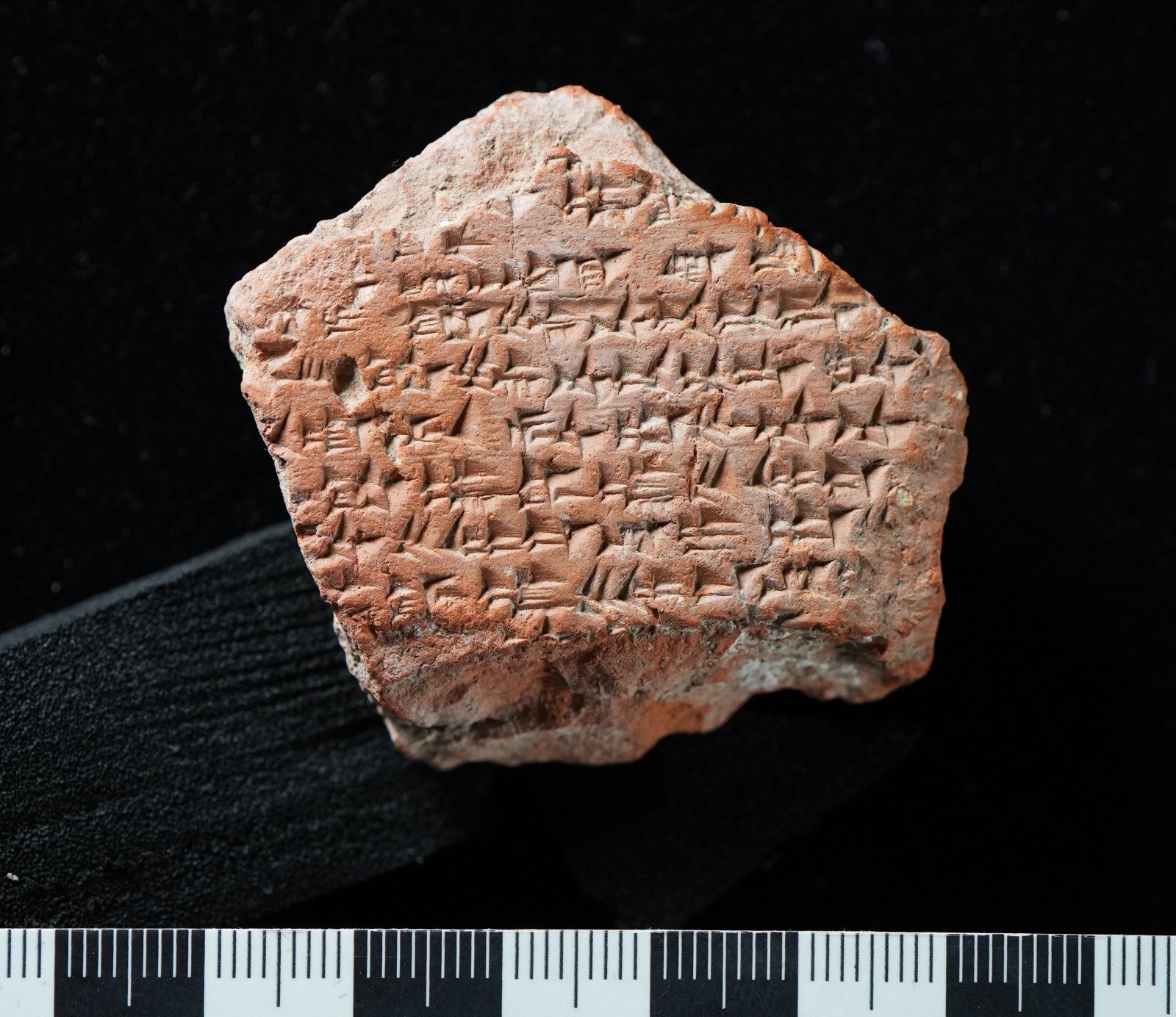
A newly identified cuneiform tablet fragment from Hattusa belongs to the Kadesh Peace Treaty, the agreement that established peace between the Hittite and Egyptian empires more than 3,200 years ago. The fragment preserves lines concerning people who fled from one kingdom to the other, including a provision stating that their homes should not be destroyed.
The piece was unearthed at Büyükkale, the royal citadel of the Hittite capital in Çorum, central Türkiye. Examination of its surviving text showed that it came from one of the treaty copies once kept in the archives of Hattusa.
The long-running excavations at Hattusa are directed by Professor Andreas Schachner of the German Archaeological Institute. Schachner has led the archaeological work at the ancient city since 2006, continuing more than a century of research at the former Hittite capital.
Türkiye’s Minister of Culture and Tourism, Mehmet Nuri Ersoy, announced the discovery on September 21, the International Day of Peace. He said the fragment underscored Anatolia’s deep place in the history of diplomacy and congratulated the excavation team and scholars involved in its study.
Rules for people returned across the border
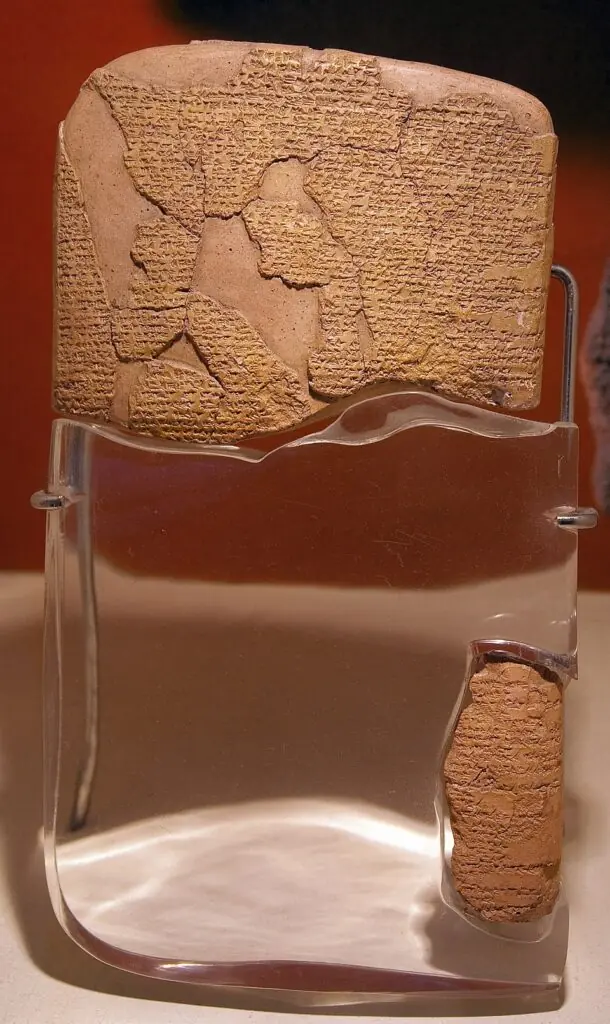
The Kadesh Peace Treaty was concluded around 1259 BC between the Hittite king Hattusili III and the Egyptian pharaoh Ramesses II. Its roots lay in a long struggle for control of Syria, including the Battle of Kadesh around 1274 BC, which failed to produce a decisive victory for either empire.
When the two kingdoms eventually reached an agreement, they did more than promise to end hostilities. The treaty established mutual military support against foreign enemies and internal rebellions while also regulating the return of people who crossed from one territory into the other.
The provisions concerning fugitives placed clear limits on retaliation. According to the surviving text, a returned person was not to be killed or physically harmed. The individual’s wife and children were also to be spared, and the family home was not to be destroyed.
The newly identified fragment belongs to this part of the agreement. It does not introduce an entirely unknown clause, but adds another physical piece to a treaty copy preserved in the Hittite capital.
A treaty recorded by both empires
The copies recovered at Hattusa were written in Akkadian cuneiform. Akkadian was widely used for communication between royal courts, allowing rulers across the ancient Near East to conduct diplomacy through a shared written language.
Egypt preserved its version of the agreement in hieroglyphic inscriptions carved on temple walls. The survival of records from both kingdoms allows scholars to compare how the Hittite and Egyptian courts presented their commitments.
The treaty is closely associated with the Battle of Kadesh, although it was concluded years after the fighting. Its terms created a framework for non-aggression, military cooperation and reciprocal obligations between two of the most powerful states of the Late Bronze Age.
Another piece of the Hittite archive
Büyükkale has yielded thousands of cuneiform tablets and fragments dealing with royal administration, religious practices, law and foreign affairs. These documents have made Hattusa one of the most important sources for understanding how government and diplomacy operated in the ancient Near East.
The newly identified fragment adds another physical piece to the Hittite record of the Kadesh agreement. Preserved in the royal archives at Hattusa, its lines show that the treaty addressed not only relations between two empires but also the treatment of people returned across their borders.
Cover Image: The newly identified cuneiform fragment from Hattusa preserves lines from the Kadesh Peace Treaty concerning the treatment of returned fugitives. Credit: Republic of Türkiye Ministry of Culture and Tourism