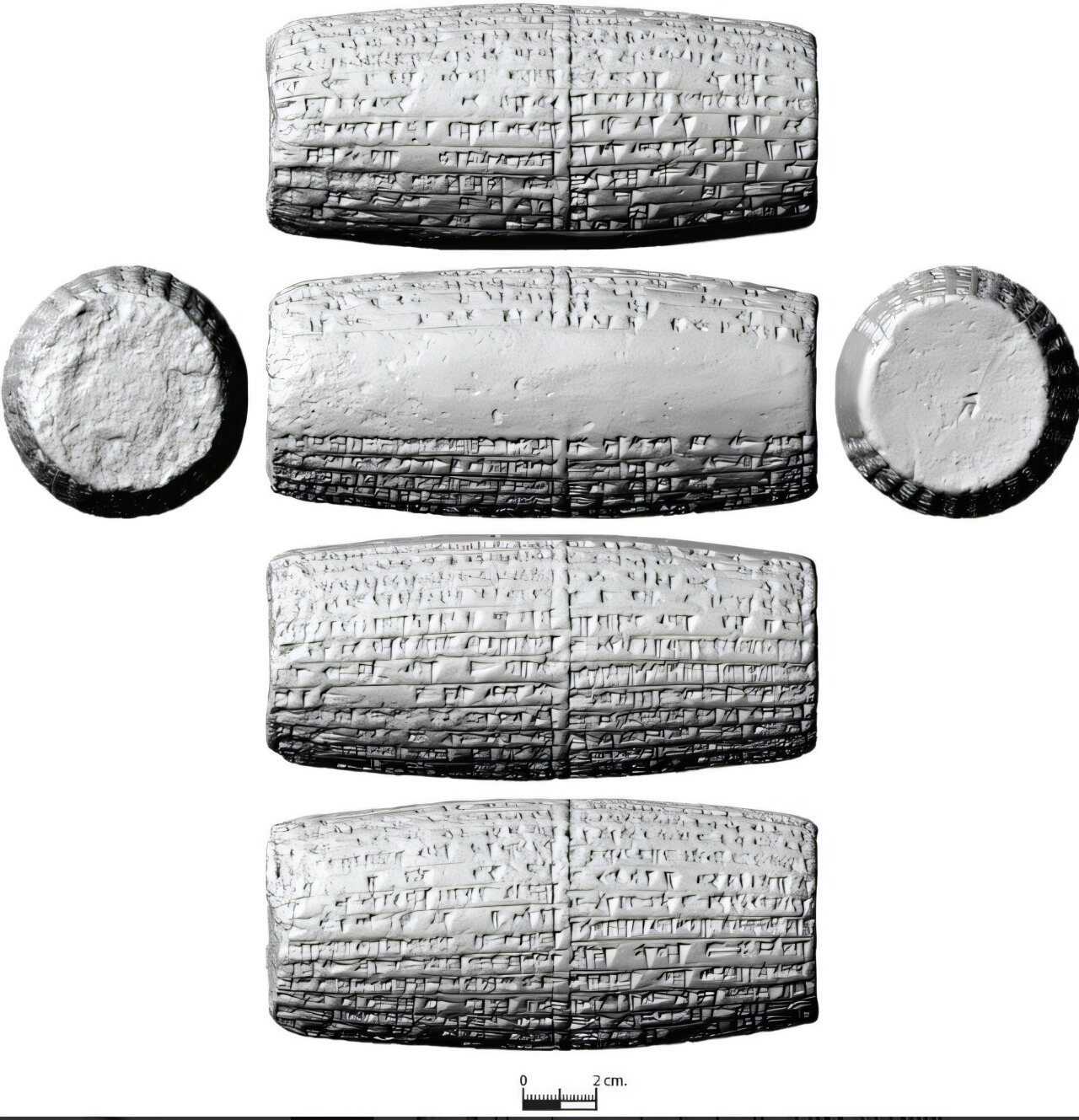
For generations, Nebuchadnezzar II’s involvement at the ancient city of Kish was inferred rather than proven. His name appeared on scattered stamped bricks, hinting at royal intervention, but no formal building inscription had ever confirmed his hand in restoring the city’s monumental ziggurat. That gap has now been decisively closed.
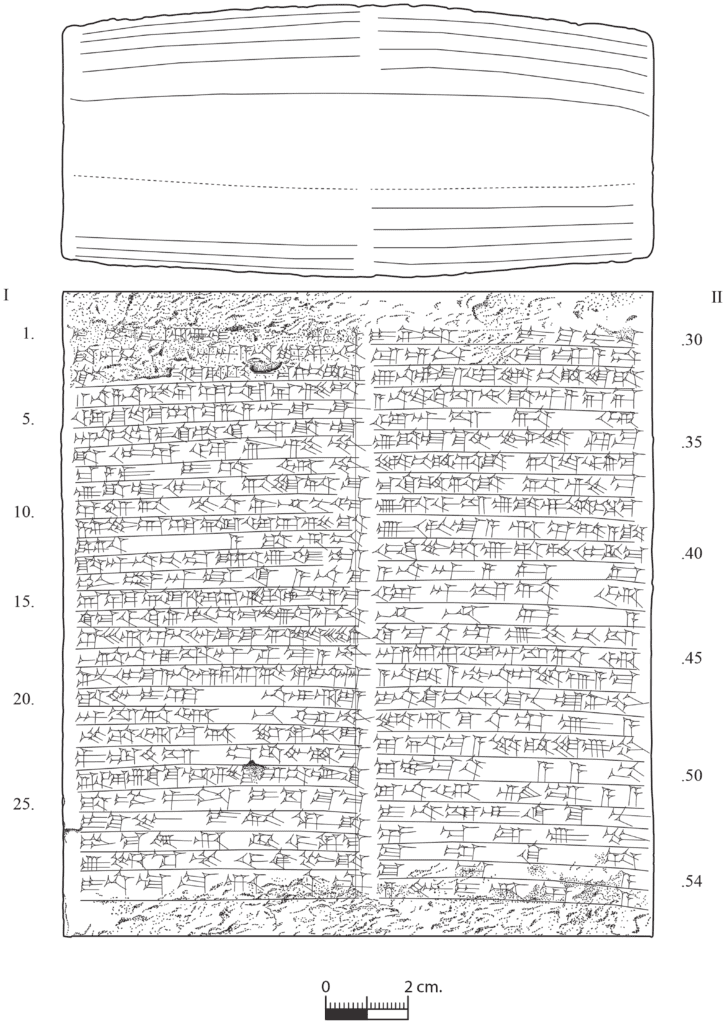
Two inscribed clay cylinders—quietly handed over by local Iraqis in 2013—have turned out to be the first known foundation texts in which Nebuchadnezzar II explicitly records his restoration work at Kish. Their publication provides a rare, first-person account of a Neo-Babylonian king engaging with a structure that was already ancient in his own time.
A Rediscovered Royal Voice from Tell al-Uhaimir
The cylinders were found on the surface of Tell al-Uhaimir, the mound that preserves the remains of the ziggurat of Kish, one of southern Mesopotamia’s most venerable urban centers. After being formally registered by Iraq’s State Board of Antiquities and Heritage, the inscriptions were translated and studied, revealing a text written in the conventional Neo-Babylonian foundation style yet remarkable for its historical implications.
In the inscription, Nebuchadnezzar introduces himself as king of Babylon, acting under divine mandate. He presents the restoration not as a routine repair, but as a sacred obligation entrusted to him by the gods. This framing situates the project within the ideological core of Neo-Babylonian kingship, where monumental construction was inseparable from divine favor and political legitimacy.

A Ziggurat with a Long and Complicated Past
Archaeological work at Kish—most notably by early twentieth-century excavators—has shown that the ziggurat was not a single-period monument. Its history spans many centuries, with multiple construction and repair phases layered atop one another. The earliest major building phase is associated with Hammurabi in the eighteenth century BCE, when the structure was dedicated to the city’s principal deities.
Later rulers undertook repairs, but until now their identities remained uncertain in Nebuchadnezzar’s own narrative. The cylinders describe a structure weakened by time: walls buckling, brickwork eroded by rain, and earlier restorations no longer sufficient. Rather than naming his predecessors, Nebuchadnezzar emphasizes continuity of duty—presenting himself as the latest caretaker in a long chain of kings responsible for preserving the gods’ dwelling.

Zababa, Ishtar, and the Theology of Restoration
The inscription makes clear that the ziggurat was dedicated jointly to Zababa and Ishtar, a pairing that reflects broader Mesopotamian religious practice. Zababa, a god of war, and Ishtar, both a goddess of love and warfare, were worshiped together at Kish, while Ishtar also held pre-eminence in other major cities such as Uruk.
Nebuchadnezzar portrays the restoration as divinely inspired. He claims that the gods themselves directed his attention to the failing monument, prompting him to rebuild and embellish it until it “shone like daylight.” This imagery is not mere poetic flourish; light, radiance, and visibility were central metaphors in Mesopotamian temple ideology, signaling divine presence and cosmic order.
Why These Cylinders Matter
What sets these objects apart is not only their content, but their function. They are foundation texts—ritual deposits meant to anchor a building project in both physical and symbolic terms. Until their discovery, Nebuchadnezzar’s role at Kish rested on indirect archaeological clues. The cylinders now provide explicit textual confirmation that he undertook a major restoration of the ziggurat, consciously situating himself within the monument’s deep historical lineage.
Equally significant is what the king chose not to say. While archaeological evidence suggests earlier restorations by rulers such as Samsu-iluna or Adad-apla-iddina, Nebuchadnezzar leaves them unnamed. This silence may reflect the conventions of foundation inscriptions, or a deliberate rhetorical strategy that places divine command above human precedent.
A Rare Glimpse into Neo-Babylonian Self-Representation
The two cylinders are nearly identical in wording, underscoring their formal role rather than personal expression. Yet taken together, they offer a vivid glimpse into how Nebuchadnezzar II understood his kingship: as a divinely sanctioned steward of ancient sacred spaces, repairing the physical fabric of the past to secure divine favor for the future.
In a region where monumental architecture was constantly rebuilt, erased, and renewed, these inscriptions restore more than a ziggurat’s history. They restore a royal voice—one that speaks across millennia about memory, decay, and the enduring obligation to rebuild what time has weakened.
Cover Image: 3D-Scan of cylinder Kz-2 (IM.227488). Credit: Jawad and Al-Ammari 2025
Ahmed Ali Jawad et al, Two inscribed cylinders of nebuchadnezzar ii from the ziggurat of kish, Iraq (2025). DOI: 10.1017/irq.2025.10023