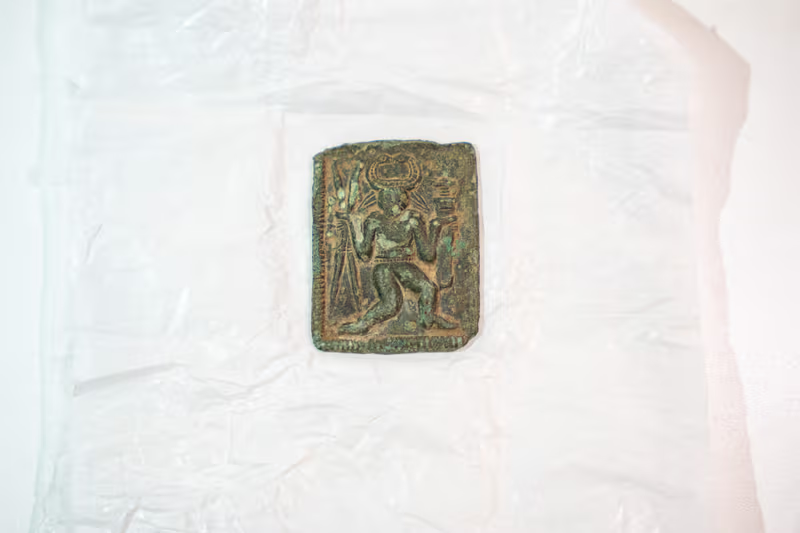
A one-of-a-kind Anglo-Saxon die stamp found in Kent may preserve rare evidence for the making of elite warrior equipment in early medieval England.
The small copper-alloy object was discovered near Lynsted by metal detectorist Stephen Newbury. It dates to the late sixth or early seventh century and has now been identified as the only confirmed example of its kind found in Britain.
At first glance, it is not a spectacular treasure. It is not gold. It is not a helmet. But that is exactly why the find matters. Archaeologists often recover finished prestige objects from graves. Far fewer discoveries take them back to the workshop.
A small tool behind elite warrior display
The object is a die stamp, also known as a patrice. It was probably used to press designs into thin sheets of metal, creating raised decorative foils for high-status military equipment.
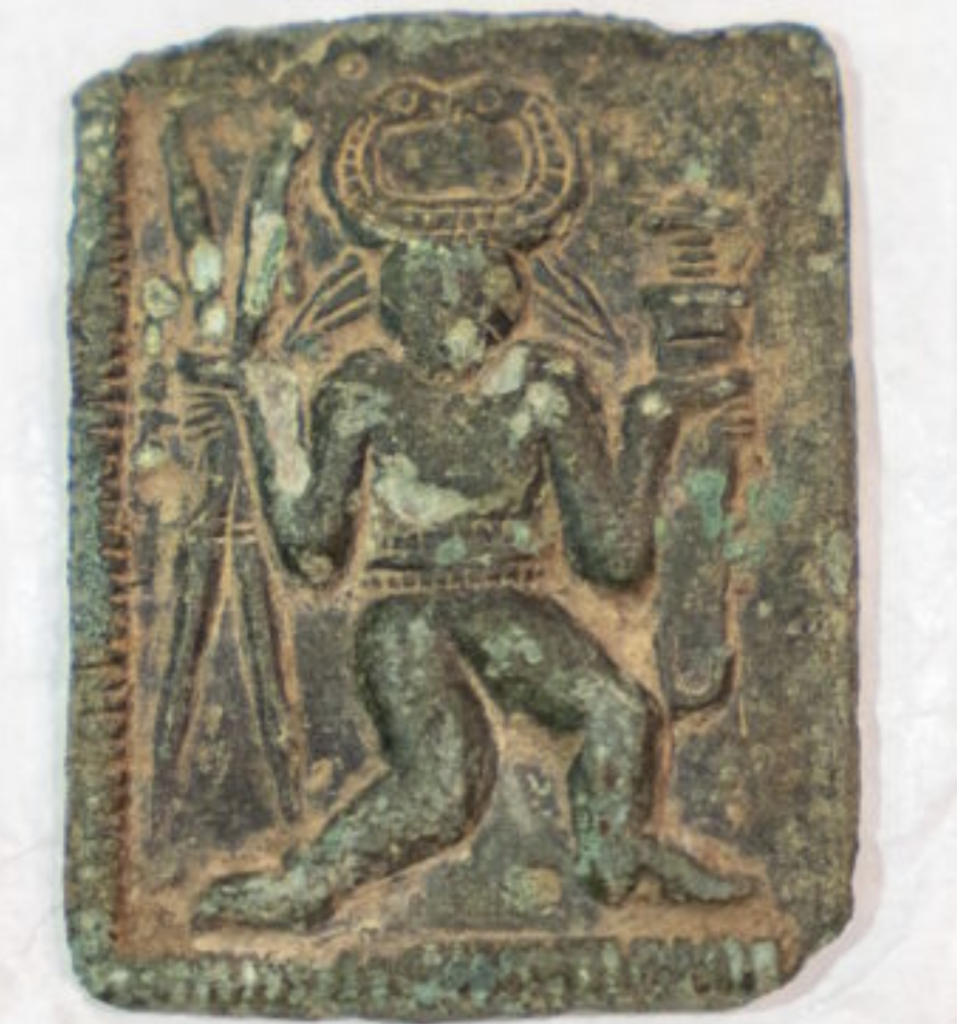
A craftworker would place a sheet of metal over the carved die, cover it with a softer layer, and strike it so the image rose from the surface. The finished foil could then be attached to a helmet, weapon fitting or another elite object.
This was not simple decoration. In early medieval society, such imagery helped turn weapons and armour into signs of rank, power and identity.
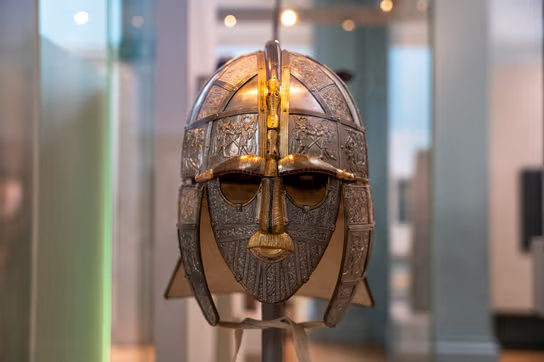
The Lynsted die carries a striking figure with bent legs, weapons and a horned headpiece ending in bird-like forms. Similar weapon-bearing figures appear on elite early medieval helmet panels, including those connected with the famous Sutton Hoo helmet.
The bigger question is local production
For decades, richly decorated helmets from early medieval England have often been discussed through their Scandinavian connections. The comparison is reasonable. The North Sea world of the sixth and seventh centuries was closely linked by trade, warfare, diplomacy and elite marriage networks.
But the Kent stamp adds a different clue.
If a tool capable of producing this kind of helmet decoration was present in England, then local craftworkers may have had the technical knowledge to make such high-status imagery themselves. The discovery does not prove that any single famous helmet was made in Kent. It does suggest that England was not merely receiving prestige objects from abroad.
That is the important shift. The Lynsted find moves the discussion from ownership to production.
Kent’s role was more than a crossroads
Kent was one of the most connected regions of Anglo-Saxon England. Its position near the Channel gave it access to continental Europe, while its early medieval burials and metalwork already point to wealth and wide cultural contacts.
The die stamp strengthens that picture. It suggests a craft environment capable of producing imagery associated with elite warrior culture.
This matters because making such objects required more than metal. It required skilled hands, specialist tools, patrons wealthy enough to commission prestige equipment, and a shared symbolic language understood by the ruling class.
The weapon dancer image on the stamp probably carried meanings linked to martial identity, ritual performance or heroic tradition. Its bird-headed horns were not random ornament. They belonged to a visual world that early medieval elites used to express authority.
A rare find declared Treasure
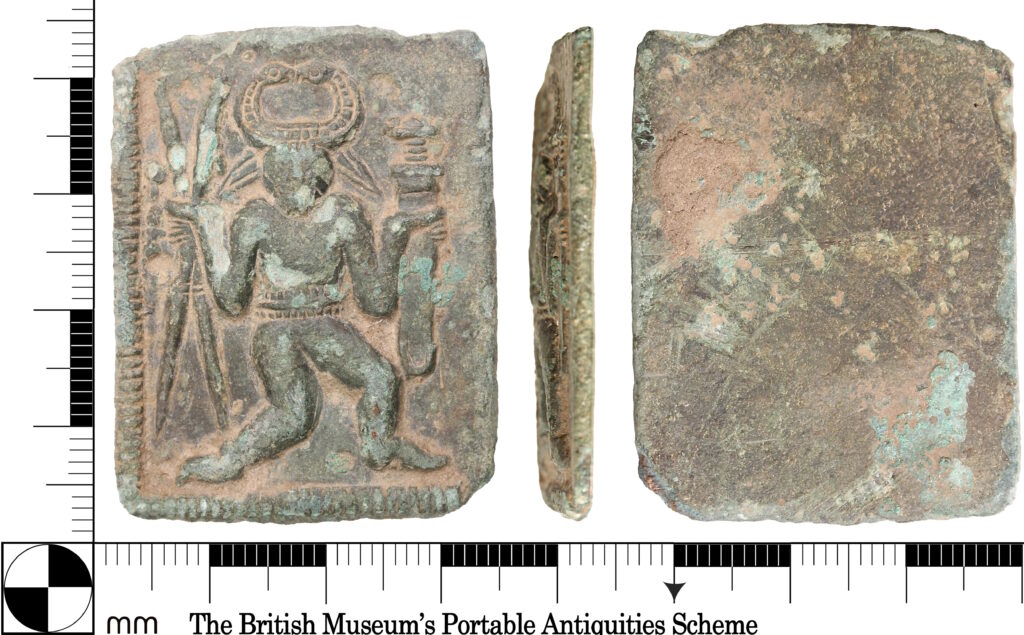
Kent County Council and the British Museum have linked the die closely in size and design to helmet panels known from Sutton Hoo-type material. Dr Andrew Richardson, Finds Liaison Officer for Kent County Council and Kent Officer for the Portable Antiquities Scheme, said the find provides important evidence that such helmets could have been made in Kent.
The object has now been declared Treasure because of its historical importance. It is recorded in the Portable Antiquities Scheme database as KENT-23D64B. There is hope that it may eventually be acquired and displayed at the Beaney House of Art and Knowledge in Canterbury.
The Lynsted die is small, but its implication is large. It does not offer a finished helmet from a royal grave. It offers something quieter and perhaps more revealing: a trace of the tools and workshops behind early England’s elite warrior image.
In the end, the find may not rewrite the story with one dramatic answer. It does something more useful. It shows that part of the world behind Britain’s most famous early medieval armour may have been made much closer to home.
Cover Image: Anglo-Saxon Die Stamp found near Lynsted in Kent may offer rare evidence for elite metalworking and possible local helmet decoration in early medieval England. Credit: Kent County Council