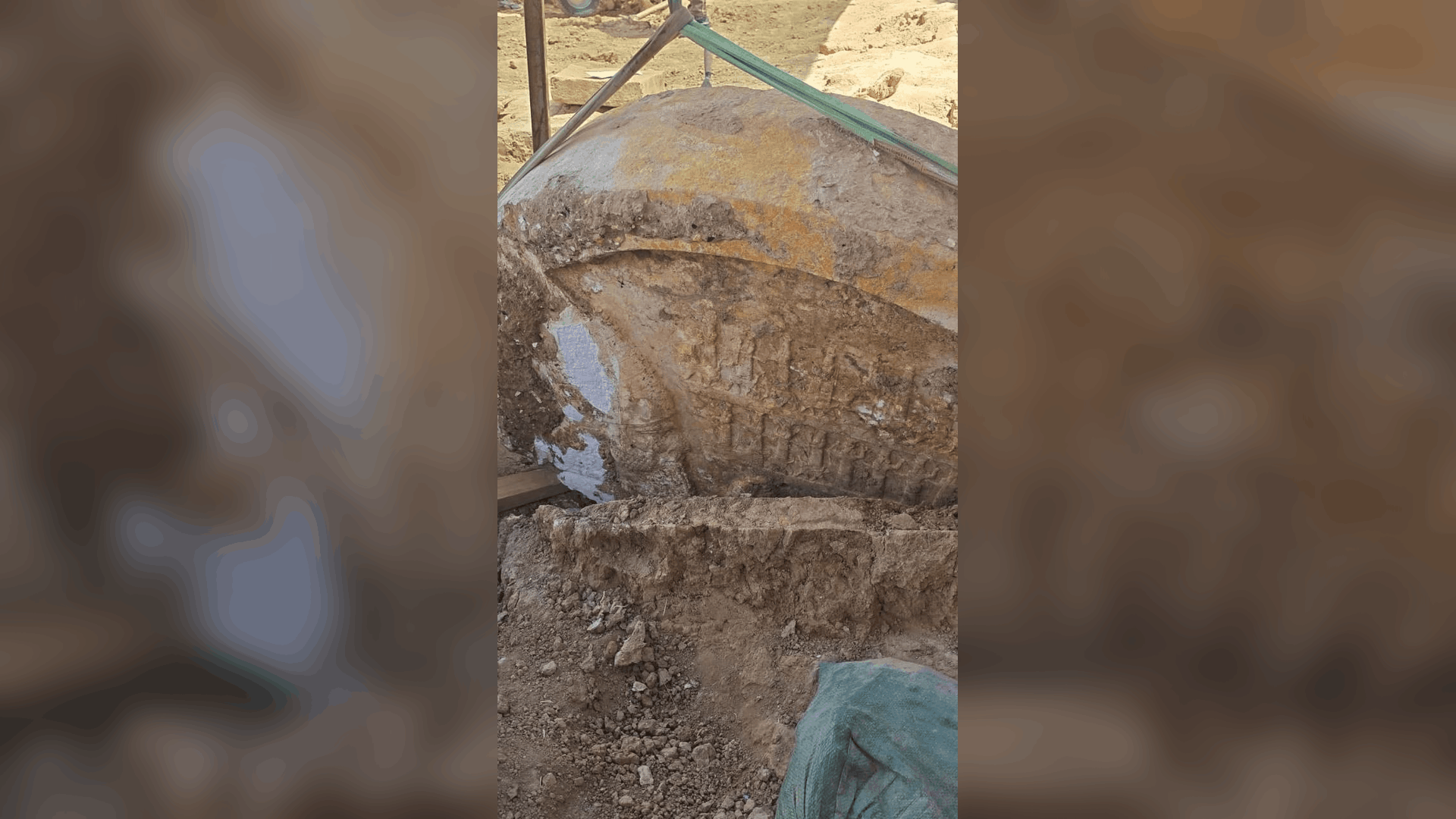
A stone monument has been uncovered at Bab Shamash, the ancient Sun Gate of Nineveh, where people once passed into one of the most powerful cities of the Assyrian world.
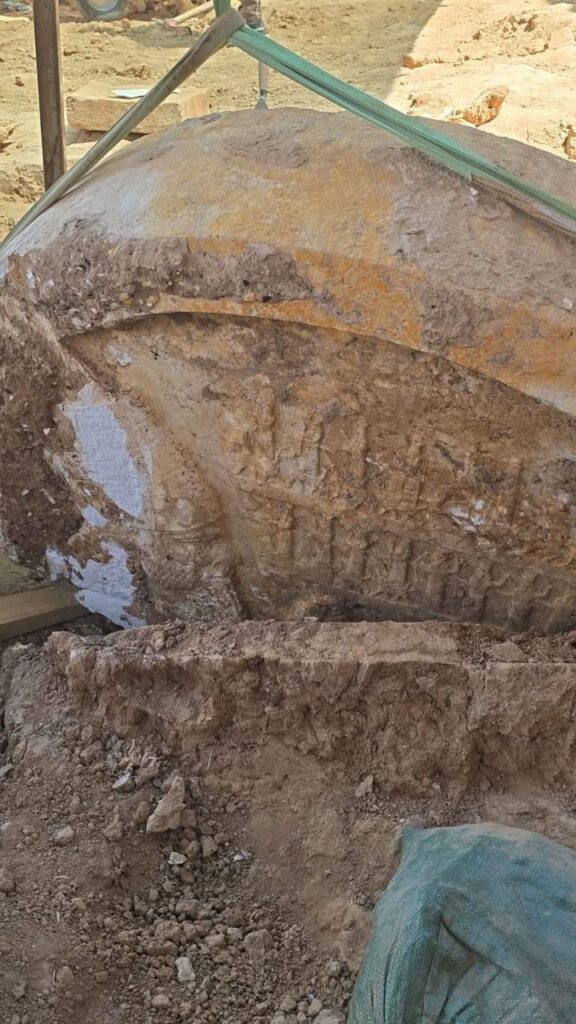
Iraq’s State Board of Antiquities and Heritage announced the discovery during ongoing excavation work in Nineveh Governorate, northern Iraq. The large stone stele has been dated to the seventh century BC, when Nineveh served as the capital of the Neo-Assyrian Empire.
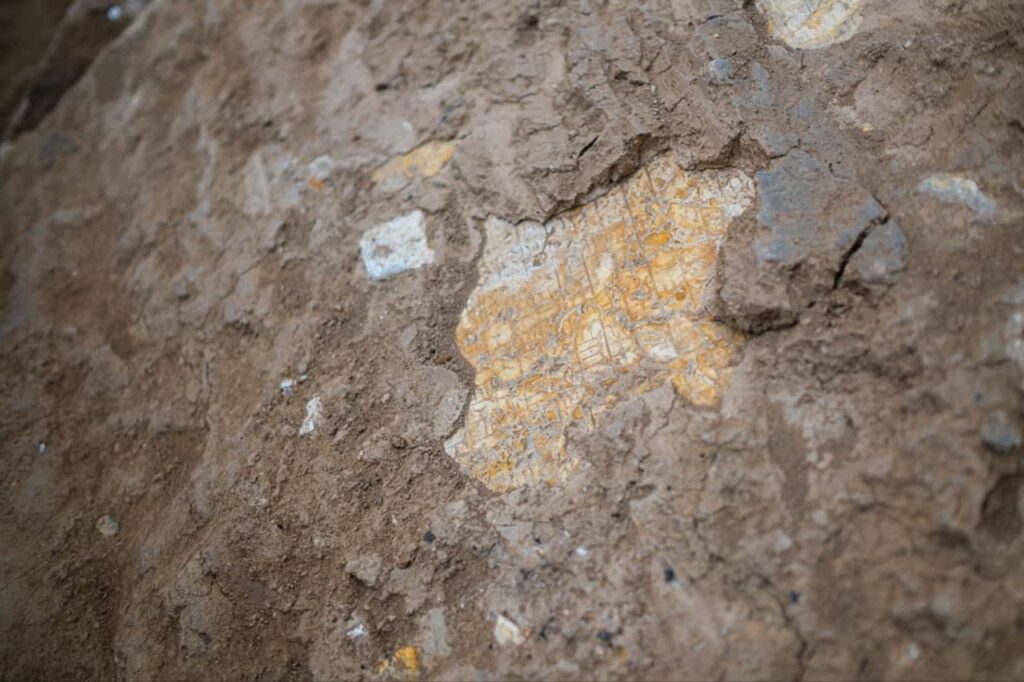
According to the announcement, the monument bears prominent Assyrian inscriptions. The full text has not yet been published, so its exact message remains unknown. That caution matters. But even before the inscription is fully read, the find is significant because of where it was discovered: at one of the great gates of ancient Nineveh.
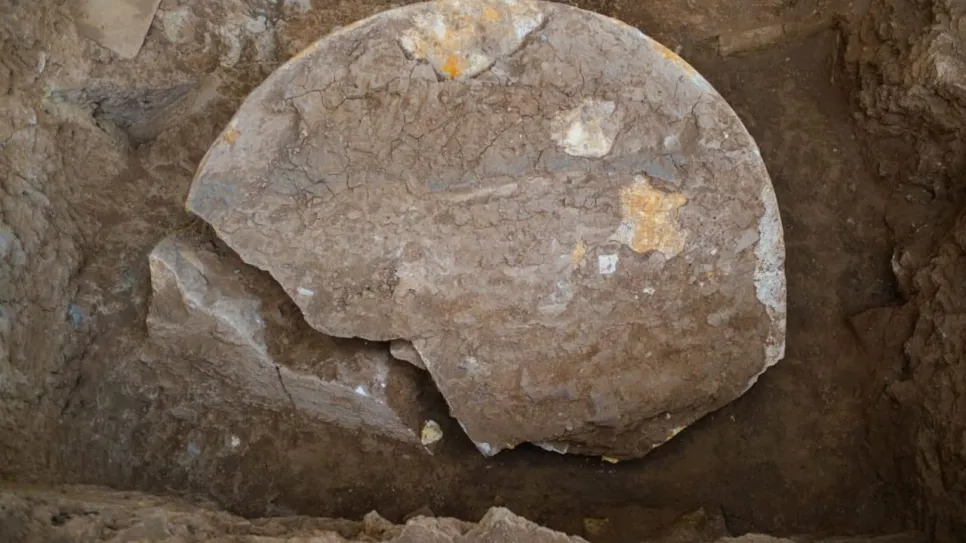
A Monument Found at the Sun Gate
Bab Shamash, meaning “Sun Gate,” was part of Nineveh’s defensive system. The gate was named after Shamash, the Mesopotamian sun god associated with justice, truth and divine judgment.
For the Assyrians, city gates were not only points of defense. They controlled who entered the capital, but they also carried a message about order, authority and divine protection. A written monument placed near such a gate would have stood in a highly visible space, close to the movement of officials, soldiers, merchants and visitors.
That gives the newly discovered stele a stronger archaeological weight. It was not found in a random corner of the ancient city. It came from a threshold where Nineveh presented itself to the outside world.
Assyrian stone stelae often recorded royal decisions, building works, military achievements, divine dedications or official statements. If the Bab Shamash inscription is preserved well enough, it may help researchers identify the ruler, event or religious message behind the monument.
Nineveh in Its Final Imperial Century
The seventh century BC was Nineveh’s most famous age. Under rulers such as Sennacherib, Esarhaddon and Ashurbanipal, the city became the centre of a vast empire stretching across much of the ancient Near East.
Nineveh’s walls, palaces and carved reliefs were built to impress visitors before they ever reached the king. The city was not simply a capital. It was a carefully staged display of Assyrian kingship, military command and divine favour.
The Shamash Gate belonged to this urban landscape. Like other major gates around Nineveh, it was both practical and symbolic. It protected the city, shaped movement through its walls and linked architecture with religion.
That is why a stele from Bab Shamash matters. It may preserve a new written trace from a period when Assyria was still powerful, but also moving toward its final crisis. In 612 BC, Nineveh fell to a coalition of Babylonian and Median forces. The event marked the end of Assyria’s role as the dominant imperial force in Mesopotamia.
From Assur to Nineveh
The discovery also recalls the deeper history of Assyria itself. Long before Nineveh became the late imperial capital, Assur stood as the older heart of Assyrian identity.
Located on the Tigris River, Assur was both the early capital and the sacred centre of Assyrian kingship. It was closely tied to the god Ashur, the supreme deity of the Assyrian state. Even after political power shifted to other royal cities, Assur kept its religious prestige.
Nineveh represented a later phase of Assyrian history. It was larger, more monumental and more closely tied to the empire’s last great rulers. Its palaces and archives have already yielded some of the most important evidence for Assyrian art, literature and administration.
Now Bab Shamash has produced another piece of that story.
The newly discovered stele may eventually add names, dates or formulas to the historical record. For now, it is already a striking find: a 2,700-year-old Assyrian monument uncovered at one of the gates through which Nineveh displayed its authority.
As archaeologists continue their work, the stone’s inscription will be the key question. What did it say? Who ordered it? And why was it placed at the Sun Gate?
Those answers may turn a single stone slab into a sharper glimpse of Nineveh in the final century of Assyrian imperial power.
Cover Image Credit: Iraq’s State Board of Antiquities and Heritage