
A rare alabaster jar linked to Xerxes I yields definitive traces of opium, forcing a rethink of ancient Egyptian pharmacology — and the motives behind the famous looting of Tutankhamun’s tomb.
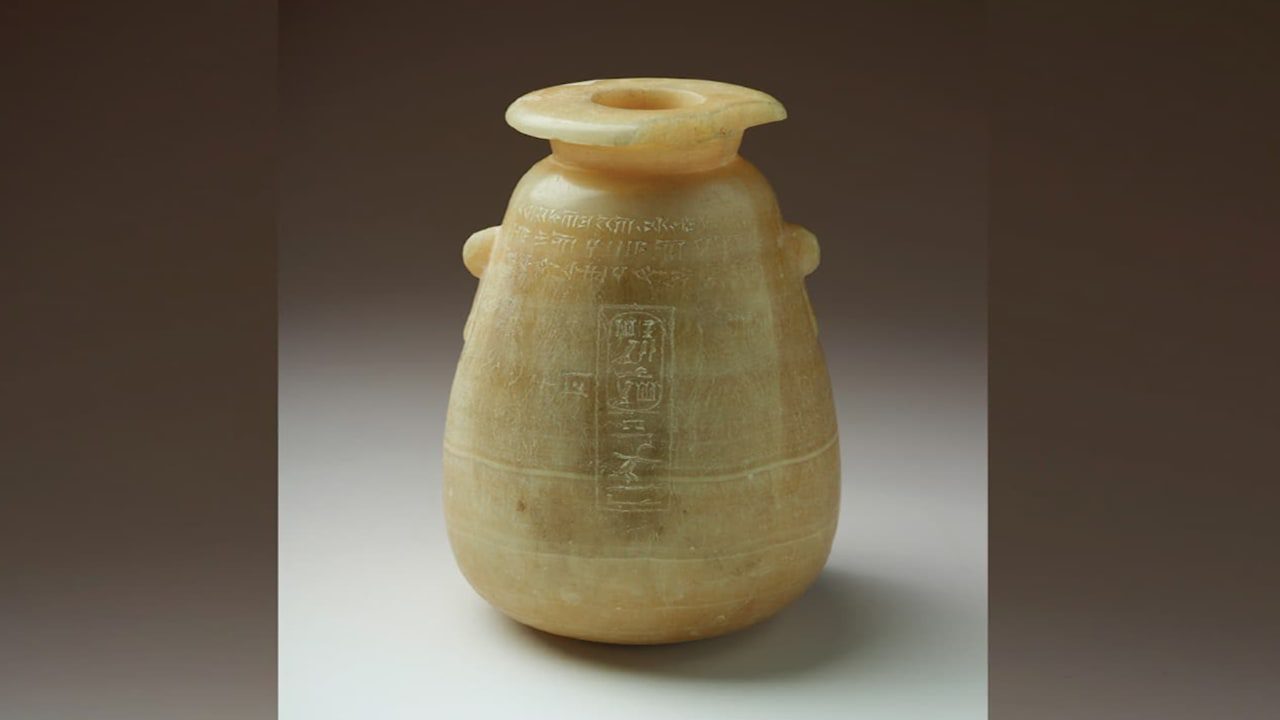
Researchers at Yale University have identified unmistakable residues of opium alkaloids inside a 2,500-year-old Egyptian alabaster vase, overturning long-held assumptions about the substances stored in royal vessels. The discovery, made through advanced gas-chromatography–mass-spectrometry, marks the first laboratory confirmation of opium in an inscribed Egyptian alabastron — a vessel type once traded among the great kings of the ancient Near East.
The jar, carved from calcite-alabaster and engraved in Akkadian, Elamite, Old Persian, and Egyptian with the royal titles of Xerxes I, was found to contain morphine, thebaine, noscapine, hydrocotarnine, and papaverine — the precise chemical signature of the Papaver somniferum, or opium poppy.
According to the team from the Yale Ancient Pharmacology Program, the alabaster’s porous structure protected the organic traces for millennia, absorbing and preserving them within the stone itself.
The 22-centimeter vessel, kept for decades in the Babylonian Collection of the Yale Peabody Museum, was tested by introducing warm ethanol into its cavity for less than a minute. A single rinse was enough to release the ancient narcotic compounds — a revelation that will likely reshape conservation practices for similar artifacts.
Reinterpreting royal treasures — and Tutankhamun’s tomb
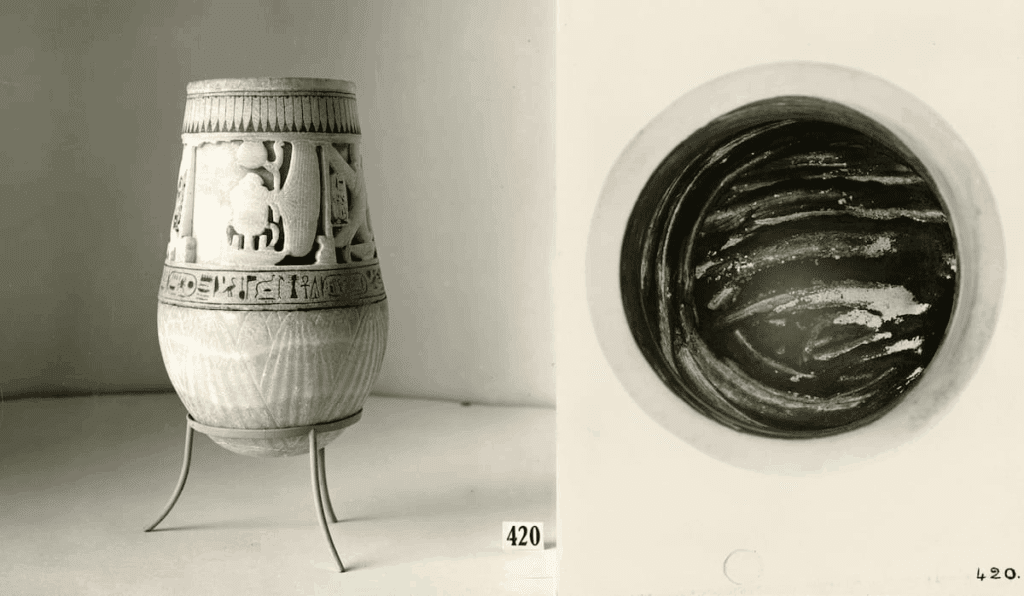
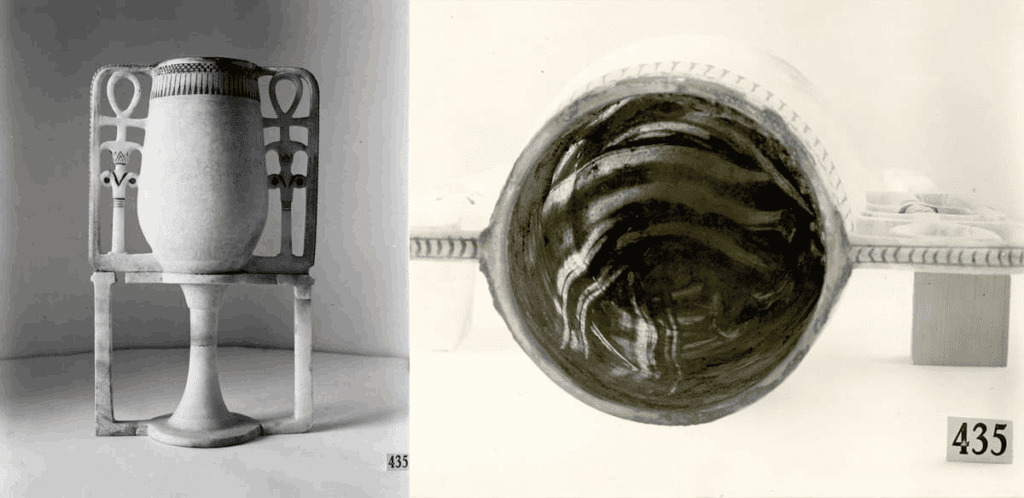
The study’s implications extend far beyond one Persian-Egyptian relic. The Yale team revisited Alfred Lucas’s 1930 analysis of Tutankhamun’s alabaster jars, which showed that only a few contained perfume. The new results now suggest that many of those dark, sticky residues Carter described in his excavation notes may have been degraded opium latex, not aromatic oils.
Those same notes record that ancient robbers entered the boy-king’s tomb twice, scraping out substances from certain jars while leaving others untouched. The Yale researchers propose that these thieves sought narcotics, a commodity that commanded enormous value on Egypt’s ancient black market — perhaps even more than gold.
A visual language of narcotics
Intriguingly, the team also suggested that the tall alabaster shape itself may have served as a symbol of opium, functioning as a recognizable container type much like a modern hookah evokes tobacco. Comparable poppy-shaped pyxides from Cyprus and limestone jars from Sedment show similar alkaloid residues, hinting at a shared visual code across Mediterranean cultures.
Opium, diplomacy, and everyday life
Beyond pharmacology, the find reopens questions about the role of narcotics in ancient diplomacy. Fewer than ten intact inscribed alabastra of this kind are known, and records indicate that such vessels circulated as royal gifts between Egypt, Persia, and Mesopotamia. If opium moved through these elite networks, the researchers argue, it almost certainly reached ordinary Egyptians as well — revealing an organized and far-reaching trade in psychoactive substances.
“The presence of opiates in royal containers implies a structured and socially accepted use of narcotics in the ancient world,” the authors wrote, emphasizing that humanity’s relationship with opioids is far older — and more sophisticated — than previously assumed.