A new radiocarbon analysis of Egyptian artifacts has reignited one of archaeology’s longest-standing debates — the precise timing of the catastrophic Thera (Santorini) eruption, one of the largest volcanic events of the last 10,000 years.
Researchers from Ben-Gurion University of the Negev and the University of Groningen have, for the first time, obtained radiocarbon dates directly tied to Pharaoh Ahmose, the founder of Egypt’s New Kingdom. Their findings indicate that the eruption occurred before his reign — during the Second Intermediate Period, not during the New Kingdom as previously thought.
Rewriting a Cornerstone of Eastern Mediterranean Chronology
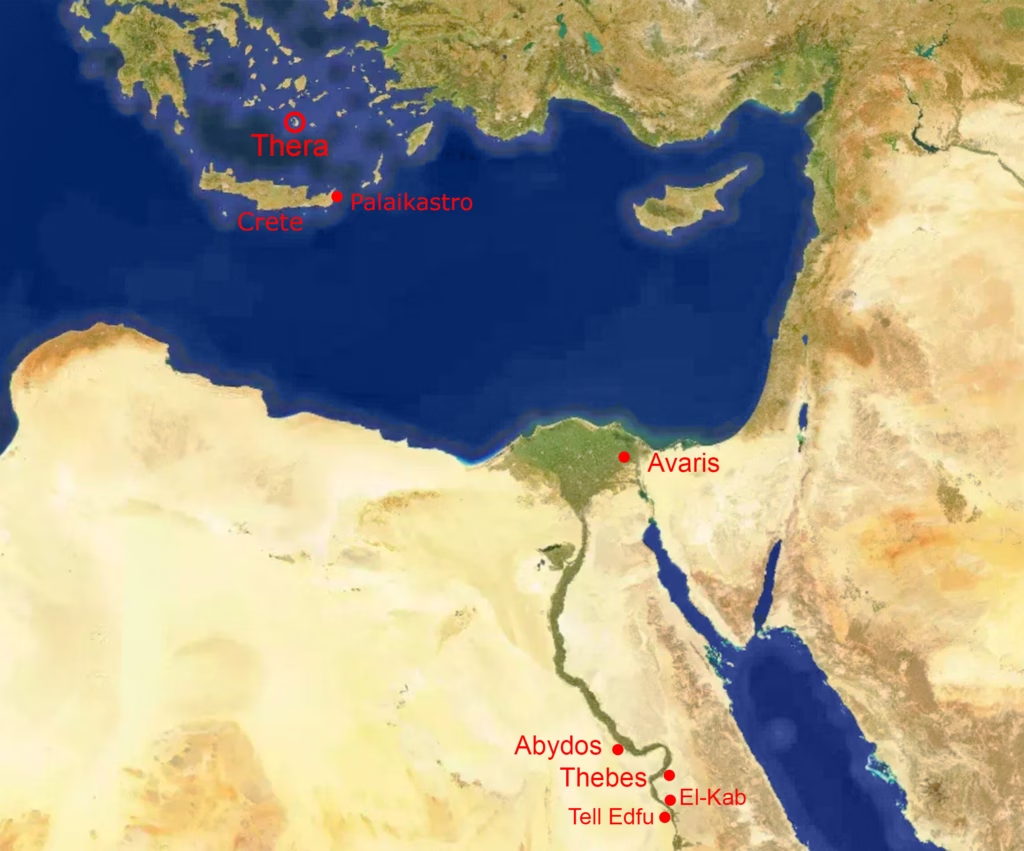
The Thera eruption, which devastated the Bronze Age Aegean and sent volcanic ash across the eastern Mediterranean, has long been a chronological anchor for synchronizing civilizations — from the Minoans and Mycenaeans to Egypt’s 18th Dynasty. Yet for decades, scholars have disagreed whether the event should be dated to the late 17th century BCE or the mid-16th century BCE.
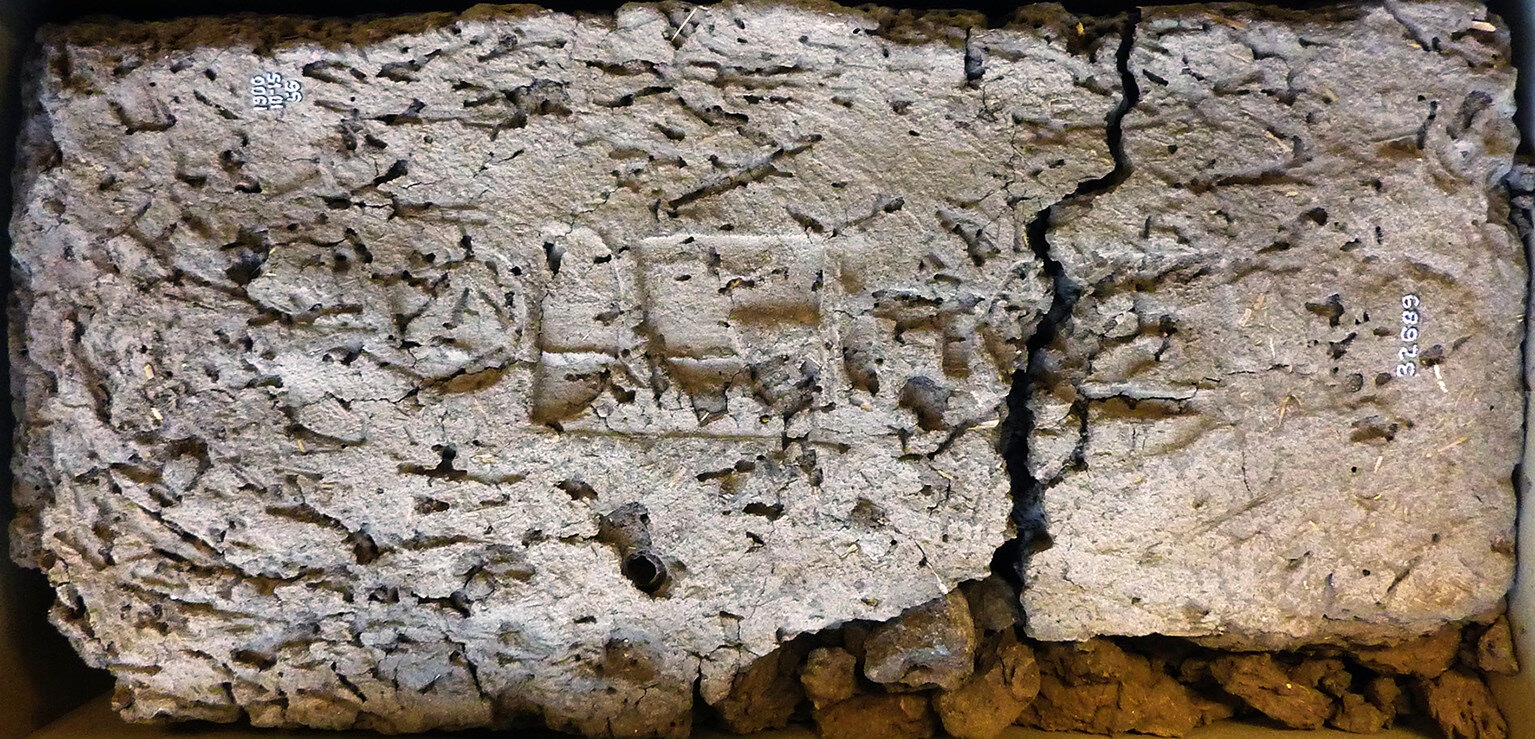
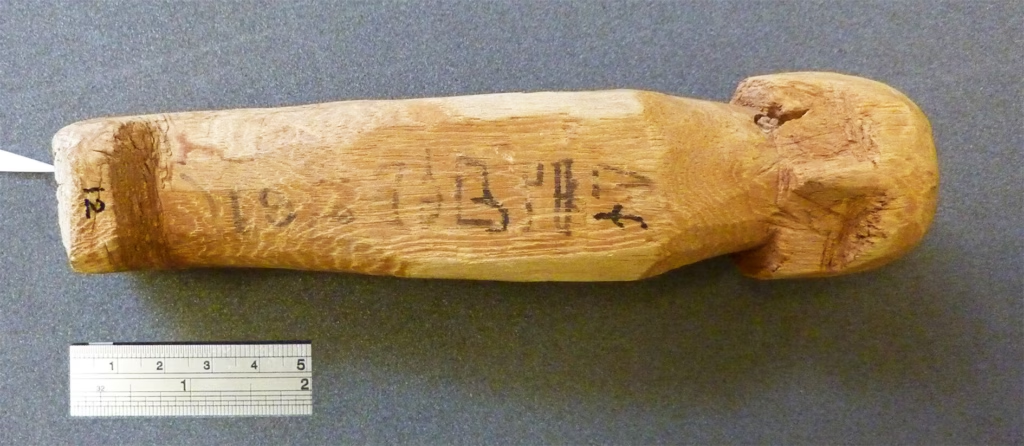
By radiocarbon-dating artifacts directly associated with Pharaoh Ahmose — including a mudbrick from the Ahmose Temple at Abydos, a linen burial cloth linked to Satdjehuty, and six wooden shabtis from Thebes — the team has narrowed the timeline with unprecedented precision.
The results, published in PLOS One, show that these Egyptian samples are younger than the radiocarbon ages of material linked to the Thera eruption. This suggests that the eruption predates the rise of the New Kingdom and therefore occurred earlier than traditionally believed.
A Longer Second Intermediate Period
According to lead author Prof. Hendrik J. Bruins of Ben-Gurion University, the new data implies that the Second Intermediate Period — the era of fragmented rule before Egypt’s reunification — lasted longer than previously estimated. “Our findings indicate that the New Kingdom started later than conventional chronologies suggest,” Bruins noted.
This has sweeping implications for the synchronization of Egyptian history with the Aegean, Levant, and Anatolia. A “low chronology” not only redefines the 18th Dynasty’s starting point, but also reshapes our understanding of cross-Mediterranean trade, diplomacy, and cultural exchange during a formative era of the Late Bronze Age.
Precision from the Past
The research involved rare access to collections at the British Museum and the Petrie Museum of Egyptian Archaeology. Under curatorial supervision, the team extracted minute samples from organic materials — linen fibers, wooden fragments, and mudbrick straw inclusions — which were then radiocarbon-dated using accelerator mass spectrometry.
These results mark a methodological milestone: rather than inferring volcanic timelines from indirect evidence, scholars can now link Egyptian royal material to a secure radiocarbon framework.
As debates continue over the exact year of the eruption, this study adds a crucial chronological anchor, bridging geology and history, and shifting one of the most debated markers in ancient world chronology.
Hendrik J. Bruins et al, The Minoan Thera eruption predates Pharaoh Ahmose: Radiocarbon dating of Egyptian 17th to early 18th Dynasty museum objects, PLOS One (2025). DOI: 10.1371/journal.pone.0330702
Cover Photo: Mudbrick EA 32689 (British Museum) from the Temple of Ahmose at Abydos, showing the stamped prenomen (throne name) Nebpehtire of Pharaoh Ahmose. Its radiocarbon dates support a low chronology for the beginning of the 18th Dynasty. Credit: Photo by H.J. Bruins, 2018 The Trustees of the British Museum, London. Shared under a Creative Commons CC BY-NC-SA 4.0 license.