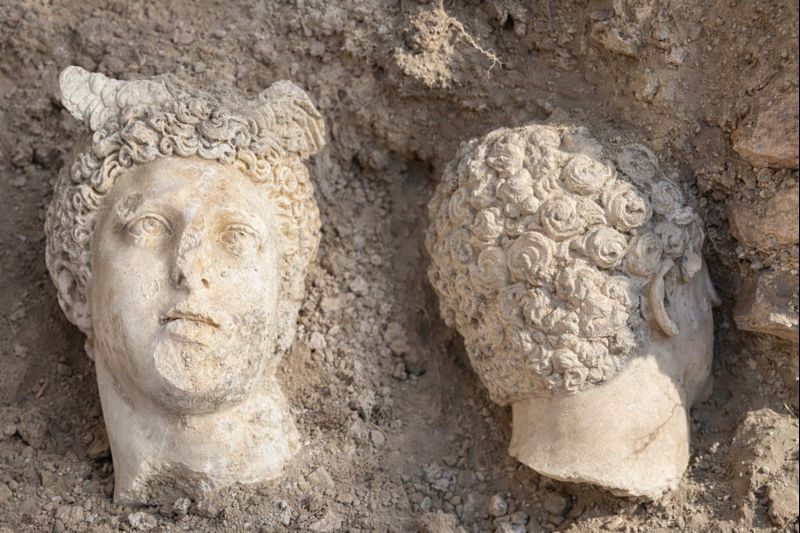
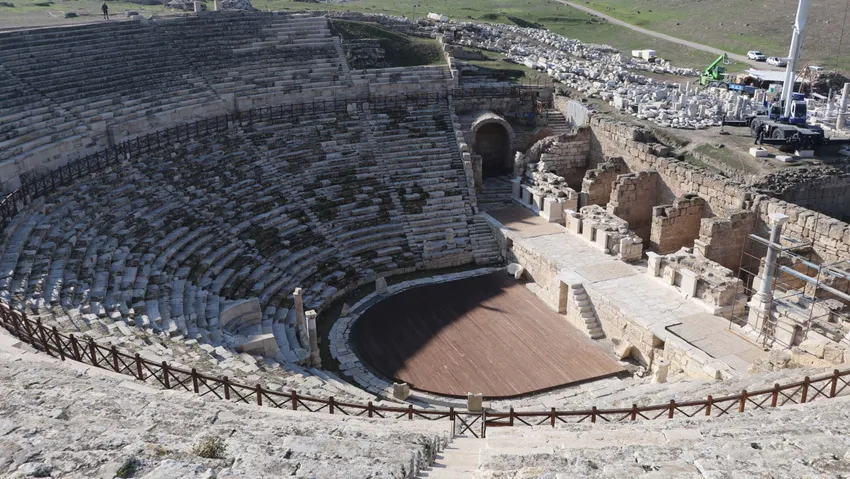
A finely carved marble head of Hermes, dating back approximately 1,800 years, has been uncovered at the ancient city of Laodikeia, located in western Turkey near the modern city of Denizli. The discovery emerged from the eastern entrance corridor of the Bouleuterion, the city’s Roman-period council house—an architectural space closely tied to civic authority and political life.
The find was made during ongoing excavations carried out under Turkey’s “Heritage for the Future” (Geleceğe Miras) initiative, overseen by the Ministry of Culture and Tourism. Archaeologists working within the Bouleuterion and neighboring Prytaneion complexes identified the sculpture fragment in situ, indicating its original placement within a formal public setting.
A Roman Sculpture with Classical Roots
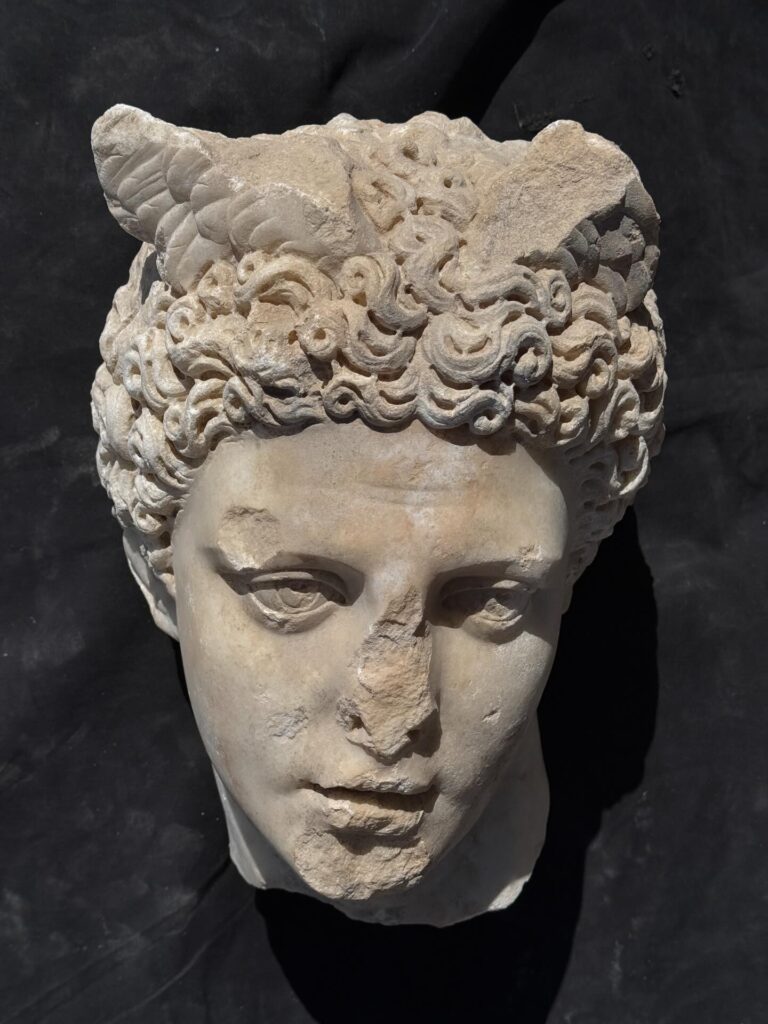
The head was carved from white Dokimeion marble, sourced from the renowned quarries of ancient Phrygia, long favored for high-quality imperial sculpture. Despite surface wear accumulated over centuries, the workmanship remains strikingly clear. Subtle facial modeling, carefully defined eyes and irises, and dense curls arranged in rhythmic patterns reflect a sculptural language shaped by Classical Greek traditions rather than provincial Roman styles.
Distinctive winged elements embedded in the hair identify the figure as Hermes, the deity associated with communication, travel, commerce, and persuasion. Stylistic assessment dates the piece to the mid–2nd century CE and links it to the “Hermes Andros” type—a Roman reinterpretation of sculptural forms rooted in the aesthetic legacy of Praxiteles, whose influence continued to shape elite art well into the imperial era.
Symbolism Inside a Civic Building
The presence of Hermes within the Bouleuterion is particularly significant. In Roman urban culture, imagery placed inside political buildings was rarely decorative alone. Hermes, known to the Romans as Mercury, embodied eloquence, negotiation, and economic order—qualities fundamental to civic administration and public decision-making.
Positioned along an entrance corridor, such a sculpture would have framed the experience of those entering the council house, reinforcing ideals of prosperity, rational discourse, and institutional authority. The find therefore sheds light not only on artistic taste but also on how Laodikeia visually articulated power within its civic core.
Laodikeia’s Role in Roman Western Anatolia
Founded in the Hellenistic period and reaching its peak under Roman rule, Laodikeia stood among the most prosperous cities of western Anatolia. Its wealth derived from textile production, regional banking, and its strategic location along major east–west trade routes linking the Aegean coast to inner Anatolia.

That prosperity manifested in ambitious urban planning. Monumental theaters, stadiums, bath complexes, and administrative buildings reshaped the cityscape, while imported marble and refined sculptural programs signaled Laodikeia’s integration into the cultural networks of the Roman Empire. The newly uncovered Hermes head fits squarely within this broader pattern of artistic patronage and civic display.
A Fragment with Broader Implications
Although only a fragment of a once-complete statue, the Hermes head carries substantial interpretive weight. It confirms the presence of highly skilled sculptural production—either through imported works or elite local workshops—and highlights the deliberate use of imagery in shaping civic identity.
As conservation and further study proceed, researchers expect the sculpture to contribute to a deeper understanding of how Roman Anatolian cities employed art within political spaces. For now, the emergence of Hermes from the soil of Laodikeia offers a vivid reminder that even a single carved face can illuminate the ambitions, values, and visual language of an ancient city nearly two millennia later.