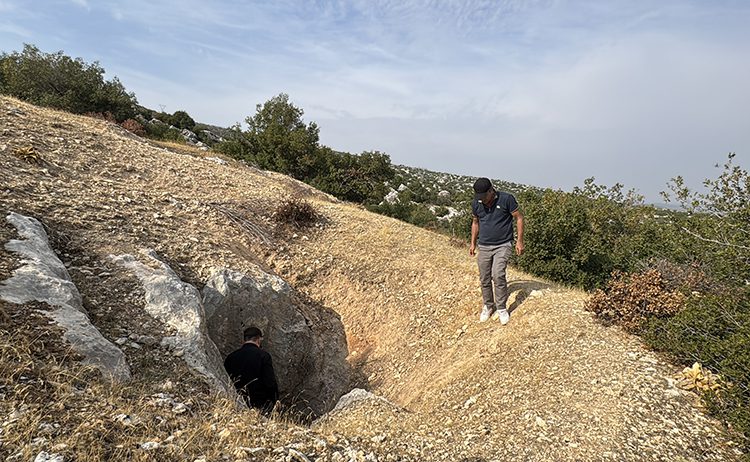
Hidden within the rugged hills of southeastern Anatolia, a newly identified Roman-period tomb is offering an unusually intimate glimpse into elite burial traditions of the 2nd century CE. Archaeologists working near the town of Besni, in Adıyaman, have documented a domed funerary chamber unlike anything previously recorded in the province—both in scale and in architectural refinement.
The discovery was triggered not by a planned excavation, but by a local report that led specialists from the Adıyaman Museum Directorate to conduct a targeted field investigation in the countryside surrounding Yukarı Söğütlü village. What they encountered was a rock-cut tomb complex carved into a steep and rocky slope, its most prominent chamber crowned by a carefully constructed dome.
A Monumental Tomb in a Remote Landscape
Initial surveys indicate that the structure forms part of a larger funerary complex comprising at least five burial chambers. One of these chambers—now partially exposed—stands out due to its domed ceiling, a feature rarely preserved in rural Roman Anatolia.
Speaking to the press, museum director Mehmet Alkan emphasized the significance of the find:
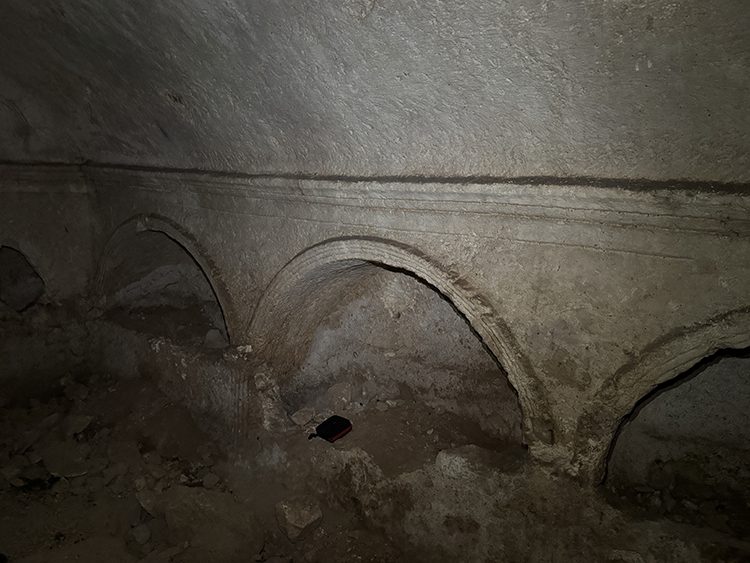
“We believe this domed tomb chamber dates to the 2nd century CE, roughly 1,800 years ago. At the entrance, three arched burial spaces are arranged on both the right and left sides. These arches are connected by columns, and above them are finely carved cornices that reflect an exceptionally high level of craftsmanship.”
Such architectural complexity strongly suggests that the tomb belonged to a family of considerable wealth and social standing—an elite presence that has rarely been archaeologically visible in this part of Anatolia.
Reliefs of Immortality and Power
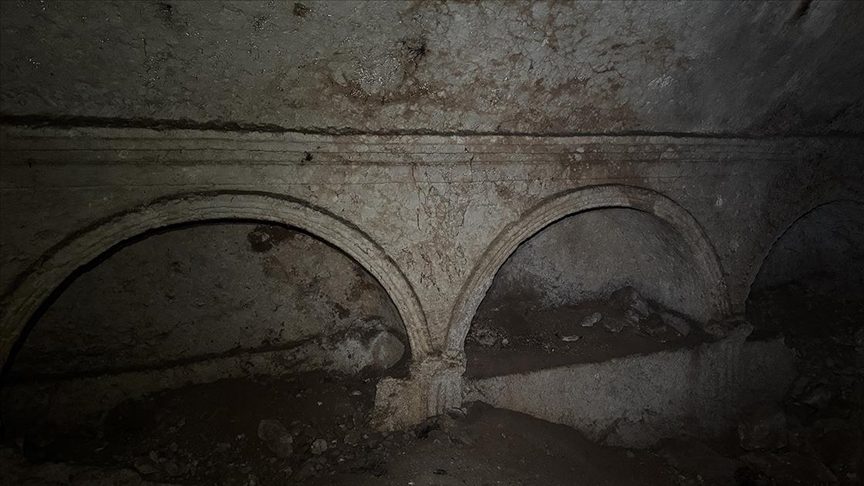
Despite centuries of exposure and partial destruction, the interior of the tomb preserves a striking decorative program. Directly opposite the entrance, archaeologists documented an arched burial niche adorned with six reliefs depicting wild goat heads. These figures are linked by garlands, while shell motifs crown the composition above.
“The shell imagery is particularly important,” Alkan noted. “In Roman funerary symbolism, such motifs are commonly associated with immortality and rebirth. Although some of the reliefs have been damaged over time, others remain clearly legible.”
Additional niches carved into the side walls indicate areas where oil lamps were lit and offerings were placed, pointing to repeated commemorative rituals rather than a single burial event.
Domed Tombs in Roman Anatolia
Domed funerary chambers occupy a distinctive place in Roman architectural tradition. While chamber tombs cut into rock faces are widespread across Anatolia, the use of a dome reflects architectural ideals more often associated with monumental urban contexts—baths, mausolea, and memorial structures commissioned by elites seeking permanence and visibility.
In provincial settings, such domed tombs typically served extended family groups and functioned as enduring markers of lineage and status. Their elevated placement within the landscape further enhanced their symbolic role, projecting memory and authority across the surrounding terrain.
The Besni tomb fits squarely within this tradition, yet its location in a relatively remote rural area makes it particularly exceptional.
Protection and Future Research
The Adıyaman Museum Directorate has initiated the legal process to register the tomb as a protected cultural asset. Documentation will be submitted to the Şanlıurfa Regional Council for the Protection of Cultural Heritage, which will determine conservation measures and outline future research steps.
For Anatolian archaeology, the discovery marks an important addition to the corpus of Roman funerary architecture. As Alkan stressed, no comparable domed tomb has previously been identified in Adıyaman, making the site a new reference point for understanding how Roman elite culture manifested beyond major cities.
Further study of the reliefs, architectural layout, and surrounding chambers is expected to refine our understanding of social hierarchy, ritual practice, and regional identity in Roman Anatolia—revealing how memory, status, and belief were carved directly into the stone of the landscape itself.