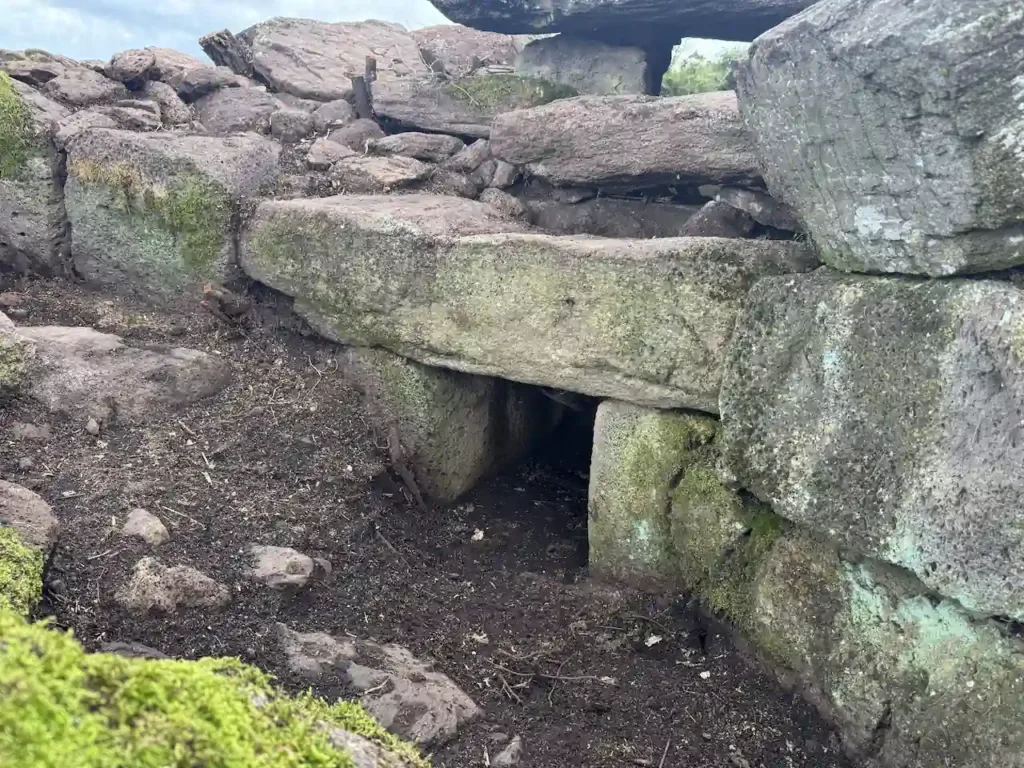
Carrarzu Iddia was already known as one of central Sardinia’s unusually dense archaeological landscapes. Two early nuraghi, traces of a settlement, a sacred well and a much older dolmen survive within a relatively small area near Bortigali. Archaeologists have now added a rare Giants’ Tomb to that list.
The well-preserved collective burial monument was uncovered beneath thick vegetation on the southern slope of Crastu Littu, close to the town of Macomer.
Its discovery adds a funerary dimension to a site where evidence of settlement, ritual activity and monumental construction was already visible.
The tomb was identified during surveys linked to the excavation and restoration of a nearby nuraghe. After reaching an agreement with the landowners, archaeological teams removed the vegetation and debris covering the structure.
What emerged was a tomb built from large blocks of trachyte, with both its elongated burial chamber and curved monumental forecourt still identifiable.
An Unusual Floor Inside the Burial Chamber
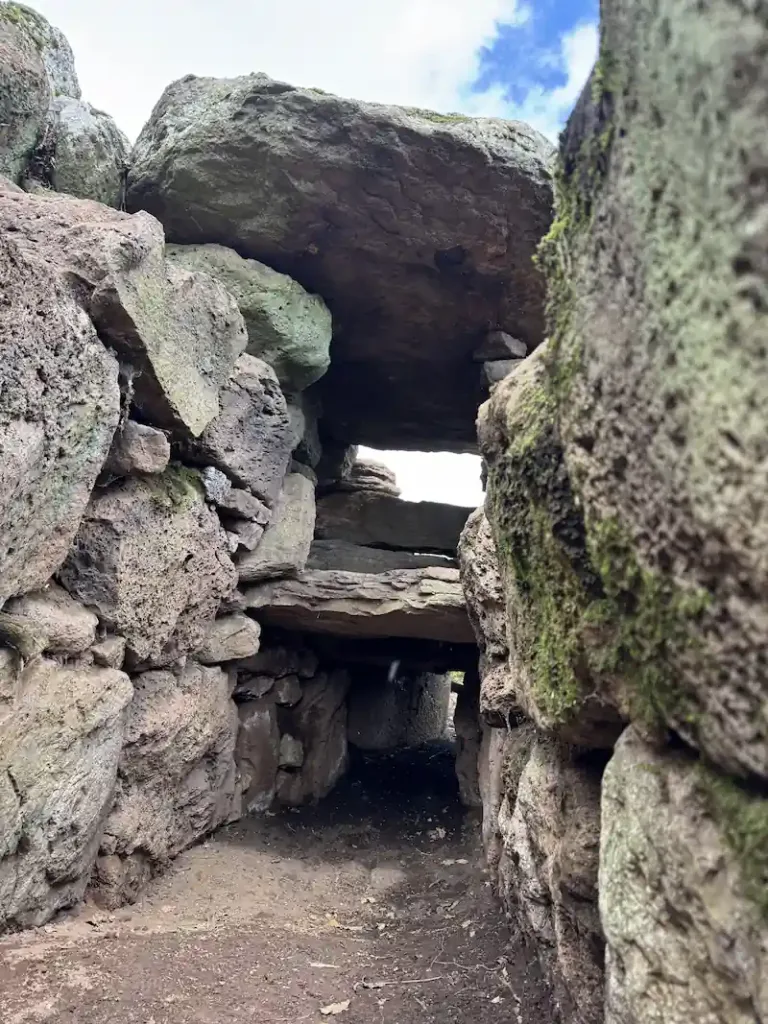
The most striking detail lies just beyond the entrance.
The floor of the chamber is arranged on two different levels, a feature documented in only a limited number of Sardinia’s Giants’ Tombs. Archaeologists have not yet determined why the builders adopted this arrangement.
Further excavation and architectural recording will be needed before the feature can be linked to a particular construction method or phase of the monument’s use.
Apart from this unusual detail, the tomb follows the basic form associated with Nuragic collective burials. A long stone chamber provided space for repeated interments, while the semicircular exedra created an open area in front of the entrance.
The popular name “Giants’ Tomb” does not refer to the size of the people buried inside. It developed from local traditions inspired by the monuments’ massive stones and imposing appearance.
Pottery Remained After Earlier Disturbance
The chamber had been disturbed before archaeologists documented it. Evidence found inside indicates that unauthorised digging had taken place at an unknown date.
Some archaeological material nevertheless survived.
Pottery fragments recovered from the chamber have been connected with the earliest phases of Nuragic civilisation. The finds provide an initial indication of the period in which the tomb was used, although the official announcement did not provide a precise construction date.
No details have yet been released about human remains or associated burial objects. Those questions will depend on how much undisturbed material survives beneath the deposits already affected by earlier digging.
A Burial Place Within a Larger Community
The new tomb is significant because it was not found in isolation.
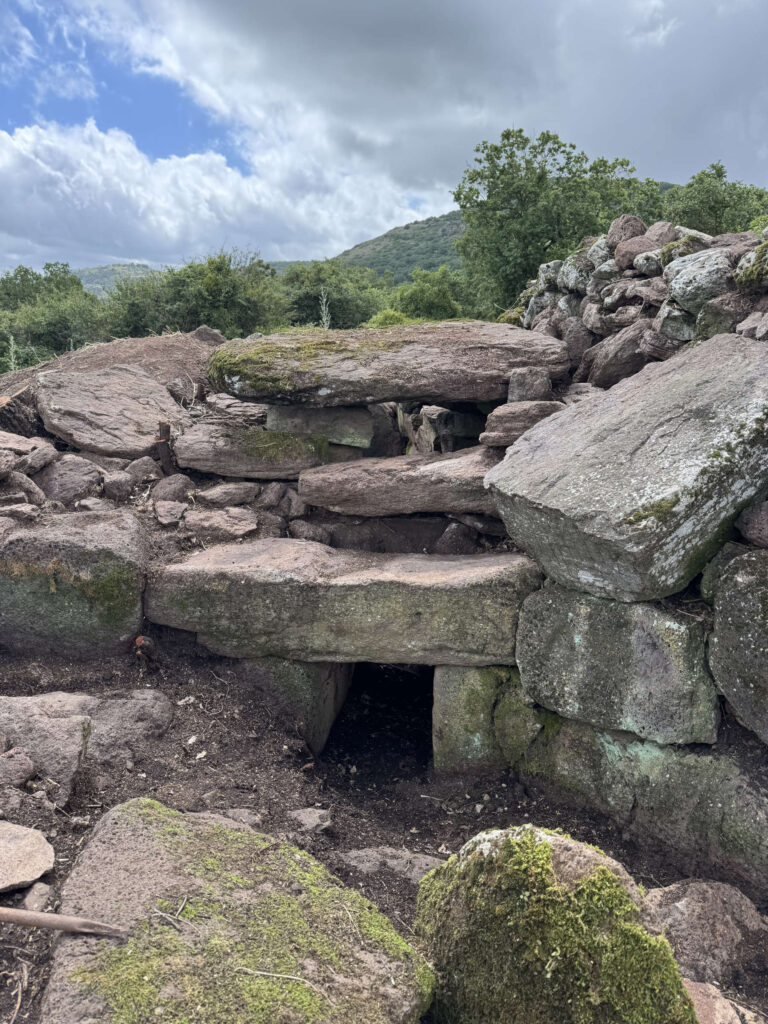
Carrarzu Iddia stands around 740 metres above sea level, overlooking the Macomer plain and the plateaus of Abbasanta and Paulilatino. The wider archaeological complex includes two protonuraghi, a settlement, a sacred well and an extensive funerary area.
A nearby dolmen shows that the location had been used for burial before the rise of Nuragic monumental architecture. Finds previously recovered in the Bortigali area have been dated to the Middle Bronze Age, approximately 1770–1370 BC.
The newly exposed tomb can now be examined as part of that broader setting.
Rather than representing the grave of a single ruler, Giants’ Tombs were collective burial places used by communities over time. Their scale suggests that burial was not treated as a private act. The monuments also created permanent gathering points within landscapes occupied by the living.
At Carrarzu Iddia, archaeologists can now compare the tomb directly with nearby domestic and ritual structures. Its unusual two-level chamber may prove important, but the discovery’s immediate value is more straightforward: it reconnects the community’s burial place with the settlement and monuments that surrounded it.