Few artifacts in Jewish history have inspired more fascination than the lost Menorah of the Jerusalem Temple. For centuries, scholars have tried to determine how this sacred lamp — destroyed or looted long before the Roman conquest — was truly designed.
Ancient texts record that after the Maccabean uprising restored the Temple in the 2nd century BCE, a new lampstand was fashioned to replace the one seized by the Seleucid king Antiochus IV. At first, it was made of iron, later replaced with silver, and eventually gold, as prosperity returned to the community. Yet, the physical form of the Menorah remained a puzzle even for those who rebuilt it.
A Missing Detail in Scripture
The Book of Exodus provides intricate measurements and ornamentation for the Menorah — its cups, knobs, and floral motifs — but leaves one striking omission: the geometry of its branches. Were they rigid and straight, or gracefully curved like arcs of fire?
This absence opened centuries of debate between rabbis, historians, and modern archaeologists.
Material Traces of a Lost Object
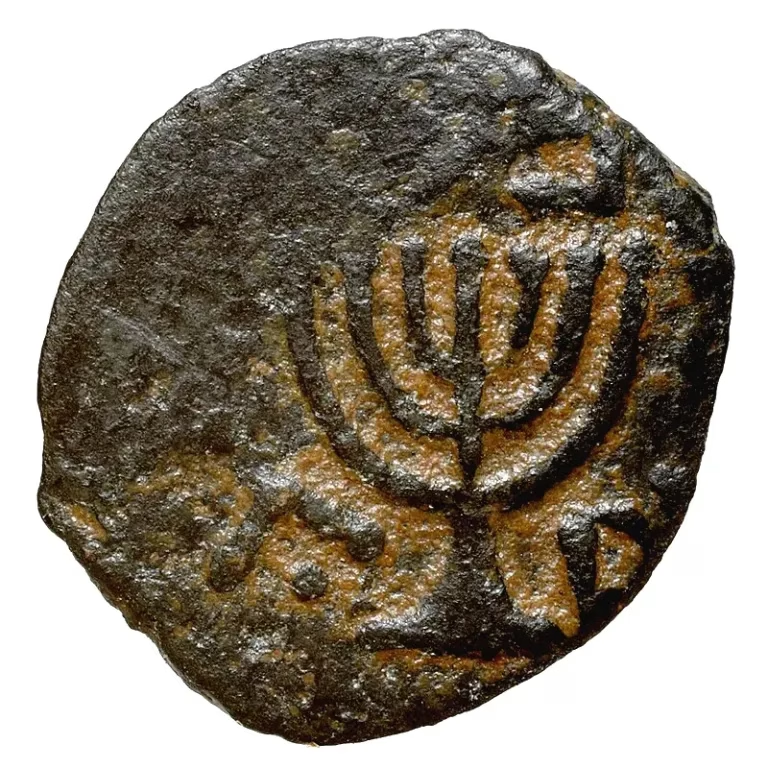
Clues emerge not from texts but from artifacts. One of the earliest is a Hasmonean coin minted around 40 BCE under King Mattathias Antigonus, showing a seven-branched candelabrum with curved arms. Because it was a Jewish issue rather than Roman propaganda, the image may reflect how contemporaries remembered the Temple object.
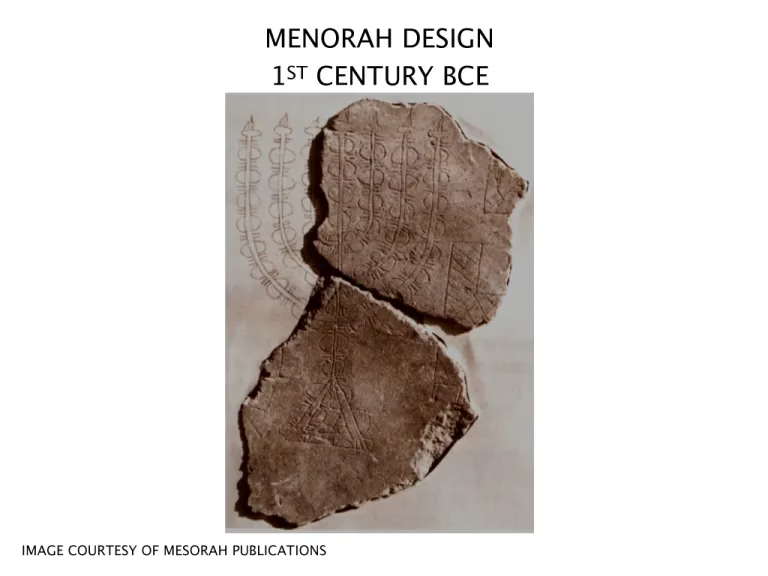
Another fragment discovered in Jerusalem’s Old City bears a similar design — again curved — though its decoration diverges from the biblical description. That inconsistency suggests the artist was working from memory, not direct observation. The Menorah, visible only to priests within the sanctuary, was rarely seen by ordinary worshippers.
The Roman Image and Its Distortions
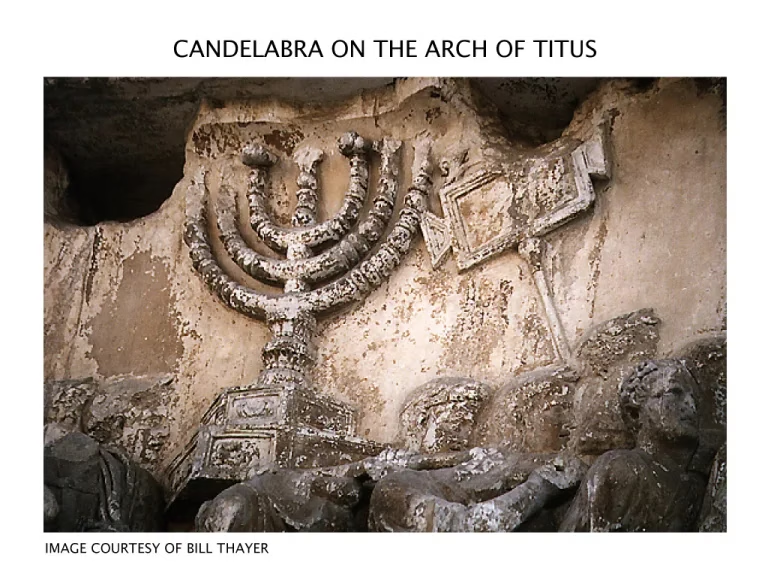
The best-known depiction comes centuries later on the Arch of Titus in Rome, celebrating the Roman destruction of Jerusalem in 70 CE. There, soldiers carry the Temple treasures in procession, the Menorah raised high among them. Its branches are elegantly curved, confirming a continuity of form across generations.
But closer inspection complicates the picture. The base of the Roman Menorah, decorated with sea monsters and mythic creatures, would have been incompatible with Jewish religious art. Many researchers argue that Roman sculptors modified the original for dramatic effect, creating a hybrid symbol — half historical trophy, half imperial invention.
Between History and Memory
Archaeological evidence cannot yet fix the Menorah’s true design. What endures instead is the layered memory of a sacred object reshaped by those who tried to recall it. Each depiction — from coin to carving to triumphal arch — tells less about the artifact itself and more about the culture that sought to remember its light.
Whether the branches once reached straight toward heaven or curved in perfect symmetry, the Menorah remains a symbol of continuity — the illumination of faith surviving through exile, loss, and rediscovery.