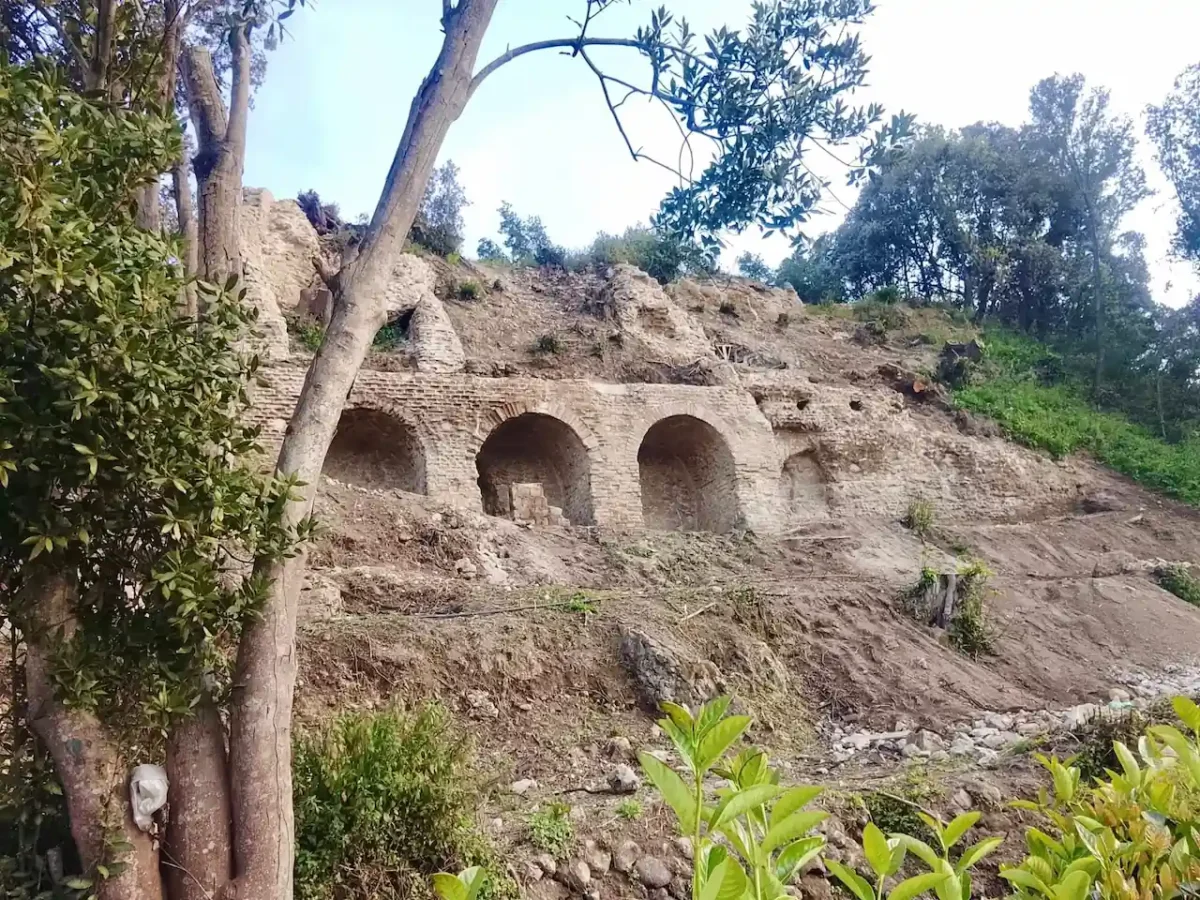
A confiscated mafia property on Italy’s southern coast has revealed something no one expected: the remains of a vast Roman seaside villa, buried beneath layers of modern construction and long-hidden from public view.
The discovery was made in Bacoli, near Naples, where archaeologists have brought to light a monumental maritime villa in ancient Baiae, one of the most exclusive resort landscapes of the Roman world. The complex, uncovered within the grounds of Villa Ferretti, is now being provisionally linked to Publio Cornelio Dolabella, the controversial political figure best known as the son-in-law of Cicero.
What makes the find stand out is not only its scale or historical context. This is the first Roman maritime villa identified within a property confiscated from the Camorra, turning a site once associated with organized crime into a newly opened archaeological space.
A Villa Designed to Be Seen
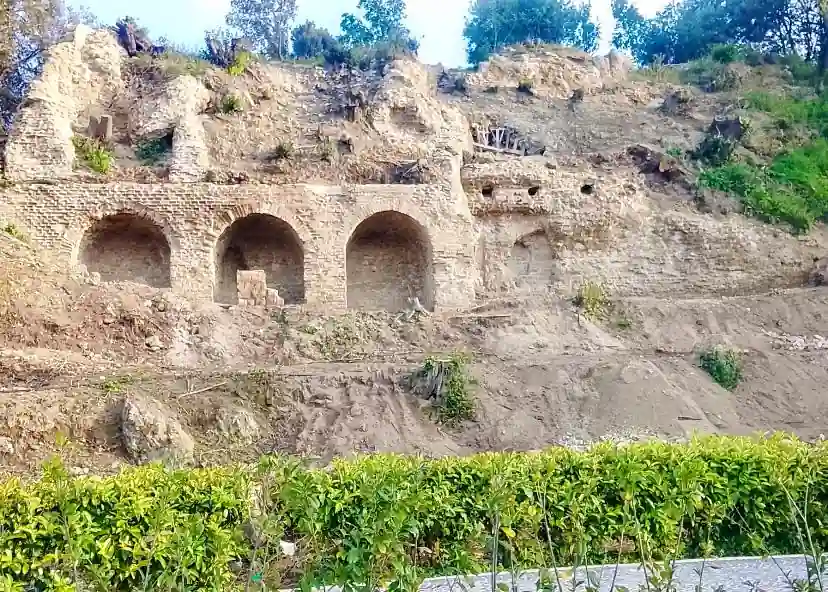
The structure extends across a steep coastal slope, descending toward the Bay of Baiae in a sequence of terraces carefully engineered to frame the sea. Built using opus reticulatum, a characteristic Roman construction technique, the villa was designed as both residence and display—a place where architecture, landscape, and status merged into a single experience.
Excavations have revealed interconnected spaces that likely included living quarters, open terraces, and vantage points overlooking the water. The arrangement reflects the Roman concept of otium, where leisure was inseparable from power and visibility.
Recent conservation work has cleared large sections of the complex, stabilizing exposed walls and uncovering rooms that had been sealed or obscured. Beneath the visible structures, archaeologists have also identified subterranean chambers, suggesting that the villa’s internal layout is more extensive than initially assumed.
A Coast That Never Stood Still
Baiae’s past cannot be separated from its geology. The area lies within the Phlegraean Fields, a volcanic zone shaped by bradyseism, a slow but continuous movement of the ground that has raised and lowered the coastline over centuries.
The effect is visible in the villa itself. Parts of the structure are now partially submerged, while others sit at elevations altered by long-term geological shifts. Underwater surveys have confirmed that sections of the complex have been absorbed by the sea, placing the site within the broader landscape of submerged Roman Baiae.
In antiquity, however, these same conditions made the region highly desirable. Thermal springs and dramatic coastal views transformed Baiae into a retreat for Rome’s elite. Figures such as Julius Caesar, Nero, and Hadrian are known to have maintained residences here, creating a fragmented but continuous chain of villas along the shoreline.
The Dolabella Hypothesis
The association with Publio Cornelio Dolabella adds a compelling historical dimension, though it remains unconfirmed.
No inscription bearing his name has yet been recovered from the site. Instead, the attribution is based on a combination of factors: the villa’s position within Baiae’s aristocratic zone, its architectural scale, and historical sources that place Dolabella in the region.
Dolabella himself was a complex figure of the late Roman Republic. Born into the prestigious gens Cornelia around 85 BCE, he pursued a turbulent political career marked by ambition, financial difficulties, and shifting alliances. His marriage to Cicero’s daughter Tullia in 50 BCE brought him into one of Rome’s most influential circles.
If future evidence supports the identification, the villa would offer a rare physical connection to that world—a landscape where political ambition, personal reputation, and luxury living were tightly intertwined.
From Camorra Asset to Public Landmark
The modern history of Villa Ferretti is as layered as its ancient foundations.
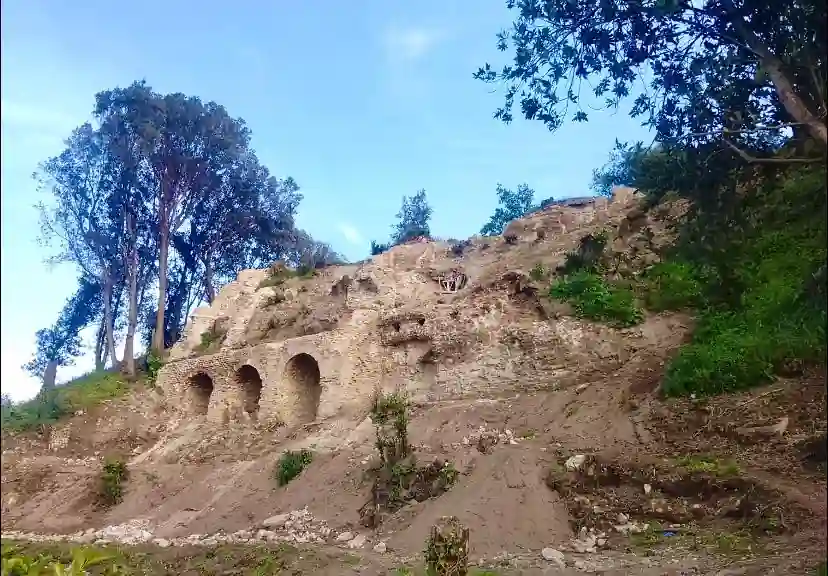
The property was seized from the Camorra following judicial investigations and later transferred to public ownership. For decades, the site remained closed, altered by unauthorized construction that obscured the archaeological remains beneath.
Only recently have systematic efforts begun to recover and reinterpret the area. Restoration work has stabilized key structures, revealed new architectural spaces, and made the site accessible to visitors for the first time.
Local authorities have framed the project as more than an archaeological intervention. It represents a shift in meaning: a place once associated with criminal control is now being reclaimed as a shared cultural resource.
A Landscape Still Revealing Itself
Baiae has never been a static site, and this discovery reinforces that reality. The coastline continues to shift, the sea continues to conceal, and new layers continue to emerge with each phase of research.
Whether the villa ultimately proves to have belonged to Dolabella or another member of Rome’s elite, its significance is already clear. It expands the map of Baiae’s high-status residences and highlights how much of this landscape remains partially hidden—on land and beneath the water.
In Bacoli, the past has resurfaced in an unexpected place. What was once a closed property tied to organized crime now offers a direct view into the world of Roman power, leisure, and ambition—set against a coastline that has never stopped changing.
Josi Gerardo Della Ragione (Sindaco di Bacoli)
Cover Image Credit: View of the Roman maritime villa uncovered in Baiae. Credit: Josi Gerardo Della Ragione, Mayor of Bacoli.