
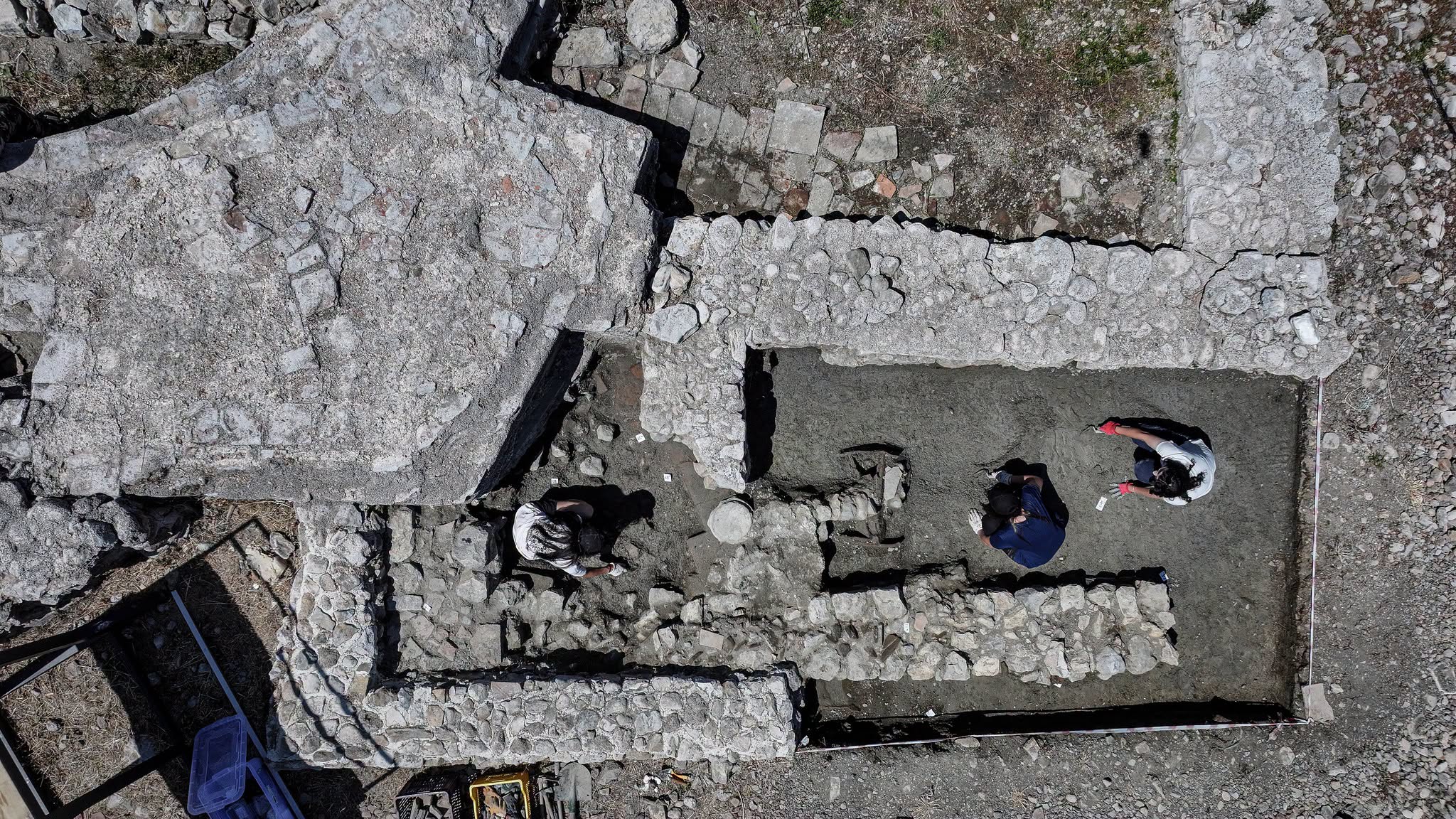
Archaeologists excavating the lakeside basilica in İznik, northwestern Türkiye, have uncovered walls, a paved floor, and a column base belonging to an earlier church beneath the later structure.
Excavation director Professor Mustafa Şahin identified the remains as part of the Church of Saint Neophytos, where the First Council of Nicaea was held in AD 325. The discoveries provide new architectural evidence for the earliest phase of the site, before the church was destroyed by an earthquake and rebuilt later in the fourth century.
The team also recovered a gold ring decorated with a palm tree and sword, along with a metal thimble. Initial comparisons place the objects within the Umayyad or Abbasid periods and raise the possibility of a connection with the Umayyad siege of Nicaea in AD 729.
A Floor Beyond the Later Basilica
The latest excavation focused on the eastern side of the prothesis, a chamber used to prepare and store sacred vessels and other liturgical objects.
A paved surface had previously been exposed inside the room, but archaeologists did not know whether it continued beyond the walls of the visible basilica. To establish its full extent, the team opened a trench outside the eastern exterior wall.
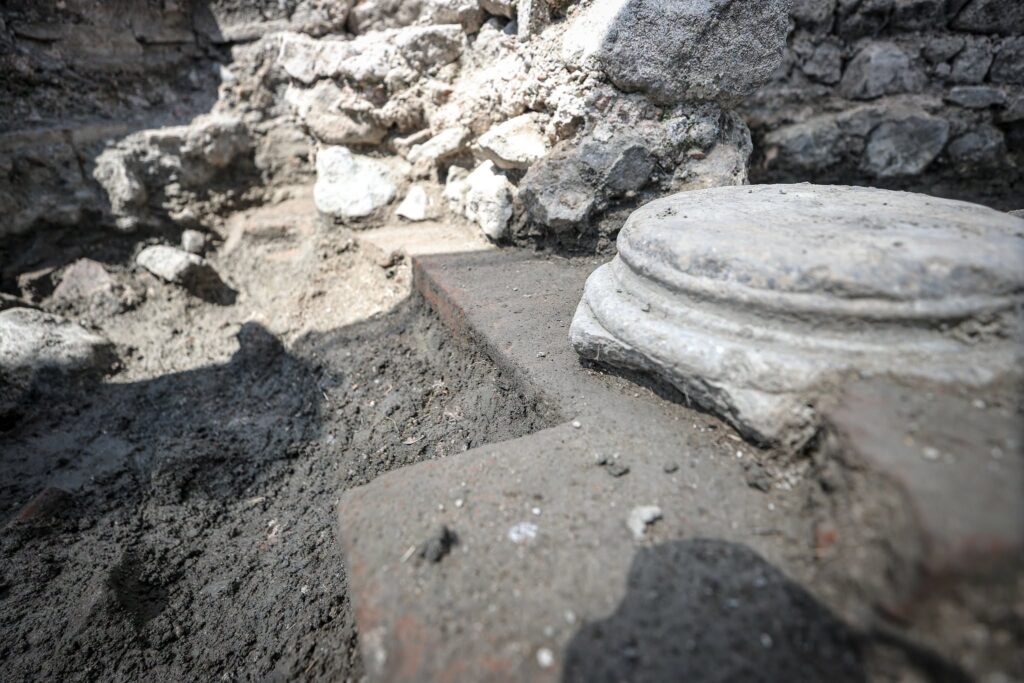
During the first week, the same pavement appeared beyond the limits of the later church. Nearby excavations also revealed wall remains and a column base.
The position of the floor showed that it belonged to a building with a different plan from the basilica above it. Şahin identified this earlier phase as the Church of Saint Neophytos.
The church was destroyed in an earthquake in A.D. 368. After A.D. 380, a second structure known as the “Church of the Holy Fathers” was built on this site in memory of the clergy who participated in the First Council of Nicaea.
The newly exposed pavement extends outside the boundaries of that later church, allowing archaeologists to distinguish the two construction phases more clearly. Şahin said the findings confirmed the position of the Church of the Holy Fathers and showed that the earlier Church of Saint Neophytos lay beneath it.
The Church Where the Council Met
Modern İznik was known in antiquity as Nicaea, one of the leading cities of Roman and Byzantine Anatolia.
Emperor Constantine I convened the First Council of Nicaea there in AD 325, bringing together bishops from different parts of the Roman Empire to address divisions within the early Church.
The council adopted the original form of the Nicene Creed. The text was later expanded at the First Council of Constantinople in AD 381 and became one of the central statements of Christian belief.
Şahin places the council inside the Church of Saint Neophytos, the earlier structure now represented by the pavement, walls, and column base beneath the lakeside basilica.
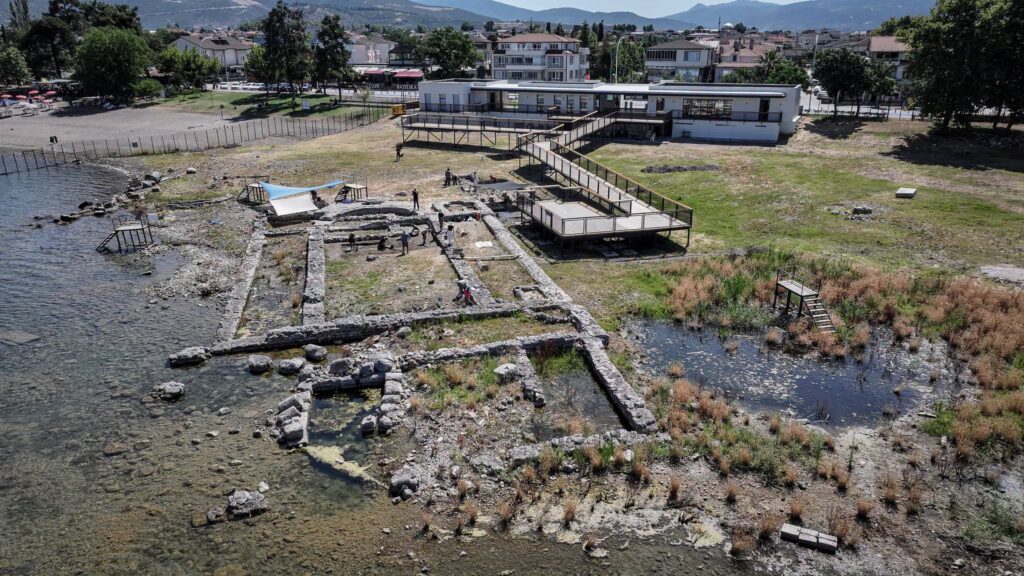
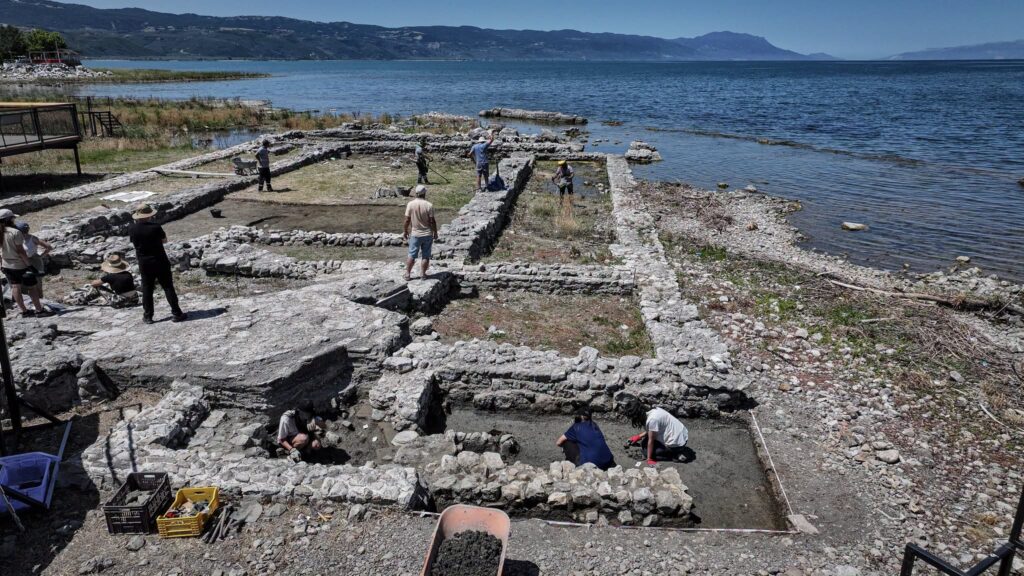
The basilica was first identified in 2014 during an aerial survey of Lake İznik. Its foundations lie in shallow water close to the shore. Subsequent excavations revealed several phases of construction and use, but the latest work has provided the clearest separation yet between the earlier church and the building erected above it after the earthquake.
Gold Ring Points to Eighth-Century Activity
The gold ring and metal thimble belong to a much later period in the history of the site.
The ring carries images of a palm tree and a sword. Şahin said similar objects are known from the Umayyad and Abbasid periods, placing the finds within the broad historical setting of the eighth century.
In AD 729, an Umayyad army besieged Nicaea for about six months. The attackers failed to capture the city, but historical accounts cited by Şahin state that an Umayyad emir entered the Church of the Holy Fathers during the campaign.
The church stood outside Nicaea’s defensive walls. It could therefore have been reached by the besieging army even though the fortified city remained beyond its control.
Şahin considers the ring and thimble possible archaeological traces of an Umayyad presence at the church. The objects cannot yet be attributed directly to the soldiers involved in the siege, and their connection with the event rests on initial comparisons with material from the Umayyad and Abbasid periods.
Further examination of their date, manufacture, and excavation context may clarify whether they were lost during the siege or belong to another phase of activity at the lakeside church.