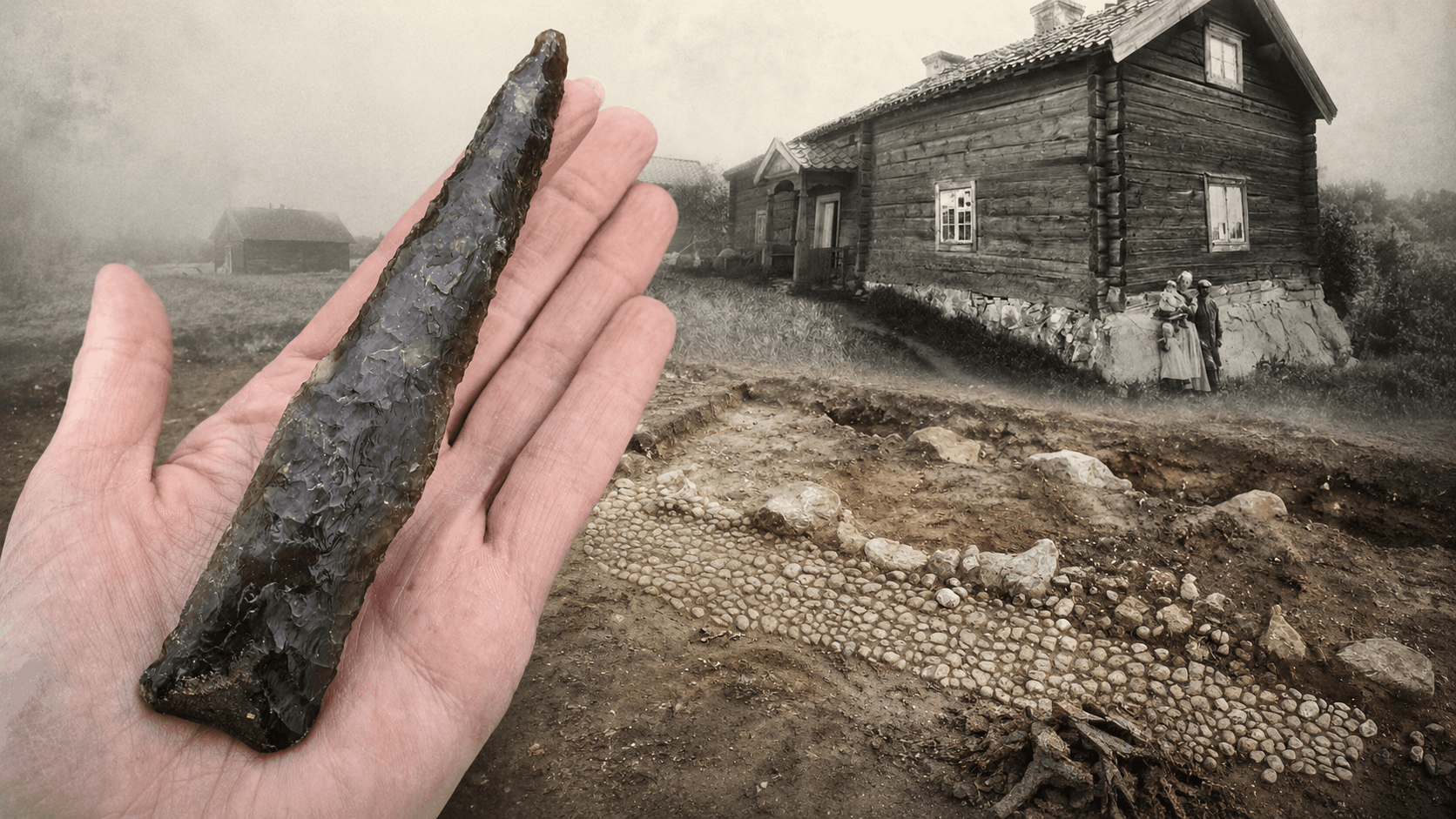
Archaeologists in Sweden have uncovered a Stone Age flint dagger beneath the former site of Åbrostugan, an 18th-century cottage that once stood in Åbro village before being moved to the Trostorp local heritage farm. The unusual find raises the possibility that the prehistoric object was later reused as a protective “thunderstone,” a type of ancient stone tool once believed in folklore to guard houses against lightning and misfortune.
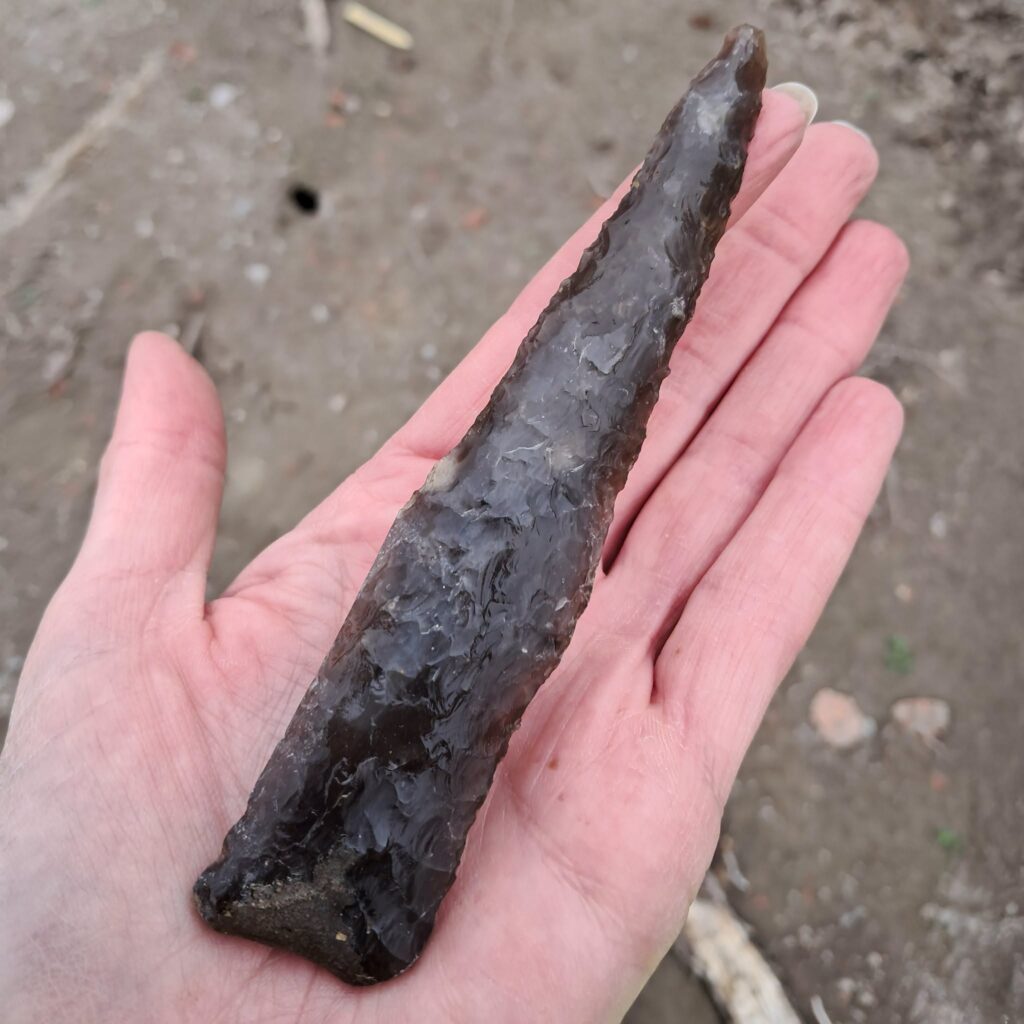
The most unexpected find, however, came from beneath the old house level. There, archaeologists recovered a finely made flint dagger dating to the later Stone Age or the beginning of the Bronze Age — thousands of years older than the cottage itself.
The discovery does not mean that a prehistoric settlement lay directly under Åbrostugan. In fact, the opposite may be true. According to the archaeologists, the site would probably still have been underwater, in a sea bay, when such daggers were being made. Åbro lies about 10 to 15 meters above present sea level and is thought to have become dry land only around the transition from the Bronze Age to the Iron Age.
That makes the dagger difficult to explain as an ordinary prehistoric find in its original place. Instead, it may have reached the cottage site much later.
A house built over an older ground surface
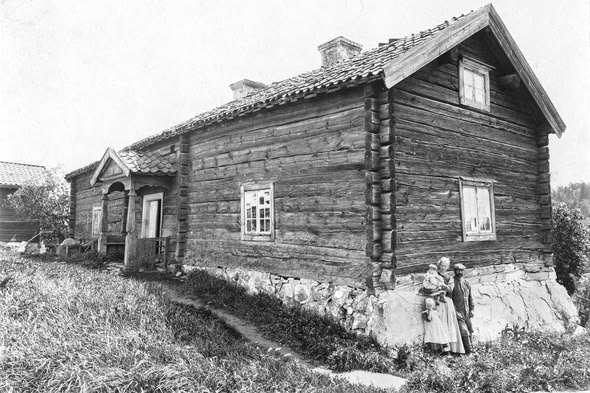
Åbrostugan was built in the 1750s, with historical information pointing specifically to 1758. When the house was constructed, the ground had been filled with large amounts of sand to create a flat building surface.
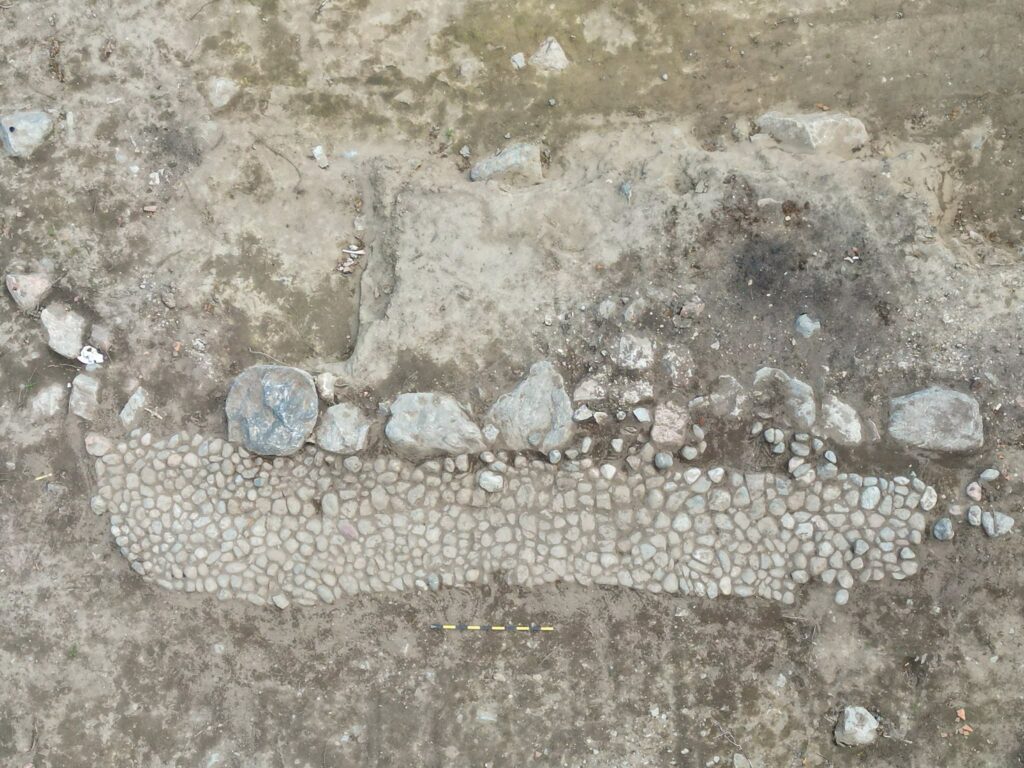
Below that sand layer, archaeologists found an older ground surface with ceramics, clay pipes and other material that belonged either to the period before the house was built or to activity connected with its construction. A coin dated 1746 fits well with the known 18th-century date of the cottage.
So far, the archaeology broadly matches the historical record. The flint dagger is the anomaly.
Scandinavian flint daggers were high-status and technically demanding objects in the Late Neolithic and Early Bronze Age. Some were made with remarkable precision, and their shapes often echoed contemporary metal daggers. But the Åbro example was found in a much later building context, not in a secure prehistoric layer.
This leaves several possibilities. The dagger could have been brought to the site in soil used as fill. It could have been found elsewhere in earlier centuries and later discarded. Or it may have been deliberately placed beneath the house.
The last interpretation is the most intriguing, but also the one that needs the most caution.
From prehistoric weapon to protective object?
In Sweden and elsewhere in Europe, prehistoric stone tools were often reinterpreted in later periods as “thunderstones” or “thunderbolts.” People who found stone axes, arrowheads or flint objects in fields did not necessarily understand them as human-made prehistoric tools. They were sometimes believed to have fallen from the sky during lightning strikes.
These objects were credited with protective powers. In folk belief, they could guard a house or barn against lightning, disease, evil forces or misfortune. Some were placed in walls, beneath thresholds, near hearths or under buildings. In Scandinavian tradition, they could also be associated with Thor’s hammer and the idea that lightning would not strike the same place twice.
Seen in that context, the Åbro dagger may have had a second life long after its original use. To an 18th-century household, a finely made flint dagger could have seemed old, strange and powerful. It may have been valued not as a weapon, but as a protective object.
Archaeologists are not claiming that the dagger proves a ritual deposit on its own. Its position beneath the cottage is suggestive, not conclusive. Without more contextual evidence, the safest reading is that the find opens a plausible question: was a prehistoric object intentionally placed under Åbrostugan to protect the house and its inhabitants?
A small find with a long afterlife
The importance of the find lies less in the dagger’s prehistoric date than in its possible later reuse. If it was deliberately placed beneath the cottage, the object connects two very different moments in Swedish history: the skilled flintworking traditions of late prehistory and the protective beliefs of early modern rural life.
Even if the exact reason for its presence remains uncertain, the dagger shows how ancient objects could continue to matter long after their original world had disappeared. Beneath an 18th-century cottage, a Stone Age object may have been kept not as a relic of the past, but as a practical form of protection.
Source note: The article is based on information shared by Arkeologikonsult about the archaeological work at Åbro and on local historical information from Vagnhärads Hembygdsförening about Åbrostugan and its later move to Trostorp.