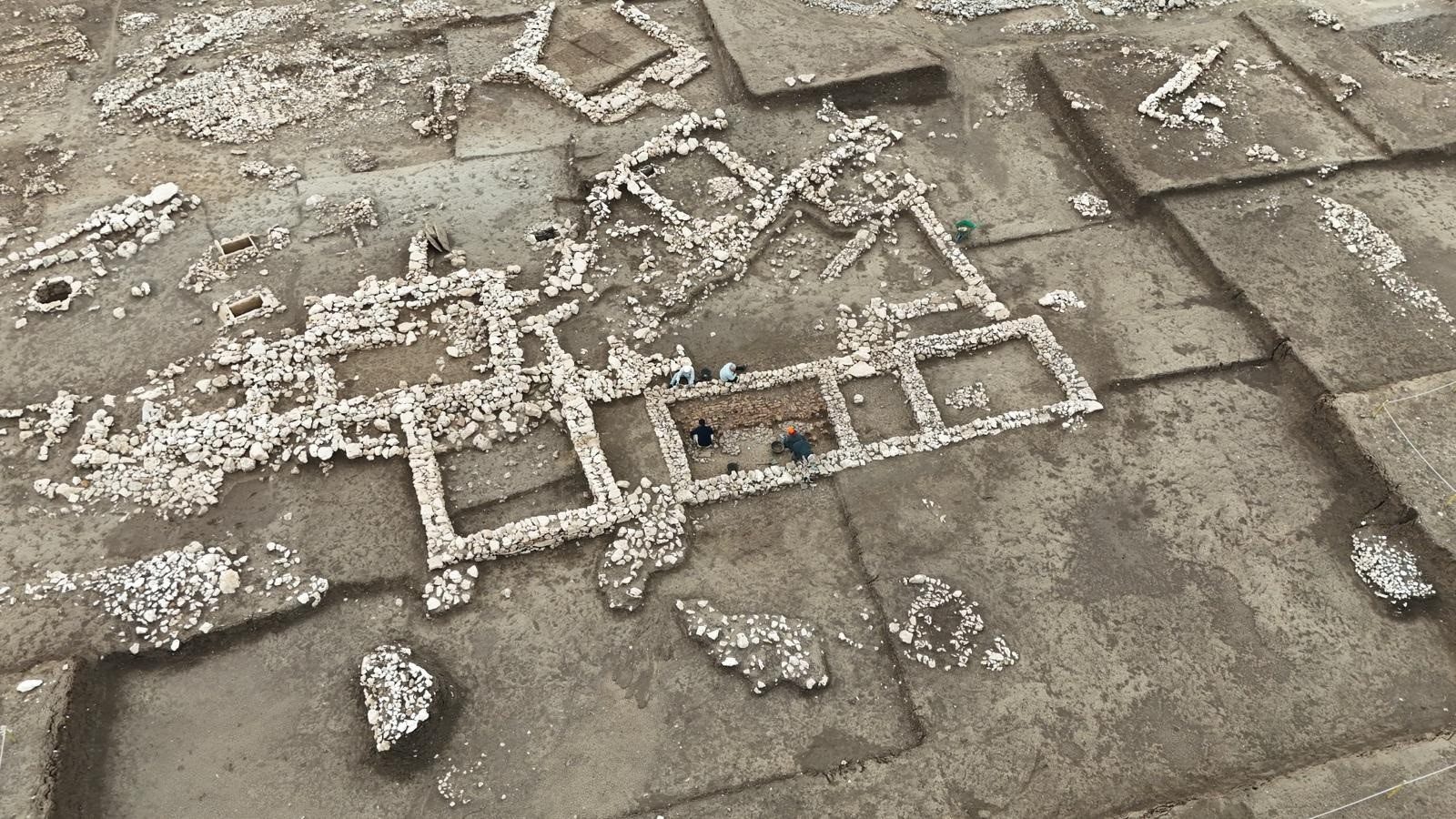
Beneath the rolling plains of southeastern Turkey, archaeologists have uncovered traces of a devastating earthquake that struck some 5,000 years ago, toppling a rectangular mudbrick structure at Çayönü, one of the earliest agricultural communities in human history. The discovery offers rare evidence of prehistoric seismic activity in the heart of ancient Upper Mesopotamia — and a glimpse into how early farmers and builders lived, built, and eventually abandoned their homes.
A Building Frozen in the Moment of Destruction
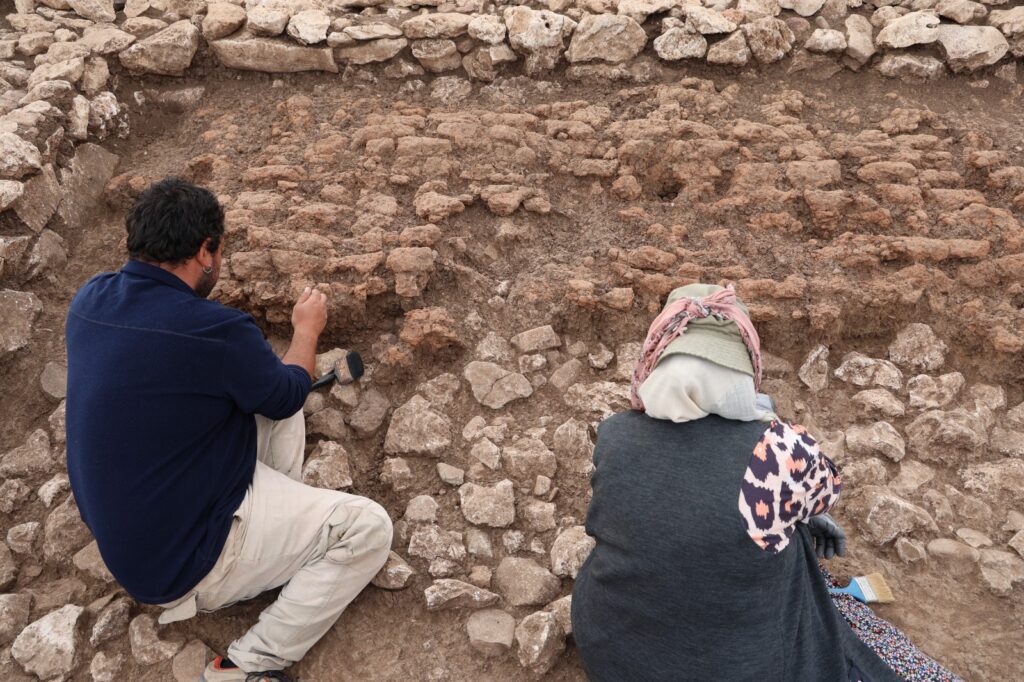
During the 2024 excavation season, the research team uncovered a rectangular building whose southern wall had collapsed inward in one solid block. Its position, perfectly aligned toward the north, revealed the unmistakable pattern of earthquake damage.
“The orientation and compact fall pattern clearly indicate seismic collapse,” said Assoc. Prof. Savaş Sarıaltun, excavation director and lecturer at Çanakkale University. “It most likely resulted from an earthquake north of the site.”
The building, dated to around 2800 BCE, contained no traces of fire or daily life — no ashes, no pottery fragments, no tools. This suggests that it had already been abandoned before the quake struck. “Natural forces weakened it over time,” Sarıaltun added. “The earthquake was simply the final blow.”
The Red Earth of Upper Mesopotamia
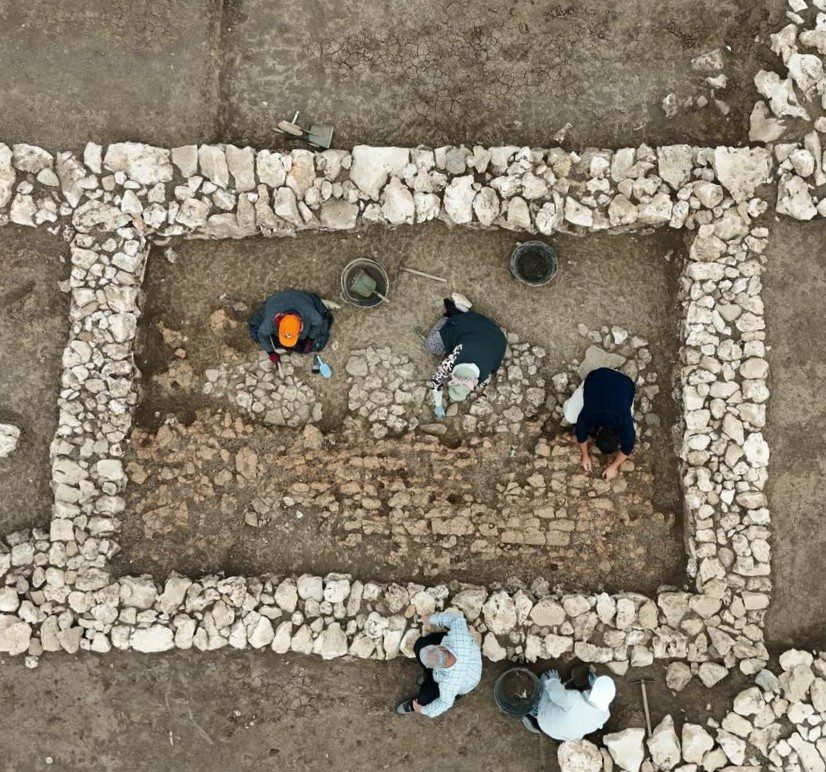
The collapsed wall revealed a striking hue: bricks tinted deep red. Laboratory analysis showed that the builders used hematite-rich clay from the surrounding soil, which gave the bricks their color.
“The red tone doesn’t come from burning,” Sarıaltun explained. “There’s no trace of heat damage. The color comes from hematite — iron oxide naturally present in the local earth.”
That red earth, once shaped into walls by the hands of Çayönü’s inhabitants, became the very material that recorded their destruction.
Between the Neolithic and the Bronze Age
Çayönü Tepesi, continuously inhabited between 10,200 and 7,000 BCE, is a key site in understanding the Neolithic Revolution — the global shift from mobile hunter-gatherers to settled farmers. Yet this new discovery belongs to a later period, when the site was reoccupied during the Early Bronze Age.
The earthquake damage suggests that, even millennia after its Neolithic peak, life at Çayönü had not entirely vanished. Instead, small communities kept returning — drawn to the same fertile land that had once fostered humanity’s first villages.
Echoes Beneath the Soil
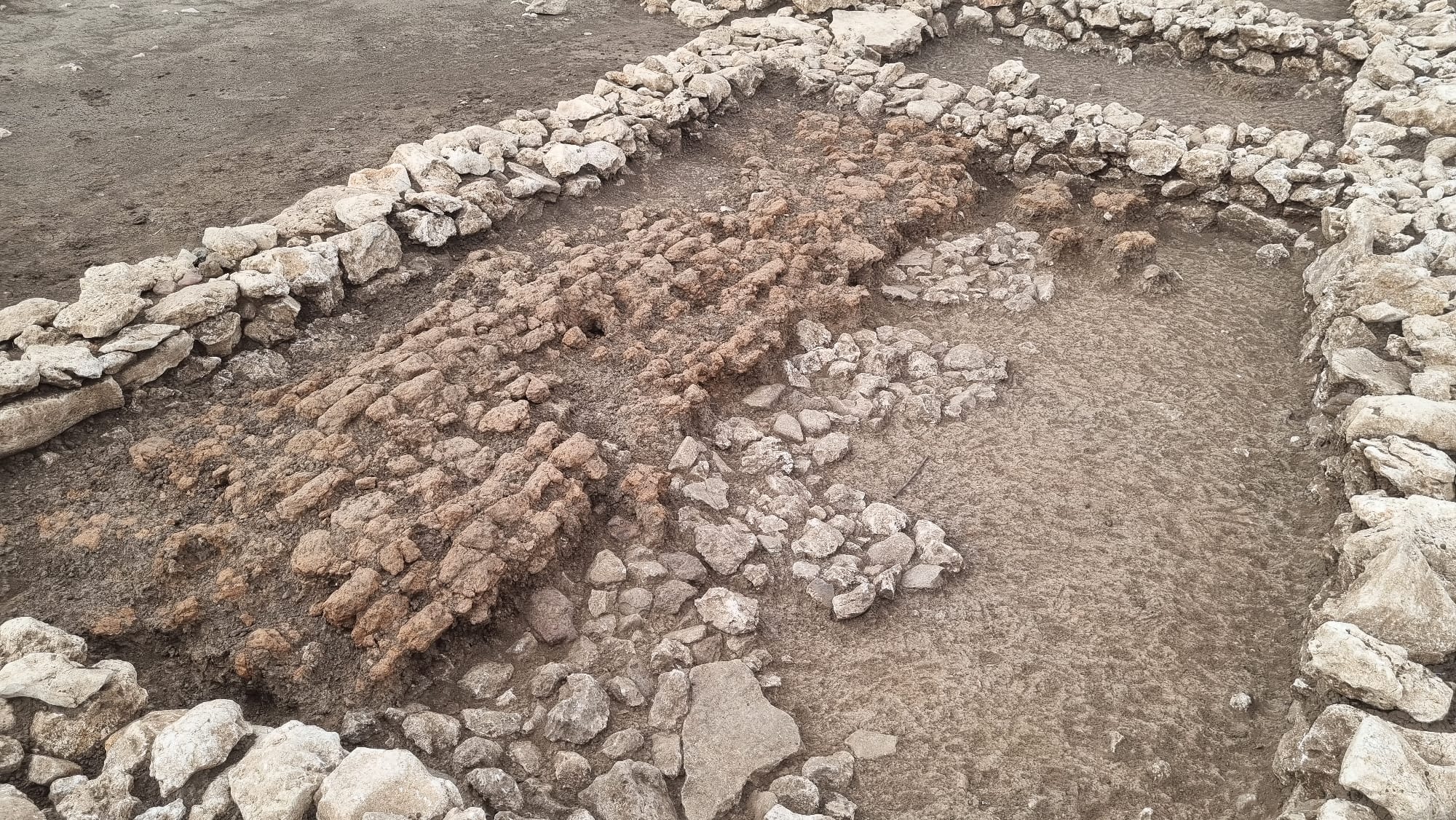
For the archaeologists working at Çayönü, the collapsed wall is more than just an architectural ruin — it is a physical memory of an ancient natural disaster. The find ties together geology, history, and human resilience in a region where civilization itself first took root.
In the quiet layers beneath the soil of southeastern Turkey, the ground still tells its story — one of construction, abandonment, and the unending dialogue between people and the earth they built upon.
General view of the excavation area at Çayönü Mound in Diyarbakır’s Ergani district, where a 5,000-year-old structure collapsed due to an ancient earthquake. | Photo: IHA