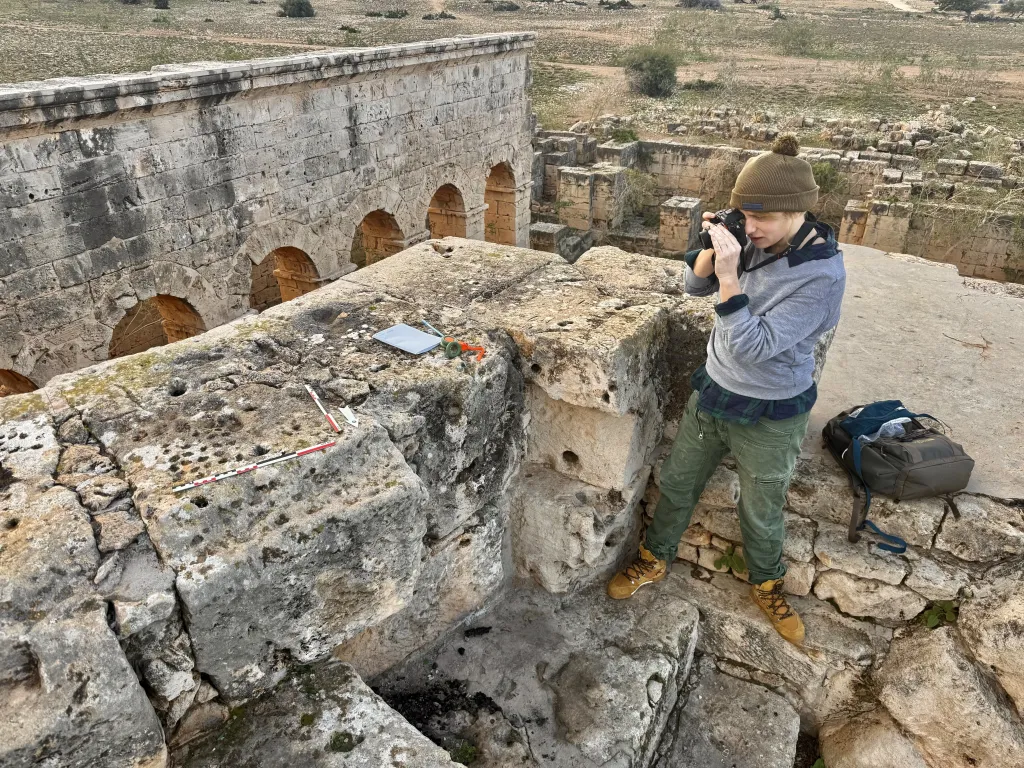
Archaeologist Zofia Kowarska has documented more than 100 game boards carved into the stones of Ptolemais, revealing how the abandoned Greek city was reused by shepherds and local communities long after its urban life had ended.
At first glance, the ruins of Ptolemais look like the remains of a once-important on Libya’s northeastern coast. But some of its stones preserve a much later, quieter story. More than 100 game boards carved into blocks, walls, and architectural fragments show that people returned to the abandoned city for centuries, not to rebuild it, but to sit, wait, watch their animals, and play.
The boards were documented by Zofia Kowarska, an archaeologist associated with the University of Warsaw. Her work at the site opens an unusually direct window onto everyday life after the fall of a city. The discovery is not about royal power, military conflict, or monumental architecture. Its strength lies in something more ordinary: people using the ruins of an ancient city as part of their daily routine.
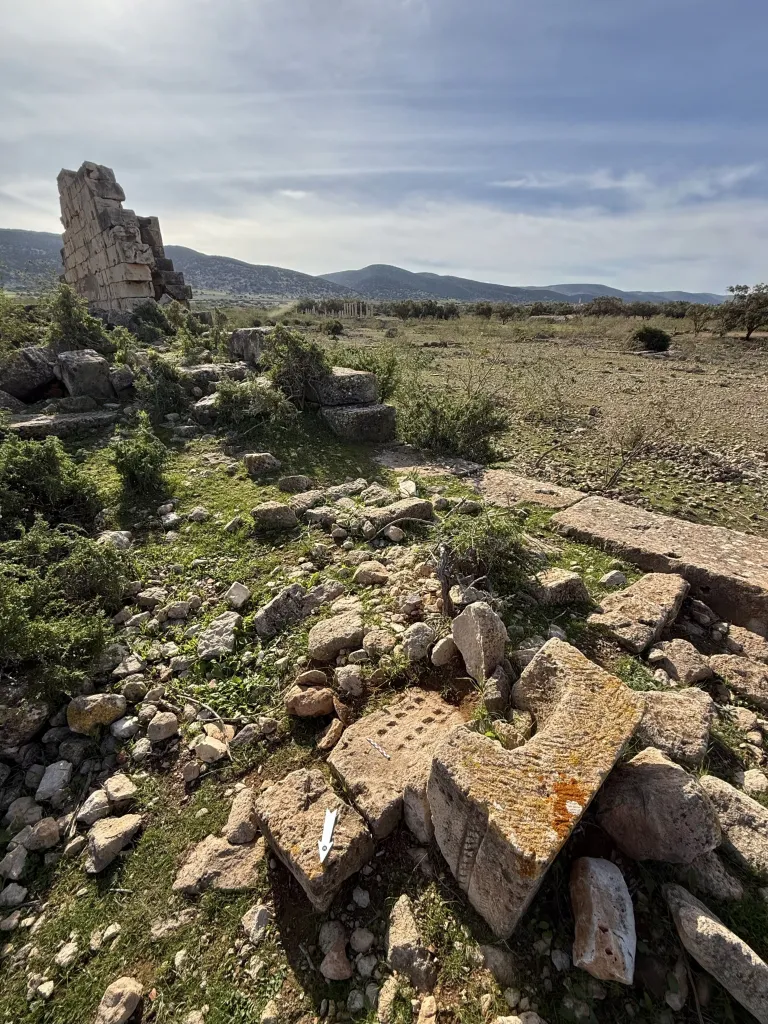
Ptolemais was one of the major cities of Cyrenaica, the historical region of northeastern Libya. Founded in the late fourth or third century BC under the Ptolemaic dynasty, the city remained active through the Roman and Byzantine periods and survived until the Arab conquest in the seventh century AD. Its ruins lie near the modern town of Tolmeita.
Yet the newly documented game boards belong to a different chapter in the site’s life. They were carved when Ptolemais was no longer functioning as a living ancient city. By then, its buildings had lost their original purpose. Its stones, however, had not lost their usefulness.
Traces of everyday life on the stones of an ancient city
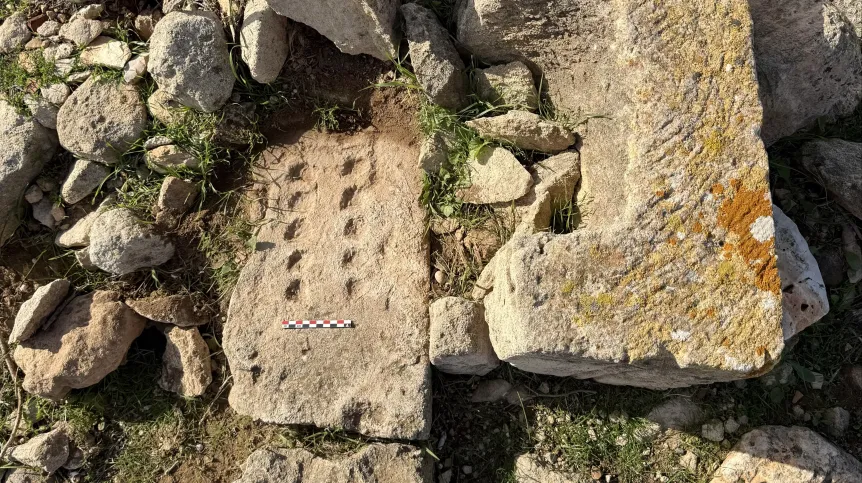
Archaeology often highlights grand public buildings, inscriptions, temples, and traces of political authority. The Ptolemais game boards point in another direction. They bring the site closer to the people who used its ruins long after official urban life had faded.
A shepherd may have sat on a raised stone block, close enough to watch his sheep or goats, while using small stones, pottery fragments, seeds, or bits of glass as playing pieces. The scene is simple, but archaeologically powerful. It shows that a ruined city could remain part of human life, even after its streets, public buildings, and institutions had fallen silent.
Kowarska initially expected to find only a few examples. Instead, the number quickly passed 100, and the survey is not finished. Some areas contain clusters of boards close together, with several, sometimes many, carved into the same part of the ruins. That concentration points to repeated use rather than a few isolated marks.
Certain spots in Ptolemais may have become informal gathering places. People sat, waited, talked, and played around the same stone blocks. In that sense, the ruins were not merely abandoned remains. They became a social landscape shaped by later communities.
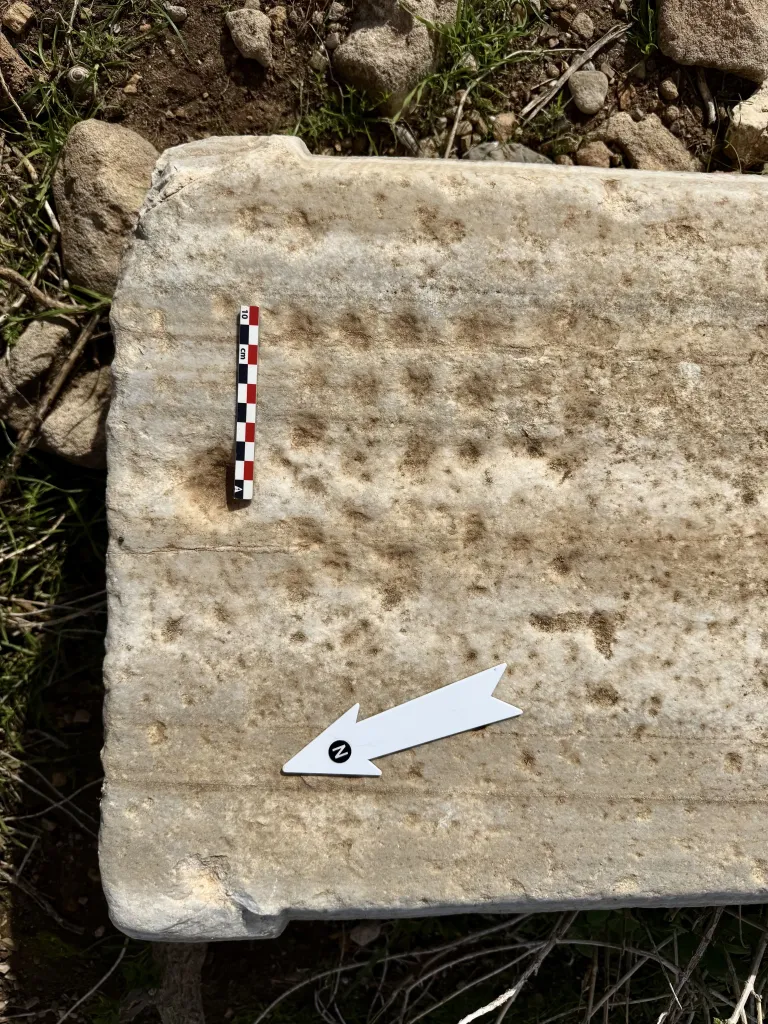
Square hollows, simple stones, and a fading game tradition
The game boards are made of small carved depressions, usually rounded, arranged in square or rectangular patterns. Some follow a three-by-three layout with nine spaces. Others are larger, with five-by-five, six-by-six, seven-by-seven, or four-by-six arrangements.
Their size also varies. Some are about 15 centimeters across, while others extend to several dozen centimeters. The differences in layout and scale indicate that more than one type of game was played at the site.
Kowarska has compared the boards with traditional games known from North Africa, Central Africa, and the Middle East. Among them are games called siza or sidża. Some variants are related to the broader mancala family, a group of games widely known across Africa and beyond.
In present-day Tolmeita, some older residents still remember how similar games were played. One nine-space version was designed for two players, each with three pieces. Its rules resemble three men’s morris or, more loosely, tic-tac-toe. Another two-player game was based on capturing an opponent’s pieces, making it closer in principle to checkers.
The equipment could hardly have been simpler. Players did not need carved pieces, boards, or purchased objects. Anything small and distinguishable could work: stones, seeds, pottery fragments, glass pieces, or even modern plastic caps. That practicality explains how such games could endure across generations. The board was fixed in stone. The pieces could be picked up from the ground.
A quiet pause for shepherds in the ancient city
Researchers believe many of the Ptolemais boards were probably used by shepherds. The ancient city is not heavily built over today, and the surrounding land has long provided suitable ground for grazing sheep and goats.
The placement of the boards strengthens that interpretation. Many were found on higher parts of buildings, on corners, or on stone blocks with a clear view of the surrounding area. For someone watching animals, those positions made sense. A shepherd could sit above the terrain, keep an eye on the flock, and pass the time with a game.
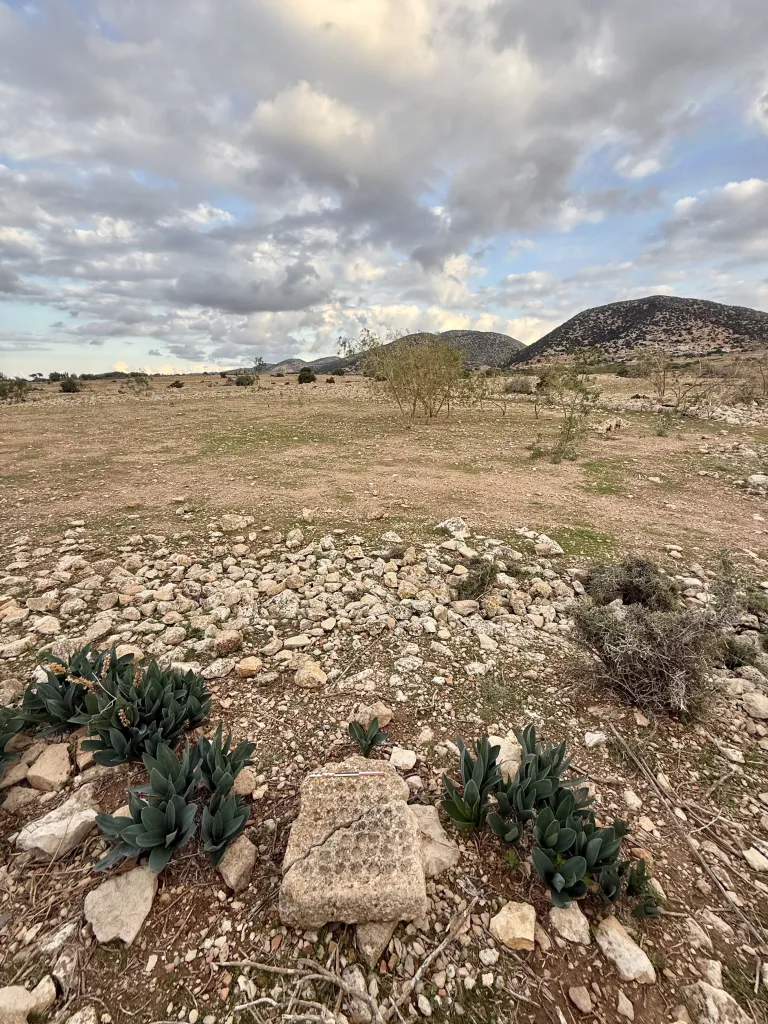
This makes the boards more than traces of entertainment. They also help reconstruct how people moved through and used the abandoned city. Ruined architecture became seating, lookout points, and gaming surfaces. The old city was no longer a city in the classical sense, but it still offered shelter, height, shade, and stone.
Kowarska has also noted that the games did not necessarily originate in Ptolemais. Many shepherds in the region may have belonged to mobile or incoming communities. The game tradition may have traveled with them, then left its mark on the stones of the former city.
The second life of Ptolemais
The game boards are difficult to date precisely. The carvings offer few direct clues about when they were made. Still, their archaeological meaning is clear. They were created after Ptolemais had become a ruin, which means they speak less about the city’s foundation or peak than about its afterlife.
That detail makes the discovery especially valuable. Ancient cities are often treated as though their stories end with abandonment, destruction, or conquest. Ptolemais shows a more complicated reality. A city can lose its political and urban function while remaining part of the human landscape.
Researchers from the Faculty of Archaeology at the University of Warsaw returned to Ptolemais in 2023 after a long interruption caused by Libya’s civil war. Their work covers several areas of the site, including the acropolis, architectural remains, and underwater zones connected with the ancient harbor. Those studies help place Ptolemais within the wider Mediterranean world. Kowarska’s game boards add a more intimate layer to that picture.
A human trace left after the city fell silent
The carved boards do not restore the lost city in marble or monumental form. They do something smaller, but perhaps more intimate. They show people using the ruins as part of ordinary life, turning broken architecture into a place for waiting, talking, and playing.
Ptolemais had lost its ancient grandeur, but it had not fully left the human world. On its stone blocks, a few rounded hollows preserve the memory of games played in the open air, by people whose names are gone but whose habits remain visible.