
Archaeologists have confirmed the existence of a medieval Silk Road city lying beneath the waters of Lake Issyk-Kul—a discovery that reshapes historical understanding of Central Asia’s submerged past. The site, identified as the long-lost settlement of Toru-Aygyr, was revealed by researchers from the Russian Academy of Sciences and officially announced on November 18, 2025.
Hidden beneath the lakebed for centuries, the city appears to have thrived between the 10th and 15th centuries, during the height of trans-Eurasian exchange. Its location aligns precisely with historical references to Toru-Aygyr, a once-vibrant urban center positioned along the Silk Road, the vast trade network linking East Asia to the Mediterranean world.
A Multicultural City That Turned Islamic
Historical sources describe Toru-Aygyr as a cosmopolitan settlement, home to communities practicing multiple religions. Archaeological evidence now suggests that by the 13th century, Islam had become the city’s dominant faith—an evolution clearly reflected in the submerged remains.
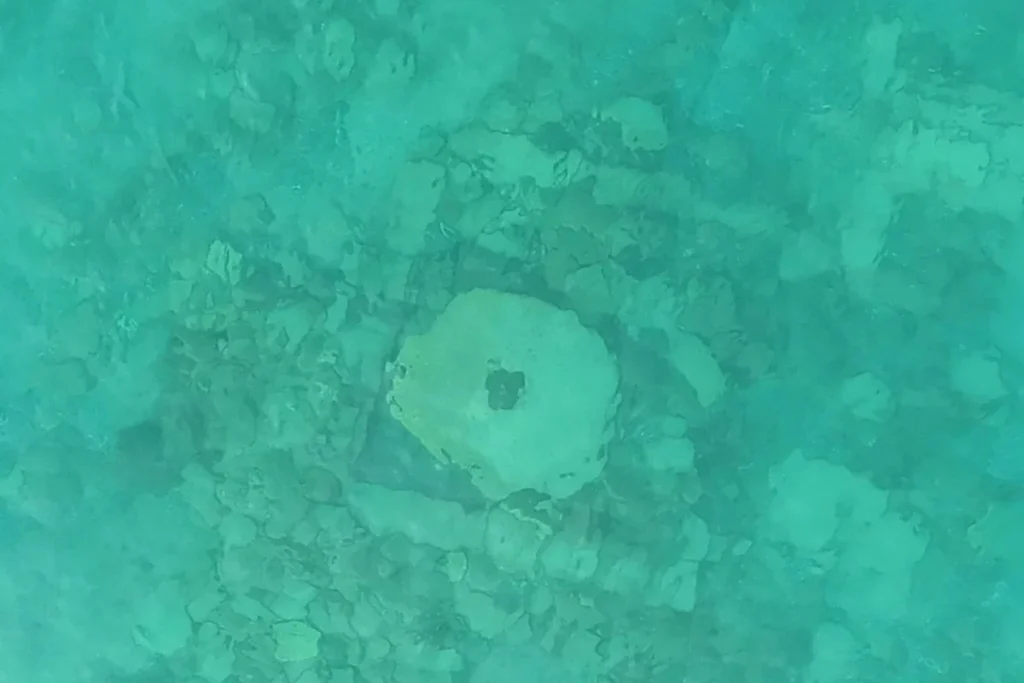
Divers exploring four distinct underwater zones have documented brick-built structures, including a stone mill once used for grain processing. Fragments of a large, ornamented building were also recovered. Based on its scale and layout, researchers believe it may have served as a mosque, bathhouse, or Islamic educational complex, indicating a developed urban and religious infrastructure.
A Cemetery Beneath the Lake
One of the most striking discoveries is a large Muslim cemetery preserved underwater. The graves are aligned toward Mecca, in accordance with Islamic burial customs, offering rare insight into medieval funerary practices in Central Asia.
Other submerged zones yielded rich assemblages of ceramics, including large water jars known as khums, commonly used for storage and daily household activities along trade corridors.
Earthquake, Submergence, and Preservation
Researchers attribute the city’s disappearance to a powerful earthquake in the early 15th century, which likely caused sections of Toru-Aygyr to collapse and sink into the lake. The unique environmental conditions of Lake Issyk-Kul—its calm, slightly saline waters—played a crucial role in slowing organic decay, allowing architectural elements and artifacts to survive in remarkable condition on the lake floor.
What Comes Next
Archaeological work at the site is far from complete. Teams plan to expand investigations using underwater drones and remote-sensing technologies, aiming to reconstruct the city’s layout and better understand daily life along this stretch of the Silk Road. Future studies may also clarify how Toru-Aygyr developed economically and culturally between the 10th and 15th centuries, and how natural disasters reshaped Central Asia’s urban landscape.
As exploration continues, the submerged ruins of Toru-Aygyr stand as a powerful reminder that some of the Silk Road’s most important cities are not buried in deserts—but resting silently beneath ancient waters.