
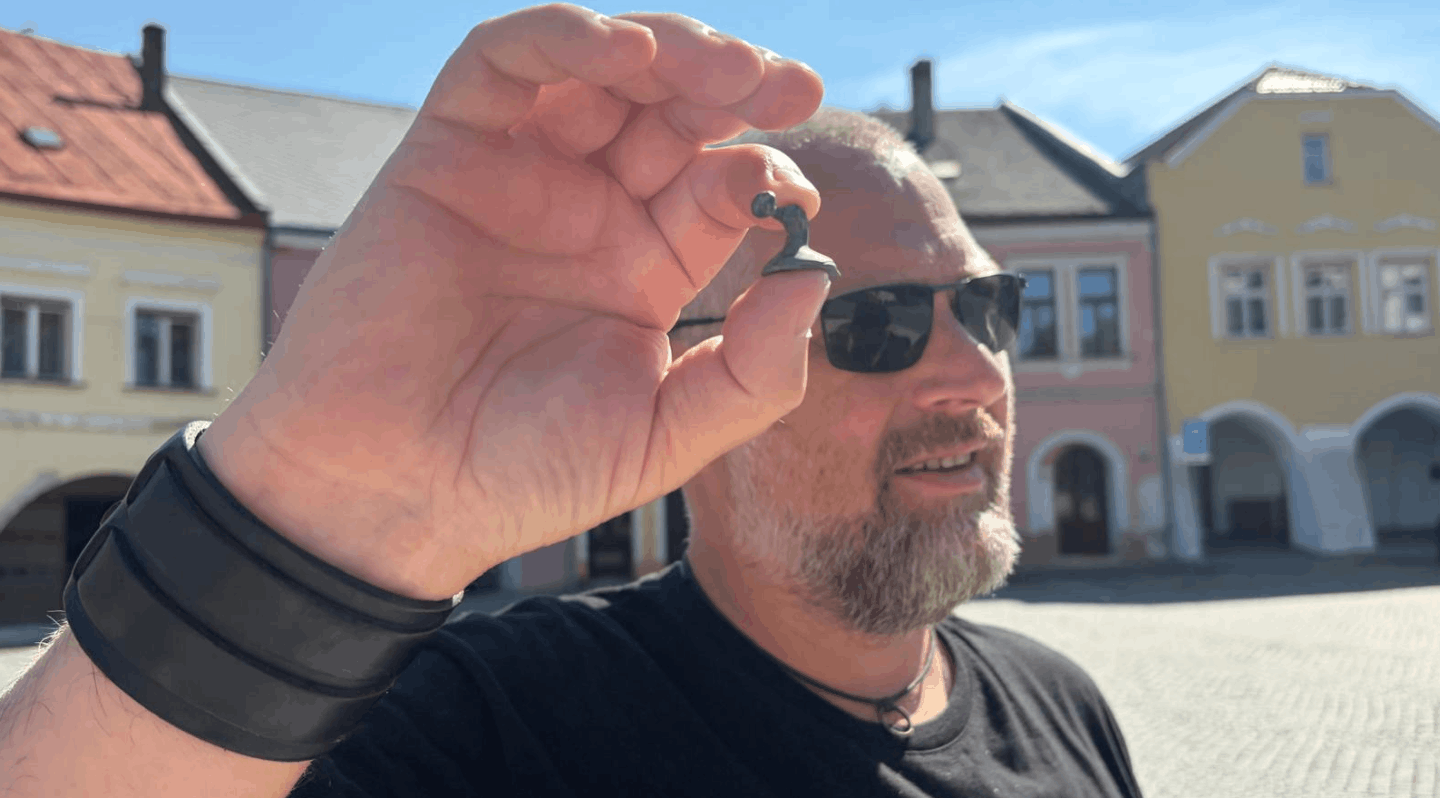
A miniature Celtic bronze duck more than 2,000 years old has been discovered near the village of Tučín in Moravia, in the eastern Czech Republic.
The intact figurine measures only 23 millimetres in length and weighs around 10 grams. It was found by amateur archaeologist Miroslav Komínek, who works with the Comenius Museum in Přerov.
Komínek did not need a metal detector to locate the object. The small bronze bird was lying exposed on the surface of a field.
A rare Celtic animal figurine
Despite its size, the figure preserves several carefully modelled details. It has prominent eyes, an elongated beak, a rounded body and short grooves at the rear that appear to represent tail feathers.
Archaeologist Zdeněk Schenk identified the object as a rare and unusually well-preserved example of Celtic animal sculpture from the Moravian Gate region.
Small bronze animals are known from Iron Age sites across Central Europe, although intact examples remain uncommon. Boars appear frequently in Celtic metalwork, while birds and waterfowl were also represented as figurines or decorative fittings.
The Tučín duck has not yet been assigned a precise date, but archaeologists place it broadly within the Celtic period, more than two millennia ago.
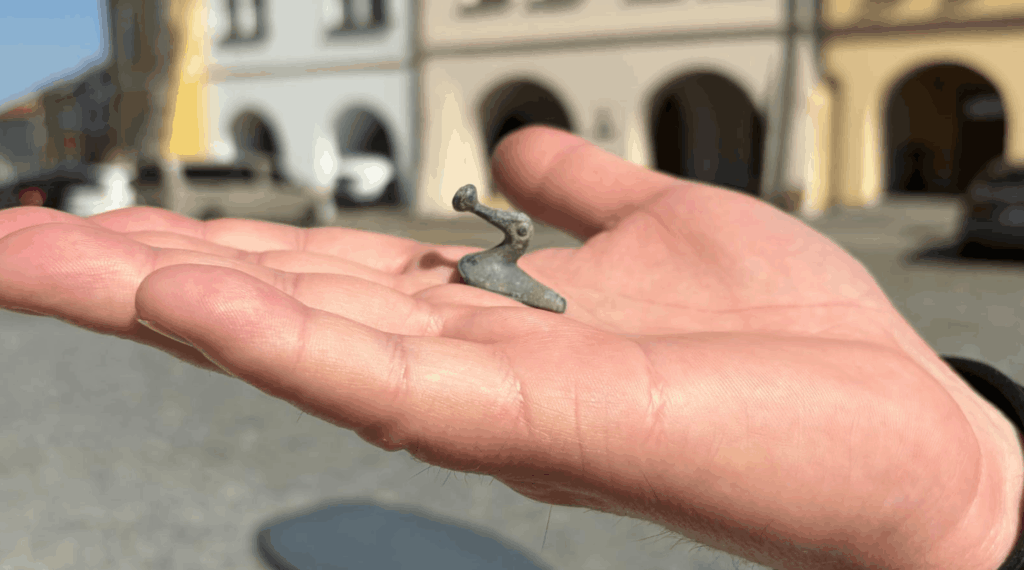
Its original purpose remains unknown
The function of the bronze duck is unclear.
One possibility is that it was a small symbolic object. It may also have served as a toy or as a decorative element attached to a larger artefact, such as a vessel, fitting or personal possession.
Because the figure was found on the surface rather than inside a sealed archaeological layer, researchers cannot determine what type of object it may originally have belonged to.
No visible attachment point has yet provided a conclusive answer.
Found near an ancient trade corridor
Tučín lies within the Moravian Gate, a natural corridor connecting northern and southern Central Europe.
Routes passing through the region later became associated with the Amber Road, the wider network through which Baltic amber and other goods moved toward the Danube and Mediterranean world.
Comparable bronze animal figures have been discovered near Celtic trading centres stretching from present-day Poland through central Moravia to Lower Austria.
The location of the Tučín find therefore places it within a landscape that supported long-distance movement and exchange during the Iron Age. It does not, however, prove that the object itself was transported along the Amber Road.
The figurine will remain in the local museum collection. Plans are being developed to display it on a new archaeological trail in Tučín alongside other finds from the area, including a Roman silver denarius.
Cover Image: Miroslav Komínek, who discovered the Celtic Bronze Duck in a field near Tučín. Credit: Lenka Kratochvílová / Český rozhlas.