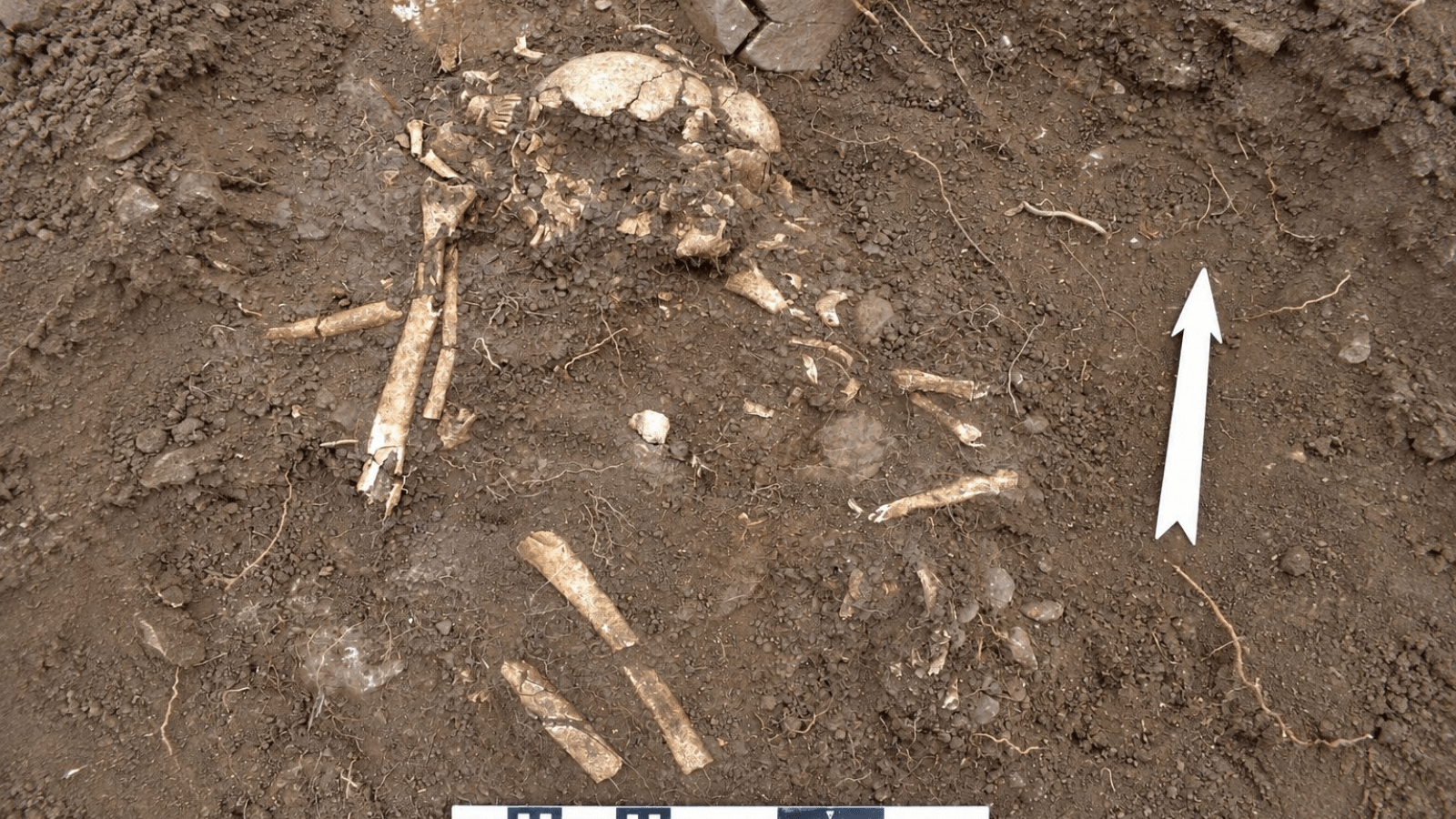
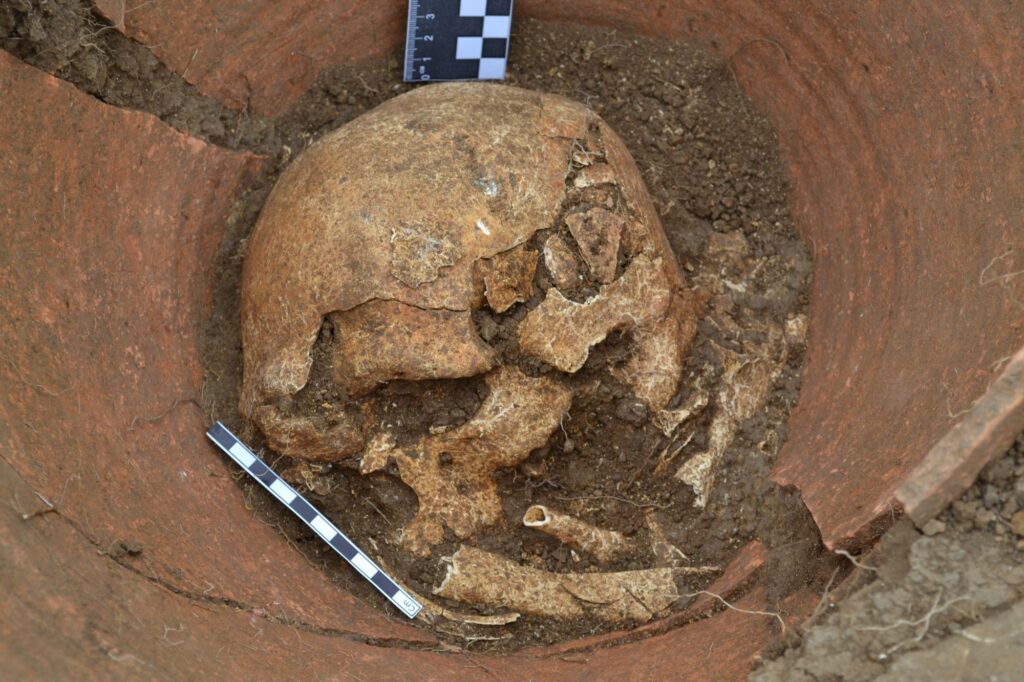
Five burials uncovered inside an Early Bronze Age mound in southern Azerbaijan show that the dead were laid to rest in markedly different ways. Archaeologists found one person tightly curled on the right side, another extended on the back, and fragmented human remains placed inside an upright ceramic vessel.
The discoveries come from one of the Ökü kurgans in the mountainous Yardımlı district. The Institute of Archaeology and Anthropology of Azerbaijan announced the results after an expedition led by archaeologist Anar Ağalarzadə completed work at the mound.
The Ökü kurgans stand near the foot of the Qayabaşı mountain ridge, about 1.5 kilometers northeast of the Yardımlı–Arvana highway. Excavated at an elevation of roughly 1,650 meters, the investigated mound consisted of a low natural rise densely covered with stones.
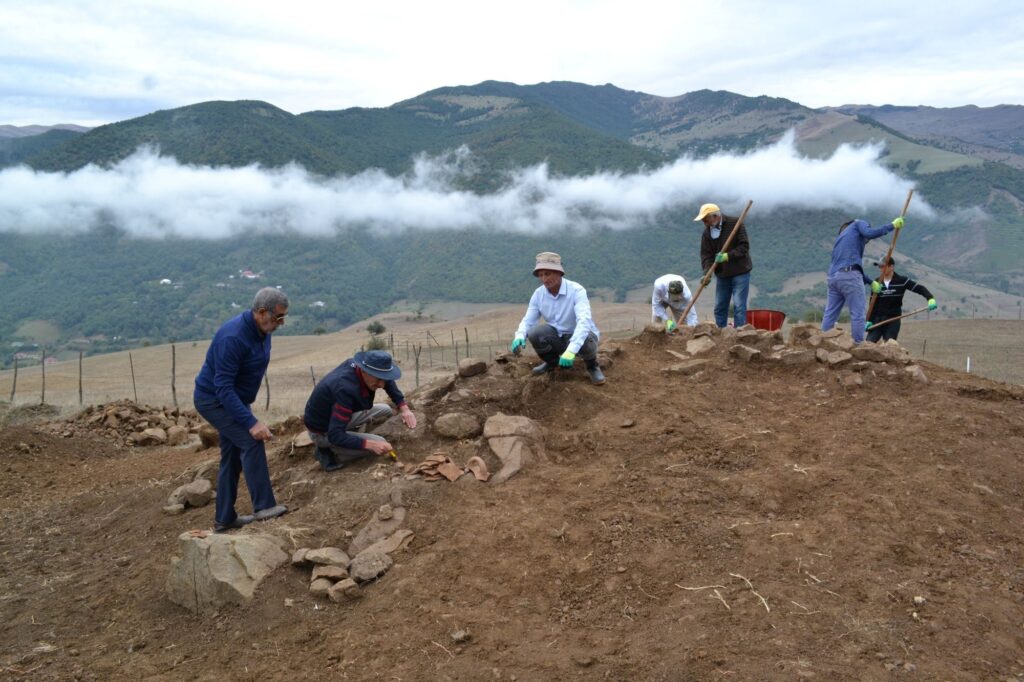
Five graves on one side of the mound
All five burials appeared close together on the eastern and southeastern sides of the mound. The hard ground and rugged landscape had limited the graves to shallow chambers, with stones arranged around the human remains.
The burial positions, however, were far from uniform. Alongside the contracted and extended skeletons, archaeologists encountered disarticulated remains buried inside a ceramic vessel standing upright. The institute has not yet offered an explanation for the different treatments.
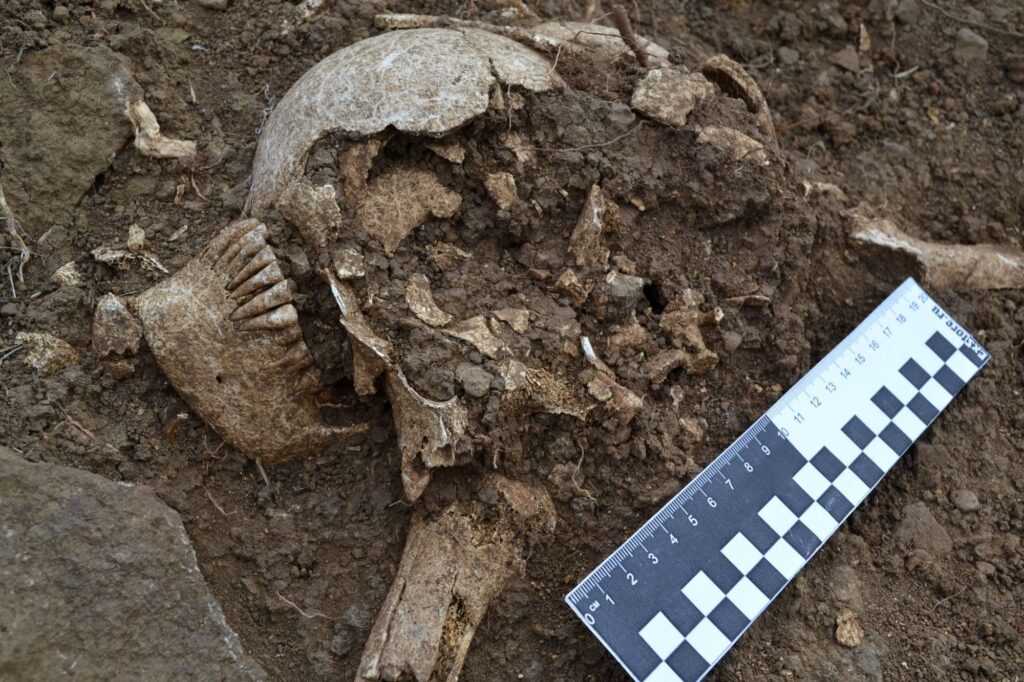
Researchers previously documented comparable burials in 2019 in the Komanı highlands, also in the Yardımlı district. Those earlier finds may provide useful comparisons as work on the Ökü material continues.
Most of the pottery recovered from the mound survives in fragments. The vessels were made from reddish, sandy clay, and their remaining forms allowed the team to identify jars, jugs and miniature containers.
Stone figures and a carved tree
The mound also produced human figures carved from stone and a number of stone tools. The institute singled out these objects as one of the most notable features of the excavation, although it has not yet published detailed descriptions or dates for the individual pieces.
Incised markings appeared on several rocks positioned near the heads of the deceased. They include geometric designs and an image described by the excavation team as a “tree of life.”
The relationship between these carvings and the burials remains unclear. Together with the contrasting positions of the bodies and the vessel burial, however, they give archaeologists several distinct elements to examine within the same Early Bronze Age monument.
The excavation has established how the five people were placed in the mound, but it has not yet revealed why their burials differed. Further study of the skeletons, ceramics and carved stones may show whether the graves belonged to the same period and how closely Ökü was connected with the burial traditions previously recorded in the Komanı highlands.
Cover Image: One of the human burials uncovered at the Early Bronze Age Ökü mound in southern Azerbaijan. Credit: Courtesy of the Institute of Archaeology and Anthropology of Azerbaijan