
Ancient Amphipolis built something that refused to disappear. For more than 1,000 years, through the rise and fall of empires, the city’s water system continued to function—adapting, expanding, and surviving long after its original builders were gone. New archaeological research now shows that this single infrastructure network served Greek, Roman, and Byzantine Amphipolis without interruption.
A System That Outlived Empires
Founded by the Athenians in the 5th century BC, Amphipolis is often remembered for its monuments and strategic position. Yet the latest findings point to something far more fundamental: the infrastructure that sustained life across centuries.
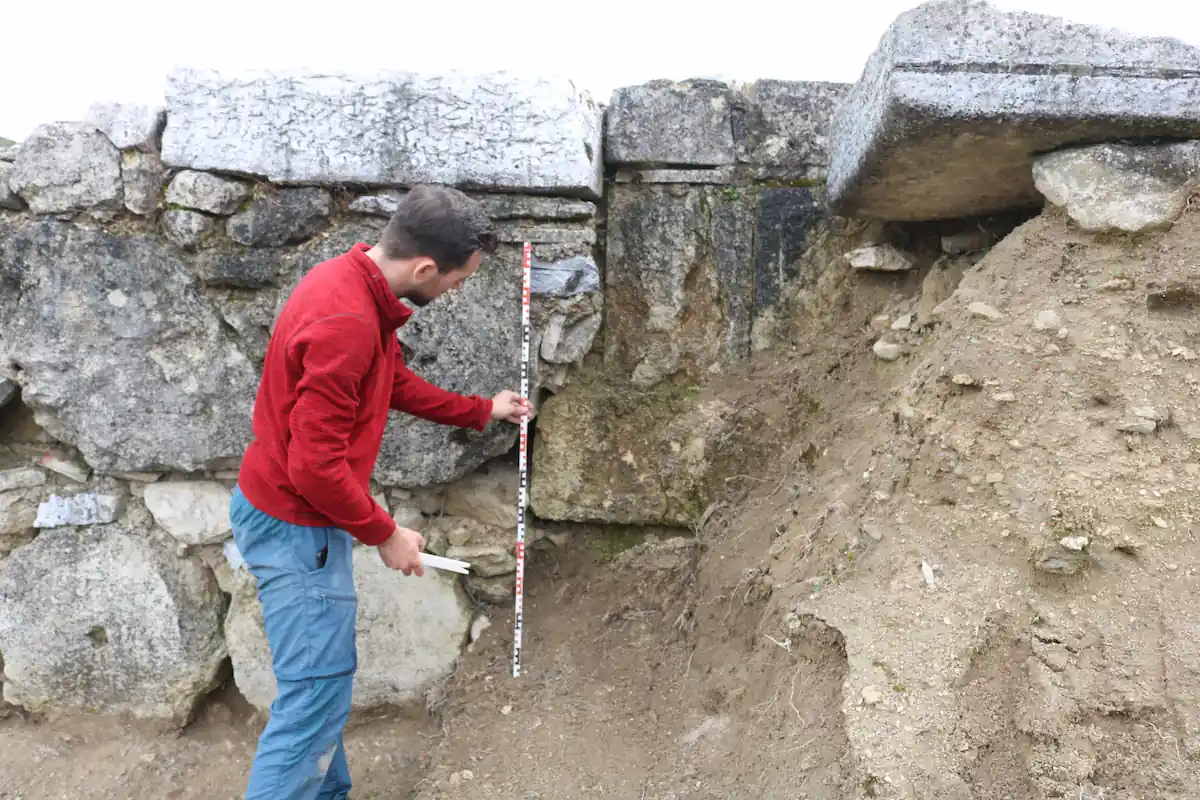
Archaeologists have identified a three-phase hydraulic system that evolved over time while preserving the same core route. Rather than being rebuilt from scratch, the network was repeatedly adapted—allowing the city to endure through changing political and cultural landscapes.
One Network, Three Civilizations
The earliest phase dates to the city’s foundation, when water was transported through ceramic pipe systems designed for efficiency at a modest scale. This initial setup reflects a carefully planned urban supply network.
During the Roman period, the system underwent a major transformation. The earlier pipes were replaced with larger masonry channels, significantly increasing both capacity and durability. Importantly, Roman engineers did not abandon the existing layout. Instead, they expanded and reinforced it.
The most striking development appears in the Byzantine period. Rather than replacing the system, inhabitants continued to use and adapt it. This reveals a rare pattern in ancient infrastructure: long-term continuity instead of repeated reconstruction.
A Landscape Shaped by Water
As researchers traced the aqueduct routes, they uncovered far more than infrastructure. Along these same corridors, evidence emerged of Classical rural settlements, Iron Age farmsteads, Hellenistic fortifications, Byzantine defenses, and Ottoman-era habitation.
Even traces of World War I activity appeared within the same landscape.
These findings suggest that the water system was not just a utility. It acted as a structuring force, shaping settlement patterns and influencing how communities developed across centuries.
Mapping What Was Once Invisible
Although it was long believed that Amphipolis drew water from Mount Pangaion, the exact routes had never been fully documented. Through detailed topographic surveys and fieldwork, researchers are now reconstructing this network with unprecedented precision.
This shift—from assumption to measurable data—marks a major step forward in understanding the city’s infrastructure.
More Than Engineering
The significance of the discovery lies in what it reveals about resilience. Amphipolis was not simply rebuilt after each historical transition. Instead, it adapted.
Its water system became a continuous thread linking different civilizations, allowing the city to persist through change rather than collapse.
In this sense, the hydraulic network is more than an engineering achievement. It is evidence of a city that survived by evolving.