In the shadow of Urfa Castle, overlooking the sacred pools of Balıklıgöl in southeastern Türkiye, archaeologists have uncovered a 1,500-year-old mosaic floor bearing a Greek inscription and intricate ornamental designs. The find, dating to the late 5th century CE, sheds new light on the religious landscape of ancient Edessa—one of the earliest centers of Christianity in Anatolia.
Excavations led by Prof. Dr. Gülriz Kozbe of Batman University have been ongoing for six months within the southern terrace of the Balıklıgöl complex. The newly exposed mosaic, composed of black, red, and white tesserae, features geometric patterns, floral motifs, and animal figures, arranged around a central Greek inscription.
The inscription follows a Byzantine epigraphic formula and records the name of Count Anaskas and his family, invoking divine protection. It also references several prominent ecclesiastical figures, including Bishop Küros, Elyas (Elias), and Rabulus the deacon—titles that reveal a clear hierarchy within the local clergy.
According to Kozbe, stylistic and linguistic analysis places the mosaic between A.D. 460 and 495, during the formative phase of Byzantine rule in northern Mesopotamia.
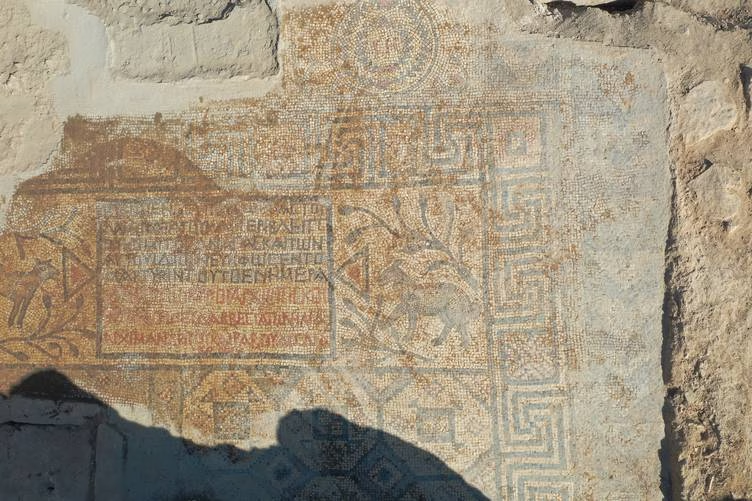
“This is likely the floor of a small church, chapel, or martyrium, built to honor a Christian martyr,” said Kozbe. “Its inscription not only preserves the names of donors and clergy but also reflects the complex ritual life that once animated the castle’s sacred precinct.”
Archaeologists also identified three rock-cut tombs near the mosaic, likely the resting places of priests or attendants who served in the same sanctuary. These burials resemble those found in the nearby Kızılkoyun necropolis, suggesting that the castle hill was part of a wider sacred zone surrounding ancient Edessa.
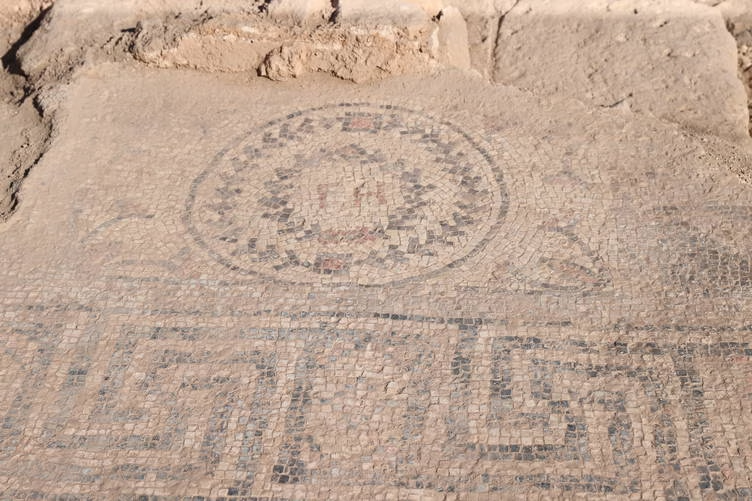
Beyond its inscription, the mosaic’s iconography offers symbolic depth: medallions depicting the **four classical elements—air, water, earth, and fire—**once adorned its corners, representing cosmic harmony and divine order. Only one medallion has been uncovered so far, but researchers expect symmetrical repetition across the floor’s layout.
Kozbe notes that the team has concluded the 2025 excavation season, with restoration and further exploration scheduled for next year. “This discovery not only adds a new chapter to Urfa’s early Christian history,” she said, “but also reveals how religion, status, and art intersected in Byzantine Edessa.”
Historical Context
Known in antiquity as Edessa, modern Şanlıurfa was one of the earliest strongholds of Christianity east of the Euphrates. Its bishops played key roles in theological debates of Late Antiquity, while its artisans developed a distinctive mosaic tradition blending Hellenistic, Syriac, and early Byzantine influences.
The newly discovered floor from Urfa Castle stands as a tangible link to this period—when art served as both ritual architecture and visual theology.