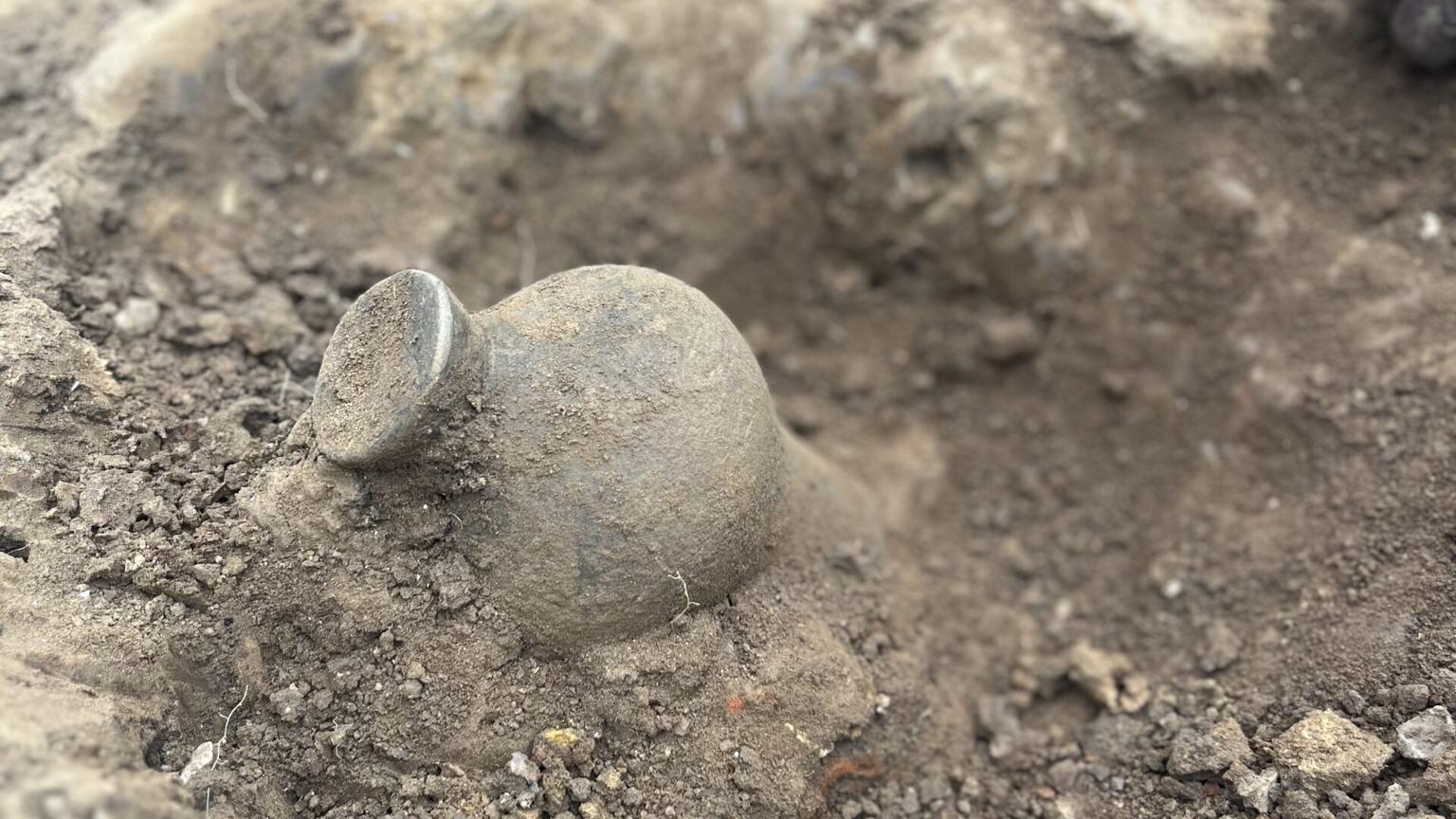
When archaeologists working in East Yorkshire lifted a small grey ceramic cup from the soil, it emerged almost completely intact — despite having been buried for roughly 1,600 years.
The vessel dates to the 4th century AD, the closing chapter of Roman Britain. On its own, it is an ordinary example of Romano-British greyware: locally produced, dark in colour, practical in form. Pieces like this are not rare on Roman sites.
But this one had been placed upside down.
Greyware pottery acquired its charcoal-grey tone through reduced-oxygen firing. By limiting oxygen inside the kiln, iron in the clay failed to oxidize into red hues, producing the darker surface typical of late Roman ceramics across Britain. It was everyday tableware — durable, widely used, and inexpensive.
What is uncommon is survival like this.
Most Roman pottery reaches archaeologists in fragments, damaged by ploughing, soil pressure, or later disturbance. This cup avoided that fate. Its inverted position inside a small pit may have protected it physically. More importantly, it suggests deliberate deposition.
Objects intentionally buried — particularly complete vessels — often signal ritual behaviour rather than disposal.
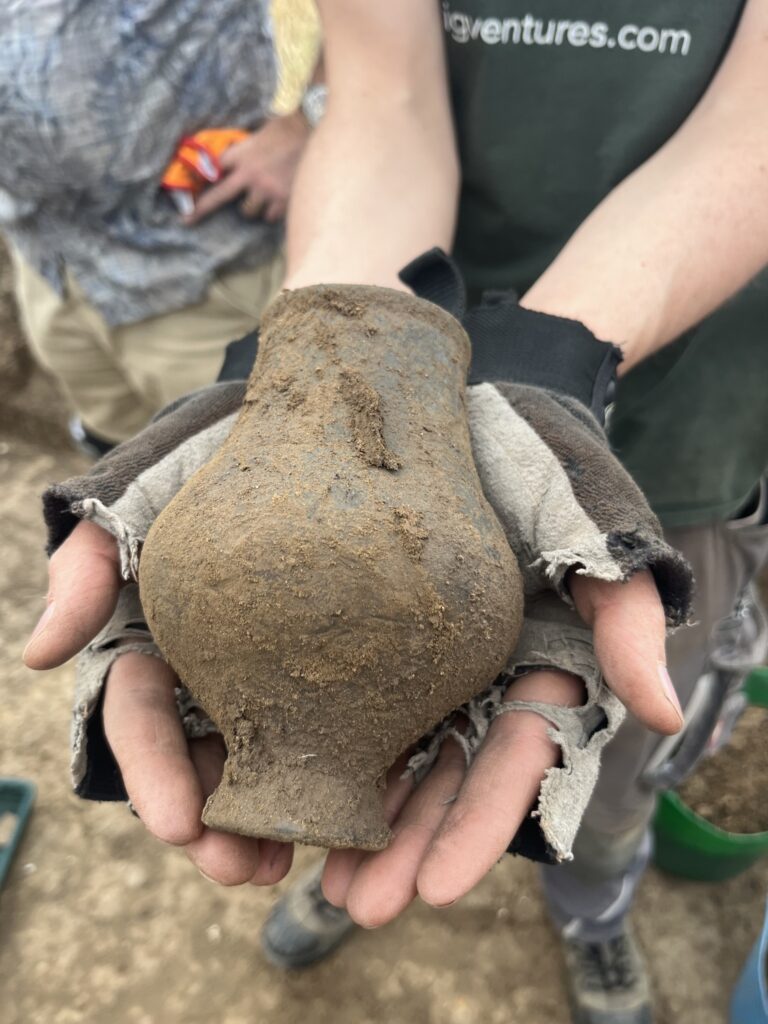
Archaeologists are considering whether the cup formed part of a votive deposit. It may have been used in a libation, the ritual pouring of wine or other liquids as an offering. In Roman religious life libation was not limited to temples. It occurred in domestic shrines, rural sanctuaries, and modest sacred spaces woven into everyday landscapes.
The wider excavation context strengthens that interpretation. The site has yielded small votive objects, a raised platform, and fragments thought to belong to an altar stone — elements consistent with a localized ritual setting.
The 4th century was a period of religious complexity in Britain. Traditional Roman worship persisted, local deities remained embedded in regional identity, and Christianity was gradually spreading. Sacred practices did not vanish overnight; they coexisted.
If the cup was left as an offering, it represents something quietly personal — an act completed and sealed in the earth.
There is no monumental temple here. No inscription naming a god. Just a small ceramic vessel, carefully inverted.
And sometimes, that is how a shrine survives.
Cover Image: The 1,600-year-old Roman greyware cup discovered upside down during excavations in East Yorkshire, its remarkably intact condition suggesting deliberate ritual deposition. Credit: Digventures