A Roman mosaic destroyed more than a century ago is reshaping what historians thought they knew about women in the arena. Long treated as a damaged curiosity from ancient Reims, the work is now being reinterpreted as the only known visual depiction of a female beast hunter, or venatrix, in the Roman world.
The reassessment, led by researcher Alfonso Mañas of the University of California, Berkeley, gives new weight to a figure that earlier scholars either hesitated to identify or dismissed altogether. More than a correction of iconography, the finding pushes the history of women in Roman arena spectacles further into the imperial period than previously thought.
A mosaic lost in war
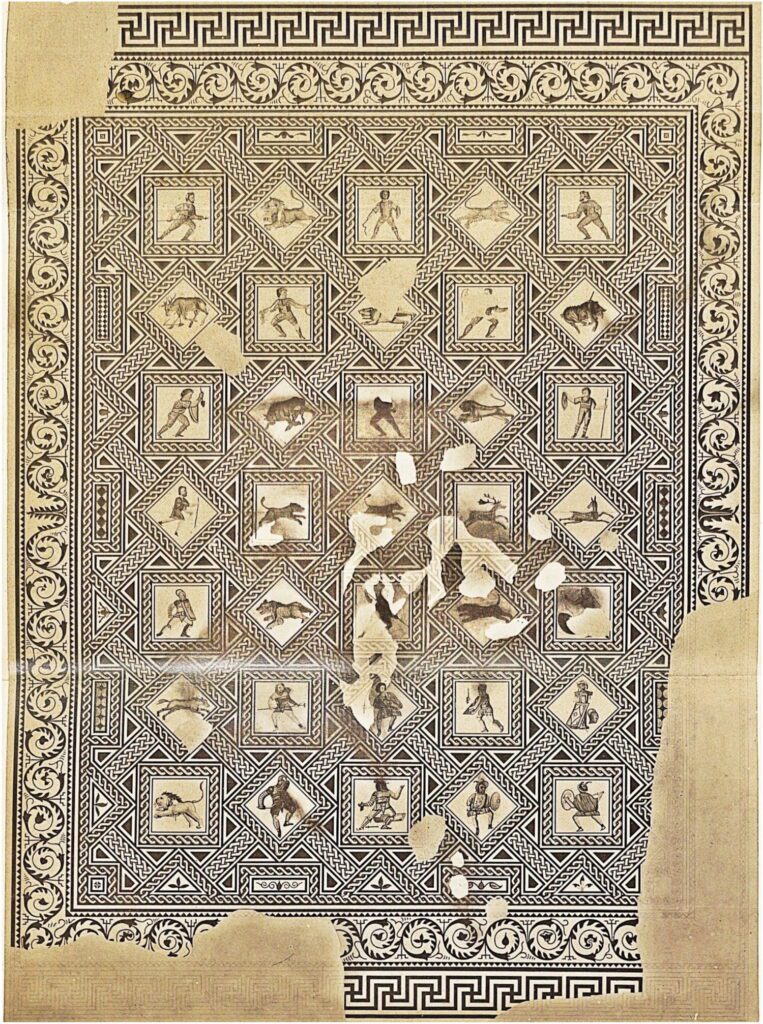
The mosaic was discovered in 1860 in Reims, France, a major Roman city in antiquity. Measuring about 11 by 9 meters, it presented a rich composition of medallions showing amphitheater scenes, including gladiators, wild animals, and staged hunts.
Its survival, however, was short-lived. The mosaic was destroyed in 1917 during World War I bombardment. What remains are 19th-century drawings made by archaeologist Jean-Charles Loriquet, along with a small number of surviving fragments. Those drawings, once seen mainly as antiquarian records, have now become central evidence in reconstructing the lost work.
For decades, the mosaic attracted little sustained attention. It was mentioned from time to time, but rarely examined in depth. The figure now at the center of the debate remained especially neglected.
The figure scholars kept missing
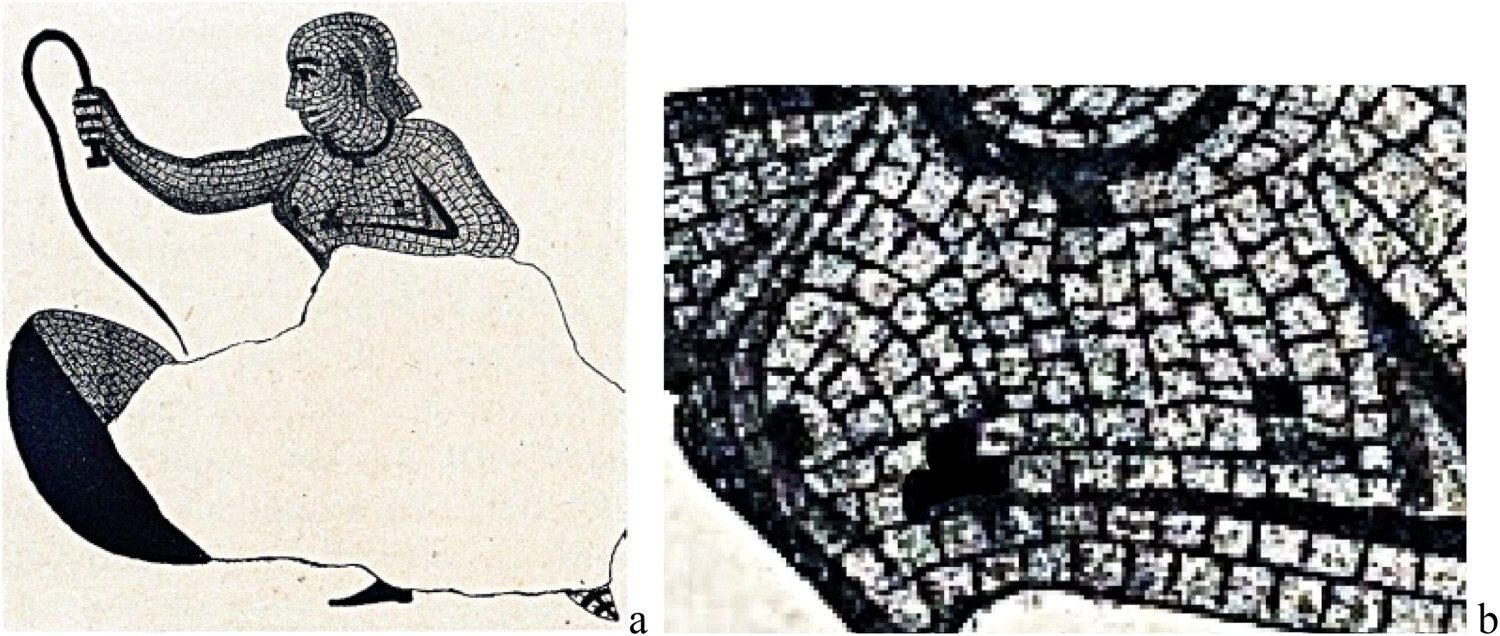
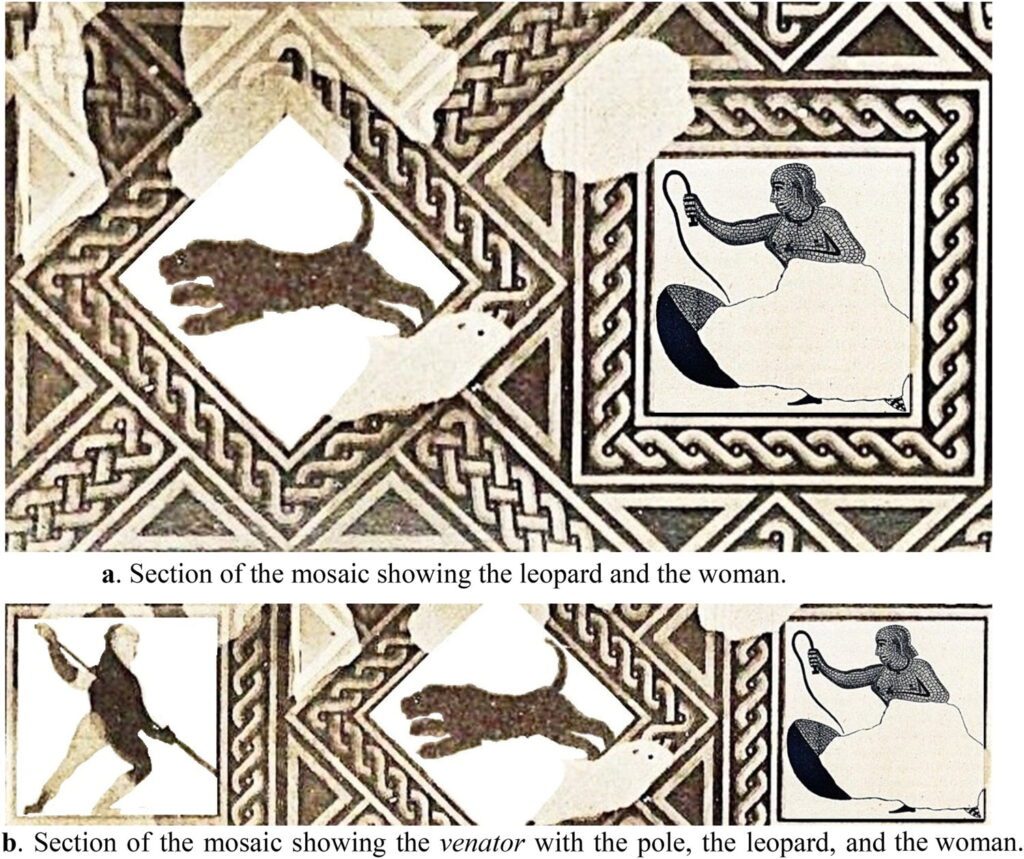
At the heart of the new interpretation is a single medallion figure shown beside a leopard. Earlier observers noticed the image but failed to agree on what, exactly, it represented. Loriquet himself cautiously suggested the figure might be female, while later scholars identified it as a man, a comic performer, or some other ambiguous arena type.
The details, however, point in another direction.
The figure is shown holding a whip, positioned in active relation to the animal, and apparently driving it toward another hunter. Most strikingly, the body is depicted bare-chested with visible breasts. In the visual language of Roman art, that is not a casual detail. It is the clearest marker available for identifying the figure as female.
Taken together with the setting, posture, and facial presentation, the scene strongly suggests that this is not a victim or decorative figure, but a woman taking part in the hunt itself.
Not a condemned victim, but a performer
That distinction matters. In Roman spectacles, women shown with animals could belong to very different categories.
Some were victims of damnatio ad bestias, the public execution of condemned prisoners by wild beasts. Those people were not armed and were not expected to survive.
The Reims figure does not fit that pattern. She is not passive, cornered, or defenseless. She carries a whip and appears to be acting in coordination with the hunt. That makes her something else entirely: a venatrix, a female participant in a staged beast hunt, or venatio.
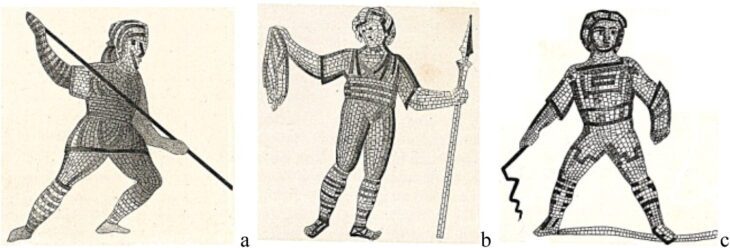
More specifically, Mañas argues that she may have served as a succursora, an assistant who helped direct animals toward another hunter for the decisive attack. That role would have required training, timing, and familiarity with arena performance. In other words, this was not punishment. It was spectacle.
Extending the history of women in the arena
The historical importance of the mosaic goes beyond identifying a single performer. Until now, evidence for female participation in beast hunts was thought to be limited mainly to the period between Nero in the 1st century CE and the early 2nd century.
Ancient authors such as Cassius Dio, Martial, and Juvenal do mention women appearing in hunts, but the references are rare and uneven. After that, the record becomes much quieter.
The Reims mosaic appears to date to the 3rd century CE. If the interpretation is correct, it means women were still being presented in arena hunts at least a century later than historians had generally assumed. That is not a minor chronological adjustment. It changes the broader picture of how long female spectacle performers remained visible in Roman public life.
Why female hunters may have lasted longer
The mosaic also raises a larger question: why would female beast hunters continue to appear after female gladiators had largely vanished from the record by around 200 CE?
Part of the answer may lie in Roman ideas about legitimacy and performance. Female gladiators fought human opponents, a form of spectacle that could be treated in Roman writing as morally troubling or socially transgressive. Female hunters, by contrast, could be framed through more familiar cultural models.
Roman mythology offered precedents. Figures such as Diana and Atalanta gave the image of the female hunter a degree of symbolic respectability. Hunting animals could therefore be presented not simply as novelty, but as something with cultural and even heroic associations.
There was also a practical moral distinction. Animal hunts did not carry the same social burden as direct human combat. Even rulers interested in regulating violence in the arena often focused more heavily on gladiatorial bloodshed than on venationes.
Gender, spectacle, and visibility
Another revealing feature of the mosaic is the deliberate presentation of the woman’s body. Her exposed chest may have served a simple visual purpose: in the crowded, fast-moving language of arena imagery, gender needed to be unmistakable.
But the choice likely did more than identify. It probably heightened the theatrical effect of the performance itself.
Ancient writers hint that female participants in arena culture could be presented in ways that emphasized visual novelty and erotic charge alongside danger. Juvenal’s famous reference to the huntress Mevia suggests that exposure, performance, and spectacle could overlap. The Reims mosaic may preserve precisely that mixture of skill, display, and staged excitement.
A unique image in Roman art
What makes the mosaic truly remarkable is its singularity. Roman texts mention women in the arena, yet no other securely identified image of a female beast hunter has been confirmed.
That makes this figure exceptional. She is not simply another arena performer emerging from the archaeological record. She may be the only surviving visual witness to a woman actively engaged in one of Rome’s most dramatic public spectacles.
For more than a century, the mosaic survived only in copies, fragments, and scattered references. Now, through a careful re-reading of old evidence, it has returned to the historical conversation with unusual force.
The woman it depicts remains unnamed. No inscription preserves her identity, and no text tells her story directly. Yet the image now speaks more clearly than before: not of a victim, and not of a curiosity, but of a trained performer standing inside the Roman arena, whip in hand, part of the hunt.
Manas, A. (2026). New Evidence of Women Fighting Beasts in the Roman Arena: The Woman in the Mosaic from Reims. The International Journal of the History of Sport, 1–29. https://doi.org/10.1080/09523367.2026.2632176
Cover Image Credit: A. Manas, 2026