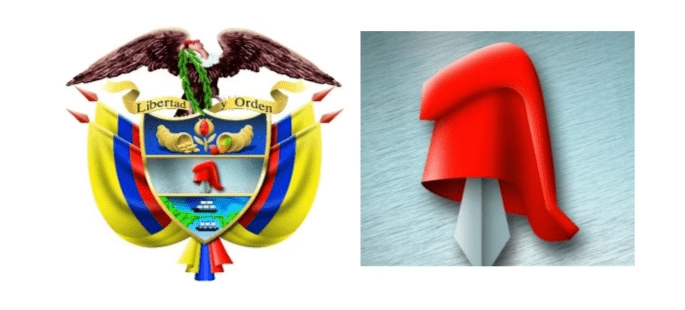
How an Anatolian symbol of rebirth and freedom became part of Colombia’s national emblem
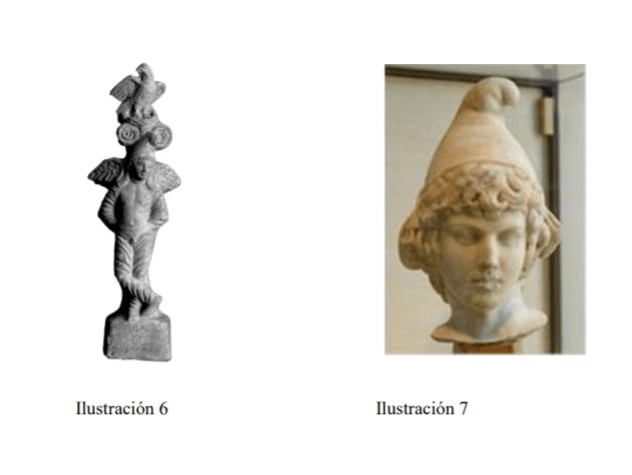
The conical felt cap worn by the ancient Phrygians — once adorning the heads of shepherds, warriors, and priests of central Anatolia — has traveled far beyond its homeland. Today, the same “Phrygian cap” crowns the coat of arms of Colombia and several other Latin American republics as a global icon of liberty.
A recent study titled “The Journey of the Phrygian Cap from Turkey to Colombia” traces this remarkable cultural odyssey from the Bronze Age highlands of Anatolia to the revolutionary movements of the 18th and 19th centuries. The research emerged through the collaboration of historian Prof. Dr. Hasan Bahar (Selçuk University), former Ambassador Engin Yürür, and scholars Yeşim Dilek and Önder Boyacı, who served at the Turkish Embassy in Bogotá between 2013 and 2017.
Anatolian Origins: The Cap of Attis and the Spirit of Rebirth
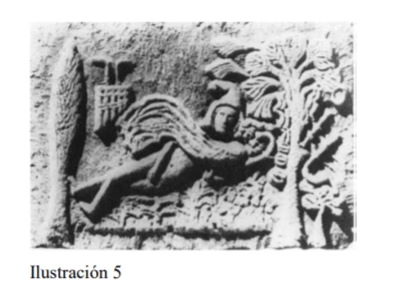
The earliest roots of the Phrygian cap lie in the cult of Kybele, the Great Mother goddess of fertility, and her youthful consort Attis, whose death and resurrection symbolized the cycles of nature.
According to ancient myth, Attis — a mortal beloved by Kybele — was driven to madness and self-sacrifice. From his spilled blood sprang the evergreen pine, a symbol of eternal life. His pointed cap, shaped like the tip of the pine, came to embody renewal, resurrection, and freedom from mortal constraint.
In spring festivals across Anatolia, worshippers donned similar caps to celebrate regeneration — a ritual memory that may have later inspired Christian symbolism associated with Easter and the evergreen tree of Christmas.
From Slave Emancipation to Revolutionary Symbol
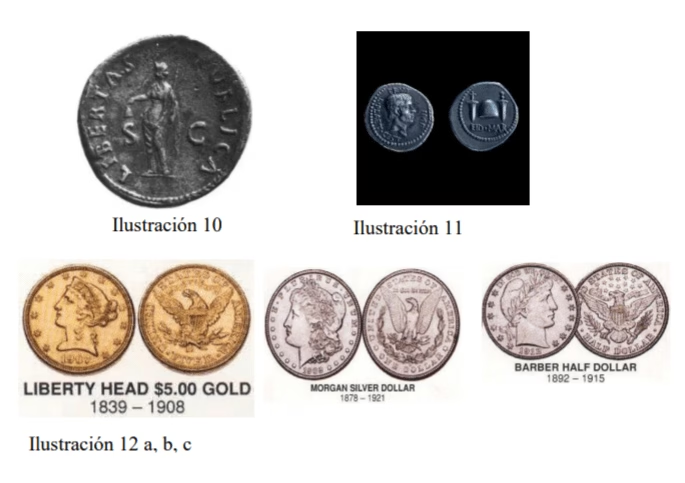
Centuries later, the Phrygian cap resurfaced in Roman society as the pileus, the soft cap granted to freed slaves. Wearing it proclaimed a man’s liberation. The symbolism endured: Brutus struck coins after Julius Caesar’s assassination featuring the cap between two daggers, announcing the “liberation of Rome.”
By the 18th century, the cap re-emerged in a new theater — the Age of Revolutions. Engraver Paul Revere included it in his 1766 monument celebrating the repeal of the Stamp Act in colonial Boston. Later, during the French Revolution, the bonnet rouge became the unmistakable mark of liberty, equality, and rebellion. Citizens, and especially women involved in political activism, wore it proudly in defiance of monarchy and tyranny.
Across the Atlantic: From Paris to Bogotá
As revolutionary ideals spread through the Americas, the Phrygian cap crossed the Atlantic once more — this time not as a trade good but as a symbol. Latin American nations emerging from colonial rule adopted it on their national coats of arms, often paired with radiant suns or liberty staffs.
In Colombia, the cap first appeared in 1834 on the republic’s emblem, symbolizing independence, enlightenment, and moral freedom. Since then, it has remained an inseparable element of the nation’s identity — a silent heirloom from ancient Phrygia.
A Symbolic Bridge Between Anatolia and the Americas
The study highlights how a motif born in the mountains of central Türkiye evolved into a universal emblem of human dignity.
From Attis’s rebirth beneath the pine to the red cap raised by revolutionaries, the Phrygian headgear carries a single unbroken message: freedom through transformation.
Its presence on the Colombian flag today is more than coincidence — it’s a cultural bridge linking two distant civilizations through shared ideals of liberation and renewal.
DOI: 10.29228/Joh.41946