
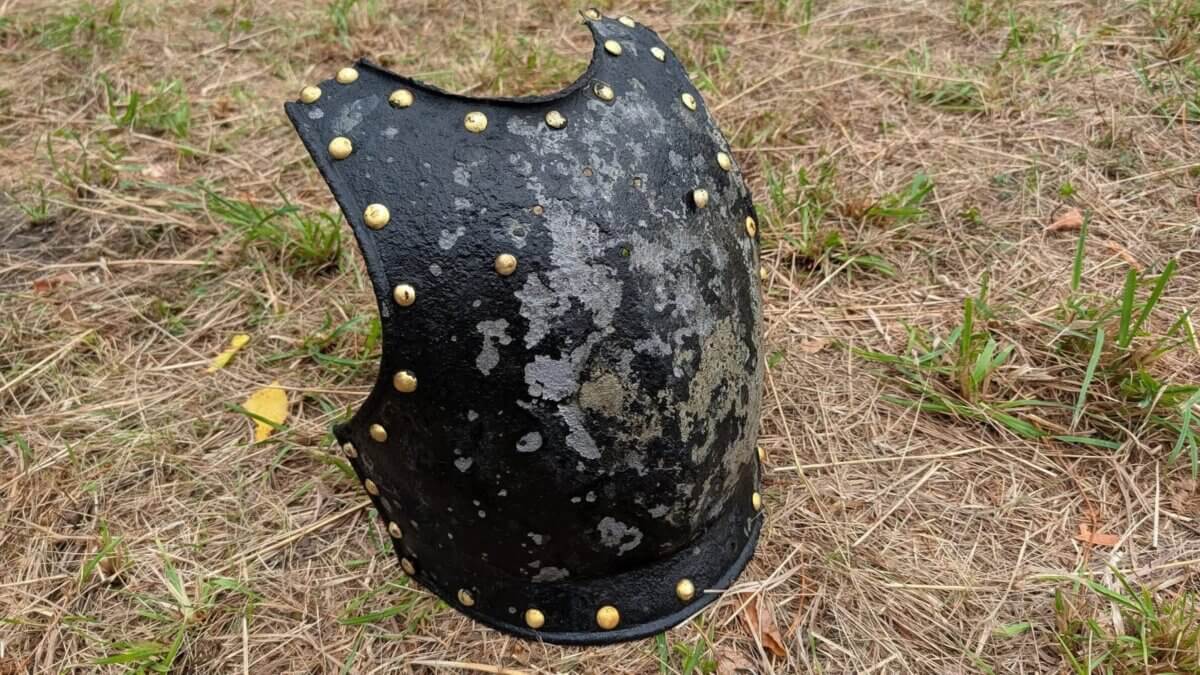
A 19th-century cavalry breastplate has emerged from the mud-filled moat of Pielaszkowice Palace in southwestern Poland, a residence closely associated with the armistice that Napoleon Bonaparte later regarded as one of the greatest mistakes of his life.
The metal armour was discovered by Wiesław Andrysiak of the DRACO History Explorers Association, who reportedly sank waist-deep into the silt while searching the moat. Initial reports describe the object as a German guardsman’s cuirass, although its exact date, military unit and route into the water have yet to be established. After specialist conservation, the breastplate will join the collection of the Silesian House Museum in Ziębice.
A Cavalry Breastplate Preserved Beneath the Mud
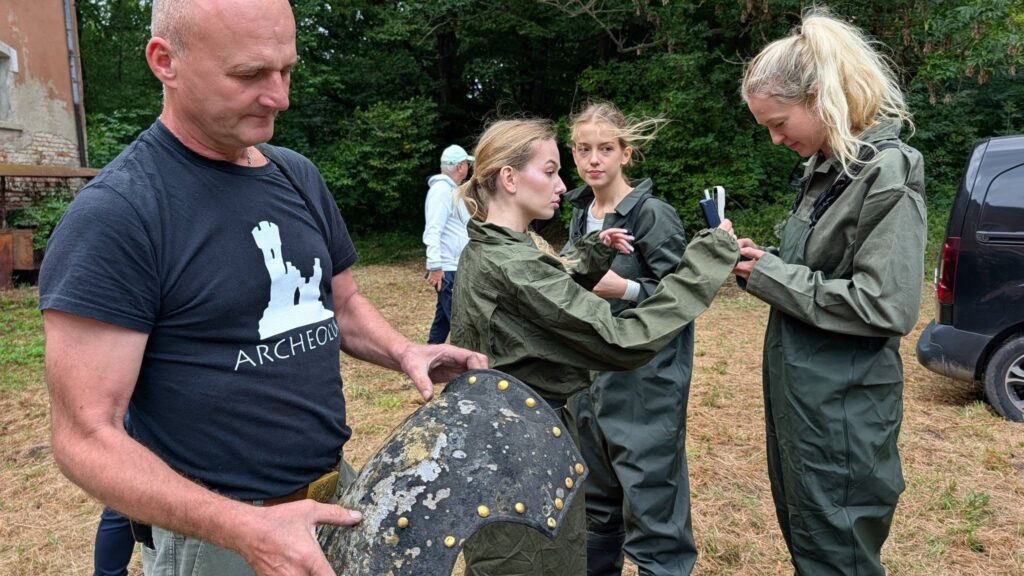
The discovery was made during an investigation led by writer and journalist Joanna Lamparska and the Hi!History team. Members of the DRACO association from Żmigród and the Hunter search group from Polkowice also took part in the work.
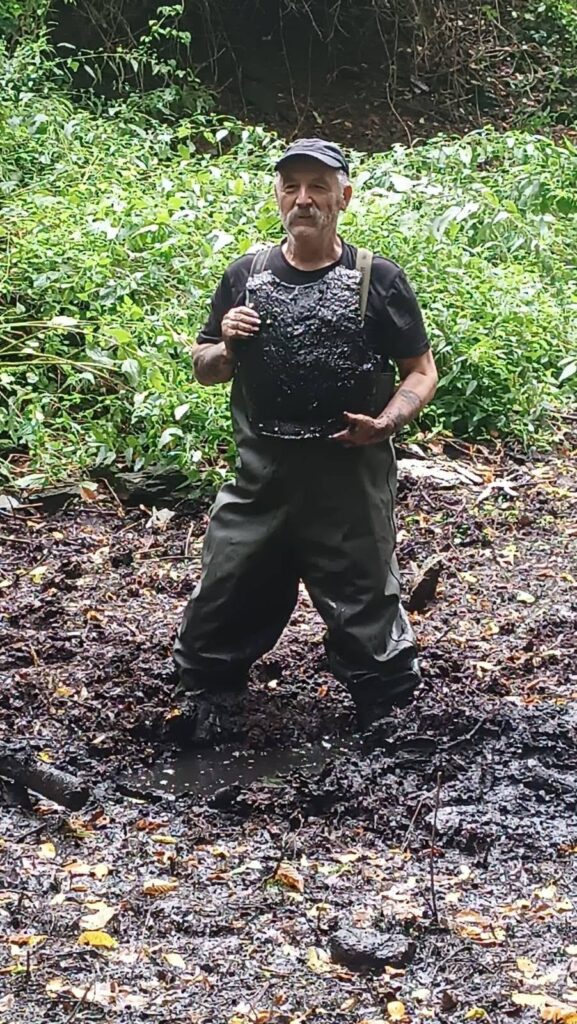
Despite remaining beneath waterlogged sediment for an unknown length of time, the breastplate appears to have survived in notably good condition. Its present condition and construction will become clearer after specialist cleaning and conservation.
Cuirasses formed part of the protective equipment worn by cuirassiers, the heavy cavalry troops employed by several European armies. Their rigid metal breastplates were intended to protect the torso against sabre blows, lance thrusts and, to a more limited extent, firearm projectiles.
Although changes in weapons and battlefield tactics gradually reduced the practical value of body armour, cuirasses continued to be worn by prestigious cavalry and guard formations throughout the 19th century. Details such as the shape of the plate, its edges, fastening points and any surviving maker’s marks may therefore help specialists identify the newly recovered example.
The Palace Behind the Armistice of Pläswitz
The location of the discovery gives the breastplate an unusually compelling historical setting. Pielaszkowice, formerly known by its German name Pläswitz, became part of European military history during the 1813 campaign against Napoleon.
Following the battles of Lützen and Bautzen, representatives of France, Russia and Prussia negotiated a temporary cessation of hostilities. The Armistice of Pläswitz was signed inside the palace on June 4, 1813, by Armand de Caulaincourt for France, Pavel Shuvalov for Russia and Friedrich von Kleist for Prussia.
Napoleon needed time to replace battlefield losses and rebuild his depleted cavalry. His opponents, however, used the pause more effectively, reorganising their forces and pursuing negotiations that eventually brought Austria into the coalition against France.
When hostilities resumed, Napoleon faced a much stronger alliance. His defeat at Leipzig in October 1813 forced the French army to withdraw westward, and the emperor later characterised his decision to accept the armistice as a disastrous error.
The breastplate was thus recovered from the grounds of a palace directly connected with cavalry warfare and one of the campaign’s decisive diplomatic moments. Yet its location alone does not prove that it belonged to a soldier present in 1813. Elsewhere in Poland, archaeologists recently uncovered an unusual grave containing an inverted human skull and iron nails.
Napoleonic Relic or a Later Palace Keepsake?
Polish reports have described the armour as German or Prussian, but no detailed identification has yet been published. Its 19th-century date leaves several possible explanations for its presence in the moat.
The object could be associated with military activity around the estate, but it may also have formed part of a collection maintained by the palace’s Prussian owners. The von Buddenbrock family, who occupied the residence until 1945, reportedly preserved objects connected with the Napoleonic era.
A third possibility is that the breastplate entered the moat during the upheaval at the end of the Second World War. Accounts from Pielaszkowice describe the palace being looted after the Red Army reached the area, with furnishings thrown from the windows into the water below.
Early post-war residents reportedly recovered porcelain, weapons and coins from the moat. Much of its deeper silt, however, remained undisturbed, potentially preserving material from both the Napoleonic period and the final days of the residence.
Other objects recovered during the recent investigation—including architectural fittings, original door locks and fragments of park sculptures—reinforce the possibility that the moat gradually became a repository for different chapters of the palace’s history rather than a single deposit created at one moment.
A Fictional Treasure Hunt Leads to a Real Discovery
The search had an unexpected connection with Polish literature. Actors preparing for a new adaptation of Kornel Makuszyński’s Satan from the Seventh Grade joined the investigation to gain practical experience of historical exploration.
The popular novel follows a schoolboy drawn into a mystery involving treasure concealed by a soldier from Napoleon’s defeated army. What began as preparation for a film therefore brought its cast into direct contact with genuine objects from the past, although the breastplate’s own story remains unresolved.
Lamparska has indicated that the team intends to return to Pielaszkowice. Since the moat has never been comprehensively investigated, its deposits may contain objects associated with several periods of the residence’s history.
Conservation will now focus attention on the breastplate’s construction, fastenings and any surviving marks. These details may show whether it was a Napoleonic-era relic preserved at the palace, a later military object, or part of the material thrown into the moat during the upheaval of 1945.
Cover Image: A 19th-century cavalry breastplate recovered from the moat of Pielaszkowice Palace, associated with what Napoleon later called his greatest mistake. Credit: Muzeum Domu Śląskiego w Ziębicach / Stowarzyszenie Odkrywców Historii DRACO Żmigród