
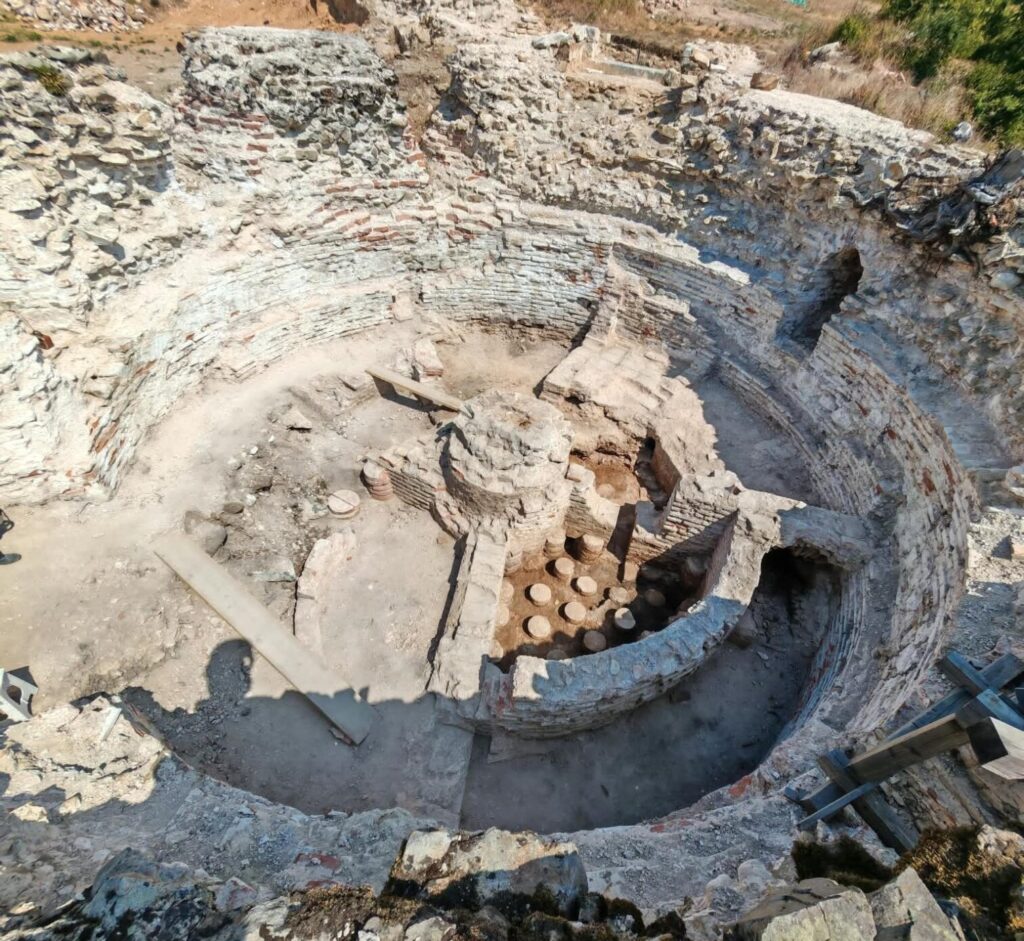
Archaeologists at Vrelo–Šarkamen in eastern Serbia have uncovered a remarkably preserved Roman imperial bath built into the lowest level of a monumental palace tower. The circular balneum belonged to a fortified residence associated with the Roman tetrarch Maximinus Daia, and the excavation team says no direct parallel for this architectural arrangement is currently known elsewhere in the Roman Empire.
The private bath contained three bathing pools or tubs, a steam room, a furnace, an exceptionally well-preserved hypocaust heating system and the emplacement that once supported a copper vessel used to heat water. Together, the remains reveal an unusually sophisticated combination of heating, water management and private leisure concealed within the architecture of a monumental tower.
Information shared directly with Arkeonews by the excavation team shows that the discovery emerged from the latest archaeological campaign conducted by the Archaeological Institute in cooperation with the Museum of Krajina, with support from the Ministry of Culture of the Republic of Serbia. The excavations are directed by Dr Marija Jović and Gordan Janjić, MA.
The interdisciplinary team also includes Dr Igor Bjelić, architect and Senior Research Associate; Dr Ljubomir Jevtović, Research Associate; surveyor Borisav Marković; and architecture student Konstantin Janjić. Their work has helped reconstruct one of the most unusual architectural features yet identified at Šarkamen.
A Roman Bath Built into a Monumental Tower
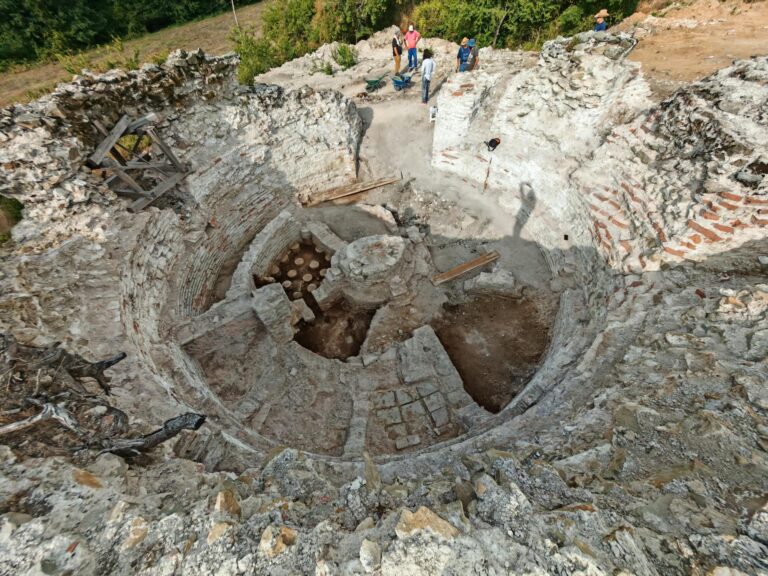
What makes the discovery exceptional is not simply the presence of a Roman bath, but its location. The balneum occupied the lowest level of the palace’s south-western corner tower and followed a circular plan adapted to the interior of the structure.
Above the bath rose a dome pierced by six window openings, a technically demanding design that required the openings to be incorporated directly into the domed construction. The arrangement suggests that light, heating and circulation were carefully considered within a space that also formed part of the monumental architecture of the fortified residence.
An Exceptionally Preserved Heating System
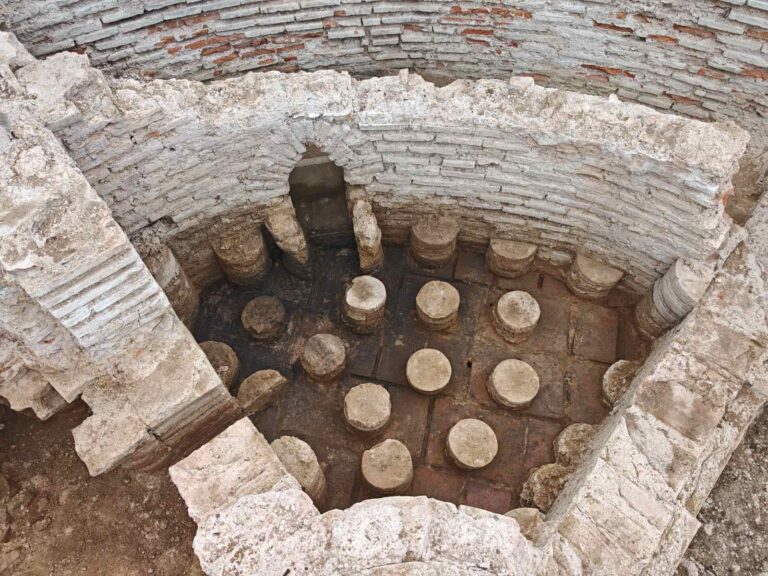
The technical area contained the praefurnium, the furnace that supplied heat to the bath. Hot air circulated beneath the floors through a hypocaust supported by circular pilae, many of which remain in place.
The exceptional preservation of the system allows archaeologists to reconstruct how heat moved beneath the bathing rooms rather than relying only on fragmentary remains. Researchers also identified the emplacement for a copper boiler used to heat water, although the valuable metal vessel itself did not survive.
Service personnel entered the technical area from the west through a monumental entrance, keeping the workers who operated the furnace separate from the residents using the bathing spaces. This division shows that the bath was carefully organized as a high-status private facility rather than a simple washing area.
Three Pools and a Private Steam Room
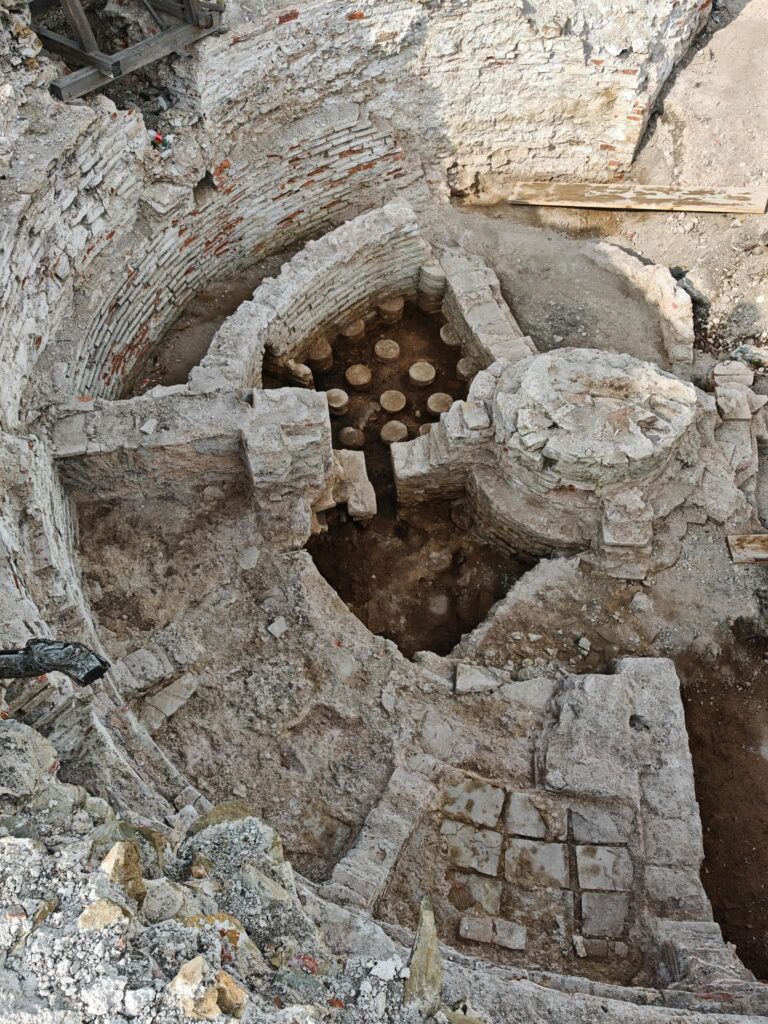
Archaeologists have so far identified three bathing pools or tubs and a sudatorium, a room used as a steam bath. Combined with the hypocaust, furnace and water-heating installation, these features preserve much of the infrastructure required to operate an elaborate Late Roman bathing complex.
Private baths were familiar in wealthy Roman residences, and Roman bathhouse and hypocaust heating systems are well documented across the empire. The Šarkamen example, however, stands apart because it was integrated into the lowest level of a monumental corner tower.
Thirty Years After Šarkamen’s Imperial Gold
Vrelo–Šarkamen is one of Serbia’s most important Late Antique archaeological sites. The fortified residential complex was constructed in the early fourth century and is associated with Maximinus Daia, while an imperial mausoleum discovered nearby produced an extraordinary assemblage of gold jewellery three decades ago.
The new bath reveals another expression of the status attached to the site. Instead of gold and funerary objects, wealth is visible here through architectural planning, heating technology, water management and private comfort.
Important questions nevertheless remain. An eastern entrance connects the bath with a paved corridor of the residence, but archaeologists have not yet established how the difference in floor levels was negotiated, while the precise function of several spaces is still being investigated.
The discovery has therefore opened a new chapter at Šarkamen: a unique Roman imperial bath hidden within a monumental tower, revealing just how complex and luxurious the residence associated with Maximinus Daia may have been.