
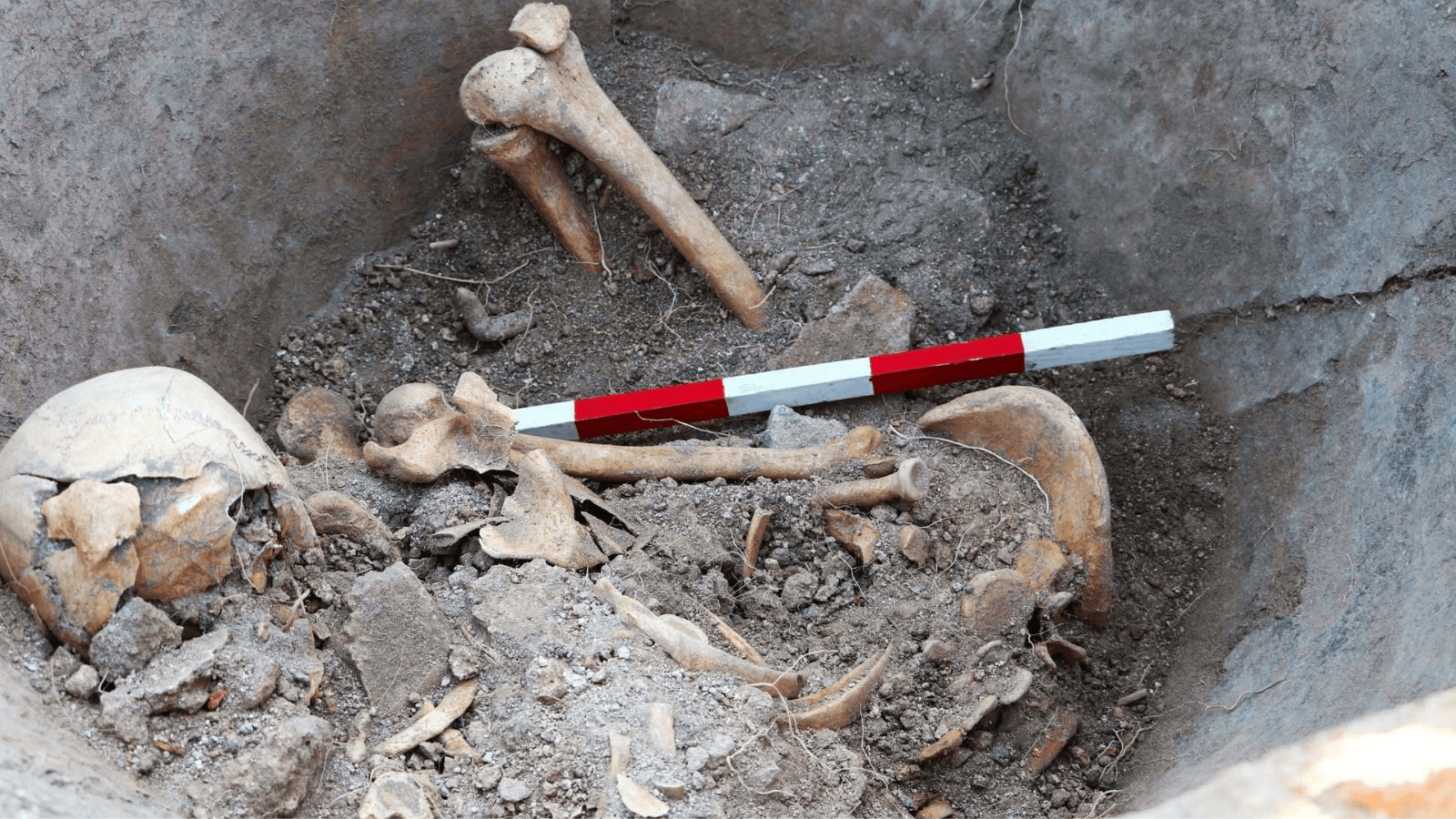
Archaeologists excavating the Roman city of Deultum in Bulgaria have uncovered a 1,600-year-old skeleton inside a giant ceramic storage vessel. The individual may have climbed into the jar as fire and violence engulfed the city—then died without attempting to escape.
The remains were discovered on August 10 in the northern tower of Deultum’s western gate, a Late Roman defensive structure built around AD 300. Rather than lying beneath collapsed masonry or inside a formal grave, the skeleton was found tightly curled at the bottom of a large vessel known as a dolium.
The position of the body immediately suggested that this was not a burial. The individual’s knees had been drawn toward the chin, while the face was turned downward. Archaeologists believe the person deliberately entered the empty vessel in search of protection.
Two Knives and a Fire Already Underway
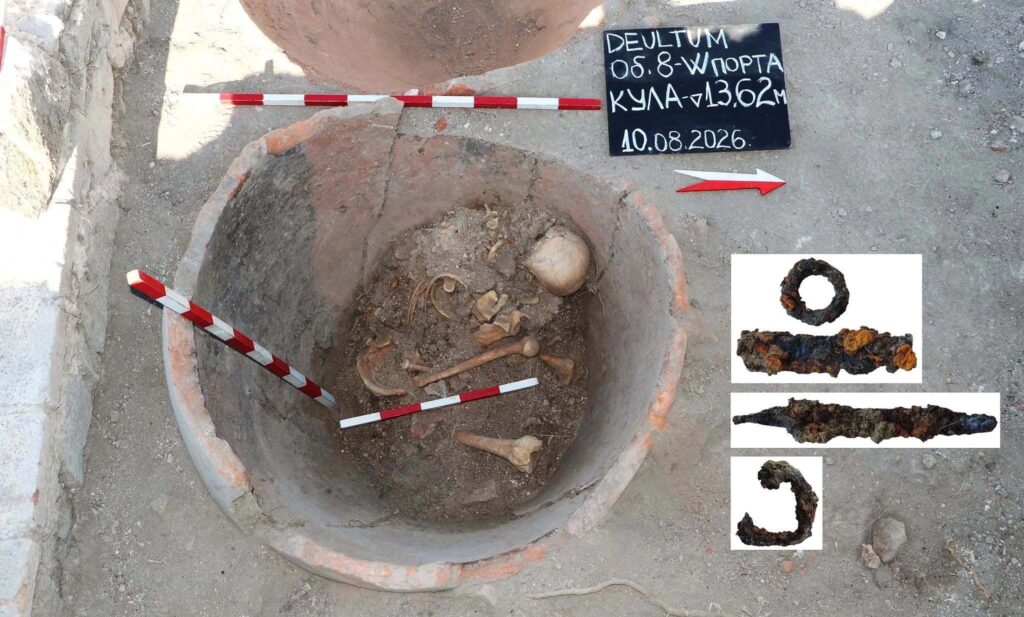
Objects recovered with the skeleton offer a glimpse of the individual’s final moments. One iron knife was found near the right hand, apparently held between the legs, while a second, smaller knife had been suspended from a ring attached to a belt.
The presence of the knives may indicate that the person expected to be discovered and had prepared to defend themselves. However, the objects were everyday implements rather than military weapons, giving archaeologists no reason to identify the individual as a professional soldier.
Only the lower portion of the dolium survived. It measures approximately one metre in diameter and appears to have been comparatively small, as the largest Roman storage vessels could hold more than 1,000 litres. Once inside, the individual would have had very little room to move.
More importantly, ashes found beneath the skeleton indicate that the fire had already begun before the person entered the vessel. The dolium may therefore have been used as a last refuge while smoke, flames or attackers closed in around the gate.
According to excavation director Professor Lyudmil Vagalinski of the National Archaeological Institute with Museum at the Bulgarian Academy of Sciences, the position of the body showed no indication that the individual later struggled to climb out. Its almost sleeping posture has led the team to consider smoke inhalation as the most likely cause of death.
That interpretation remains preliminary. The remains have been transferred to Sofia, where a physical anthropologist will attempt to determine the individual’s biological sex, age, health and possible cause of death.
A Destruction Layer Preserved the Scene
The skeleton was not the only evidence of a violent event inside the gate tower. Archaeologists documented ash and charcoal, blackened walls, collapsed bricks and roof tiles, broken pottery and fragments of glass distorted by intense heat.
Bones belonging to domesticated animals were also scattered throughout the destruction layer. One possibility is that inhabitants drove their livestock into the fortified area after receiving warning of an approaching attack. Numerous bronze coins found among the debris may have been dropped as people and animals crowded behind the city’s defenses.
The precise event responsible for the destruction has not yet been identified. Preliminary examination places it around AD 400, although the date is expected to be refined as pottery, coins and stratigraphic evidence from the excavation are studied.
Deultum experienced repeated periods of upheaval during Late Antiquity. Archaeological research has identified numerous episodes of destruction in the city between the second and sixth centuries, including fires that may have resulted from enemy attacks, internal conflicts and natural disasters.
Eastern Germanic groups and the Huns were active in the Balkans during the fourth and fifth centuries, but no particular army can yet be securely connected with the newly uncovered destruction layer. For now, the burned tower documents a catastrophe without revealing who caused it.
The Body Disappeared Beneath a New Floor
The location of the skeleton also helps explain why the individual was never recovered by the city’s inhabitants. Following the destruction, the ruins of the tower were levelled and covered by a new, higher floor.
Those who cleared and rebuilt the gate appear to have overlooked the body concealed inside the damaged dolium. The vessel and its occupant remained sealed beneath the later construction until archaeologists entered the tower more than 16 centuries later.
Human remains are rarely encountered within the inhabited areas of Roman cities, where the dead were normally buried beyond the city limits. Bodies found inside houses, streets or defensive structures generally point to exceptional events in which normal funerary practices could not be followed.
At Deultum, the combination of the body’s position, the two knives and the surrounding fire damage preserves something even rarer: the apparent actions of one individual during the final minutes of an ancient disaster.
Deultum’s Violent Late Roman History
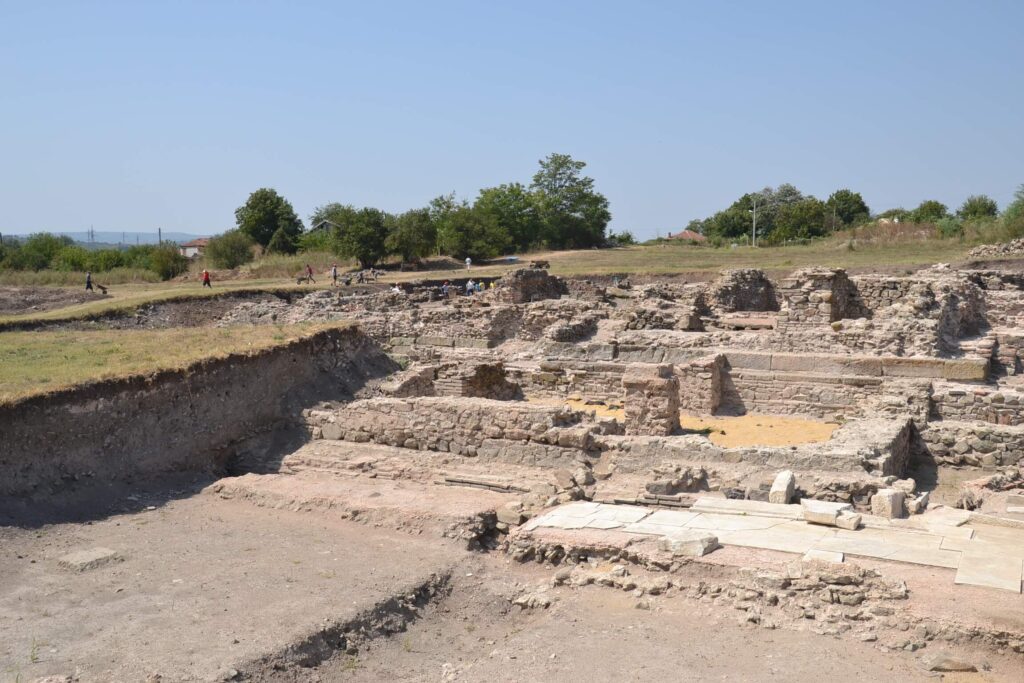
Founded around AD 70, probably for veterans of Rome’s Eighth Augustan Legion, Deultum developed into an important colony in the province of Thrace. Its location in southeastern Bulgaria placed it near routes that followed the western Black Sea coast toward Constantinople.
That strategic position brought prosperity but also exposure. As Roman control in the Balkans came under increasing pressure, Deultum’s fortifications were rebuilt and strengthened several times. Archaeological evidence indicates that the city endured at least four hostile raids within approximately a century during the late fourth and fifth centuries.
Excavations are expected to resume next summer, when the team will continue investigating the northern tower and attempt to expose the complete plan of the western gate. The work may establish a firmer date for the fire and clarify the circumstances that drove one resident of Deultum into the vessel as the gate burned around them.
Cover Image: The 1,600-year-old skeletal remains discovered inside a Roman storage vessel at Deultum, Bulgaria. Credit: Archaeologia Bulgarica