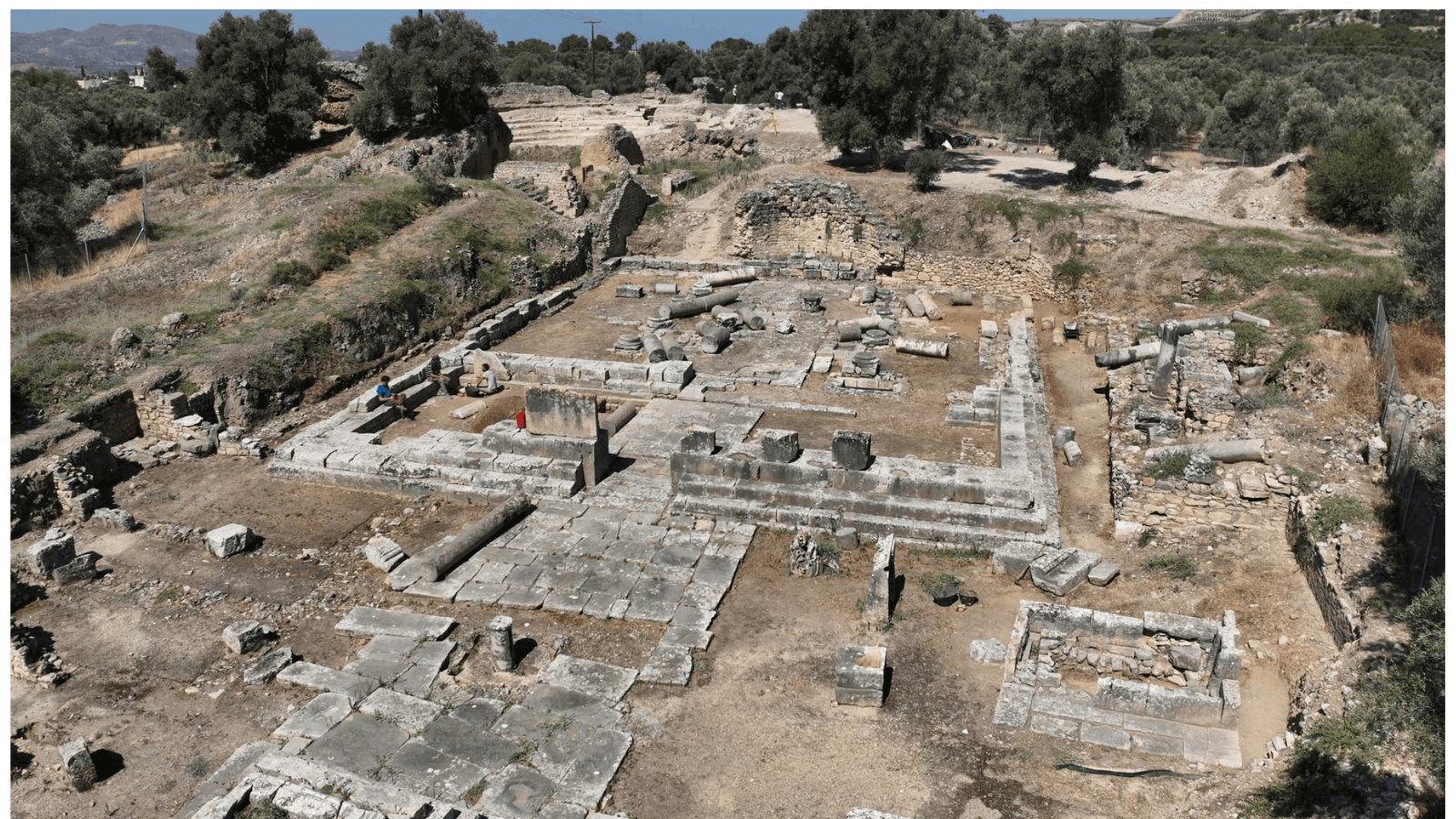
The remains of more than 450 mice discovered in a votive deposit at an ancient sanctuary in Crete may offer the first archaeological evidence for an Apollo Smintheus cult in Gortyn.
The unusual deposit was uncovered in 2025 at the Sanctuary of Apollo, one of the oldest religious complexes associated with the emergence of the early Cretan city-states. It contained numerous archaeological objects alongside the mouse remains, raising questions about whether the animals held a particular meaning within the sanctuary.
The discovery remains a central focus of the 2026 excavation season, conducted by the Italian Archaeological School at Athens and the Department of Cultural Heritage at the University of Padua. Fieldwork began on July 19 and is scheduled to continue until August 14.
Why the mice may be linked to Apollo Smintheus
Researchers believe the deposit may point to the worship of Apollo Smintheus, an aspect of Apollo closely associated with mice, purification and protection from rodents.
The identification is still a working hypothesis. The excavation announcement does not establish why the mice were placed in the deposit, whether they were deliberately collected or how they related to the other materials found with them.
For that reason, the remains cannot yet be described as sacrifices or evidence of a specific ceremony. Further study of the bones and their archaeological context will be needed before the nature of the deposit can be determined.
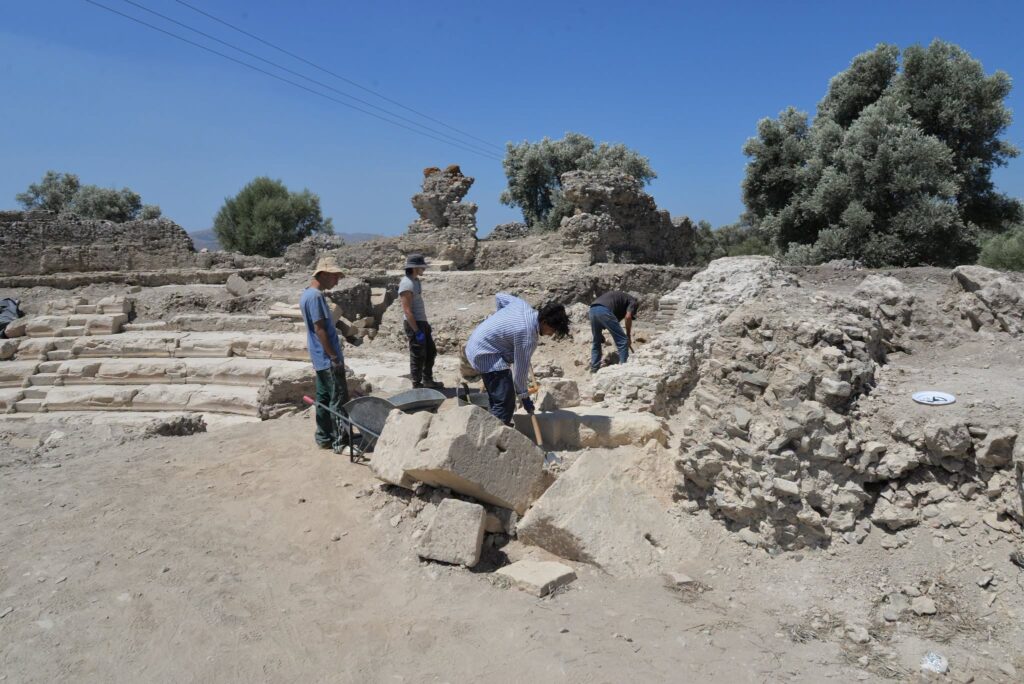
Even so, the concentration of more than 450 animals inside a votive assemblage is difficult to overlook. The excavation team believes it could reveal a previously unrecognized element of religious life at Gortyn.
Apollo was worshipped under different names and attributes across the ancient Greek world. The epithet Smintheus was associated with mice and with the god’s ability to protect communities from dangers connected with rodents.
The researchers suggest that this form of Apollo may have been worshipped at Gortyn alongside Apollo Pythios, whose presence at the sanctuary is documented during the Hellenistic period. The relationship between the two forms of the god, however, has not yet been established.
New trenches confirm the sanctuary’s early date
The 2026 campaign also examined the development of the sacred precinct itself.
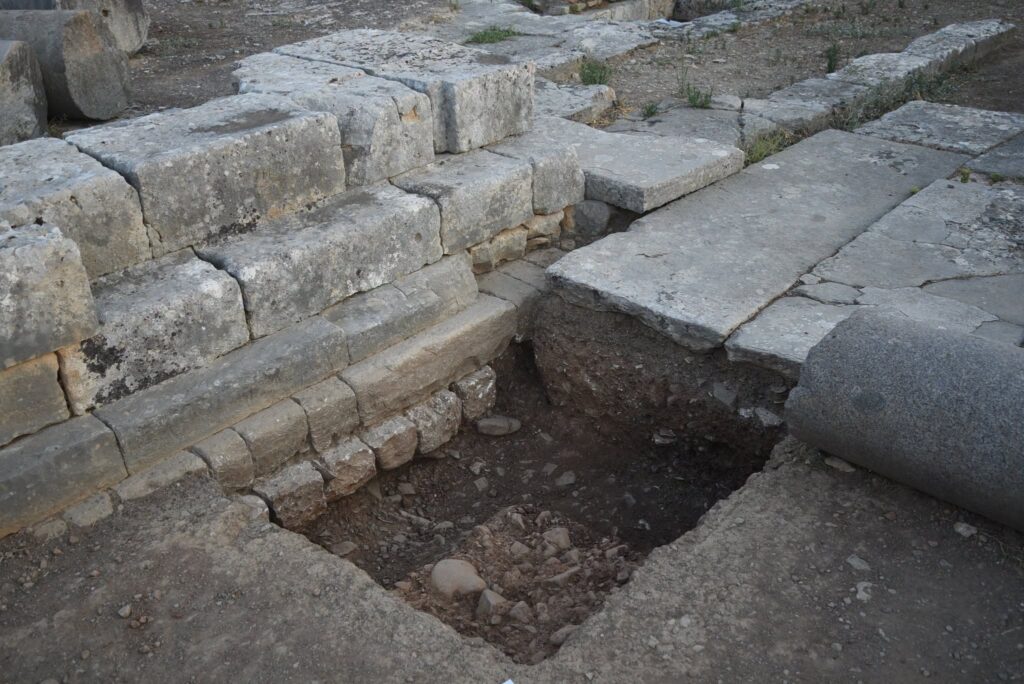
Built around the middle of the seventh century BC, the complex is regarded as one of the oldest and most elaborate places of worship connected with the formation of Crete’s early city-states. The Temple of Apollo Pythios underwent a series of architectural changes during its long history.
Archaeologists opened three new test trenches within the sanctuary during the current season. These investigations confirmed the proposed chronology of the complex while providing additional evidence about the techniques used in its construction.
The results may help researchers understand how the religious center developed as Gortyn grew from an emerging settlement into one of the most important cities of ancient Crete.
Monumental sections of the theater uncovered
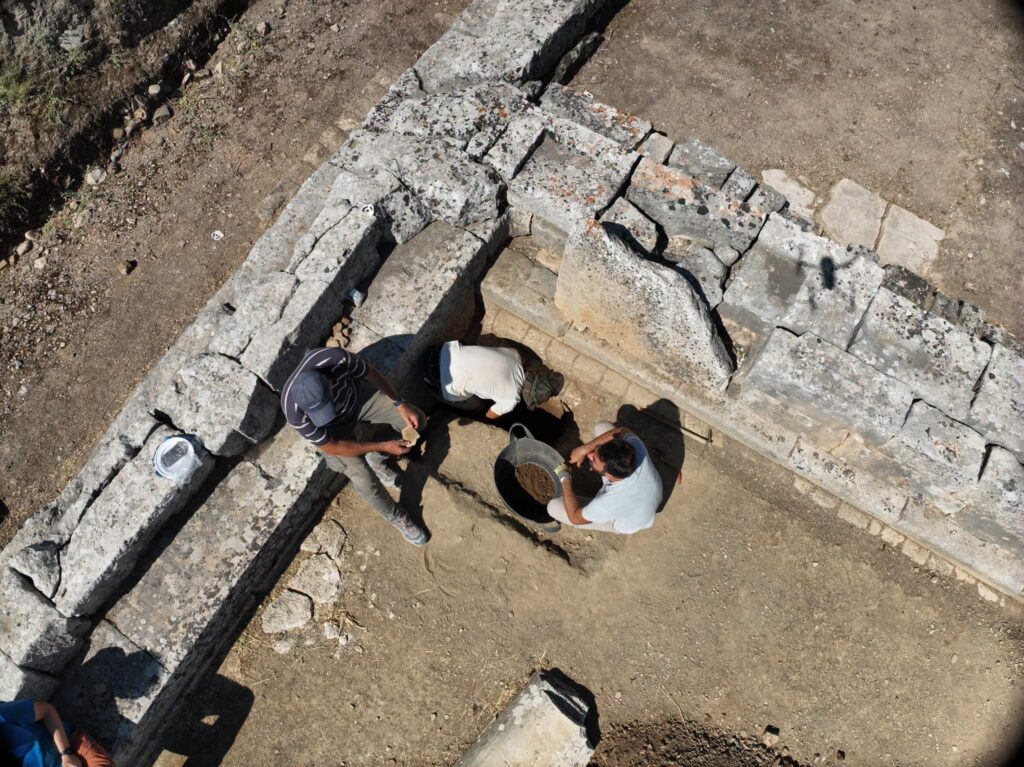
Excavations also continued in the theater located near the sanctuary.
The team uncovered substantial sections of the scaenae frons, the monumental architectural façade that rose behind the stage in Greek and Roman theaters. Collapsed structural components and decorative architectural elements were also brought to light.
These finds are expected to provide new information about the theater’s design, construction phases and later destruction. The excavation announcement does not yet provide a detailed date for the newly exposed sections.
The project brings together students and researchers from the University of Padua, Sapienza University of Rome, the University of Pisa and Ruhr University Bochum.
The mouse remains remain the most unusual discovery from the sanctuary. Their precise significance is unresolved, but their number and their presence within a votive deposit have opened a new line of investigation into the religious identity of ancient Gortyn.
Further analysis may determine whether the animals were directly connected with Apollo Smintheus or entered the deposit through a different process. Until then, the proposed cult should be treated as a compelling archaeological hypothesis rather than a confirmed conclusion.
Cover Image Credit: Scuola Archeologica Italiana di Atene.