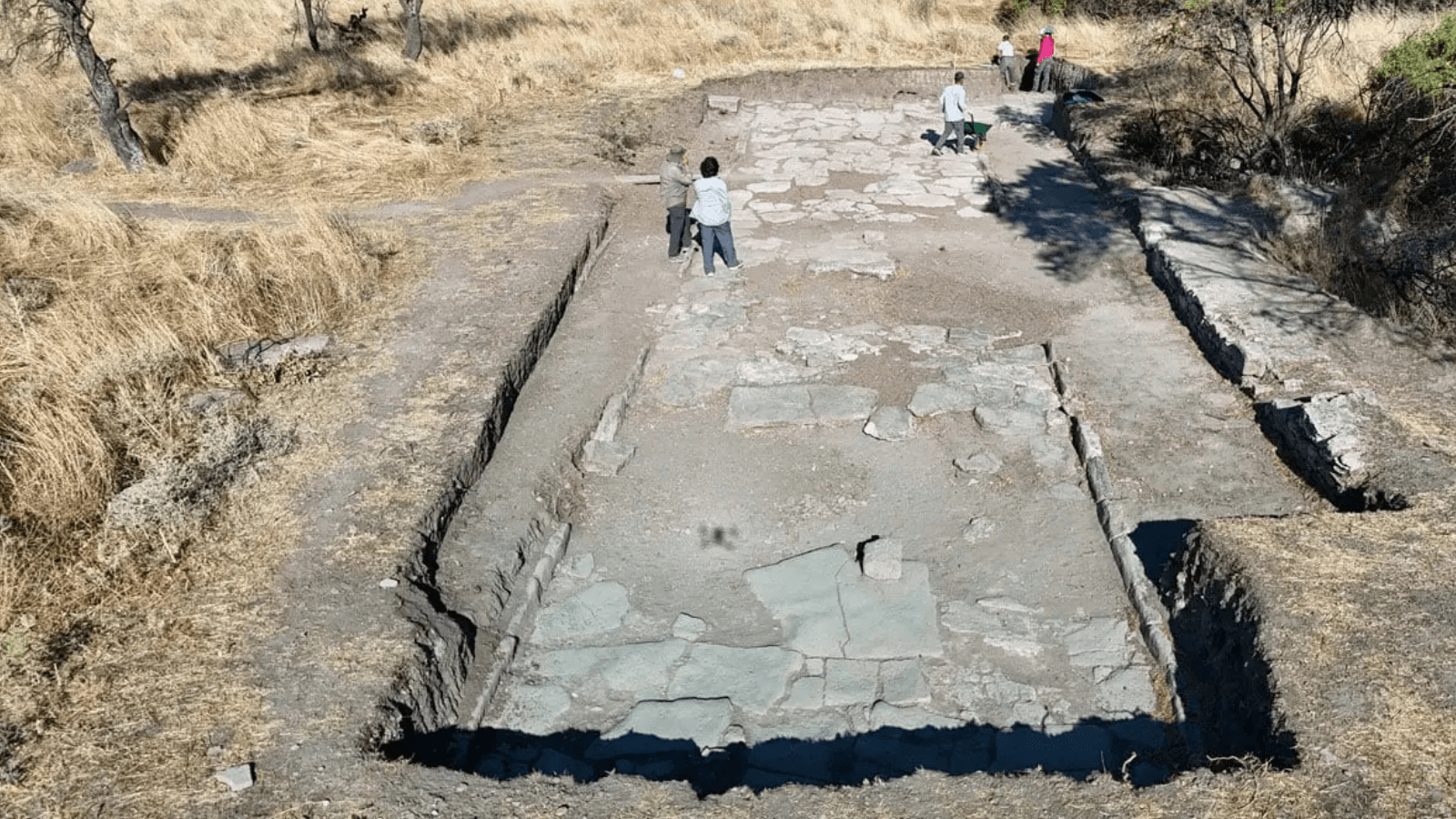
Archaeologists at Troy are uncovering a major Roman street that once ran through the lower city, exposing part of an urban landscape shaped nearly 2,000 years ago at a place Romans closely associated with their own legendary beginnings.
The street is emerging during the 2026 excavation season at the ancient site in northwestern Türkiye. Researchers are concentrating on Troy’s Hellenistic and Roman lower city, where earlier geophysical surveys had already indicated an organized network of streets and building blocks beneath the ground.
Now archaeologists are investigating that buried plan directly.
Prof. Dr. Rüstem Aslan, director of the Troy excavations, said the team is working along one of the Roman city’s major streets and intends to follow it toward the main archaeological area.
The work is revealing a very different Troy from the Bronze Age citadel associated with Homer and the Trojan War: a later city that expanded under Roman rule while the site acquired extraordinary significance within Rome’s own traditions about its ancestry.
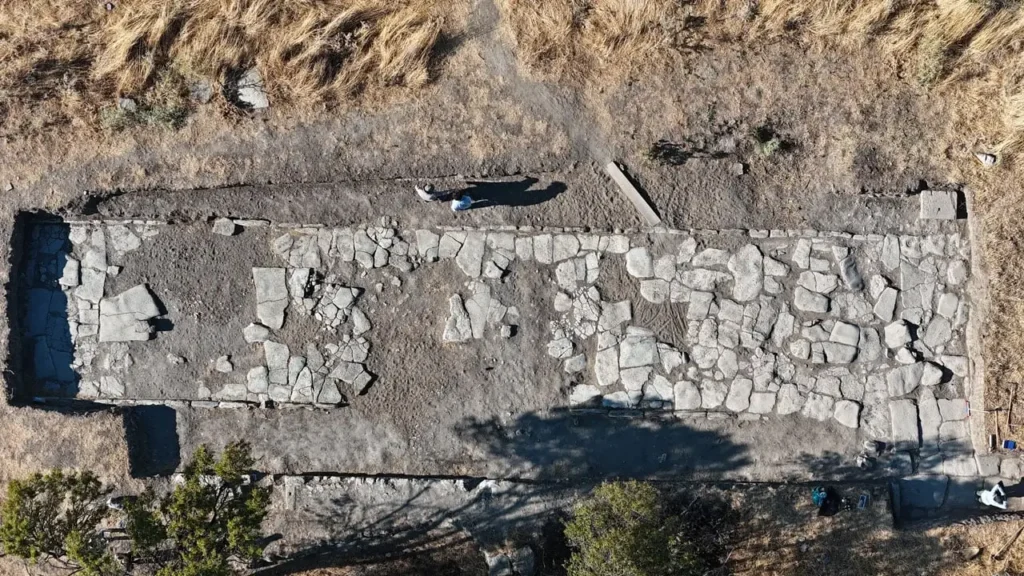
Beneath Troy lies another city
Troy is most widely known for its Bronze Age remains and its association with Homer’s Iliad, but settlement at the site continued for centuries after the period traditionally linked with the Trojan War.
By the Roman period, the city had expanded well beyond the earlier citadel into the lower city.
According to Aslan, major streets crossed Roman Troy along roughly east-west and north-south axes. Houses, shops and other structures lined these routes, creating rectangular urban blocks, or insulae.
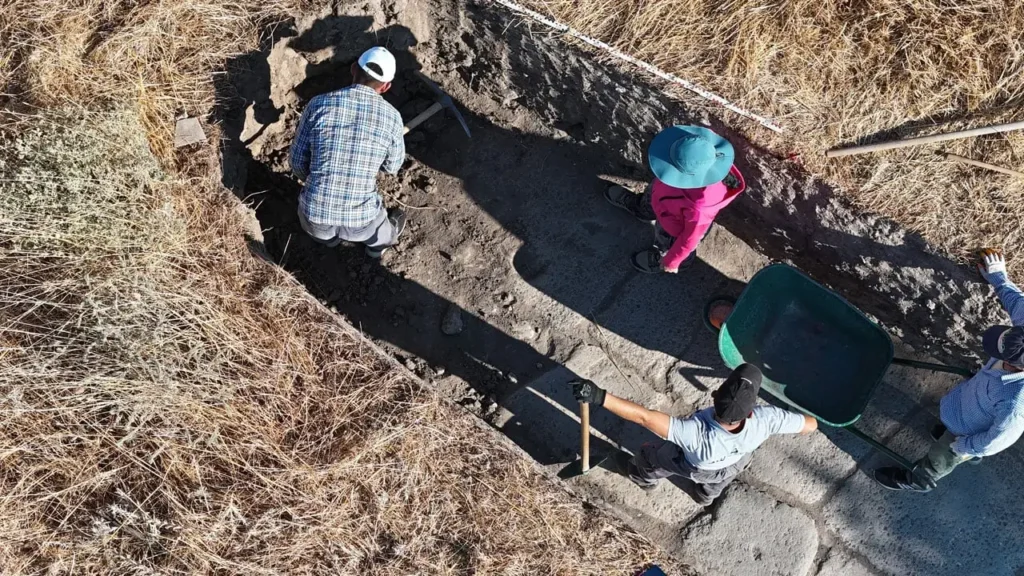
The street now under excavation belonged to this wider network.
Its existence was not entirely unexpected. Magnetic prospection carried out during the period when archaeologist Manfred Korfmann directed the Troy excavations had already revealed substantial parts of the buried lower-city plan.
Those surveys allowed researchers to identify patterns beneath the surface without excavating them. The current excavations are now testing that geophysical map directly on the ground and examining how the streets and surrounding structures developed.
Aslan said the road appears to have entered use around the late 1st century BC and remained part of Troy’s urban landscape until approximately the 6th century AD.
Its long period of use spans centuries in which Troy became increasingly important within Roman cultural memory.
Why Rome looked back to Troy
Troy’s position changed significantly during the age of Augustus.
Aslan said the emperor visited the city around 20 BC and that Troy subsequently benefited from imperial support, including the development of monumental buildings and temples.
Roman interest in the site was closely connected to Aeneas, the Trojan hero who escaped the destruction of Troy and became a central figure in Rome’s legendary ancestry.
Virgil’s Aeneid, composed during the Augustan period, describes Aeneas fleeing the ruined city with his father Anchises and his son Ascanius before traveling westward.
Aeneas did not found Rome himself. Roman tradition instead traced a line from the Trojan hero and his descendants to the ancestry that eventually produced Romulus, the legendary founder of the city.
The story gave Romans a way to place Troy near the beginning of their own imagined past.
For Augustus and later Romans, Troy was therefore more than the setting of an ancient Greek epic. It was a real landscape associated with a prestigious ancestral tradition that had become deeply embedded in Roman culture.
That connection formed part of the broader context in which Troy received sustained attention under Roman rule.
A Roman city behind the legend
Literary tradition has long dominated the image of Troy, but the lower city reveals the routines of a much later Roman settlement.
People moved through streets, entered houses and shops, and lived within a planned urban environment centuries after the age traditionally associated with the Trojan War.
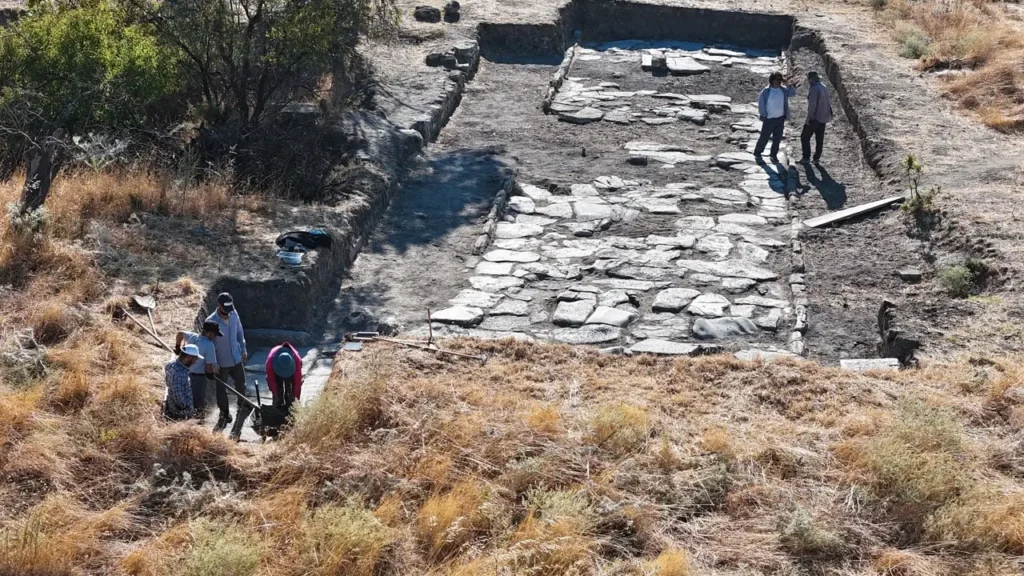
The street under excavation is important not because it proves any episode from the Trojan legends, but because it shows what happened much later, when Rome incorporated Troy into its own cultural memory.
The archaeological evidence belongs to a functioning Roman city rather than to the world described by Homer.
The excavation team now plans to follow the street farther toward the main archaeological zone and expose more of the structures associated with it.
In future seasons, part of the Roman street network could also be opened to visitors, making a phase of Troy that is often overshadowed by its Bronze Age remains much easier to see.
If the project advances as planned, visitors may eventually be able to walk through sections of the Roman lower city and view its streets and surrounding buildings as part of the archaeological landscape.
The final centuries of Roman Troy
The street remained in use into Late Antiquity.
According to Aslan, major earthquakes in the 6th century AD severely affected the settlement. Continued excavation of the lower city may provide a clearer picture of how Troy changed during the final centuries of intensive Roman-period occupation.
As excavation progresses, the newly exposed street is giving archaeologists a more detailed view of the Roman city that developed centuries after the period associated with the Trojan War.
Its stones belong not to Homer’s Troy, but to the later city in which Rome’s fascination with its supposed Trojan ancestry became part of the landscape of everyday urban life.