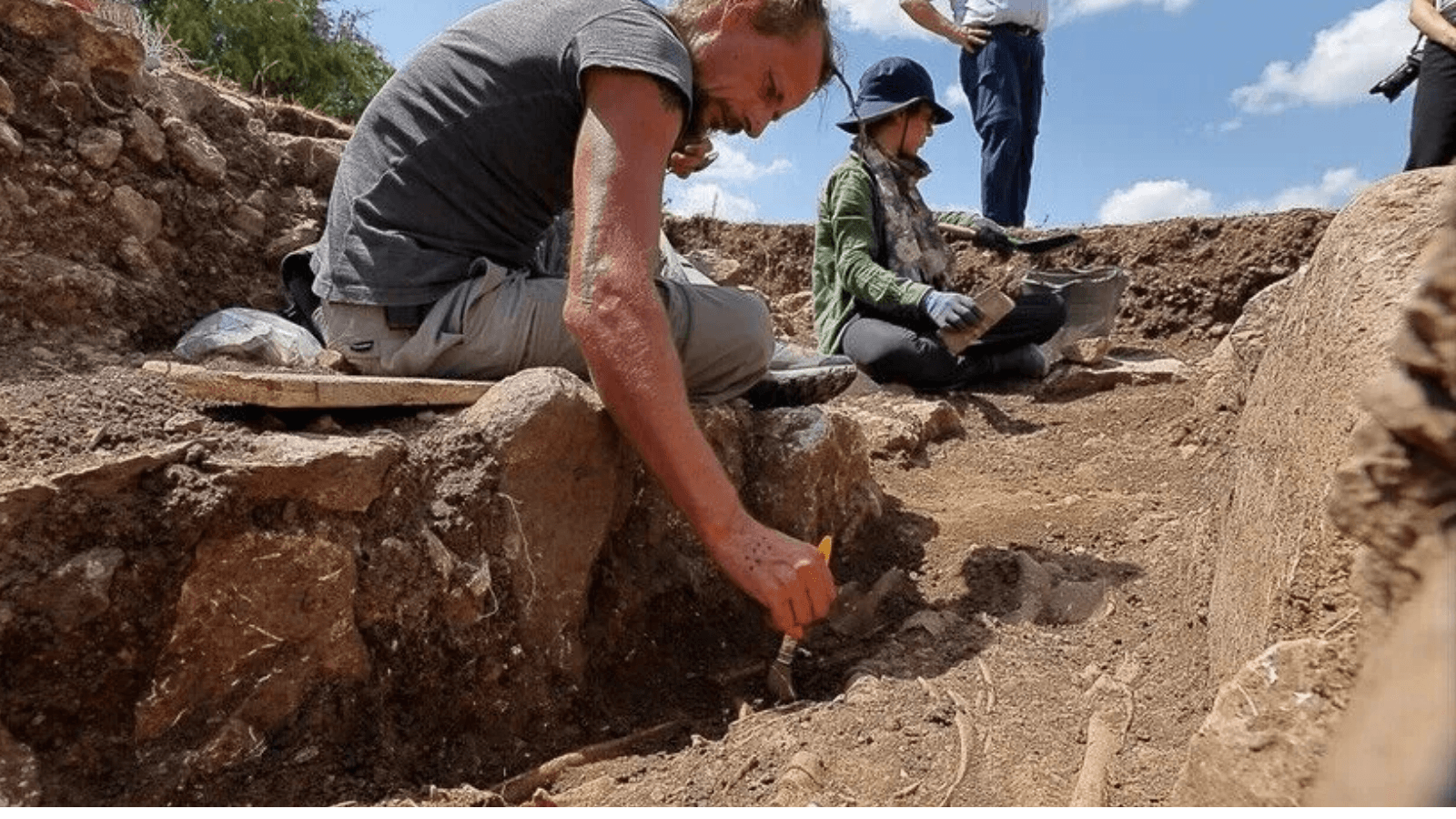
Archaeologists at Hattusa have uncovered a 2,300-year-old burial containing a complete human skeleton, with a knife lying beside the deceased’s right shoulder.
The grave was discovered on the northwestern slope of the ancient city in central Türkiye and dates to the late 4th or 3rd century BC. That places it long after Hattusa’s famous role as the capital of the Hittite Empire had ended.
The burial is one of three graves uncovered during the latest excavation season, but it immediately stood out because of its preservation.
Much of the stone-built grave architecture has survived, including a circular enclosure surrounding the burial. Together with the complete skeleton and the object found beside it, the grave offers archaeologists an unusually intact context from a period of Hattusa’s history that remains far less understood than its Bronze Age past.
A knife beside the right shoulder
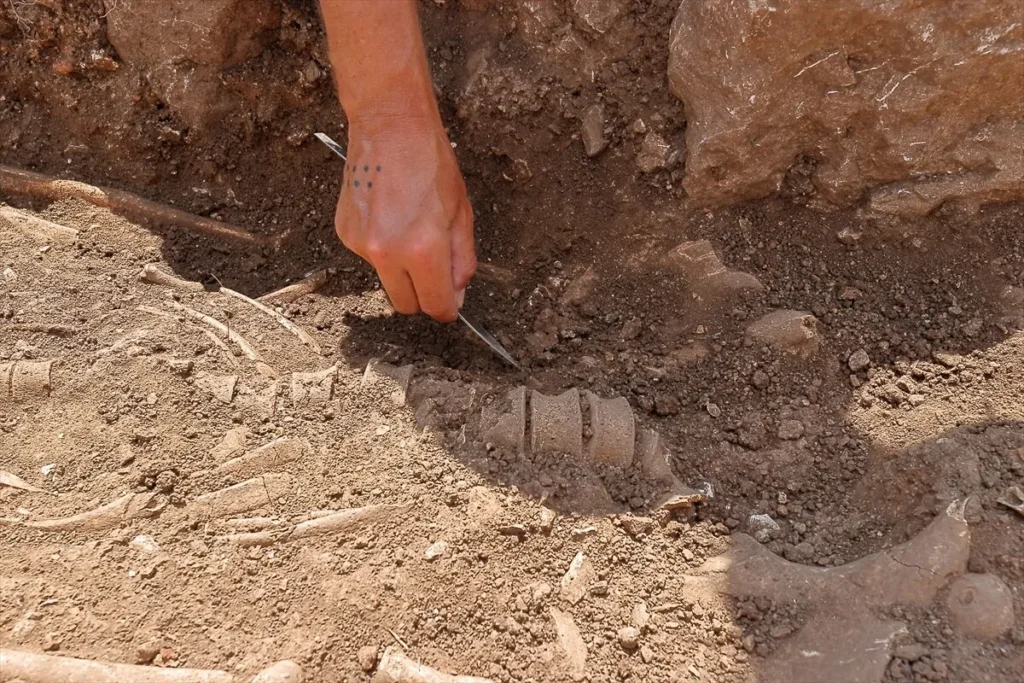
The position of the knife is one of the most intriguing details of the newly exposed burial.
It was found close to the skeleton’s right shoulder, but archaeologists are not yet assigning a specific meaning to it.
Excavation director Prof. Dr. Andreas Schachner said it remains unclear whether the knife was deliberately deposited as a grave offering or whether it was a personal object that accompanied the individual into the grave.
The biological sex of the individual has not yet been established. Schachner said the skeleton may belong to a man, while several of the previously excavated burials in the area contained women.
The grave survived almost as a complete structure
The burial was constructed as a stone cist large enough to hold an adult body.
Around it, ancient builders created a circular stone enclosure measuring approximately seven meters in diameter.
According to Schachner, the grave is the best-preserved example encountered so far among the burials investigated in this area.
Its condition allows researchers to examine the relationship between the human remains, the grave construction and the surrounding stone arrangement as part of a single archaeological context.
Seventeen graves are beginning to reveal a pattern
The newly discovered burial is part of a much larger picture now emerging at Hattusa.
Five graves were uncovered in the same area during the previous excavation season, while three more have now been identified. Another nine graves belonging to the same general period had already been documented farther west.
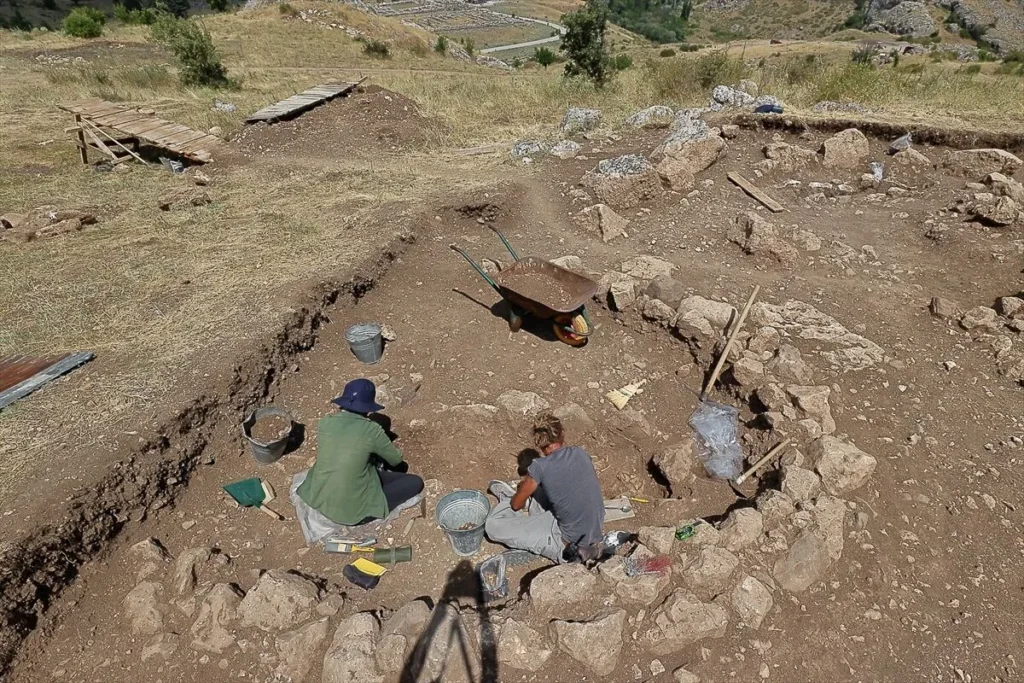
Together, they bring the number of known graves associated with Hattusa’s Early Hellenistic and Galatian phases to 17.
Their arrangement is also notable.
Rather than forming a densely packed cemetery, the graves appear to have been distributed more widely across the landscape.
Earlier burials have produced objects including coins and a cosmetic set. The knife found beside the latest skeleton adds another artifact to the growing body of evidence connected with these graves.
Taken together, the burials are beginning to provide a clearer picture of funerary practices and material culture at Hattusa during a period that has received far less attention than the city’s Hittite past.
Another Hattusa existed after the Hittites
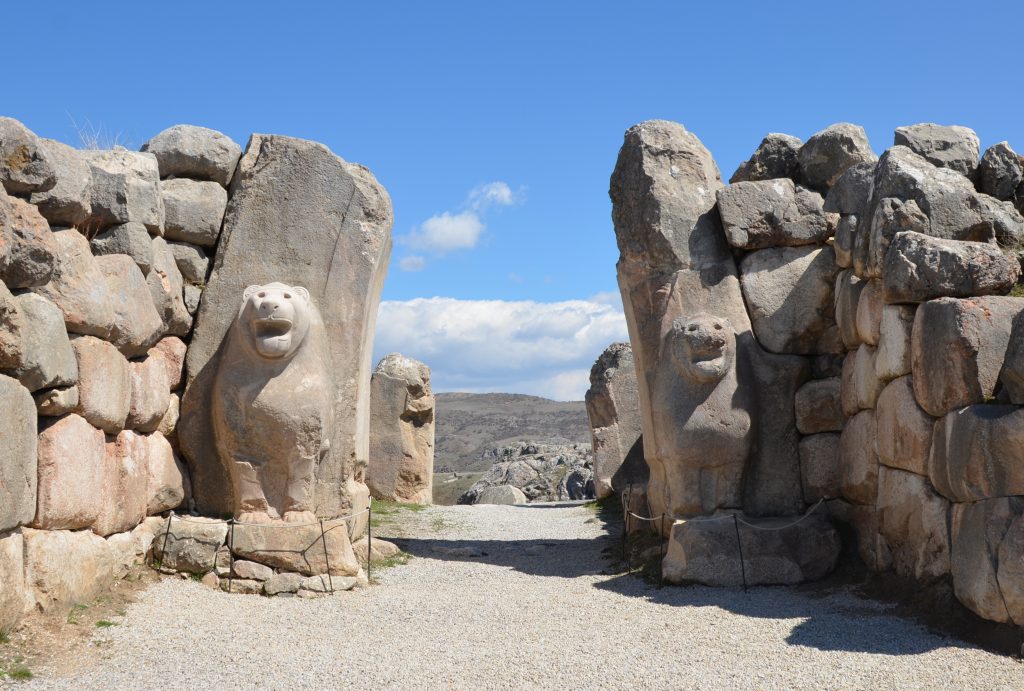
Hattusa is best known for its monumental Bronze Age remains.
Its fortifications, temples, royal buildings and gateways reflect the period when the city served as the political and ceremonial center of the Hittite Empire.
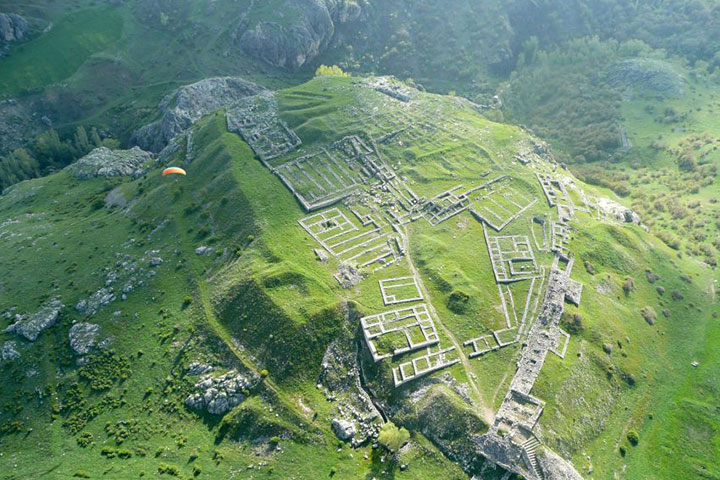
But the archaeological record of Hattusa did not end with the collapse of that empire.
Evidence from later periods shows that the site continued to be used during the Iron Age and subsequently through Hellenistic, Galatian, Roman and Byzantine times.
The newly uncovered burials belong to one of the least understood stages in that long sequence.
For archaeologists, the importance of the 17 graves lies in the direct evidence they provide for people rather than monuments. Human remains, burial architecture and grave objects can help reconstruct how communities treated their dead and how parts of the old city continued to be used centuries after the Hittite state had disappeared.
The newly discovered grave is especially valuable because so many elements survive together.
A complete skeleton, a knife beside the shoulder and an unusually intact stone enclosure now provide one of the clearest burial contexts yet recovered from this later chapter of Hattusa’s history.