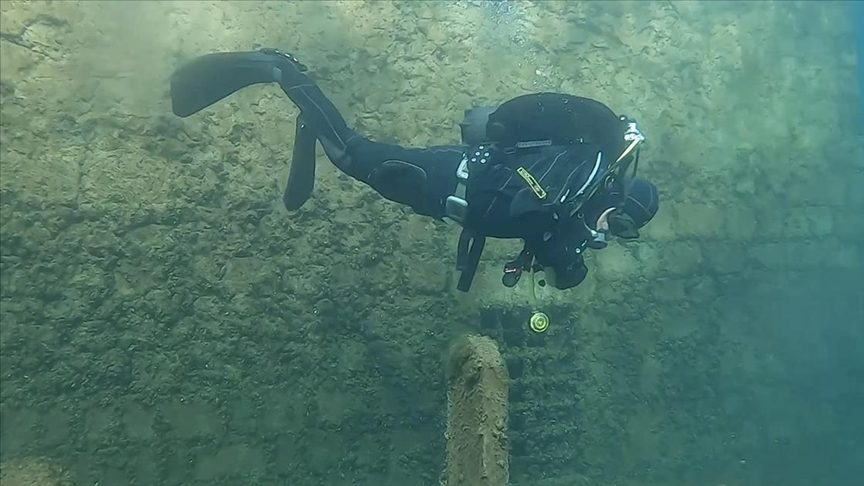
For years, the waters of the Dicle Dam have concealed what looks less like scattered ruins and more like the outline of a forgotten settlement.
Now, new underwater footage has brought that hidden landscape back into view.
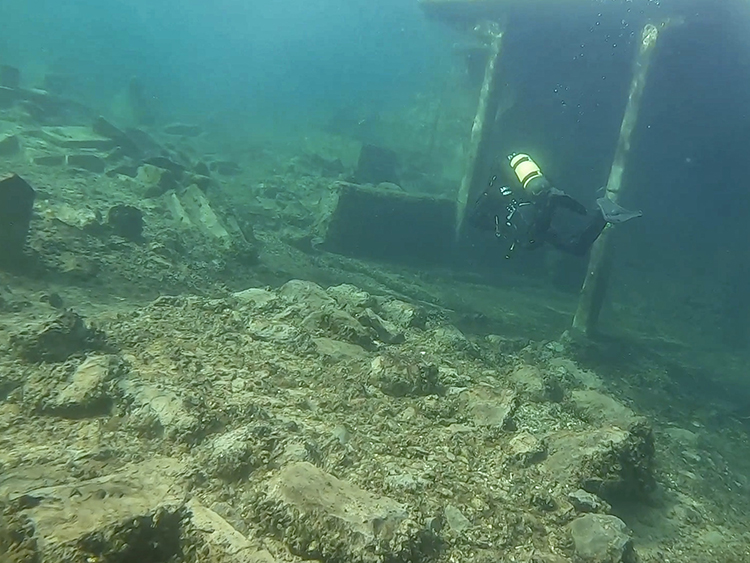
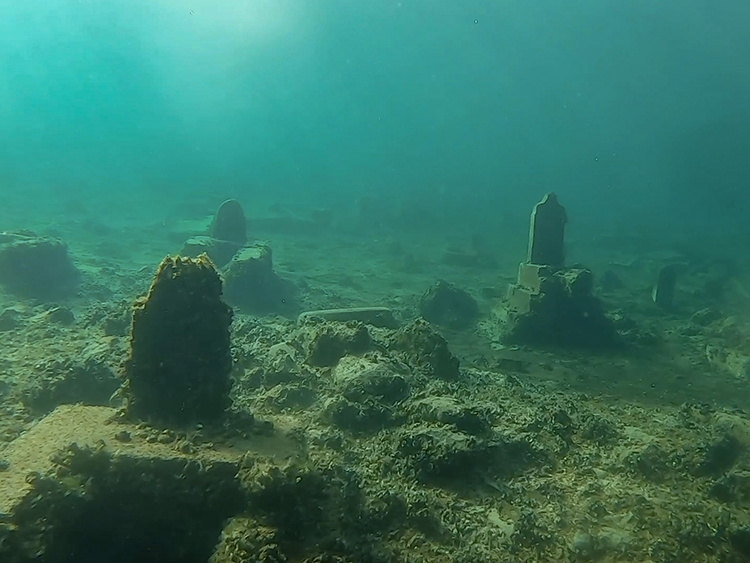
Captured during a routine dive by search-and-rescue teams in the Eğil district of southeastern Turkey, the images reveal architectural remains lying beneath the reservoir — structures that researchers say may date back roughly 2,400 years.
What emerges from the footage is not a single monument, but something broader: the submerged traces of a once-inhabited urban and sacred environment.
A district shaped by centuries of civilizations
Eğil, located about 52 kilometers from Diyarbakır, is one of those places where history never belonged to a single culture.
The earliest known settlement in the area is linked to the Hurrian-Mitanni period, followed by Assyrians, Urartians, Medes, Persians, Romans, and Byzantines. After the 7th century, the region became part of the Islamic worldadding another layer to an already dense historical landscape.
That long continuity helps explain why the underwater remains are so significant. They represent overlapping phases of life, belief, and architecture, now preserved in an unexpected way — beneath water.
What the reservoir swallowed
The transformation came with the construction of the Dicle Dam.
Work began in 1986, and by 1997 the reservoir had filled, submerging parts of Eğil’s older settlements. Entire neighborhoods, including Tekke and Hacıyan, gradually disappeared below the rising waterline.
Some of the most important religious sites were saved just in time. The tombs associated with the prophets Zulqifl and Elyesa were relocated in 1995 to higher ground at Nebi Harun Hill.
But much of the surrounding built environment remained where it stood.
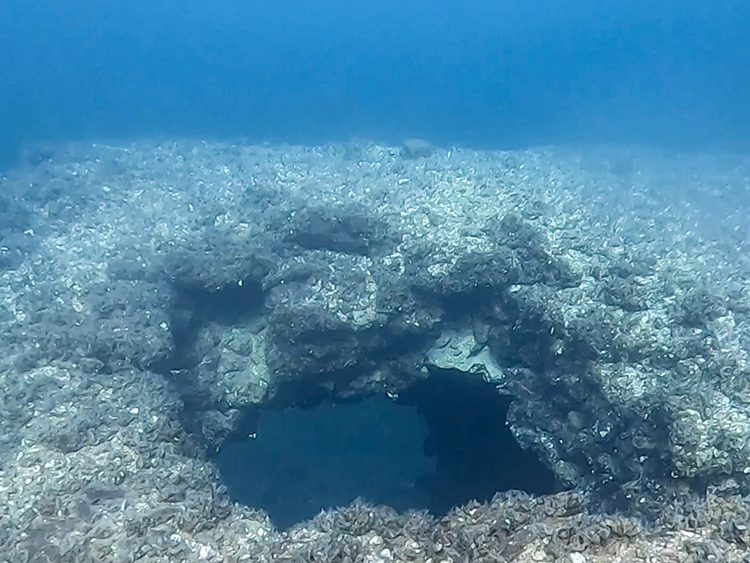
Mosques, madrasas, rock-cut tombs, cemeteries — even a Byzantine bath complex — were left behind and eventually submerged. Today, they survive as a submerged architectural landscape rather than isolated ruins.
What the new footage reveals
According to Prof. Dr. İrfan Yıldız of Dicle University, the recently recorded images offer one of the clearest glimpses yet of these structures.
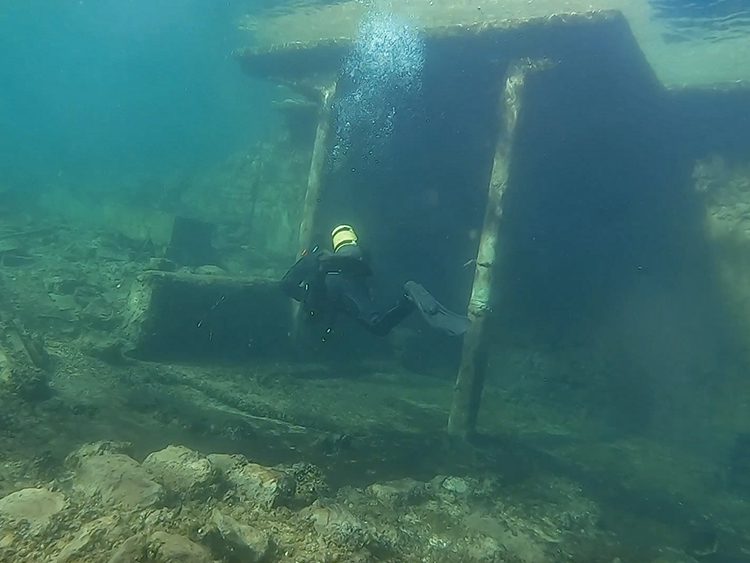
Among the visible remains are the tomb and mosque associated with Prophet Elyesa, along with the adjacent Caferiye (Lala Kasım) Madrasa. The cemetery of the former Tekke neighborhood can also be identified.
Another key structure believed to lie beneath the water is the Deran Bath, a Byzantine-era complex once positioned between the tomb area and the local castle.
Taken together, these elements suggest that the submerged zone was not peripheral. It was a functioning center of religious, social, and daily life.
Still standing beneath the water
Perhaps the most striking detail is the condition of the remains.
Despite decades underwater, many of the structures appear remarkably well preserved. Their outlines remain visible, and in some cases, their spatial relationships can still be traced.
During periods of drought, when water levels drop, parts of the submerged landscape briefly re-emerge as silhouettes within the reservoir.
For a short time, the past becomes visible again — before the water covers it once more.
A quiet archive beneath the surface
Eğil is not the only place in Turkey where dam projects have submerged historical sites. But it stands out because of the scale and coherence of what remains underwater.
Yıldız notes that the reservoir may contain structures dating back around 2,400 years and emphasizes the growing importance of underwater archaeology in Turkey.
Sites like Eğil, he suggests, represent a different kind of archaeological archive — one that has not been excavated, but has also not been destroyed.
Instead, it remains suspended in place.
And beneath the still waters of the Dicle Dam, the outlines of that older world continue to endure — quiet, intact, and waiting to be studied.