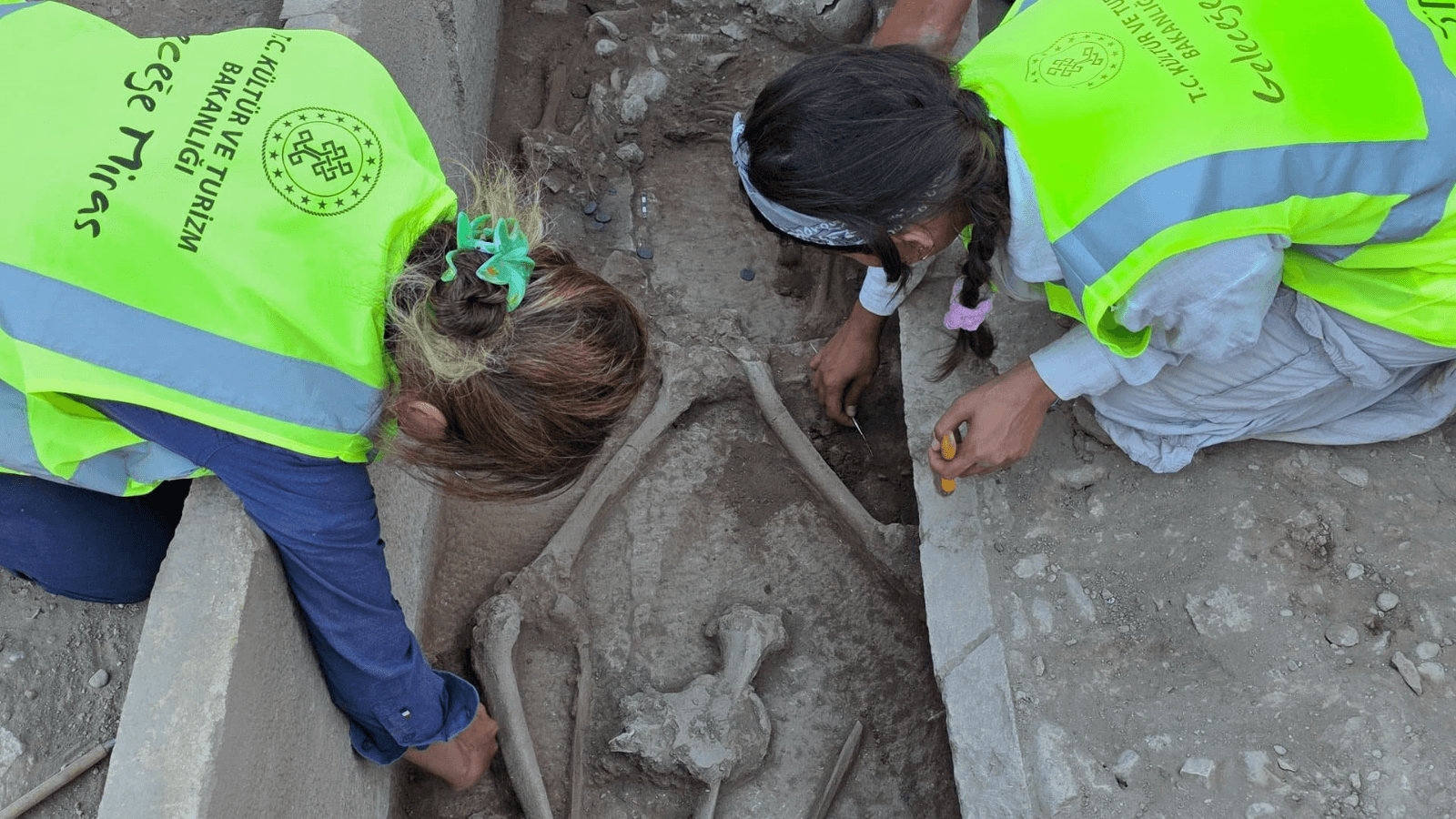
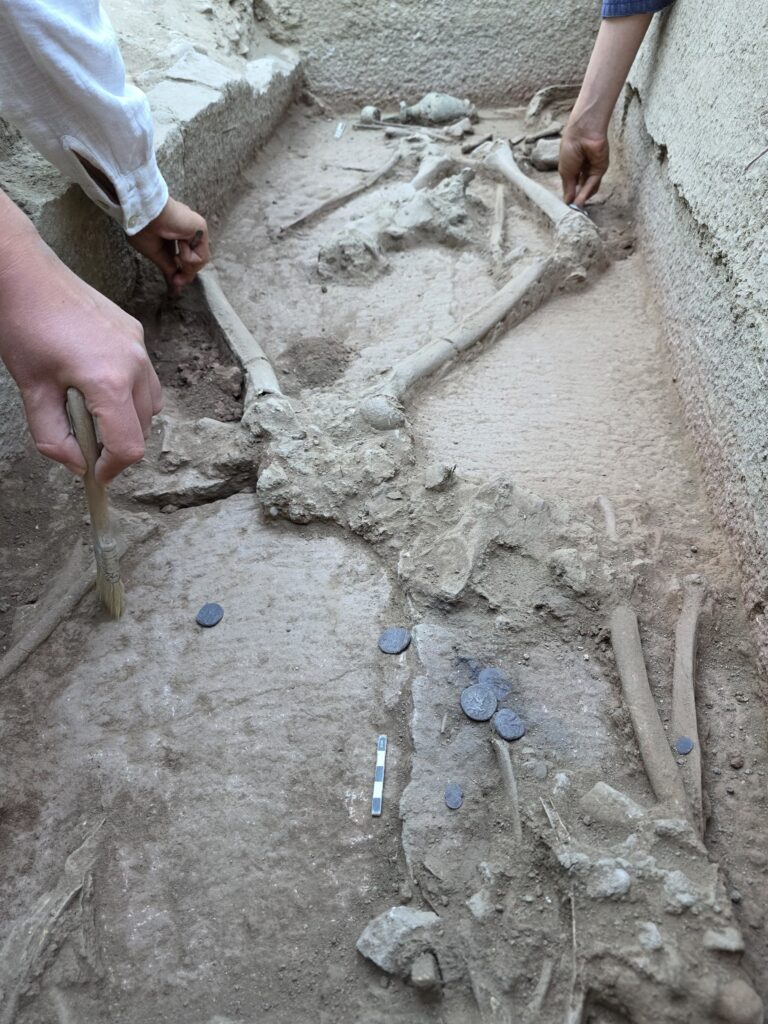
Archaeologists excavating the ancient city of Aspendos in southern Türkiye have uncovered a roughly 2,400-year-old cist grave containing coins decorated with images of wrestlers, raising the possibility that the person buried there may have been connected to sport.
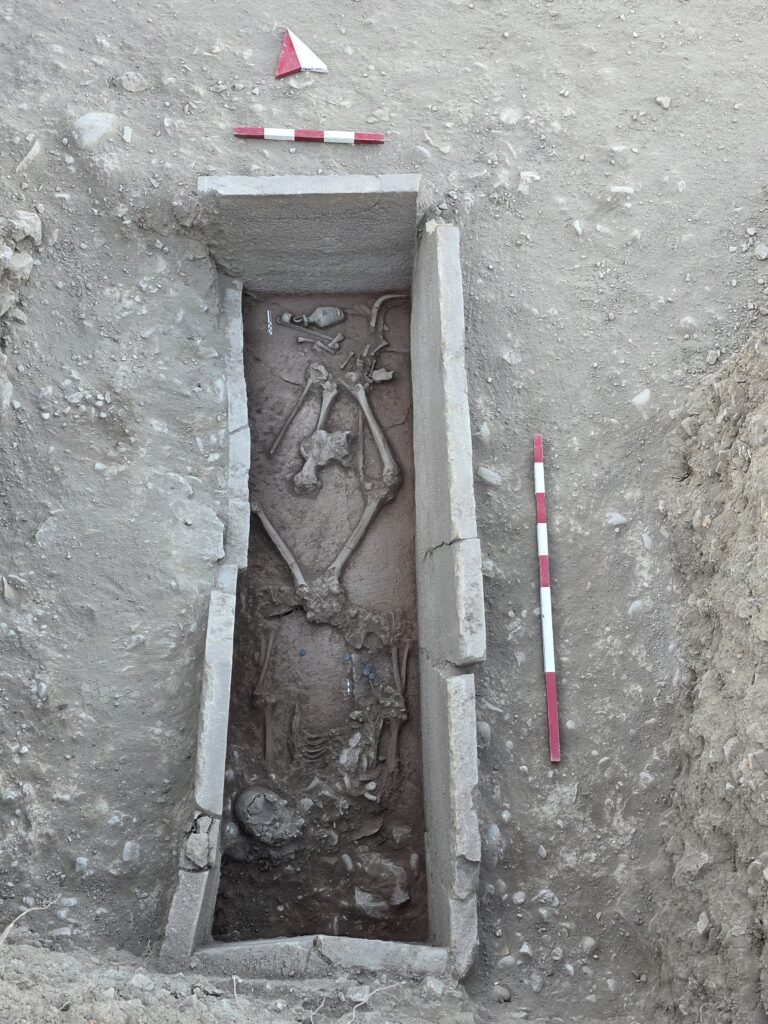
The grave was discovered in the newly identified Eastern Necropolis, the first burial area of its kind documented in this part of the ancient city. It dates from the final quarter of the 5th century BC to the 4th century BC, placing it within Aspendos’ Classical-period history.
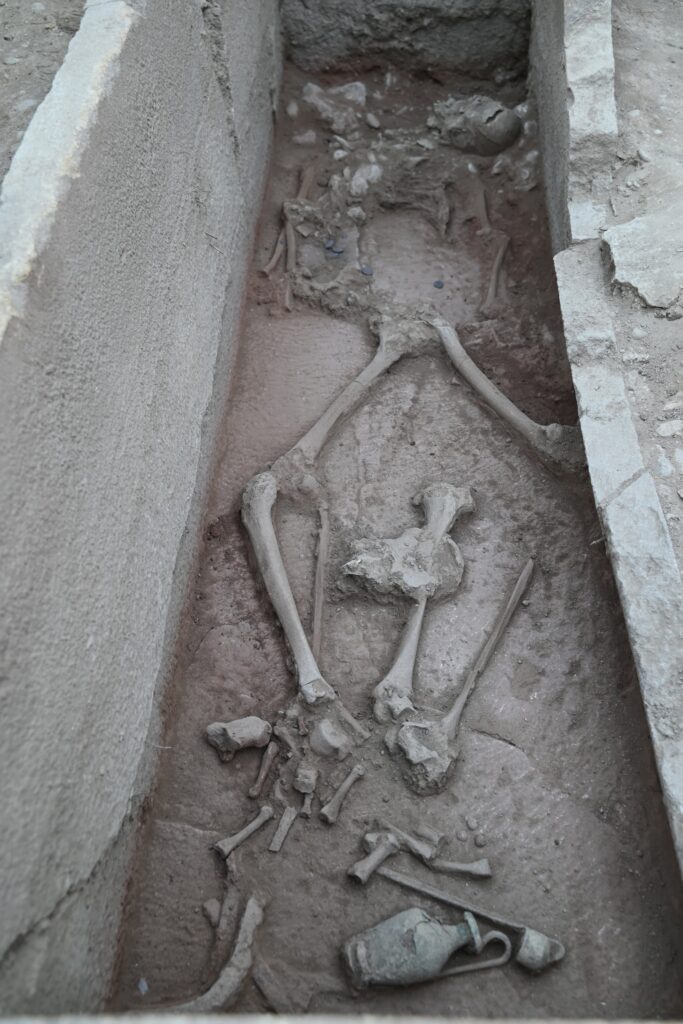
The cist grave contained the remains of a single individual, making the association between the burial goods and the deceased particularly important for researchers assessing who the person may have been.
Türkiye’s Minister of Culture and Tourism Mehmet Nuri Ersoy announced the discovery, saying that the wrestler imagery on Aspendos coins found in the grave, together with other finds, suggests the deceased may have had a connection with athletics and could even have been a local wrestler.
For now, however, the identification remains an archaeological interpretation rather than a confirmed conclusion.
A new window into Classical Aspendos
The discovery is significant not only because of the unusual grave goods, but also because it provides new evidence for an earlier phase of Aspendos that is less visible than the city’s famous Roman monuments.
Aspendos was one of the major cities of ancient Pamphylia, located near the Eurymedon River, today known as Köprüçay, in Antalya’s Serik district. The city was already an important regional center during the Classical period and issued its own silver coinage centuries before many of the monumental structures that dominate the site today were built.
The coins are especially significant because they were recovered from a securely dated burial context. Wrestler imagery was already a well-established feature of Aspendos coinage, however, so the coins alone cannot identify the deceased as an athlete. The interpretation instead rests on the coins together with the other finds recovered from the grave.
What the new necropolis reveals
Scientific excavations at Aspendos are currently directed by Assoc. Prof. Mustafa Bilgin of Afyon Kocatepe University’s Department of Art History. Bilgin has led the project since 2022, when excavations resumed under Presidential Decree.
The 2026 excavation and restoration season began on February 23 with the authorization of Türkiye’s Ministry of Culture and Tourism and the General Directorate of Cultural Heritage and Museums.
The identification of the Eastern Necropolis now adds an important element to the known topography of Aspendos. Beyond the possibility that the grave belonged to a wrestler, the burial area offers archaeologists fresh evidence for how the city’s inhabitants buried their dead and organized space during the Classical period.