Ancient DNA recovered from more than 500 woolly mammoths has revealed an unexpected pattern in the relationship between Ice Age people and one of the largest animals they shared the landscape with: at archaeological sites associated with human activity, female mammoths vastly outnumber males.
An international team analyzed genomic data from 521 woolly mammoths from Eurasia and North America, including 448 individuals whose DNA was sequenced for the first time. Among mammoths recovered from major human-associated bone accumulations, around 70 percent were female.
The pattern was almost the reverse of what researchers found among mammoths preserved in natural settings. The contrast provides population-scale genetic evidence that human activity, rather than natural mortality alone, played a major role in creating some of the great mammoth bone accumulations of the Upper Paleolithic.
The findings were published in the journal Current Biology in a study examining how ancient DNA can help distinguish natural mammoth deposits from those shaped by prehistoric people.
A striking difference between archaeological and natural sites
Researchers compared genomic data from 100 mammoths recovered at 11 archaeological sites across Eurasia with another 421 individuals from more dispersed natural deposits in Eurasia and North America.
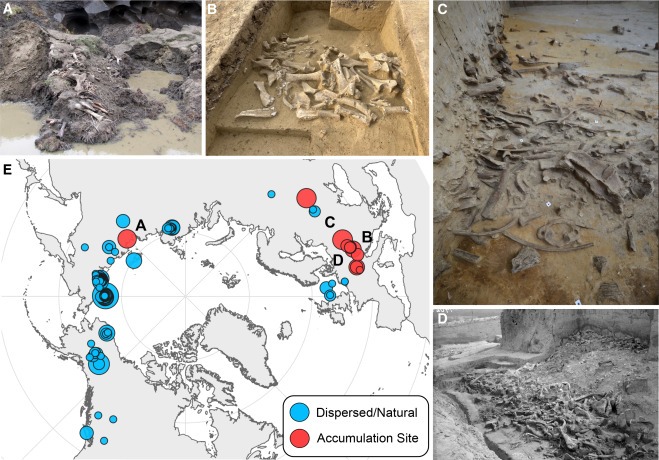
Many of the archaeological specimens date to roughly 30,000–20,000 years ago, when mammoths remained an important resource for hunter-gatherer communities across the cold landscapes of Late Pleistocene Eurasia.
The difference between the two groups was substantial.
Among mammoths from natural deposits, roughly two-thirds were male and only about one-third female. At archaeological sites associated with human activity, the pattern was reversed: approximately 70 percent of the animals were female.
The male bias in natural deposits fits what researchers might expect if woolly mammoths behaved broadly like modern elephants. Adult males likely spent substantial periods alone, making them more susceptible to natural hazards such as sinkholes, unstable terrain or other traps where their remains could later be preserved.
That explanation, however, cannot account for the strong concentration of females at sites shaped by human activity.
Kraków Spadzista offers key archaeological evidence
One of the sites included in the study is Kraków Spadzista in southern Poland, a major Upper Paleolithic locality known for its exceptionally large accumulation of woolly mammoth remains.
The new genetic analysis included 26 mammoths from the site.
At Kraków Spadzista, the evidence for human involvement extends beyond the sheer number of bones. Archaeologists have documented projectile points associated with mammoth remains, cut marks and spatially organized concentrations of bones, all of which have contributed to long-running debates over how the site was formed.
The newly identified female bias adds another line of evidence.
Rather than representing a random sample of mammoths that died naturally in the surrounding landscape, the animals accumulated at Kraków Spadzista and comparable archaeological sites appear to have been shaped, at least in part, by deliberate human behavior.
Were hunters deliberately selecting female mammoths?
One explanation may seem straightforward: female woolly mammoths were generally smaller than fully grown males and therefore may have been easier targets for prehistoric hunters.
But the researchers caution against reducing the pattern to simple prey selection.
There is direct archaeological evidence that Upper Paleolithic people sometimes hunted mammoths. Projectile weapons have been found embedded in mammoth bones at some sites. Yet hunter-gatherers could also have exploited animals that died naturally, taking meat, fat, hides, bones and ivory from carcasses they encountered.
The female-heavy archaeological record therefore does not necessarily mean that every animal represented at these sites was deliberately hunted.
Mammoth social behavior may offer another explanation.
If woolly mammoths lived in social groups comparable to those of modern elephants, females and their young probably moved in matriarchal herds, while mature males were more often solitary. Other proboscidean fossils, including 7.7-million-year-old elephant remains found in Anatolia, also show how deeply these animals are embedded in the prehistoric record.
Such herds would not necessarily have been easy prey. A group of large animals capable of defending one another could have posed a serious danger to hunters.
Their movements, however, may have been more predictable.
Female-led herds following established routes between feeding grounds, water sources and seasonal habitats could have been easier for hunter-gatherers to locate repeatedly than solitary males moving more independently across the landscape.
Humans may therefore have encountered female mammoths more frequently, whether during deliberate hunts or while exploiting animals that had already died.
Mammoths were a crucial Ice Age resource
For Upper Paleolithic communities, a mammoth represented far more than a source of meat.
A single carcass could provide large quantities of meat and fat, hides for practical use, bones suitable for tools and structures, and ivory that could be transformed into implements, ornaments and works of art.
This is why the origins of large mammoth bone concentrations have remained an important archaeological question.
Some may have resulted from hunting. Others may have formed through repeated scavenging or the movement of bones by people after animals died naturally. In many cases, several processes may have contributed to the same site.
The genetic sex ratios now provide archaeologists with an additional way to investigate those possibilities.
The strong contrast between natural deposits dominated by males and archaeological accumulations dominated by females suggests that human behavior left a measurable biological signature in the mammoth fossil record.
Ancient DNA can reveal behavior as well as ancestry
Ancient DNA is most commonly used to reconstruct evolutionary relationships, population changes and migrations. This study shows that large genomic datasets can also answer archaeological questions about behavior.
By determining the biological sex of hundreds of individual mammoths and comparing the contexts in which their remains were found, researchers identified a pattern that would have been difficult to recognize from skeletal remains alone.
The study also produced a separate genetic discovery: one mammoth from Wrangel Island showed an unusual X0/XX mosaic sex-chromosome pattern, which the researchers describe as the first documented case of such a condition in an extinct species.
For archaeology, however, the broader finding is the more significant one.
Tens of thousands of years after Ice Age people encountered woolly mammoths across Eurasia, DNA preserved inside the animals’ bones is revealing that the mammoth remains found at archaeological sites were not simply random collections of animals. Human choices helped shape which mammoths entered the archaeological record — and female mammoths appear to have been encountered and exploited far more often than males.
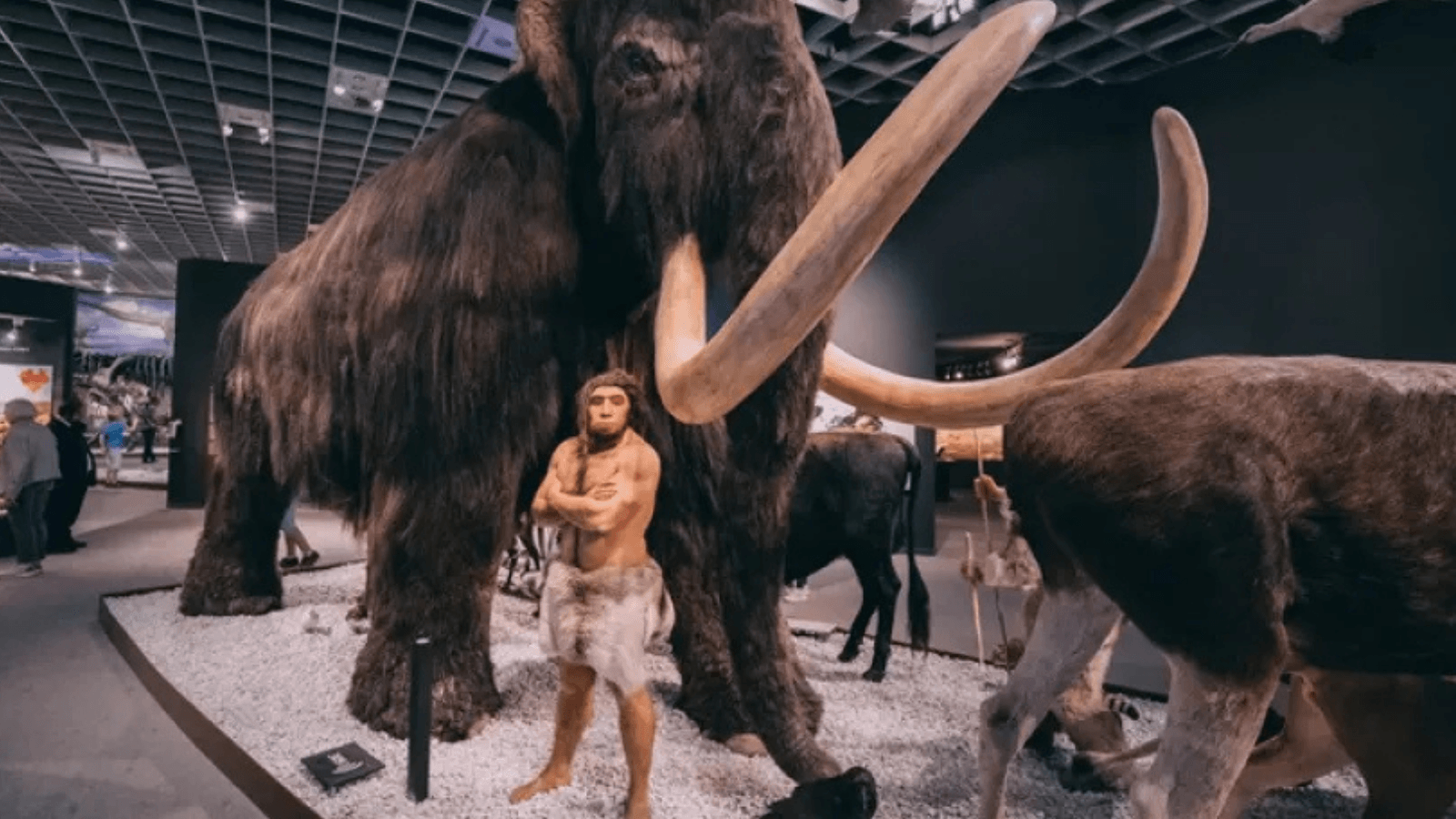
Cover Image: A reconstruction of a woolly mammoth and an Ice Age hunter. Ancient DNA analysis is revealing new details about how prehistoric humans interacted with mammoths. Natural History Museum, Münster, Germany. Credit: Adobe Stock.