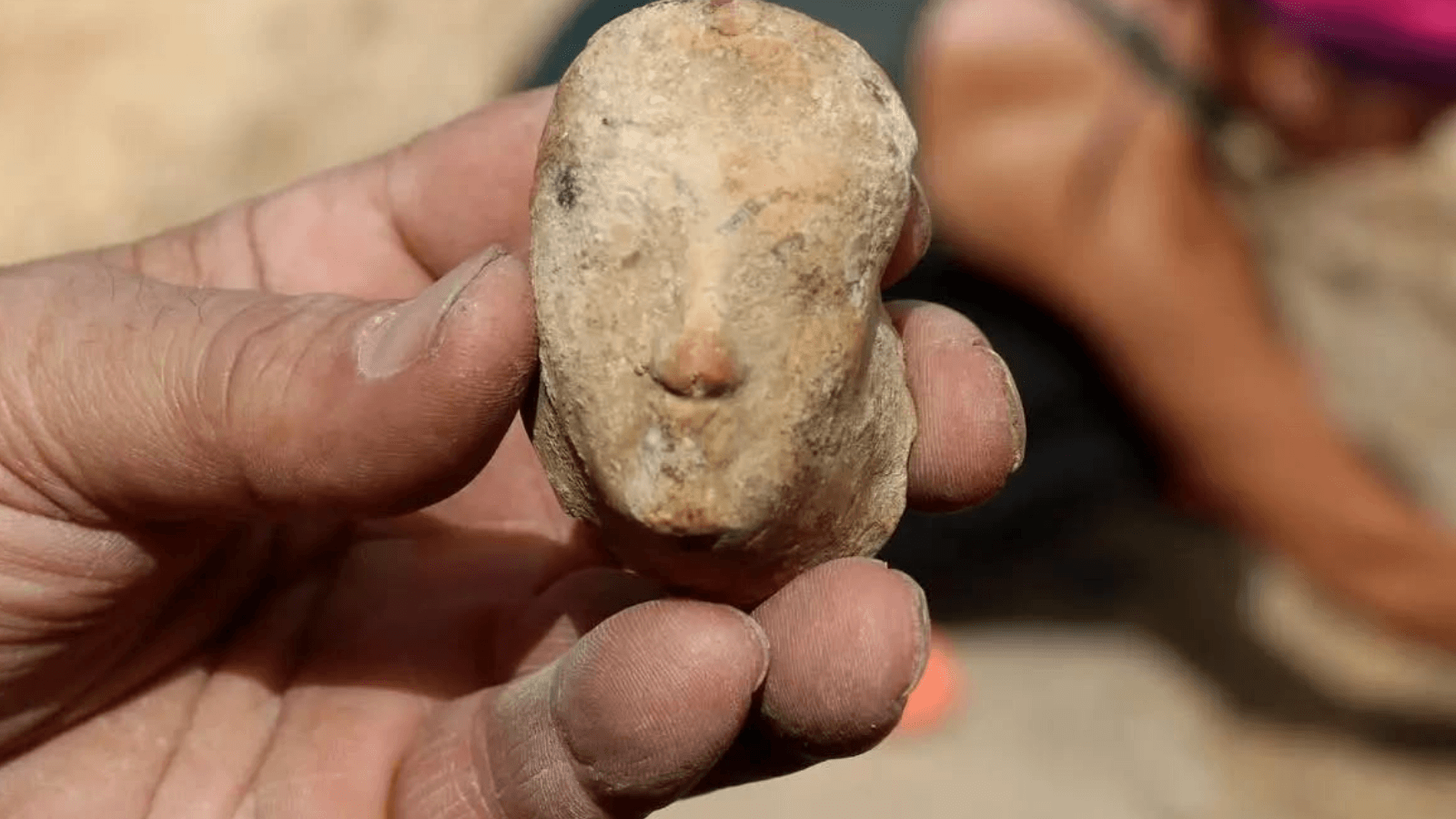
Archaeologists excavating the ancient Greek settlement of Empúries in northeastern Spain have uncovered new evidence of daily life inside one of the earliest houses of Neapolis, including a kitchen, storage vessels and an unusual painted female head that may represent a siren.
The ceramic fragment dates to the 6th century BC, when the Greek settlement of Neapolis was first taking shape beside the Mediterranean coast. It once belonged to an askos, a small vessel used to hold and pour liquids such as oil or wine.
Part of the original painted decoration survives on the face, including details of the eyes and eyebrows. Archaeologists believe the figure may depict a siren, a creature of Greek mythology commonly represented in Archaic art with a woman’s head and the body of a bird.
Pere Castanyer, an archaeologist at Empúries, described the find as unusual because this is the first known askos from the site decorated with this type of female figure.
Found inside an early Greek home
The fragment was discovered inside one of the earliest houses excavated in the ancient harbor district. The dwelling was arranged around a central courtyard, with several rooms opening onto it.
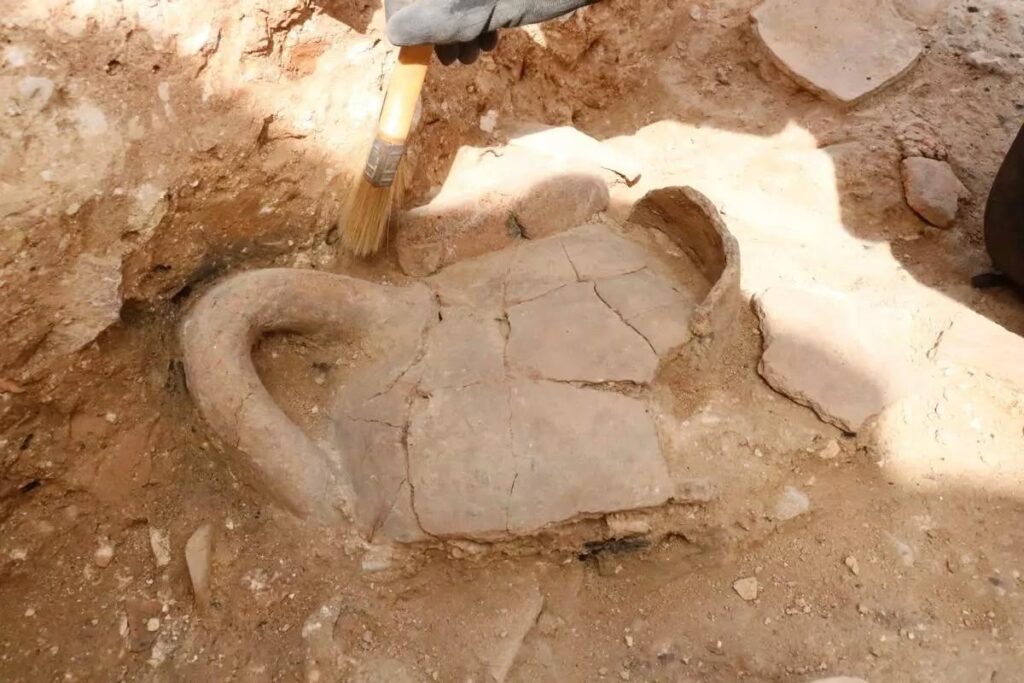
Archaeologists were also able to identify the house’s kitchen. Excavations revealed traces of a hearth as well as fragments of amphorae used for storing food and liquids. One of the amphorae was of Etruscan origin, reflecting the wider Mediterranean trading networks in which Emporion participated.
The location of the painted head is particularly interesting because vessels of this type are often associated with funerary or ritual contexts. Finding one in a domestic setting raises questions about how it was used by the people who lived in the house.
Researchers have not ruled out a possible connection with a sanctuary later constructed nearby, but the exact purpose of the object remains uncertain.
A glimpse into the earliest Neapolis
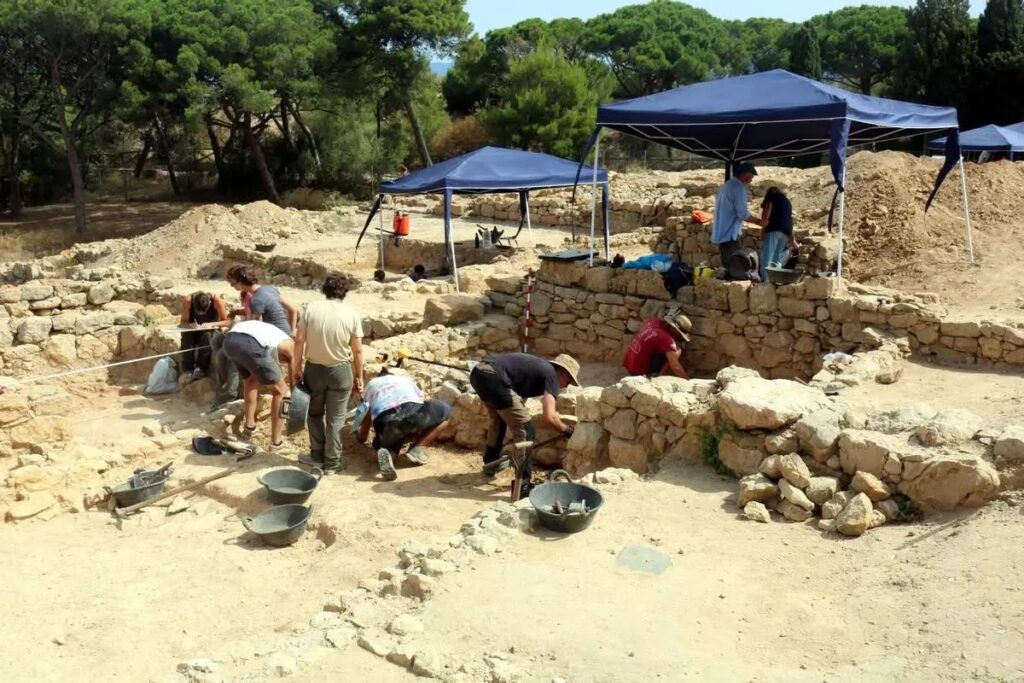
The excavation forms part of ongoing research into the ancient harbor district of Empúries, where archaeologists have been working since 2018.
About ten houses have so far been investigated in an area that once sloped toward the natural beach and Greek harbor. Their remains span several centuries, from the foundation of Neapolis around 540 BC into the Roman period.
Other discoveries from the area include a well-preserved hearth in a 5th-century BC house, amphora fragments, an intact single-handled jug and a Hellenistic stone-built reservoir.
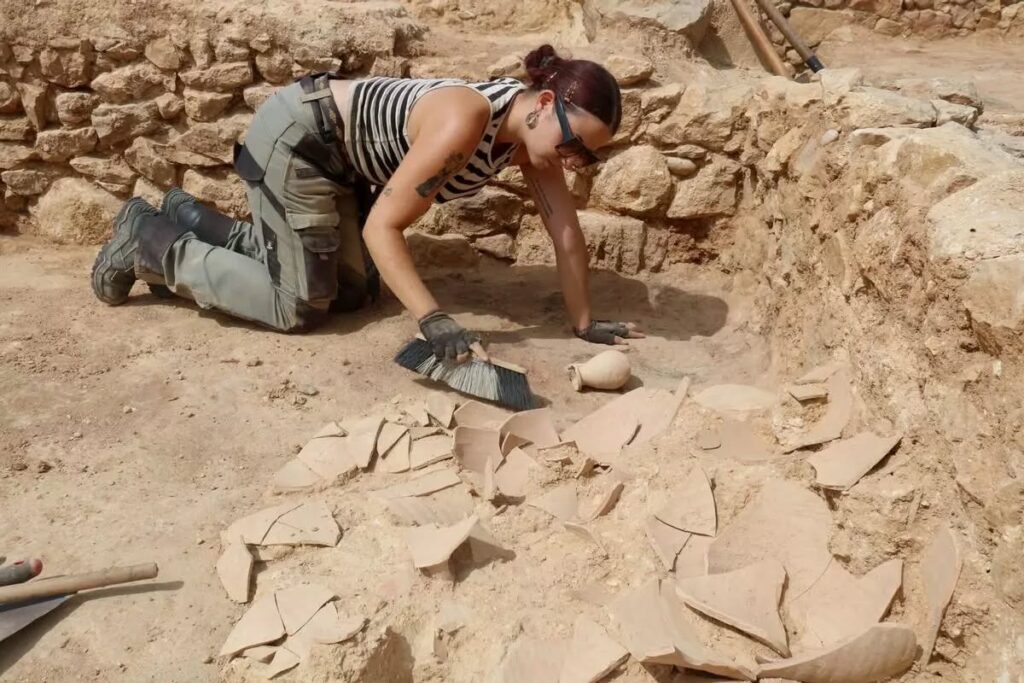
The excavations have also shown that the basic street layout of the harbor quarter remained largely unchanged throughout much of the city’s history. Although individual houses were demolished and rebuilt, the original grid established during the early Greek settlement continued to shape the neighborhood for centuries.
Together, the finds provide a rare view of everyday life in one of the western Mediterranean’s most important Greek trading settlements. Rather than monumental architecture, the latest discoveries preserve the more ordinary spaces where people cooked, stored food and used household vessels around 2,500 years ago.