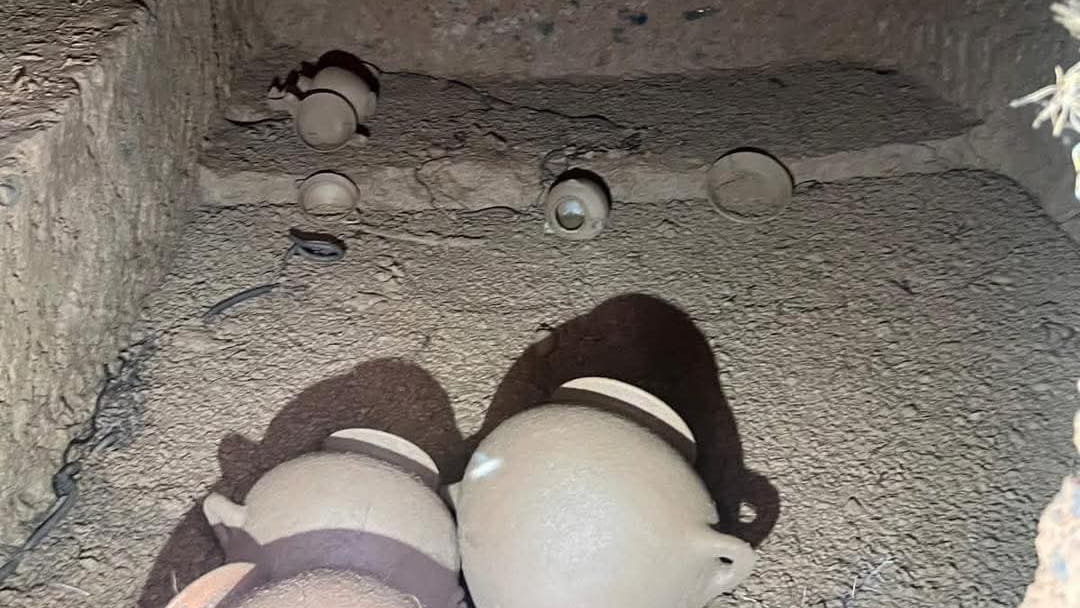
Archaeologists in central Italy have opened a 2,700-year-old untouched Etruscan tomb containing two burials and a rich collection of grave goods, including a spearhead, bucchero cups, storage vessels and at least one aryballos.
The tomb was discovered in the Caiolo necropolis within the archaeological area of San Giuliano, near Barbarano Romano in the Lazio region, north of Rome. It is the second intact Etruscan tomb found in the same area in about a year, a rare development in a region where ancient burial chambers were often damaged or emptied by tomb robbers.
A Sealed Tomb in the Caiolo Necropolis
The burial chamber was identified on June 9, 2026, during the new excavation campaign led by Baylor University under the direction of Professor Davide Zori. The work is being carried out in collaboration with the Superintendency of Archaeology, Fine Arts and Landscape for the province of Viterbo and Southern Etruria.
According to the first assessment, the tomb probably dates to the end of the 7th century BC. That places it in the Orientalizing period of Etruscan history, a time when elite burials often included imported objects, refined ceramics and grave goods that reflected status, identity and wider Mediterranean contacts.
The chamber was still sealed by a large closing slab when archaeologists reached it. That detail is crucial. In Etruscan archaeology, an untouched tomb does not only preserve objects. It preserves the relationship between the bodies, the grave goods and the original burial arrangement.
Two People Inside the Chamber
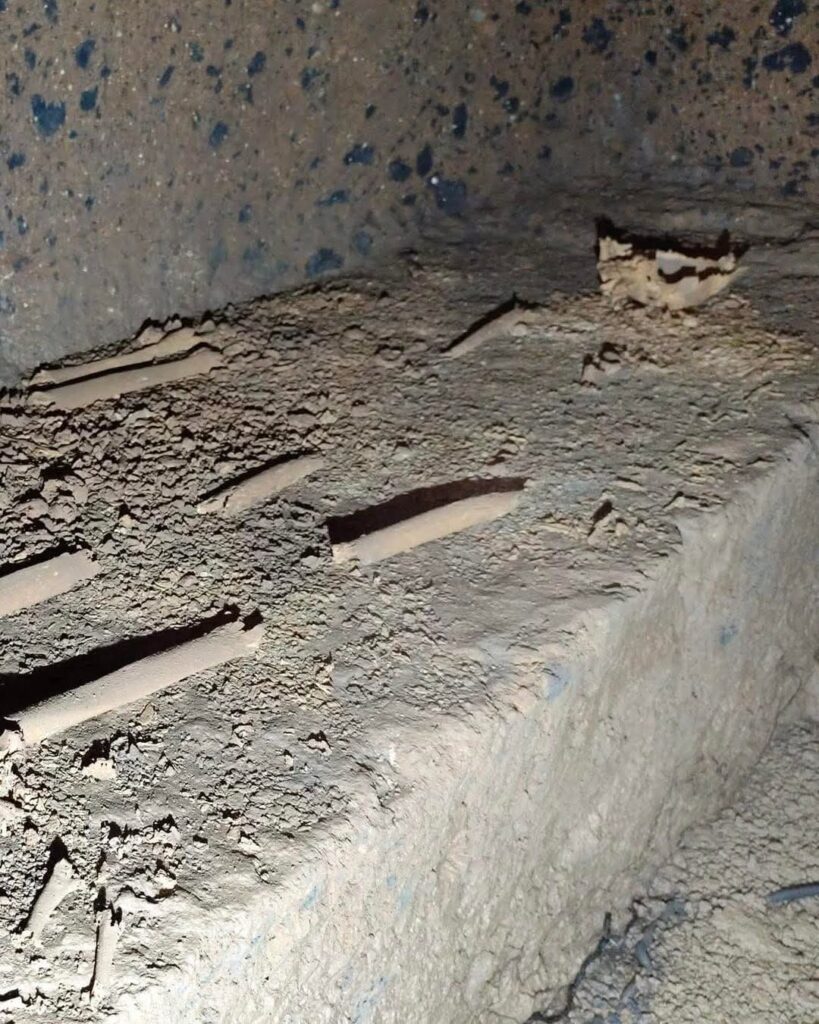
Initial observations suggest that the tomb held two individuals. One of them may have been male, based on the spearhead found near the body. The interpretation remains preliminary until the bones are studied in detail.
Part of the skeletal material is still preserved. This could allow specialists to examine age, sex, health conditions and perhaps even biological relationships between the two buried individuals.
For now, the tomb’s undisturbed condition is the most important point. The position of the bodies and the placement of the objects may help researchers reconstruct how the burial was arranged nearly 2,700 years ago.
Bucchero Cups, Vessels and an Aryballos
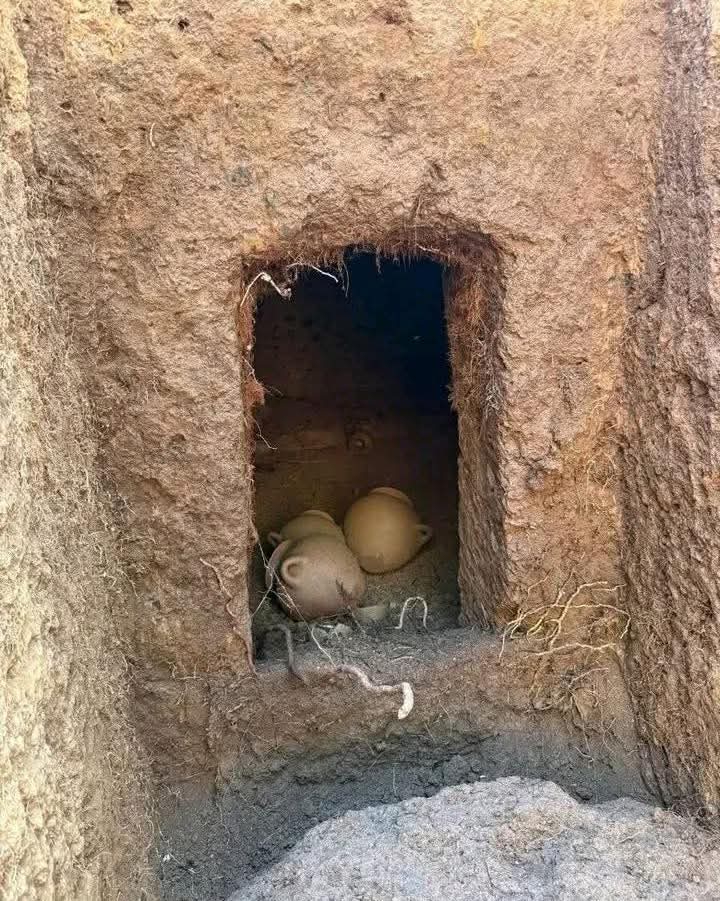
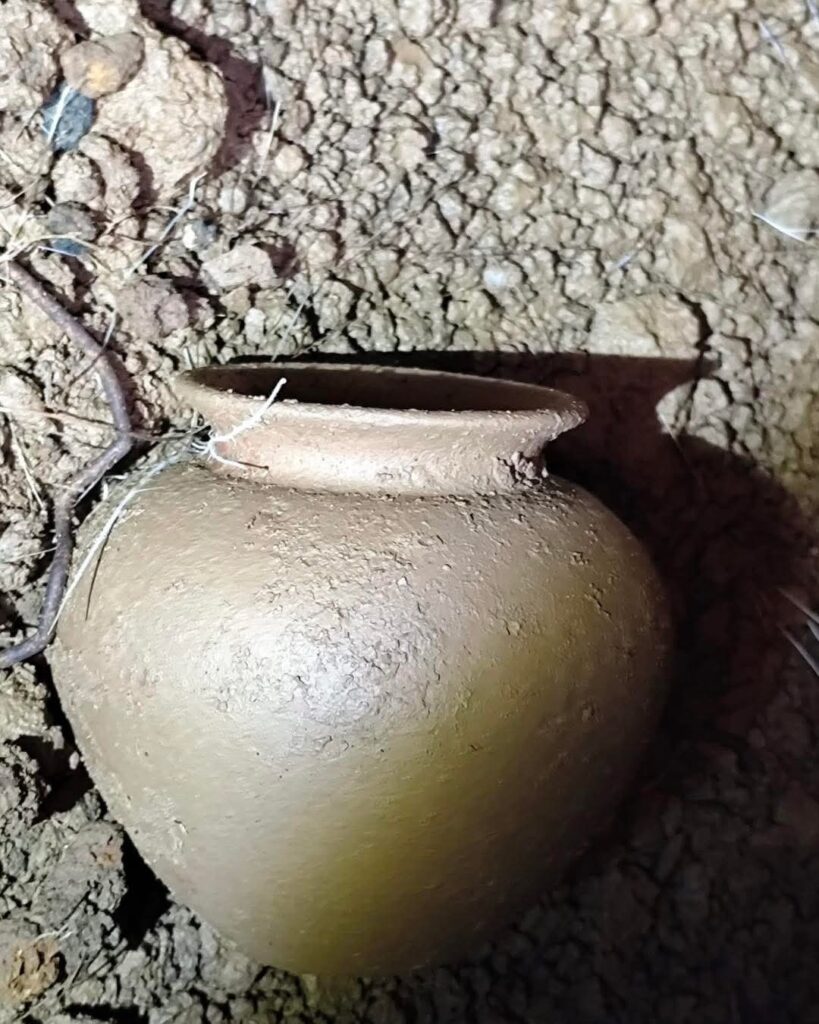
Several grave goods were visible inside the chamber when it was opened. They include olle, or large storage vessels, bucchero cups, at least one aryballos and numerous other ceramic vessels, many still covered by soil that entered the tomb over the centuries.
Bucchero is one of the most distinctive ceramic traditions of the Etruscans. Known for its black, polished surface, it was widely used between the 7th and 6th centuries BC and often appears in elite funerary contexts.
The aryballos, a small vessel commonly associated with oils or perfumes, adds another layer to the burial assemblage. Such objects could reflect personal identity, ritual practice or ideas connected with the body and the afterlife.
The Second Intact Tomb in One Year
The discovery follows another untouched Etruscan tumulus found in the Caiolo necropolis on June 27, 2025. That earlier burial was also dated to the late 7th century BC. The newly opened tomb was found nearby and appears to belong to the same broader funerary landscape.
Two intact tombs in the same sector are significant for Southern Etruria. The region is rich in Etruscan cemeteries, but many burial chambers were looted long before modern archaeology could document them. When a sealed tomb survives, researchers can study not only the artifacts but also their original context.
That is why the Caiolo finds are drawing attention. They may provide unusually clear evidence for funerary customs, social rank and burial practices among Etruscan communities living in this part of central Italy during the late 7th century BC.
San Giuliano and the Etruscan Landscape
San Giuliano lies near Barbarano Romano, in an area shaped by volcanic tuff cliffs, ravines and ancient roads. The wider landscape is known for its Etruscan rock-cut tombs and long occupation history.
The Etruscans flourished in central Italy before the rise of Rome. Their cities, especially in modern Tuscany, Lazio and Umbria, played a major role in trade, metalworking, art and religious practice across the ancient Mediterranean.
Funerary archaeology is one of the clearest ways to study Etruscan society. Tombs can reveal wealth, family identity, ritual choices and external contacts. In this case, the sealed condition of the Caiolo tomb makes the evidence especially valuable.
Further study of the human remains and grave goods is expected to clarify who was buried in the chamber, how the burial was arranged and what the objects may reveal about status and ritual life in late 7th-century BC Etruria.