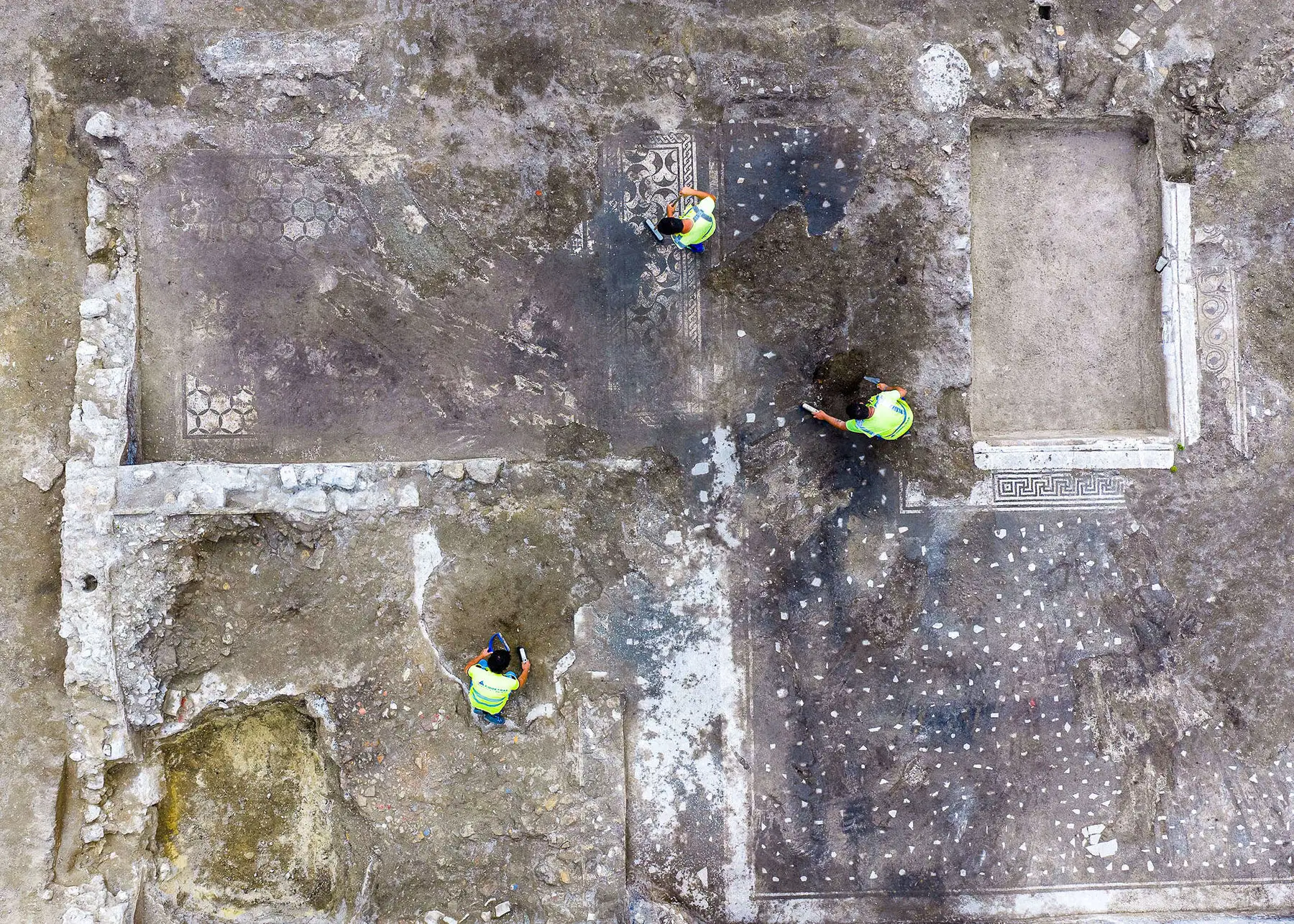
An illegal excavation report has led archaeologists to a richly decorated Roman villa west of Rome, in a landscape once tied to the imperial residences of the Antonine dynasty.
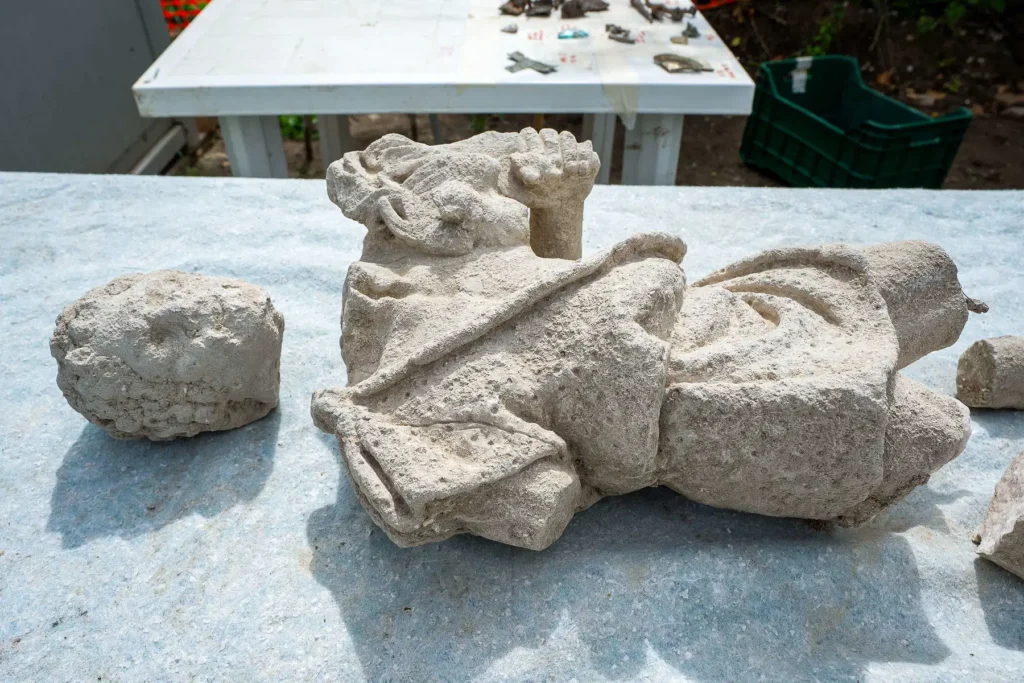
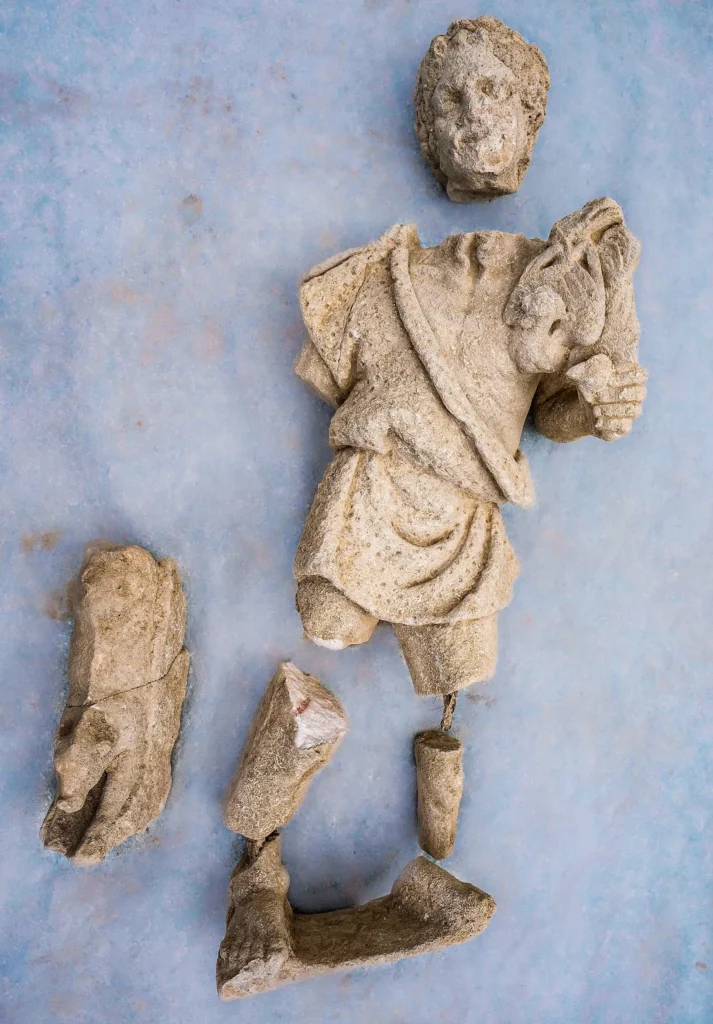
The villa was uncovered on the Castel di Guido estate after authorities stopped unauthorized digging at the site. Excavations carried out by the Special Superintendency of Rome revealed preserved rooms, mosaic floors, painted plaster, and a fragmentary marble statue that may depict Silvanus, a Roman god linked to woods, fields, herds, and country estates.
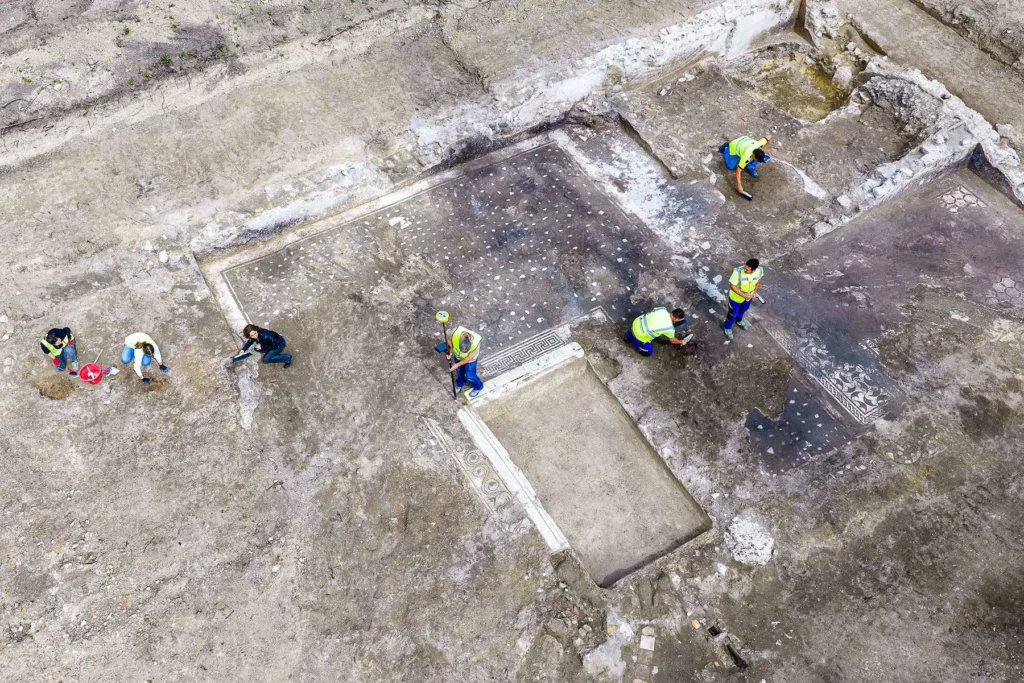
A rescue operation becomes a major discovery
Castel di Guido lies west of Rome, near the ancient Via Aurelia, the road that connected the capital with the Tyrrhenian coast. Today the area is mostly countryside. In antiquity, it formed part of a belt of estates, villas, farms, and imperial properties outside the city.
The newly found villa was not a modest farmhouse. Some of its walls still stand up to 1.5 meters high. Archaeologists have identified an atrium with a central impluvium, the basin used in Roman houses to collect rainwater. Around it were rooms with mosaic floors and painted decoration.
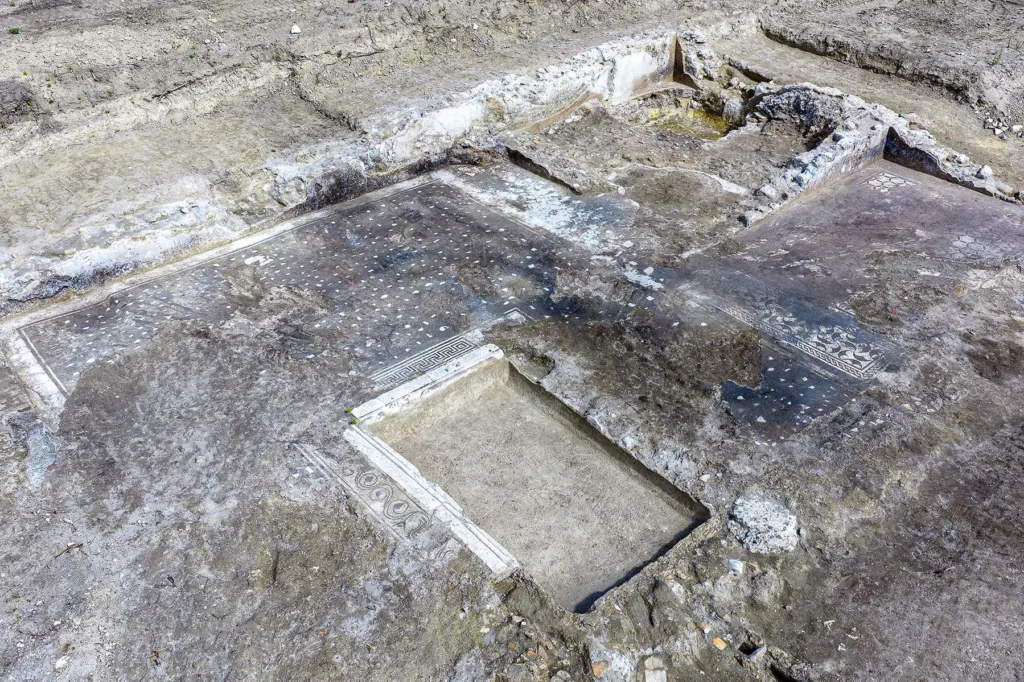
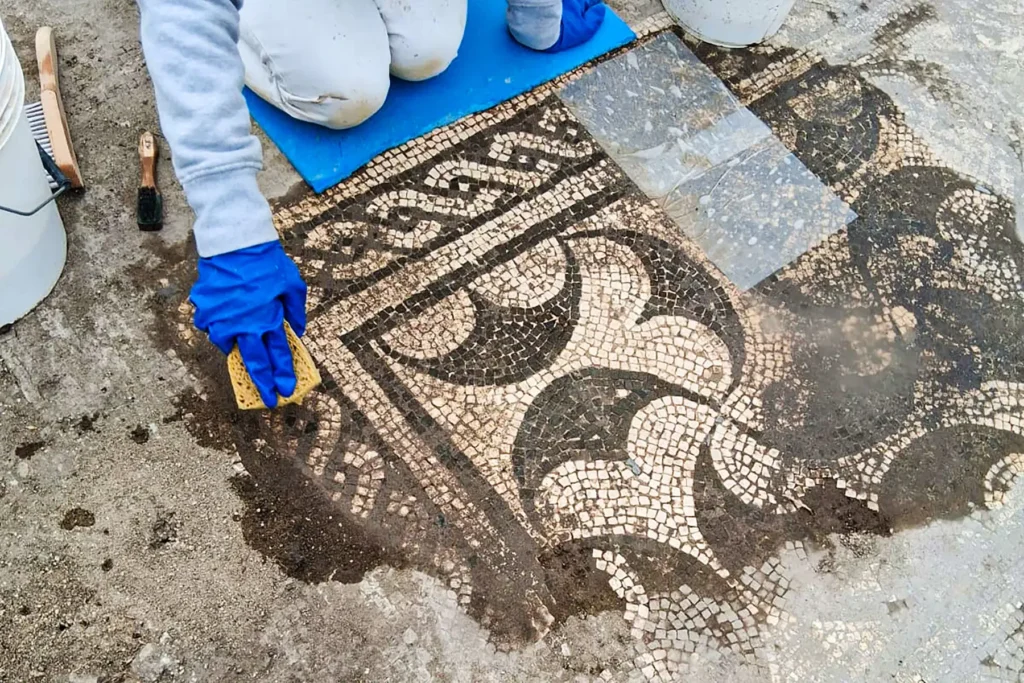
The designs include geometric and plant motifs, the kind of visual language often used in high-status Roman homes. Their survival gives the site unusual value, especially in a rural zone where many ancient buildings were damaged over centuries by agriculture, stone reuse, and later activity.
The excavation also revealed areas connected with production. That detail is important, but not surprising. Roman villas outside the city often combined refined living spaces with the practical work of managing land, crops, animals, and storage.
A possible Silvanus statue
Among the finds, the most striking object is a fragmentary marble statue of a bearded figure carrying a small domestic animal, possibly a calf or piglet. Researchers believe the figure may represent Silvanus.
If that reading is correct, the statue fits the setting well. Silvanus belonged to the religious world of the countryside. He was associated with woods, fields, boundaries, livestock, and agricultural prosperity. In a villa like this, his image would have spoken directly to land, ownership, and protection.
The statue is still under study, as are the mosaics and painted surfaces. Even at this early stage, the quality of the finds points to owners with wealth and social standing, possibly members of the Roman aristocracy living close to the imperial sphere of Lorium.
Near the imperial estate of Lorium
The location gives the discovery added weight. Castel di Guido lies close to ancient Lorium, a site associated with the Antonine dynasty. Antoninus Pius is traditionally linked to Lorium, where he spent part of his early life, and the area later remained connected with imperial residences used in the age of Marcus Aurelius.
The newly discovered villa has not been identified as an imperial residence. Still, its position and decoration place it within the same privileged landscape west of Rome.
That landscape matters. The story of Rome is usually told through the city’s monuments: the Forum, the Palatine, the Colosseum, and the temples. But the power of Rome also rested on country estates like this one. They produced wealth, displayed status, and kept aristocratic families close to land that shaped both economy and identity.
The Castel di Guido villa now adds another piece to that picture. What began as an illegal excavation alert has become the recovery of a well-preserved Roman residence with mosaics, painted rooms, productive areas, and a possible image of Silvanus.
Cover Image Credit: Italian Ministry of Culture