
Wooden fish traps discovered in a mountain lake in southern Norway have revealed that Mesolithic hunter-gatherers deliberately introduced brown trout into waters the fish could not have reached naturally.
Radiocarbon dating places the earliest traps at around 5000 BC, making them direct evidence that communities in prehistoric Scandinavia were actively managing aquatic resources thousands of years before farming became established in the region.
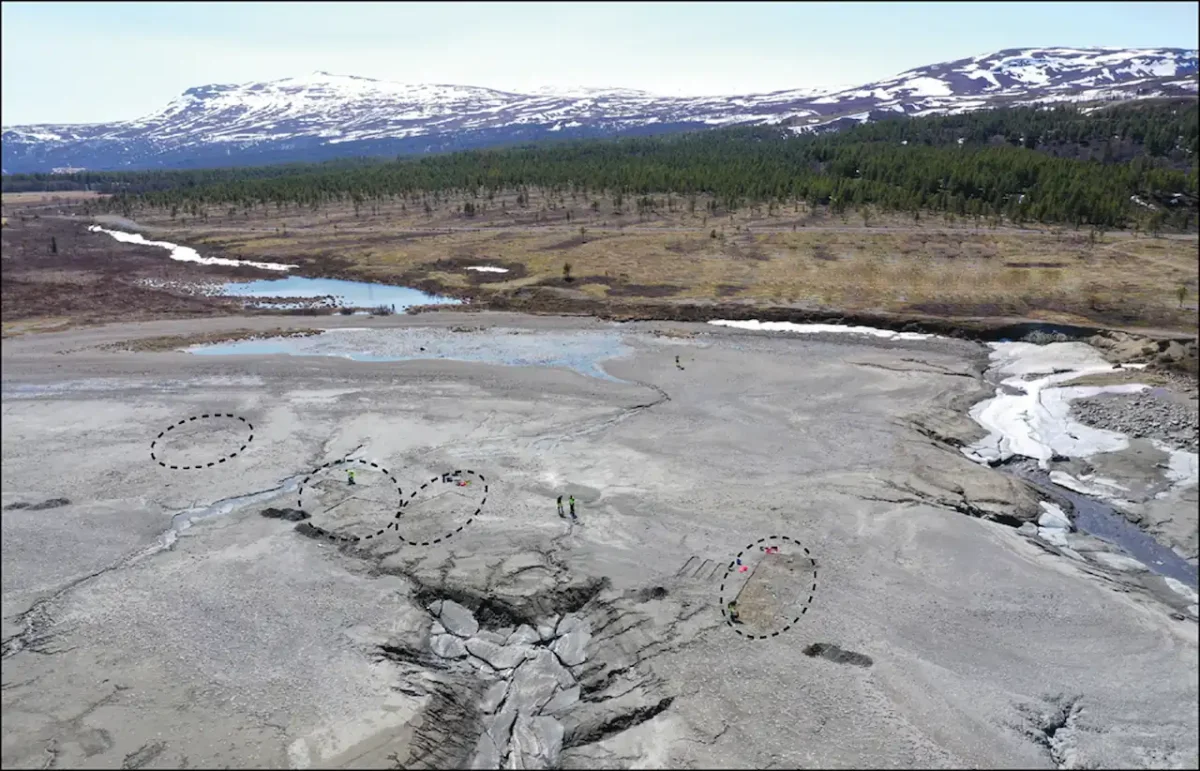
The structures were found in Lake Tesse, a low-alpine lake in the Jotunheimen mountains. Seasonal changes in the water level exposed rows of wooden poles driven into the former lakebed, allowing archaeologists to examine the remains of several stationary fishing installations.
Wooden Traps Built to Funnel Fish
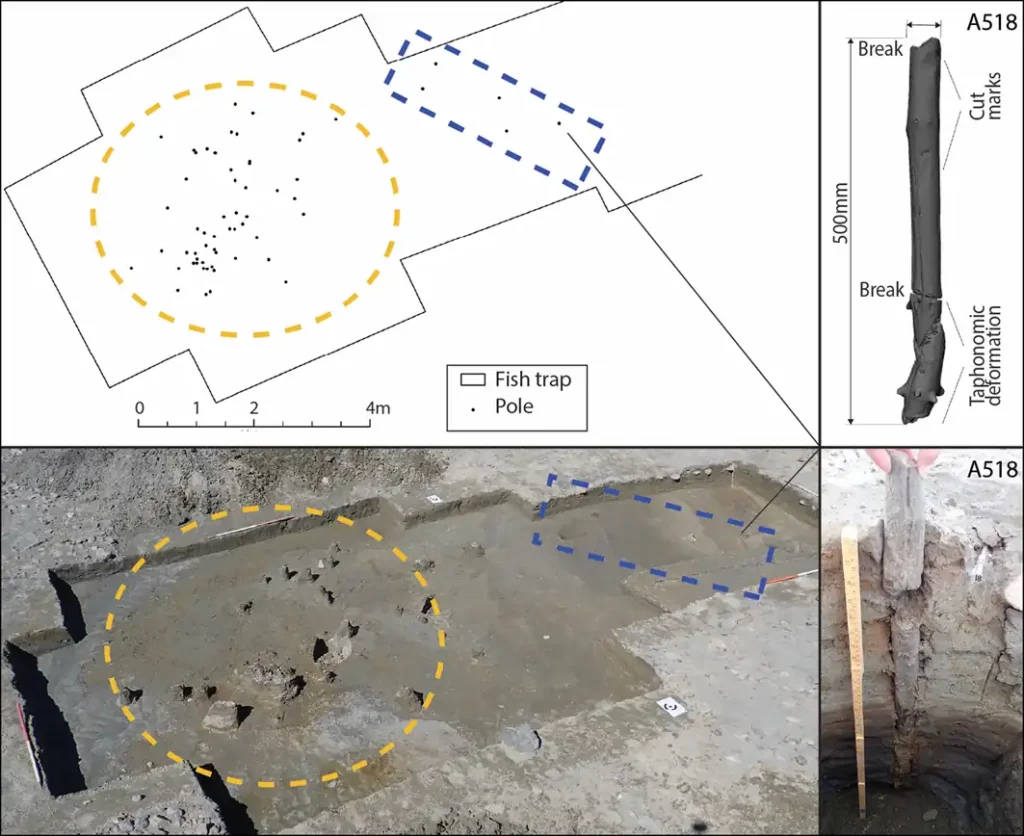
The best-preserved trap consisted of 46 wooden poles. Most formed a circular enclosure approximately 3.5 metres wide, while another line of posts appears to have guided fish toward its entrance.
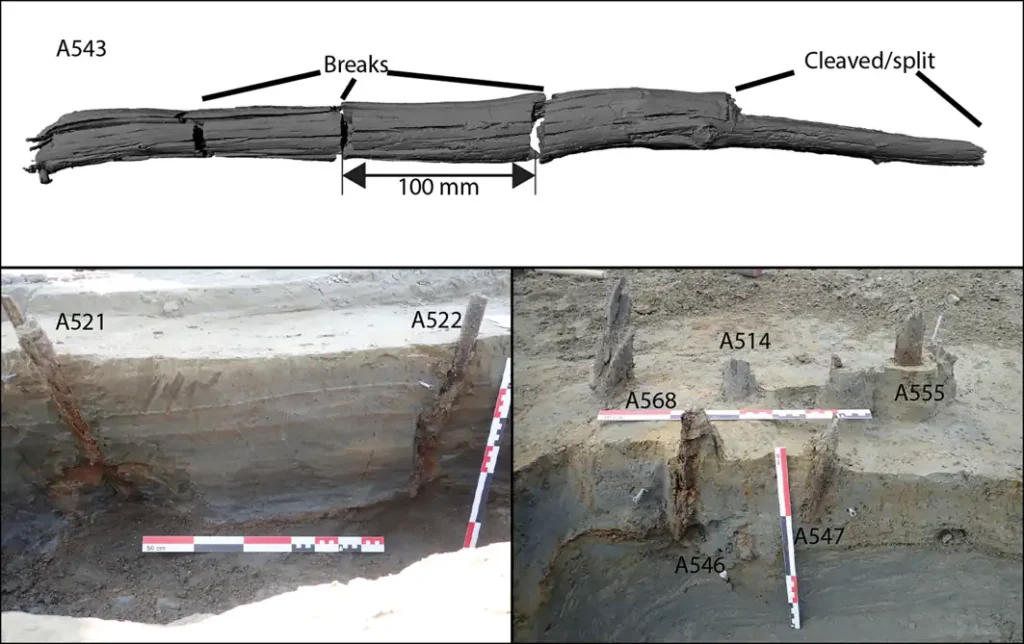
The surviving wood suggests that the poles once supported woven walls or fencing, creating a fixed trap capable of directing and containing fish. Most of the posts were made from young Scots pine, although birch and willow were also used.
Radiocarbon analysis showed that the earliest traps were constructed around 5000 BC. Additional structures dated to approximately 3850 BC and 2700 BC indicate that fishing installations were repeatedly built at the lake for more than two millennia.
The research was led by Axel Mjærum of the University of Oslo’s Museum of Cultural History and published in the journal Antiquity.
Trout Could Not Reach Lake Tesse Without Human Help
Lake Tesse lies about 854 metres above sea level. Waterfalls, steep rivers and differences in elevation would have prevented fish from naturally reaching the lake after the retreat of the glaciers.
The brown trout exploited by Mesolithic communities therefore had to be carried into the mountain waters by people.
Researchers have long known that trout populations in many Norwegian mountain lakes originated through human intervention. Until now, however, archaeological evidence had not clearly established when this practice began.
The traps at Lake Tesse place the introduction of fish into high-altitude waters at least as far back as the sixth millennium BC.
Brown trout would have been particularly useful to hunter-gatherers. The species can survive in cold mountain environments, grow to a substantial size and provide a calorie-rich source of food. Once an established breeding population developed, the lake could offer a more predictable resource than hunting alone.
Ecosystem Management Before Farming
The people who built the earliest traps lived during the Scandinavian Mesolithic, before agriculture and livestock farming reached the region.
Their actions show that hunter-gatherers did not simply depend on resources already present in the landscape. By transporting trout into a fishless lake and constructing permanent traps to harvest them, they deliberately created a new food source.
This strategy required planning. The fish needed to survive, reproduce and form a stable population before regular fishing could begin. Communities also needed detailed knowledge of local waterways, trout behaviour and seasonal movements.
The discovery weakens the traditional distinction between hunter-gatherers who collected wild resources and farming societies that actively produced food. At Lake Tesse, people altered an ecosystem to make it more productive long before the Neolithic transition.
Trout remain in the lake today. Their presence is a lasting result of decisions made by Mesolithic communities roughly 7,000 years ago—one of the clearest examples yet of prehistoric hunter-gatherers reshaping a mountain environment for their own survival.