
A rare gold aureus minted during the reign of Emperor Tiberius has been discovered during excavations at Vindonissa, Switzerland’s only Roman legionary camp.
The coin is one of the most remarkable finds from the latest excavation, as coins recovered at Vindonissa are generally made of bronze or silver. Tiberius ruled the Roman Empire from AD 14 to 37, making the aureus nearly 2,000 years old.
Although the coin was minted during his reign, archaeologists have not determined when it was lost or deposited. Roman gold coins could remain in circulation for years, meaning the date of minting does not necessarily indicate when the object entered the archaeological record.
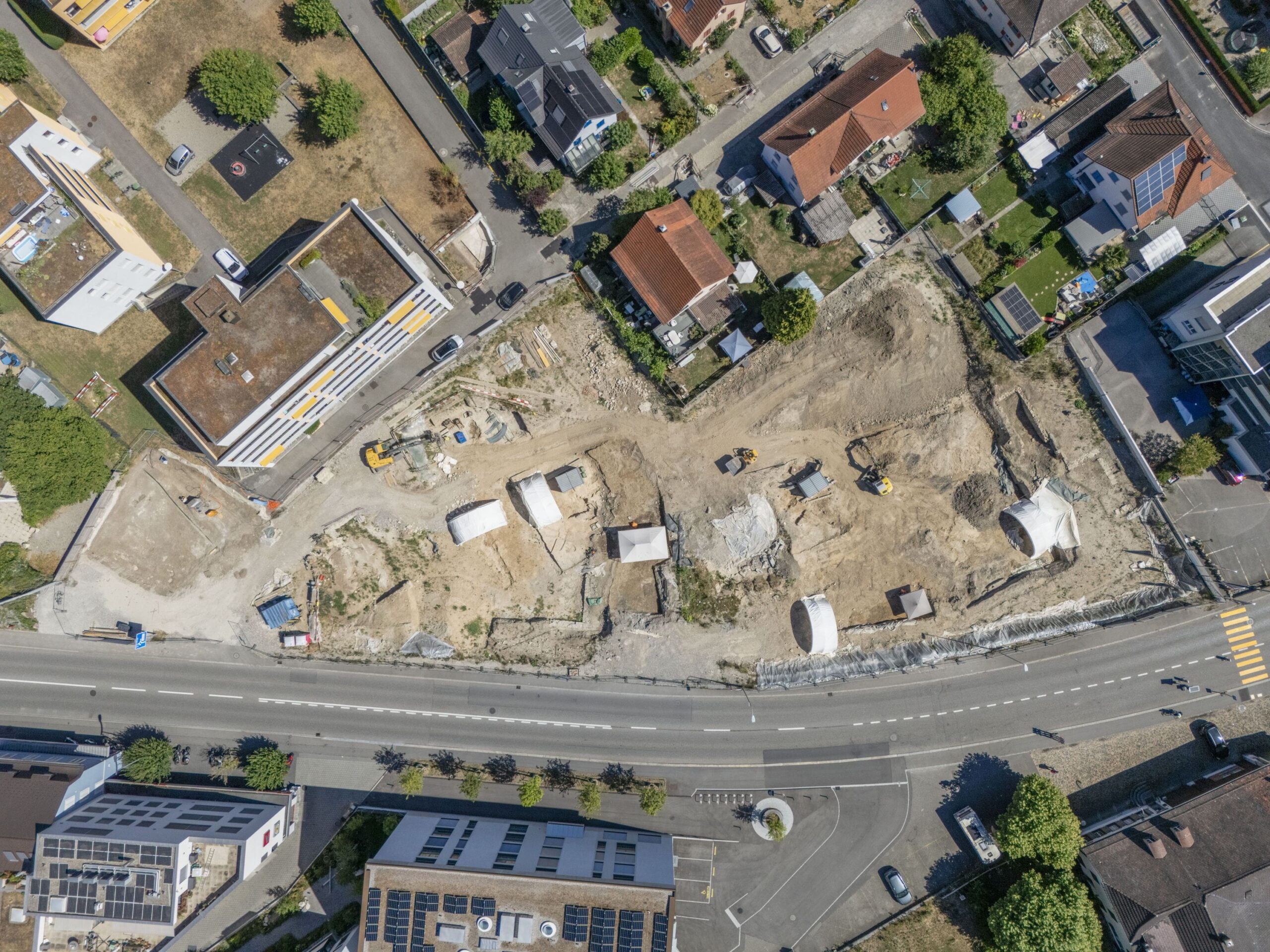
Located in modern Windisch in the canton of Aargau, Vindonissa was the most important Roman military base in the territory of present-day Switzerland.
A Rare Gold Coin at Vindonissa
Coins found during the excavation range in date from the Roman Republic to Late Antiquity, reflecting the long history of military and civilian activity at Vindonissa.
The gold aureus stands apart from this wider group. Aurei were high-value coins and circulated in far smaller numbers than ordinary bronze and silver currency. Their discovery is therefore uncommon, particularly at sites where most surviving coins represent everyday transactions.
The exact circumstances surrounding the Vindonissa aureus remain unknown. It may have been accidentally lost, concealed or deposited with other material during one of the site’s many phases of occupation.
Remains of Vindonissa’s First Military Camp
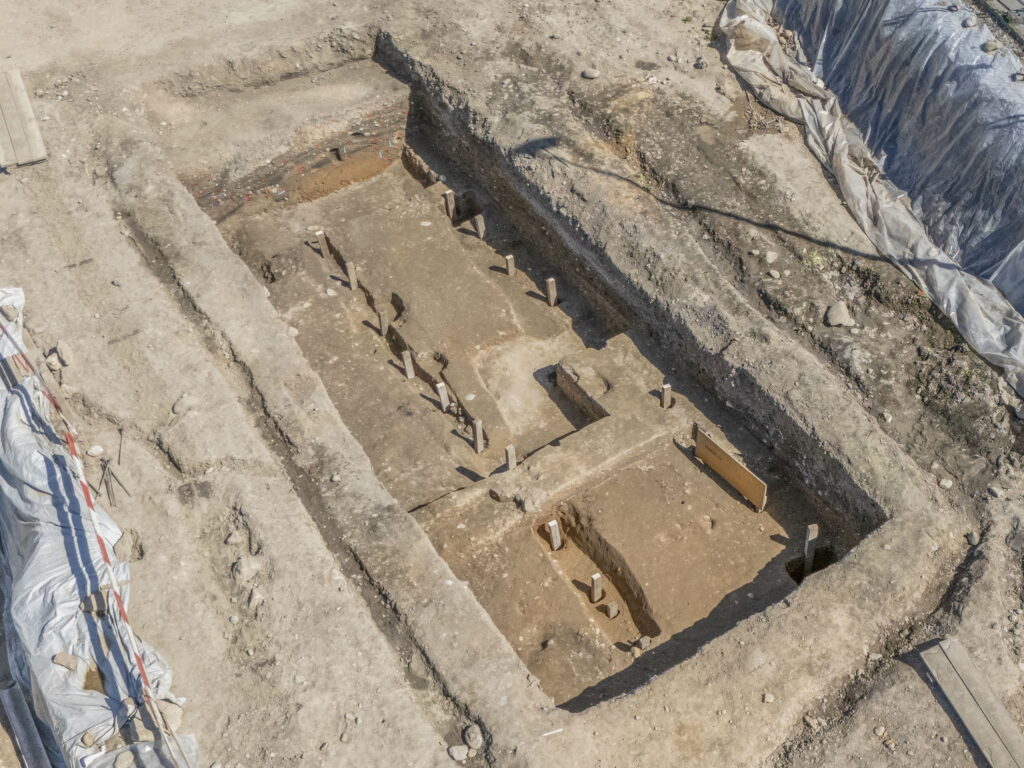
The excavation also uncovered important structures belonging to the earliest phase of the Roman camp.
Archaeologists exposed part of the southern timber-and-earth defensive wall, located around 230 feet, or 70 meters, from the wall of the later permanent fortress. The surviving section provides new evidence for the original size and layout of the first camp.
Beneath a later Roman road, researchers discovered a legionary barracks approximately 30 feet wide and at least 100 feet long. Its regularly arranged rooms and antechambers housed some of the first Roman soldiers stationed at Vindonissa.
A small workshop was identified close to the early defensive wall. Beside it, archaeologists found an even older structure containing the hearth of a field forge, where military smiths could repair tools, weapons and other iron equipment.
Blacksmithing tools, leatherworking equipment and part of a Roman millstone were also recovered from nearby debris layers.
Victoria Gemstone and Possible Scalpel Handles
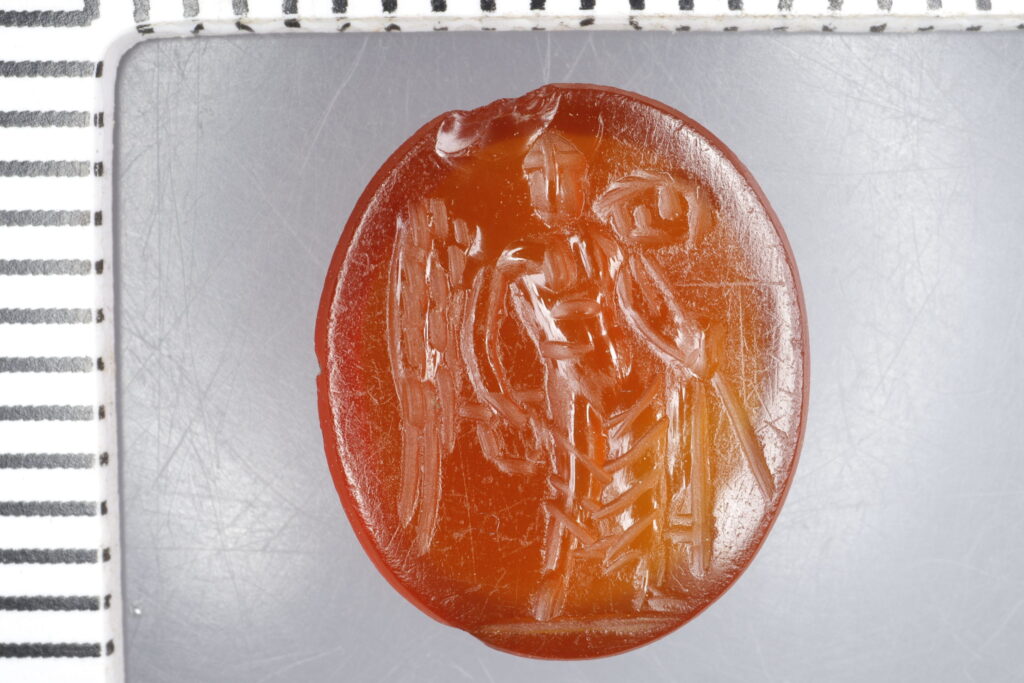
Among the smaller finds is a carnelian intaglio engraved with Victoria, the Roman goddess of victory.
The gemstone measures about one centimeter and depicts the goddess holding a staff and wreath. It may once have been mounted in a ring and used as a personal seal.
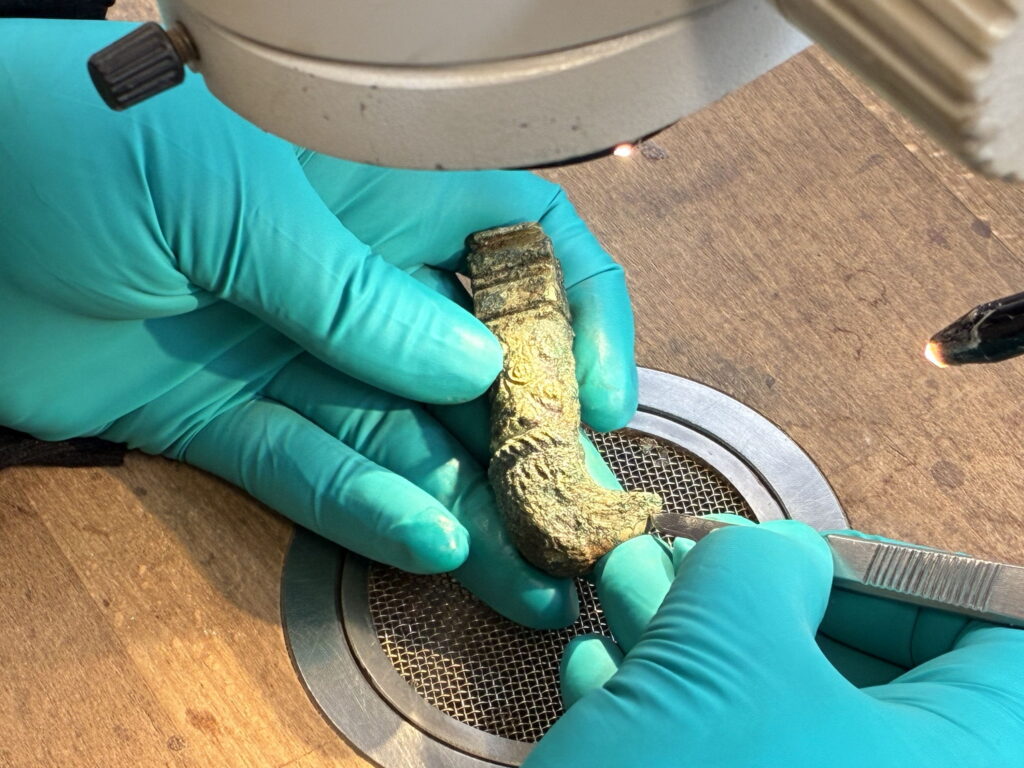
Two metal fittings are also thought to be handles from Roman scalpels. One was shaped in the form of an animal head and is currently being conserved in a restoration laboratory. Their identification has not yet been confirmed.
Together, the finds reveal both the military organization and everyday working life of early Vindonissa. Yet among the tools, buildings and ordinary coins, the gold aureus of Tiberius remains exceptional—a rare survival from the Roman world discovered at Switzerland’s first legionary base.