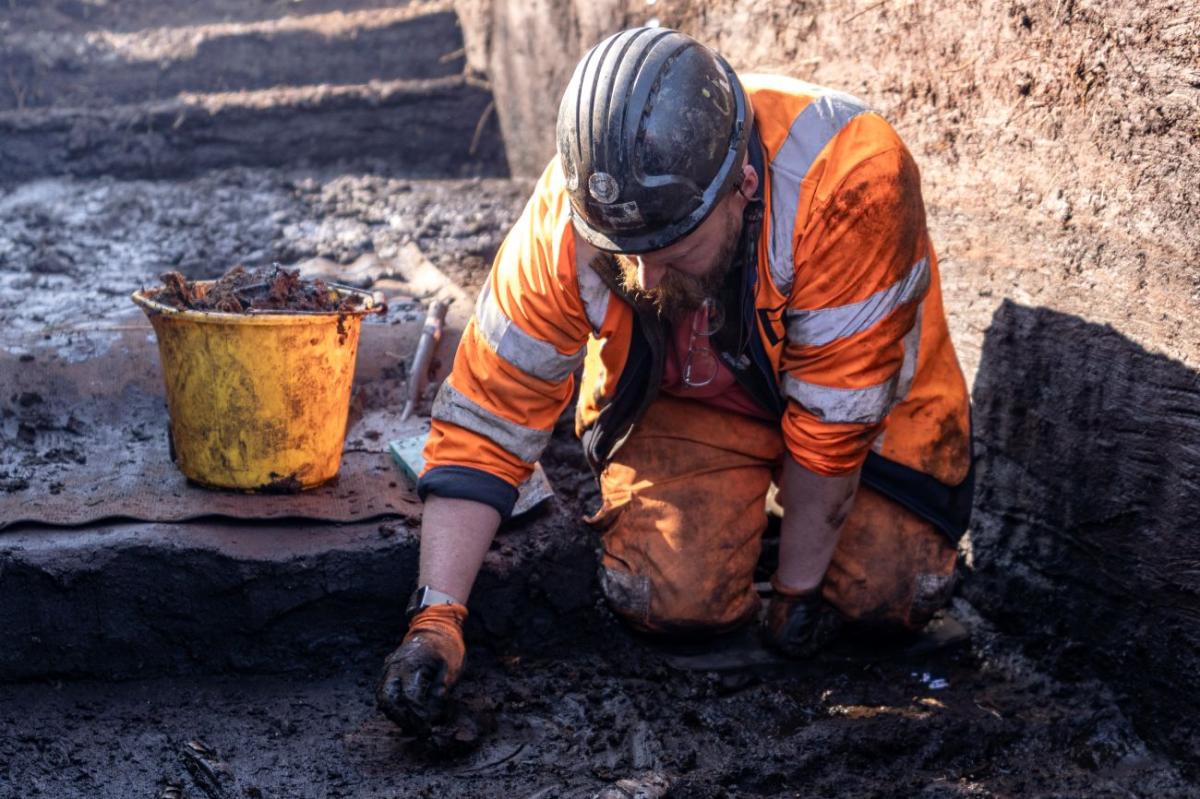
A wooden pathway laid down nearly 6,000 years ago has surfaced from the peatlands of Somerset, revealing how some of Britain’s earliest farming communities moved through a landscape dominated by water and marsh.
The discovery emerged during excavations at Honeygar, a site now undergoing long-term ecological restoration. Archaeologists had originally been asked to assess a known prehistoric trackway dated to around 4,600 years ago. Instead, they uncovered something far older—a hidden structure buried deeper in the peat, radiocarbon dated to 3770–3640 BC.
This pushes the timeline back by nearly a millennium and places the trackway firmly in the early Neolithic. In practical terms, it is not just older—it redefines how early communities used and crossed this landscape.
A Fragile Path Across Waterlogged Land
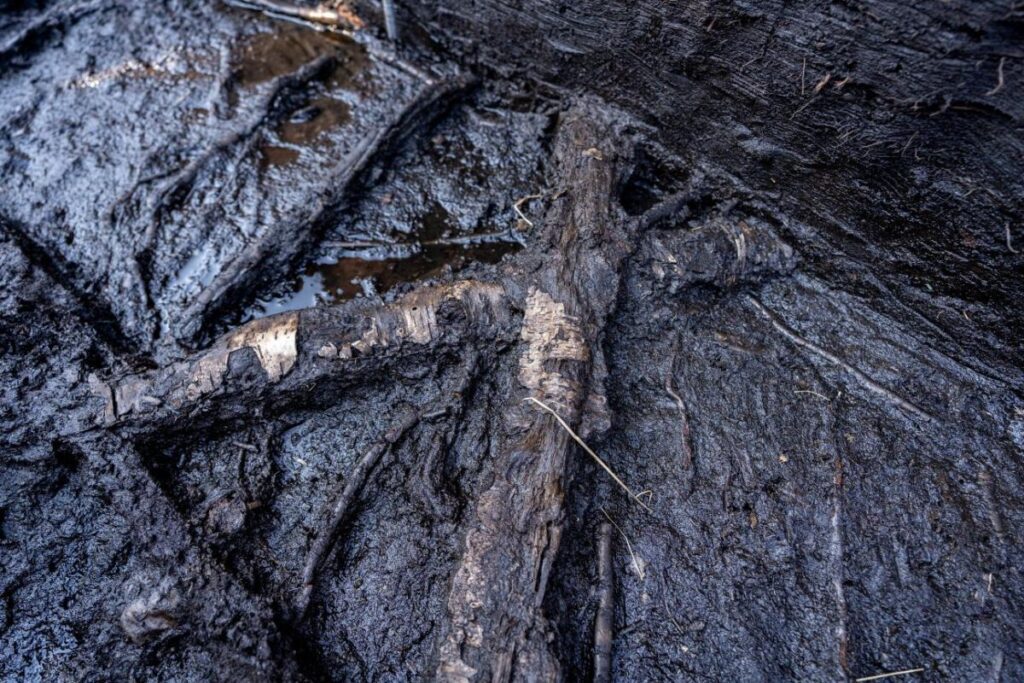
Built from birchwood poles and compacted brushwood, the trackway once formed a raised route over unstable ground. In prehistoric Britain, such constructions were not optional—they were essential. Without them, movement across wetlands would have been slow, dangerous, and often impossible.
What makes Honeygar exceptional is the peat itself. These oxygen-poor, waterlogged conditions halted decay and preserved the wood in remarkable detail. But the trackway is only part of the story.
Peat also traps pollen, seeds, insects, and microscopic remains, effectively freezing an entire ecosystem in time. Each layer acts like a natural archive, storing evidence of climate shifts and human activity stretching back thousands of years.
More Than a Structure
This is not simply a piece of ancient engineering. It is evidence of adaptation, planning, and survival in a difficult environment.
The Somerset Levels are already known for prehistoric trackways, but Honeygar adds a crucial detail: people were navigating and shaping this wetland far earlier than previously confirmed at the site.
At the same time, the discovery arrives with urgency. Peatlands are increasingly vulnerable to drought linked to climate change. When peat dries, it shrinks—and with it, the organic materials preserved inside begin to decay rapidly.
In other words, what survived for millennia can disappear in a matter of years.
Archaeology Meets Conservation
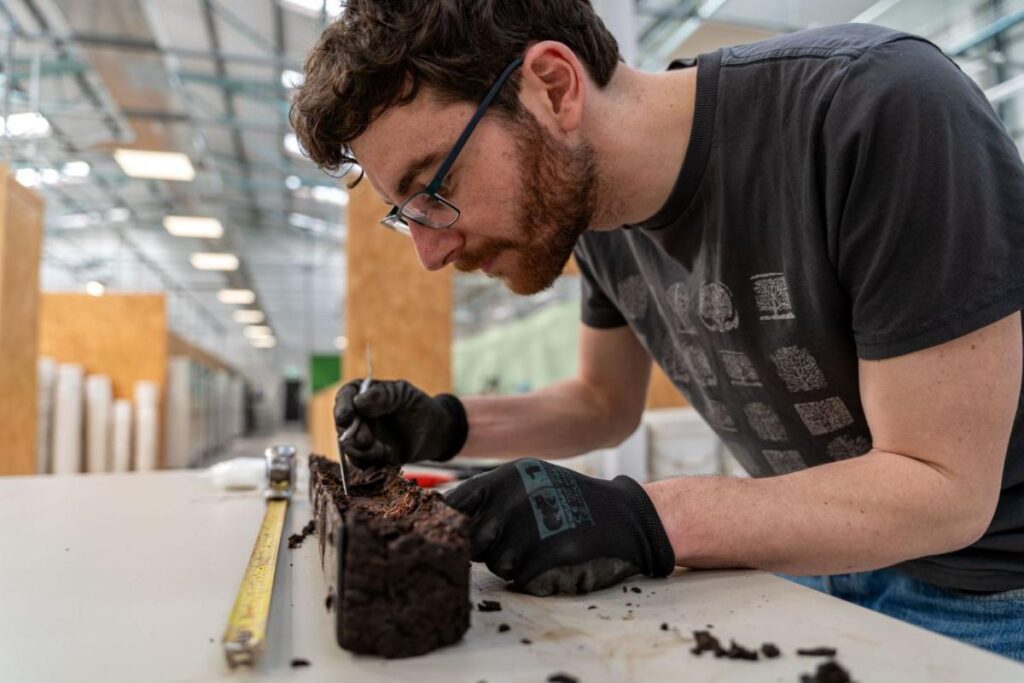
Researchers are now analysing soil samples to reconstruct the ancient environment—what plants grew there, which insects thrived, and how the wetland evolved over time.
This data serves a dual purpose. It deepens archaeological understanding while also helping ecologists rebuild a functioning wetland ecosystem based on its original conditions.
Bruce Eaton, who leads the excavation, emphasized the broader importance of the site, noting that the project combines habitat restoration with the protection of fragile archaeological remains. The two are no longer separate goals—they are interdependent.
Honeygar is now part of a 50-year restoration effort aimed at reversing the effects of intensive farming. Yet beneath that modern ambition lies something older: a landscape shaped not by machines, but by early communities learning how to live with water.
Cover Image Credit: Wessex Archaeology