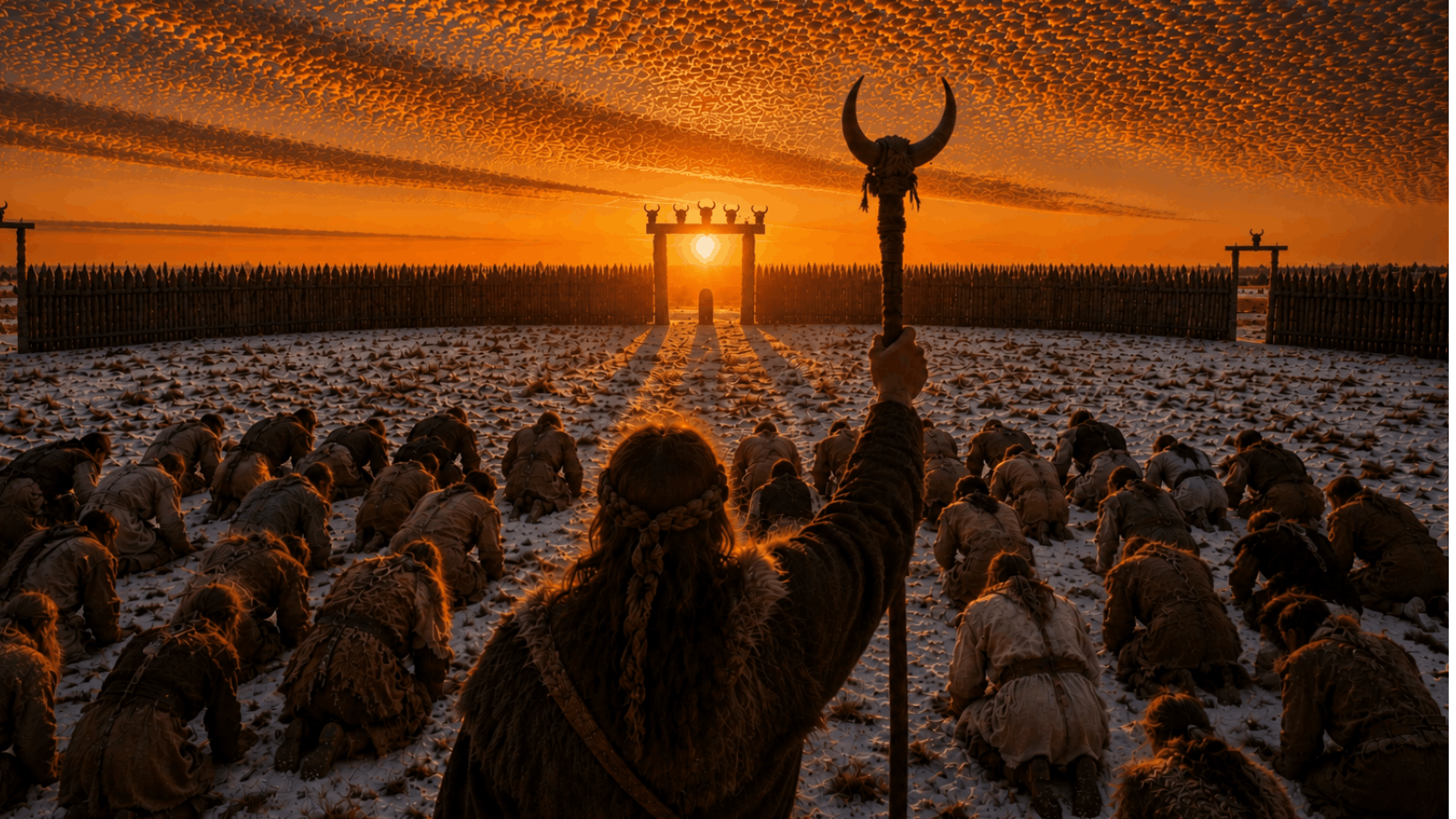
More than 6,500 years ago, prehistoric communities in what is now the Czech Republic created a vast circular sanctuary whose entrances appear to have been deliberately arranged around important movements of the Sun and Moon. Archaeologists led by the University of West Bohemia say the monument near Chleby in Central Bohemia is one of the oldest known monumental sites in the region and predates Stonehenge by more than a thousand years.
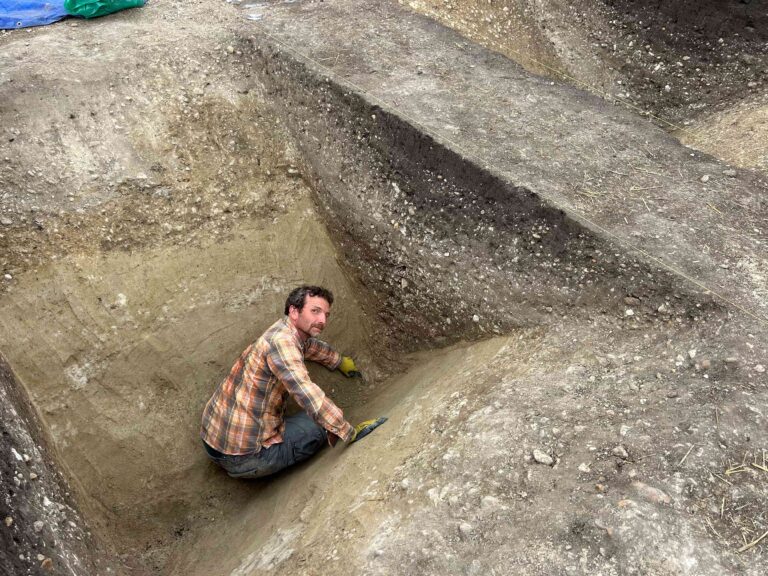
The almost circular enclosure measures about 230 meters in diameter and was surrounded by a ditch more than 2.5 meters deep. Yet its most remarkable feature may be the 12 entrances positioned at irregular intervals around the enclosure, which initially appeared to follow no obvious pattern.
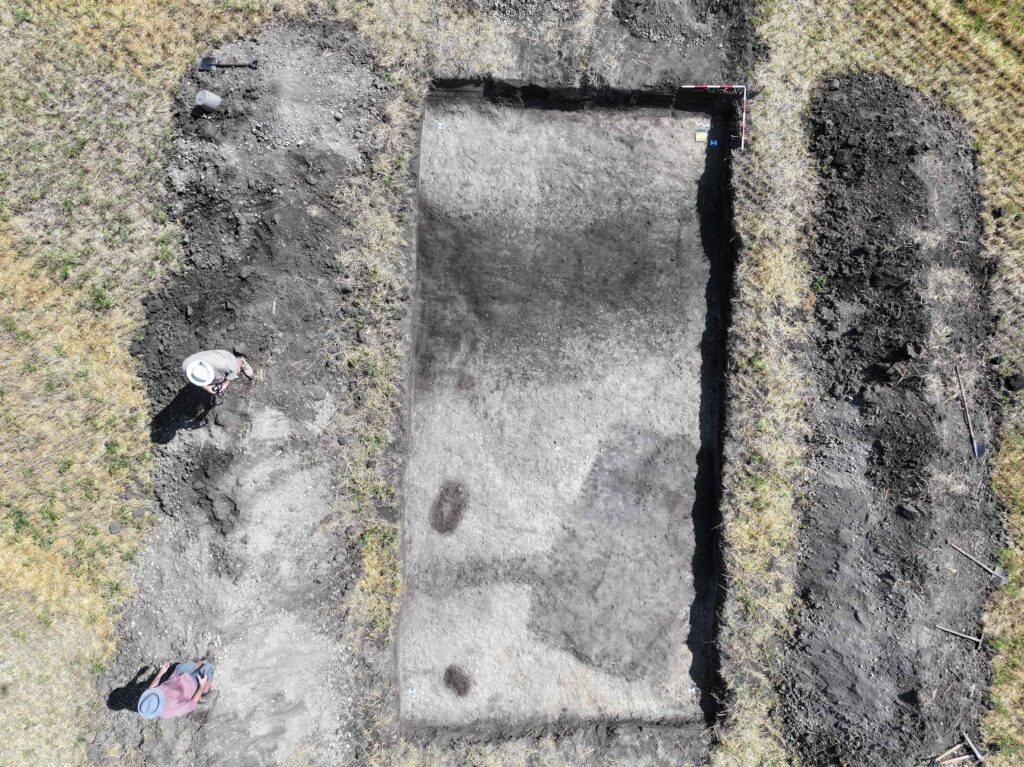
Researchers led by the University of West Bohemia now argue that the arrangement was anything but random. Detailed analysis of the entrances revealed a geometric system connected to significant points in both solar and lunar cycles, suggesting that the people who created Chleby incorporated observations of the sky into the monument’s design.
Twelve entrances reveal a pattern in the sky
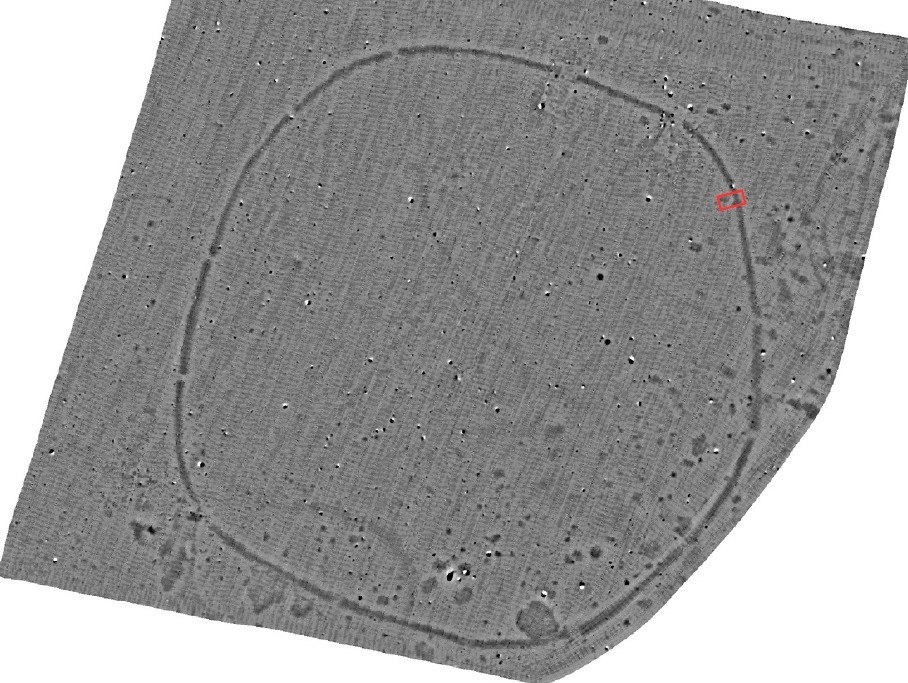
According to research leader Petr Krištuf of the University of West Bohemia’s Department of Archaeology, circular enclosures of this form are otherwise unknown in the region from this period. The discovery became even more unusual when researchers examined how the entrances related to the surrounding horizon.
The team identified two principal observation positions within the enclosure. One corresponds with the extreme positions reached by the Moon on the horizon during its approximately 18.6-year lunar standstill cycle, while the second creates an axis connecting sunrise at the summer solstice with sunset at the winter solstice.
It is this solar alignment that has prompted comparisons with Stonehenge, whose main axis also relates to the midsummer sunrise and midwinter sunset. English Heritage dates the first major earthwork at Stonehenge to around 3000 BC, while the Czech researchers say organic material associated with Chleby shows that the Central European sanctuary is more than a thousand years older.
Krištuf believes the orientation may reflect ideas attached to seasonal change among prehistoric farming communities. Sunrise at the summer solstice could have carried associations with beginning and renewal, while sunset at the winter solstice represented the opposite point in the annual solar cycle.
The researchers are not describing Chleby simply as an astronomical observatory. Instead, the celestial alignments appear to have formed part of a much larger ritual landscape in which architecture, seasonal cycles and ceremonial activity were closely connected.
Bull skulls point to rituals at the entrances
Archaeological evidence from the enclosure strengthens the interpretation of Chleby as a sanctuary rather than an ordinary settlement. Excavators discovered bull skulls and horns in the ditch close to some of the entrances, and researchers believe these remains may originally have decorated monumental gateways leading into the enclosed area.
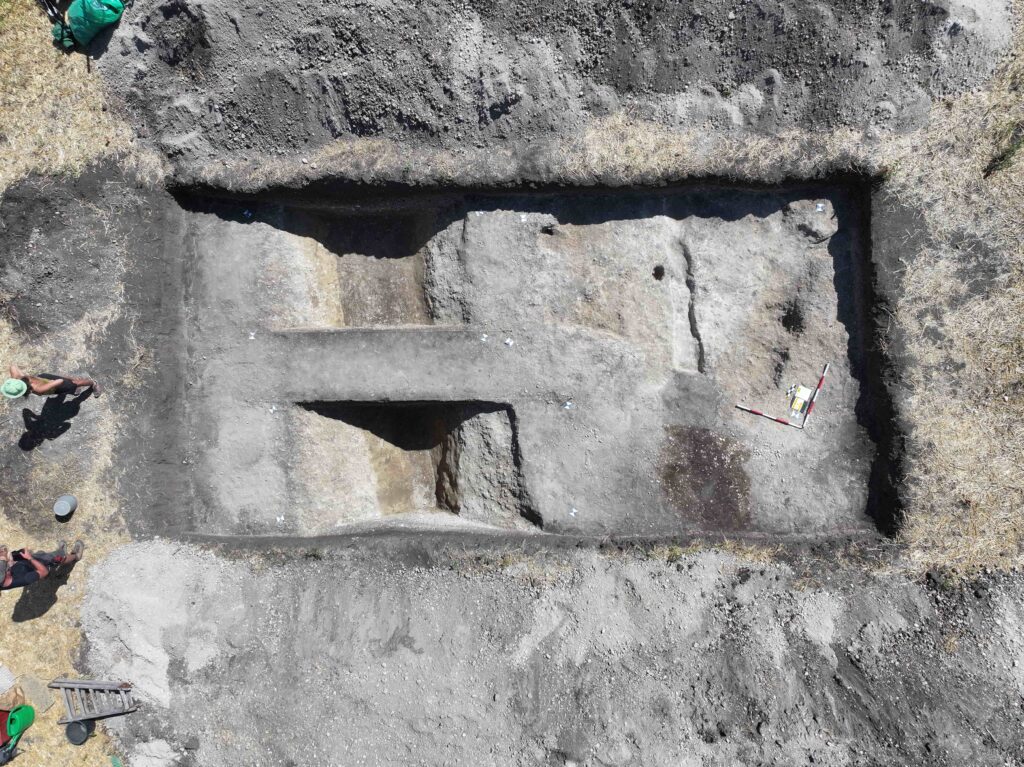
Jan Turek of Charles University, who is involved in the research, notes that bulls held significant symbolic importance for early farming communities and appear in ritual contexts across several parts of prehistoric Europe. At Chleby, their placement near the entrances may therefore provide a glimpse of how people marked the transition into a space that carried special meaning.
The scale of the enclosure reinforces that impression. Creating a ditch more than 2.5 meters deep around a monument 230 meters across would have required substantial coordinated labor, while the careful positioning of entrances indicates that its builders were following a predetermined plan rather than simply enclosing a convenient area of land.
Together, the architecture and deposits suggest that Chleby was designed as a deliberately separated ceremonial space whose relationship with the surrounding landscape and sky formed part of its significance.
The sacred landscape survived for thousands of years
Chleby did not disappear from human memory when the sanctuary’s original builders were gone. Much later, during the Early Bronze Age, people returned to the ancient landscape and used part of it for burial.
Earlier excavations uncovered an unusual grave associated with the Únětice culture containing the remains of approximately 15 to 18 individuals. A peer-reviewed study published in Památky archeologické confirmed the unusually high number of people in the grave and showed through genetic analysis that they did not all belong to a single biological family.
The burial demonstrates that the location retained significance long after the original enclosure had ceased to function in the way its builders intended. The relationship between the Bronze Age grave and the much older sanctuary remains particularly valuable for archaeologists trying to understand how prehistoric communities reused ancient monuments and landscapes.
Eventually, however, Chleby appears to have lost its earlier ritual character. By the Iron Age, the old ditch was gradually filled and an ordinary settlement developed across the former sanctuary, marking a striking change from monumental ceremonial space to everyday habitation.
Soil may reveal what happened inside the sanctuary
Researchers are now turning to soil chemistry for evidence that conventional excavation cannot easily recover. Human activity can leave chemical signatures in the ground even when buildings, organic objects and other physical remains have disappeared, allowing archaeologists to identify areas associated with repeated activity.
Jan Fišer of the University of Hradec Králové is analyzing soil from the enclosure and its surroundings to determine how different parts of the site were used through successive periods of prehistory. The results could help researchers move beyond the monument’s impressive geometry and establish what people actually did when they gathered inside it.
For now, Chleby already offers rare evidence that prehistoric communities in Central Europe were combining monumental construction with sophisticated observation of recurring celestial events.
The people who created the sanctuary dug a massive enclosure, organized twelve entrances around its perimeter and incorporated the changing positions of the Sun and Moon into its layout. More than a thousand years before the first Stonehenge earthwork took shape, communities in Central Europe were already building monumental ritual architecture around patterns they observed in the sky.
Cover Image: Visualization of the Chleby sanctuary based on archaeological findings, showing sunset during the winter solstice. Created with ChatGPT. Credit: University of West Bohemia (ZČU).