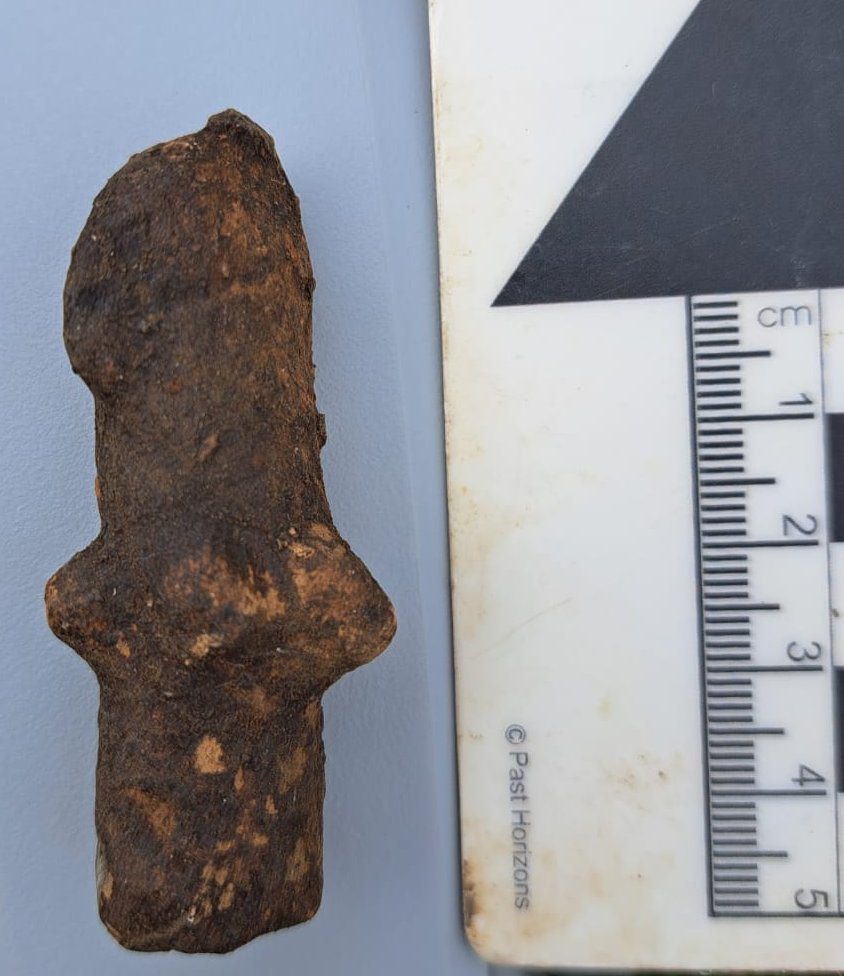
A small clay figurine no taller than six centimeters is now reshaping discussions about early European spirituality. Archaeologists in central Romania have announced the discovery of a 7,500-year-old Neolithic idol at the site of Arcuș – Platoul Târgului, near Sfântu Gheorghe — a find that offers rare insight into the symbolic world of some of Europe’s earliest farming communities.
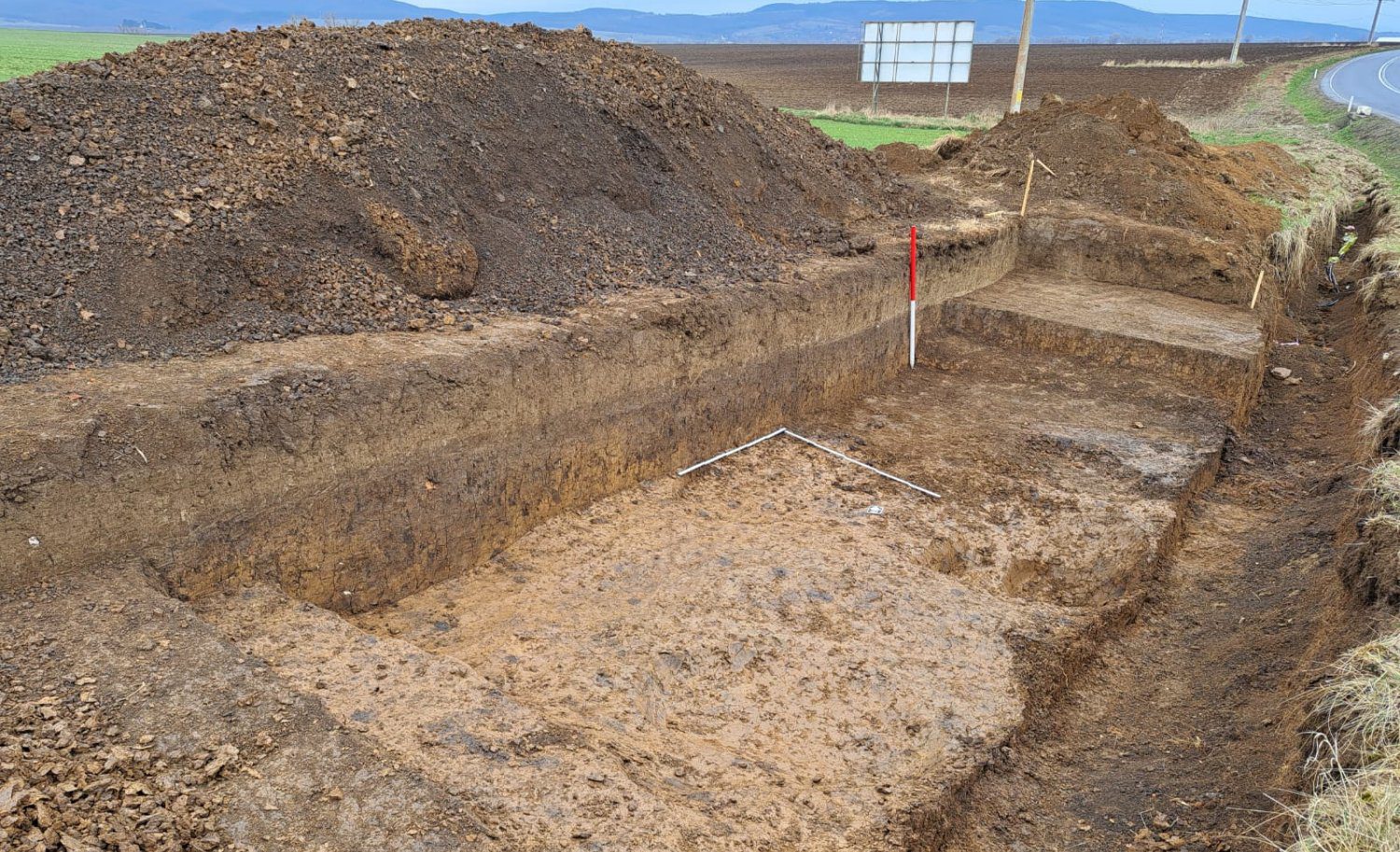
The discovery was made during legally mandated preventive excavations conducted ahead of infrastructure works near the Sepsi Arena. The excavation was carried out by specialists from Muzeul Naţional al Carpaţilor Răsăriteni, who were investigating a Neolithic settlement dated between 5800 and 5500 BCE.
A Rare Idol from the Early Farming World
Credit: MNCR – Muzeul Naţional al Carpaţilor Răsăriteni (via Facebook)
The settlement has been attributed to the Starčevo-Criș culture, one of southeastern Europe’s earliest agricultural cultures. These communities played a pivotal role in spreading farming across the Balkans and into the Carpathian Basin.
Within the remains of a seven-millennia-old dwelling — among pottery fragments, burnt clay, and charcoal deposits — researchers uncovered a carefully modeled female figurine. Crafted from clay tempered with chaff and sand, the object was fired at high temperature, giving it a light brick-red color with darker patches from uneven heat exposure.
Its features are subtle but deliberate. The eyes are incised in a distinct V-shape; an oval ridge marks the nose. Fine engraved lines suggest long hair gathered into a bun — possibly one of the earliest depictions of a female hairstyle north of the Danube. The arms extend laterally in a raised gesture commonly associated with invocation or prayer in
Unlike many prehistoric “Venus” figurines known for exaggerated fertility traits, this example presents a slender silhouette and restrained modeling. Such stylistic simplicity may reflect regional variation or a distinct symbolic function within the Starčevo-Criș cultural sphere.
Ritual Object or Household Protector?

Clay figurines are relatively rare within this cultural tradition, making the Arcuș discovery particularly significant. Scholars propose several possible interpretations: a votive offering, a domestic protective amulet, or an object used in fertility-related or communal ritual practices.
Dr. Dan-Lucian Buzea, one of the project’s archaeologists, emphasized that artifacts like this figurine provide a tangible connection to the inner lives of early agrarian societies. The raised-arm posture, he noted, suggests symbolic communication — an embodied gesture of belief carved into clay more than seven millennia ago.
The excavation was led by Dr. Dan-Călin Ștefan, with an interdisciplinary team ensuring meticulous documentation before construction resumed. Without preventive archaeology, the figurine might have remained buried and unknown.
A Window into Europe’s Neolithic Transformation
The discovery comes from a period when communities were transitioning from mobile hunter-gatherer lifeways to permanent agricultural settlements. This profound shift not only altered economic systems but also generated new forms of artistic and spiritual expression.
Today, the small clay figure from Arcuș stands as quiet testimony to that transformation. Though modest in size, it expands our understanding of Neolithic ritual symbolism in southeastern Europe and highlights the deep cultural networks shaping the early farming world.