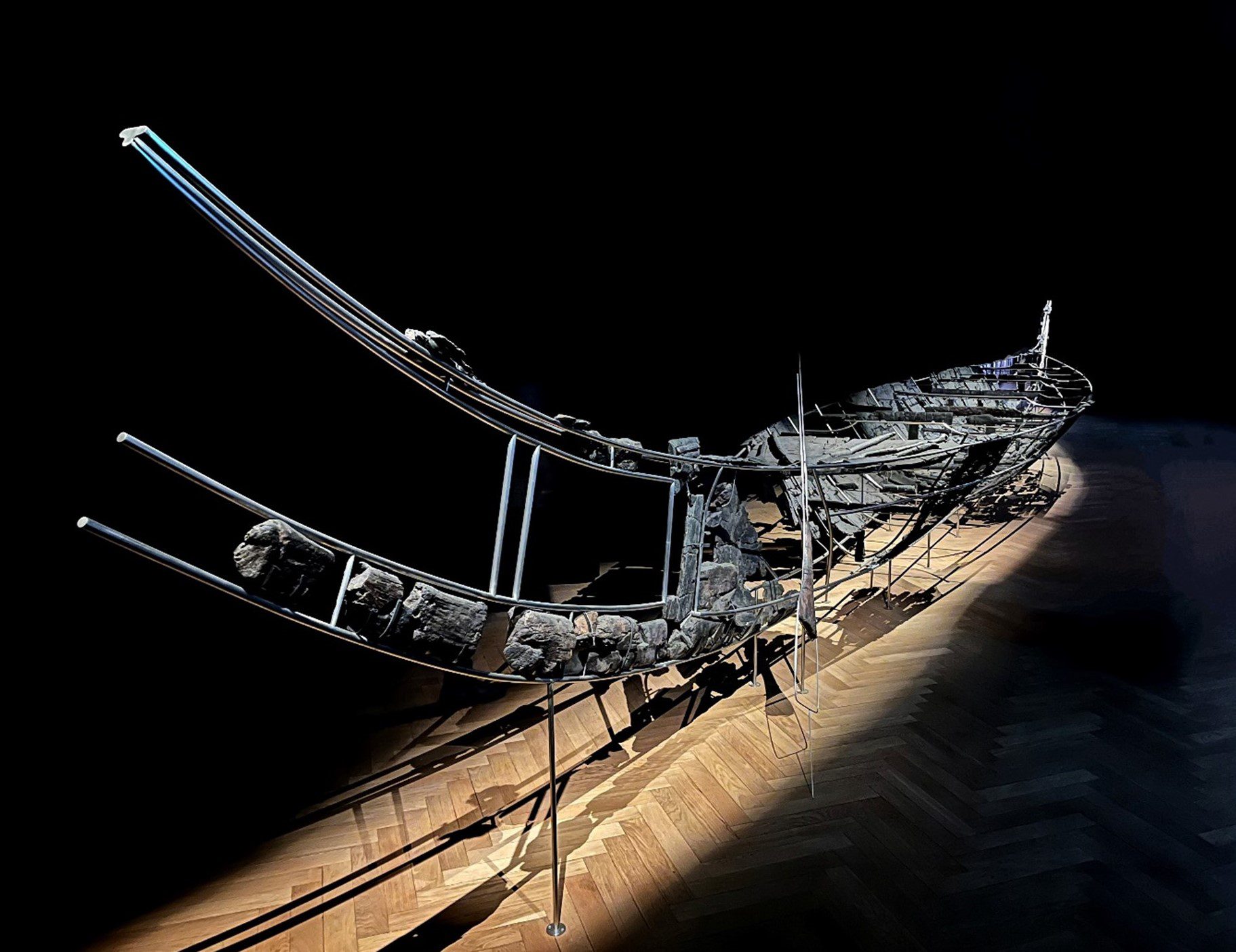
For a brief moment more than 2,300 years ago, a sailor pressed his hand into warm pine pitch while repairing a wooden boat. The gesture was ordinary, almost invisible — yet it endured. Today, that faint fingerprint has been identified in the remains of the Hjortspring boat, the oldest known wooden plank-built vessel in Scandinavia, preserved for centuries in a Danish bog.
The discovery comes from a new scientific study that examined fragments of caulking and cordage collected during the early twentieth-century excavation of the Hjortspring find. Using modern analytical techniques, researchers have not only identified a partial human fingerprint embedded in the waterproofing material, but also uncovered new evidence about where the boat was built and how its crew maintained it at sea.
A Boat Raised from the Bog
The Hjortspring boat was first encountered in the late 1800s, when peat diggers on the island of Als in southern Denmark uncovered large wooden elements deep within the bog. A full archaeological excavation followed in 1921–1922, revealing roughly forty percent of a remarkably sophisticated vessel.
Measuring around 20 meters in length and weighing about 530 kilograms, the boat was capable of carrying at least 24 people along with their equipment. Rather than being nailed together, its limewood planks were sewn using organic cordage, a flexible construction method well suited to open-water travel.
Alongside the boat lay an extraordinary assemblage of weapons — spearheads and shields sufficient to equip approximately 80 warriors. Archaeologists interpret the deposit as the remains of a failed maritime raid. After repelling the attackers, the island’s inhabitants appear to have placed the captured boat and weapons into the bog as ritual offerings.
Dating an Icon of Iron Age Seafaring
For decades, the exact age of the Hjortspring boat remained uncertain. Conservation treatments applied in the early twentieth century made direct radiocarbon dating of the main timbers impossible. However, later excavations at the site recovered untreated wood fragments that could be reliably analyzed.
These samples dated the vessel to the 4th or 3rd century BC, placing it firmly within the pre-Roman Iron Age and making it the earliest known example of a sewn-plank wooden boat in northern Europe.
Cordage That Tells a Story
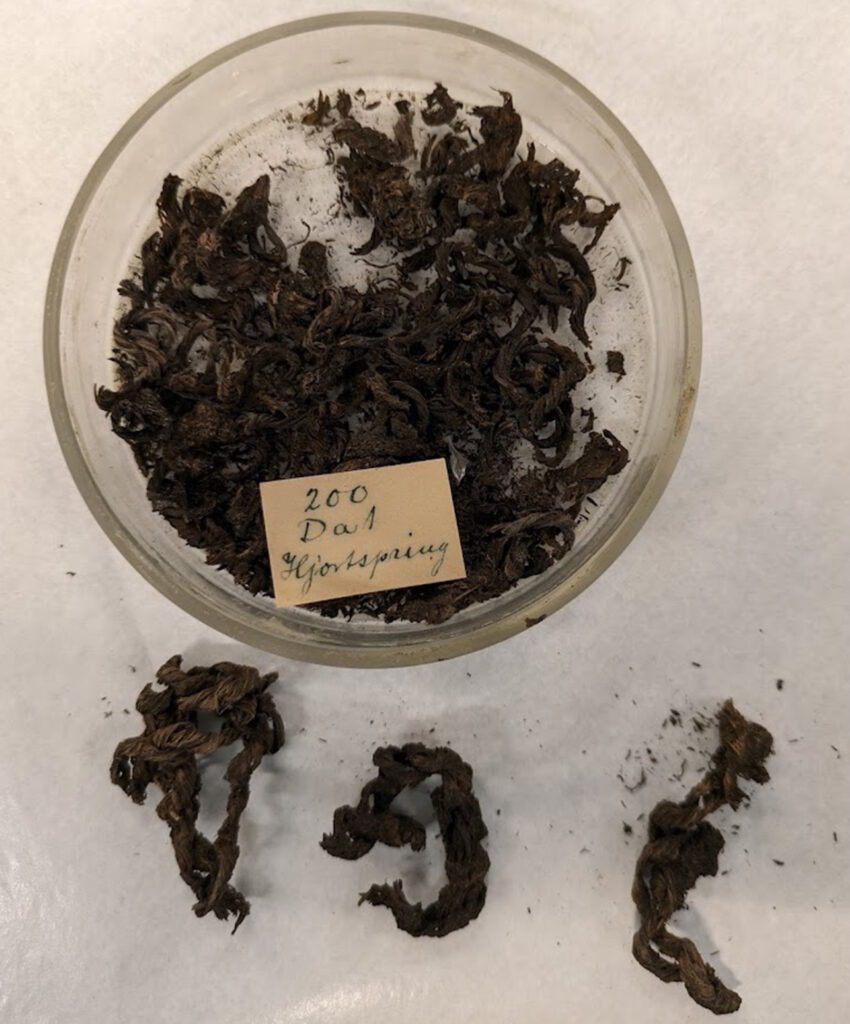
The recent study focused on cordage and caulking fragments that had escaped chemical preservation and remained in their original state. Microscopic analysis revealed that the ropes were made from lime bast fibers, spun into long, resilient strands.
Experimental reconstructions suggest this type of cordage would have remained pliable during construction and durable during repairs. Some fragments were found untarred, leading researchers to conclude that spare cordage was likely carried onboard, ready to be spliced into damaged lines during voyages.
This evidence points to a highly developed boatbuilding tradition, one that relied on accumulated technical knowledge rather than improvisation.
Pine Pitch and a Shift in Origin
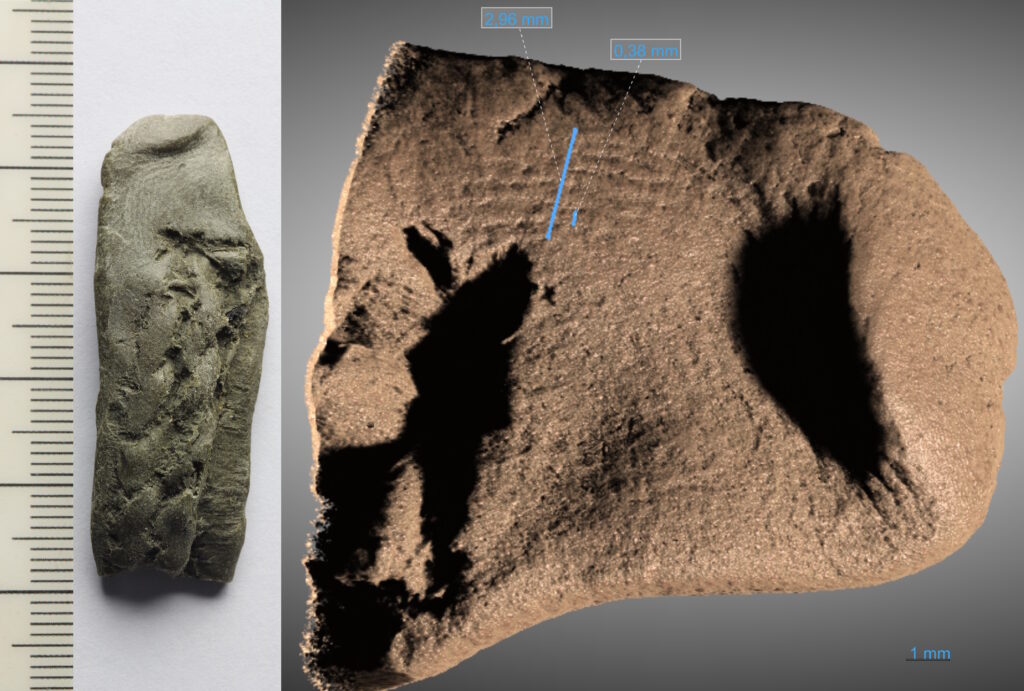
Chemical analysis of the caulking material using gas chromatography–mass spectrometry revealed another surprise. The waterproofing consisted primarily of pine-derived tar.
Pine forests are scarce in the immediate surroundings of Als but abundant along the Baltic Sea coast. This finding challenges earlier theories that placed the boat’s origin near the Elbe River and modern-day Hamburg. Instead, researchers now argue that the Hjortspring boat was likely built somewhere within the pine-rich Baltic region.
If this interpretation is correct, it carries major implications. The attackers who sailed to Als would have crossed hundreds of kilometers of open sea — a clear indication that long-distance maritime raiding was already well established in northern Europe more than two millennia ago.
The Fingerprint in the Pitch
Among the most striking findings is the partial fingerprint preserved in the hardened pine tar. The impression likely formed while a crew member was handling the pitch during maintenance or repair work, pressing fingers directly into the viscous material.
Unlike tools or weapons, fingerprints capture an individual moment. They provide a rare physical connection to a specific person — someone who worked, repaired, and sailed aboard this vessel long before written history reached the region.
Researchers hope that future studies may even extract ancient DNA from the caulking pitch, potentially revealing biological information about the people who crewed the Hjortspring boat.
A Human Trace Across Millennia
The Hjortspring boat has long been recognized as a cornerstone of Scandinavian maritime archaeology. This new discovery adds an intimate dimension to its story, transforming it from a technological milestone into a human encounter.
A hand pressed into pine tar.
A repair made before setting sail.
A fingerprint that survived 2,300 years.