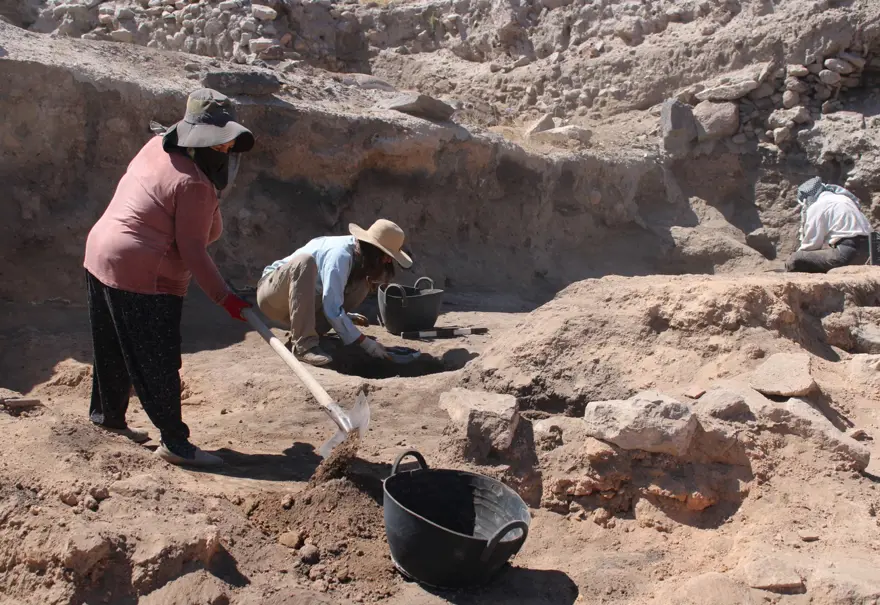
At Kültepe Kaniš-Karum, the site where Anatolia’s earliest written documents were first uncovered, archaeologists have made a discovery that pushes the region’s history deeper than previously understood. Excavations have revealed the remains of a monumental palace complex hidden beneath a known palace, pointing to a powerful authority that predates the Assyrian merchant period traditionally associated with the site.
Located along the Kayseri–Sivas route in central Anatolia, Kültepe has been under continuous archaeological investigation since 1948, making it one of Türkiye’s longest-running excavations. Thousands of cuneiform tablets recovered here transformed scholarly understanding of early trade, literacy, and administration in Anatolia. The newly identified architectural layer now suggests that this written and commercial world was built upon an even earlier foundation of centralized power.
Why Kültepe matters in Anatolian archaeology
Kültepe, known in antiquity as Kaniš, served as the principal hub of the Assyrian trading colony system during the early second millennium BC. The cuneiform tablets found at the site—contracts, letters, debt records, and inventories—represent the earliest written evidence ever discovered in Anatolia. They provide rare insight into how long-distance trade, legal practice, and institutional authority functioned in everyday life.
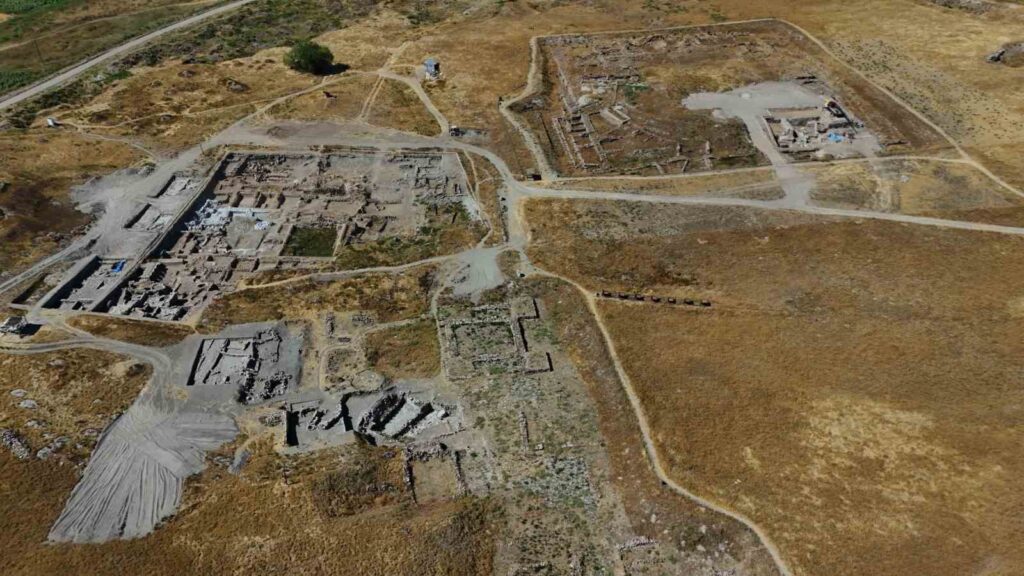
What makes the current discovery significant is its stratigraphic position. The newly exposed remains lie beneath the architectural levels associated with this well-documented commercial phase, indicating that Kültepe’s role as a center of power began earlier than the written sources alone suggest.
A larger structure beneath the known palaces
According to Excavation Director Prof. Dr. Fikri Kulakoğlu, the scale of the deeper architecture immediately stood out.
“The structures coming from below are even larger than those above,” he explained. “We have identified buildings with walls reaching up to four meters in thickness.”
Until now, three major palace structures dating to the Assyrian merchant period were known at Kültepe. Among them, the Waršama Palace—measuring approximately 100 by 110 meters—has long been regarded as one of the largest monumental buildings of its time in Anatolia. The newly discovered remains, however, appear beneath these levels and suggest an even more ambitious architectural program.
Evidence for authority before Assyrian trade
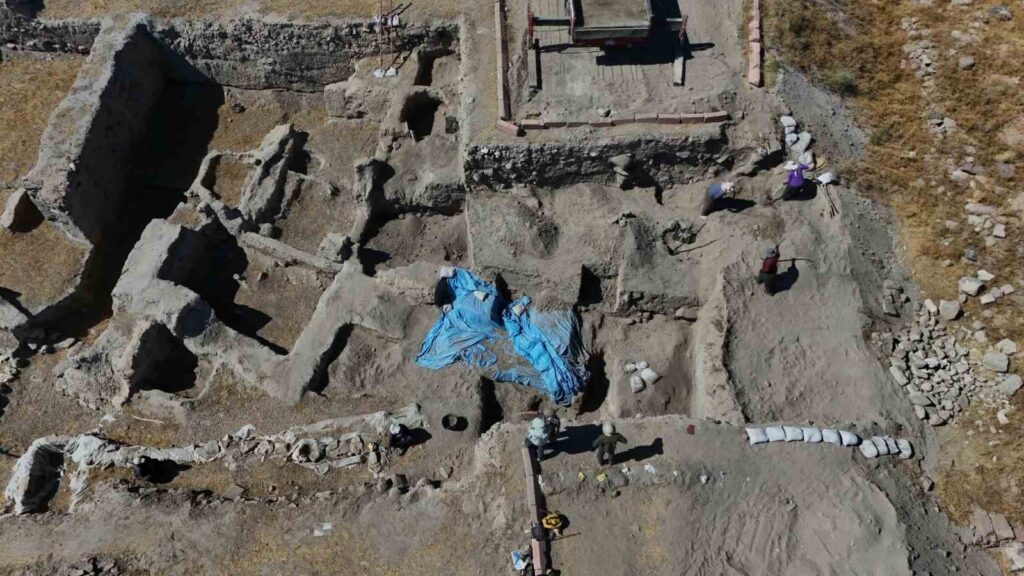
For Kulakoğlu and his team, the implications are clear but require careful interpretation. The deeper structures point to a strong local authority that existed around 500 years before Assyrian merchants established their trading networks at Kültepe.
“These were not ordinary buildings,” Kulakoğlu noted. “They were most likely monumental spaces with administrative or religious functions.”
Written records already show that palatial institutions at Kültepe were deeply involved in trade. Palaces functioned not only as political centers but also as regulated spaces where goods were stored, managed, and, in some cases, where rooms were rented to merchants. The newly identified lower level suggests that this close relationship between power, economy, and architecture has roots that extend further back in time.
Only a fragment uncovered so far
Despite the scale of the discovery, archaeologists emphasize caution. So far, excavations have exposed only a limited portion of the deeper structure.
“The excavated area is extensive,” Kulakoğlu said, “but at this stage we have reached only the corner of a very large building.”
Future excavation seasons are expected to clarify the function, date, and full extent of the structure. If confirmed, the palace beneath the palace will force a reassessment of Kültepe’s early history—not merely as the birthplace of Anatolia’s written tradition, but as a long-standing center of political and institutional power.