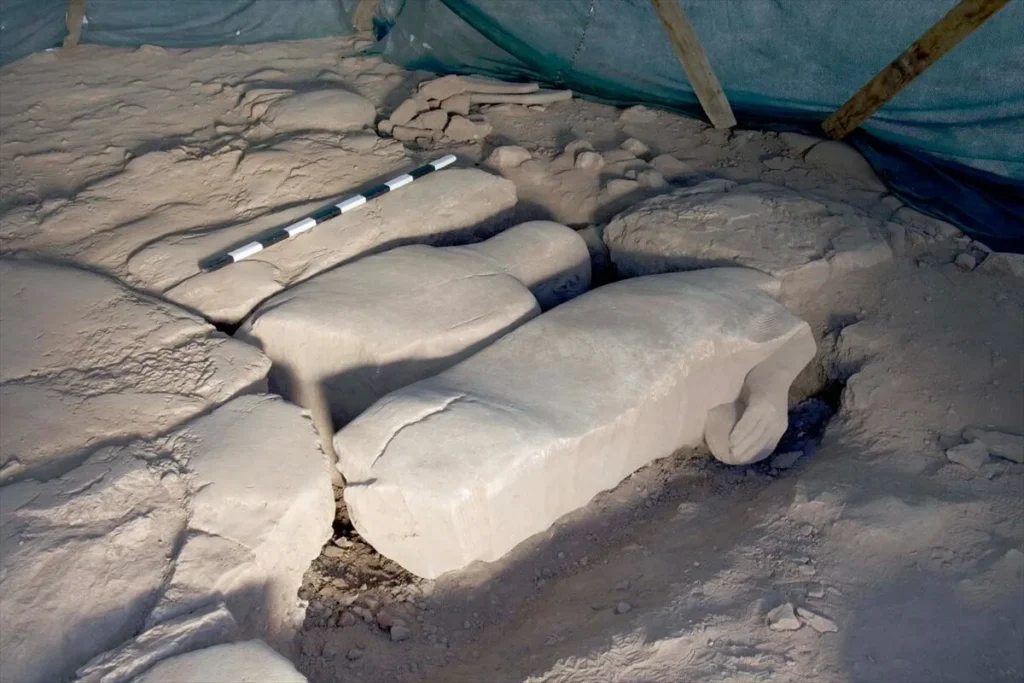
Roman builders at Sardis once laid a monumental marble statue face down beneath a colonnaded street. Centuries later, that act of reuse helped preserve the young man’s face, long hair and clothing in remarkable detail.
The statue was uncovered during excavations at the ancient city in western Türkiye’s Manisa Province. Türkiye’s Ministry of Culture and Tourism dates it to between 470 and 450 BCE, placing it in the first half of the fifth century BCE.
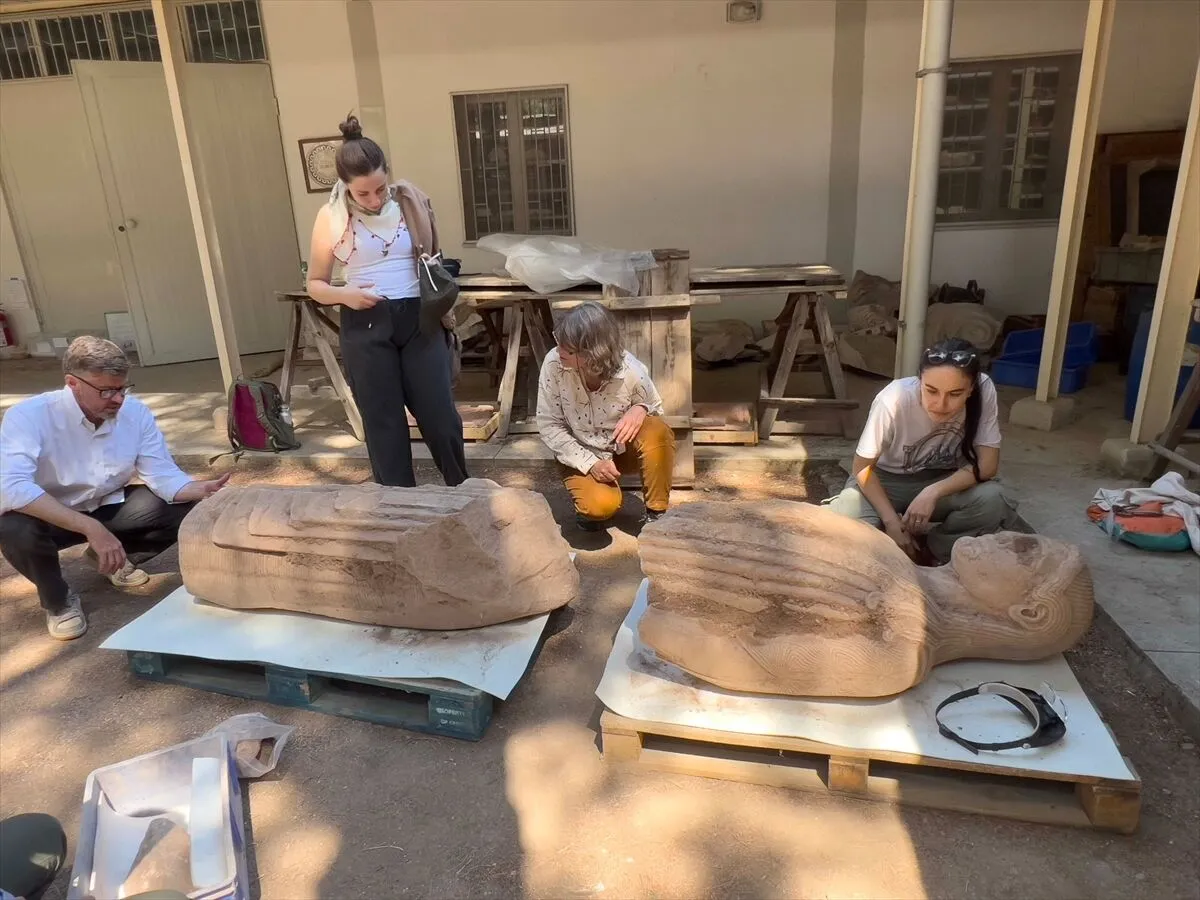
Although its feet are missing, the surviving sculpture measures 2.2 meters in height. Archaeologists recovered it in two large sections, while several smaller fragments have yet to be located.
The figure was already centuries old when Roman builders removed it from its original setting and incorporated it into the street as paving material. Placing the marble face down stripped the statue of its original context, but protected much of its carved surface from prolonged exposure and later damage.
After clearing the surrounding soil and paving stones, excavation and conservation teams lifted the two sections for documentation and treatment.
Created in Persian-period Sardis
The statue belongs to a period when Sardis was adapting to a new political order.
Once the capital of the Lydian kingdom, the city came under Achaemenid Persian control in the sixth century BCE and became an important administrative center in western Anatolia.
The sculpture was therefore produced under Persian rule, but its appearance preserves features associated with earlier artistic traditions.
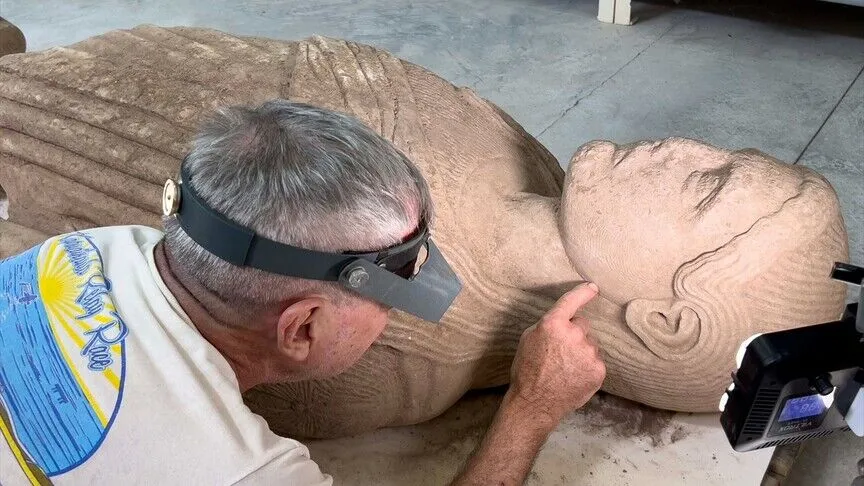
Its upright posture and long hair recall male statues of the sixth-century BCE Archaic period. The face and anatomical treatment of the hands, however, point to the early fifth century BCE, when sculptors were beginning to adopt more naturalistic forms.
The statue combines features associated with both the Archaic and early Classical periods.
Unusual clothing may preserve a local tradition
The young man wears a heavy himation, or outer cloak, over a thinner chiton. Beneath them is another garment decorated with horizontal bands.
According to the Ministry of Culture and Tourism, researchers have not yet identified a close parallel for this arrangement among comparable statues from Anatolia or Greece.
The garment may reflect a local Lydian tradition. Although that interpretation remains preliminary, the clothing differs from the standard arrangements seen on many contemporary figures from the Aegean world.
The figure also holds a rounded object in his right hand. Archaeologists believe it may represent a quince or another fruit, possibly carried as an offering to a god or goddess.
Its precise meaning remains uncertain. No inscription or surviving architectural context has been reported that would securely identify the young man as a deity, worshipper, hero or historical individual.
Because the statue had been removed from its original location before being reused, archaeologists no longer have the sanctuary, monument or public setting that might once have explained its purpose.
From monument to paving stone
By the Roman period, the statue had been removed from the setting for which it was created.
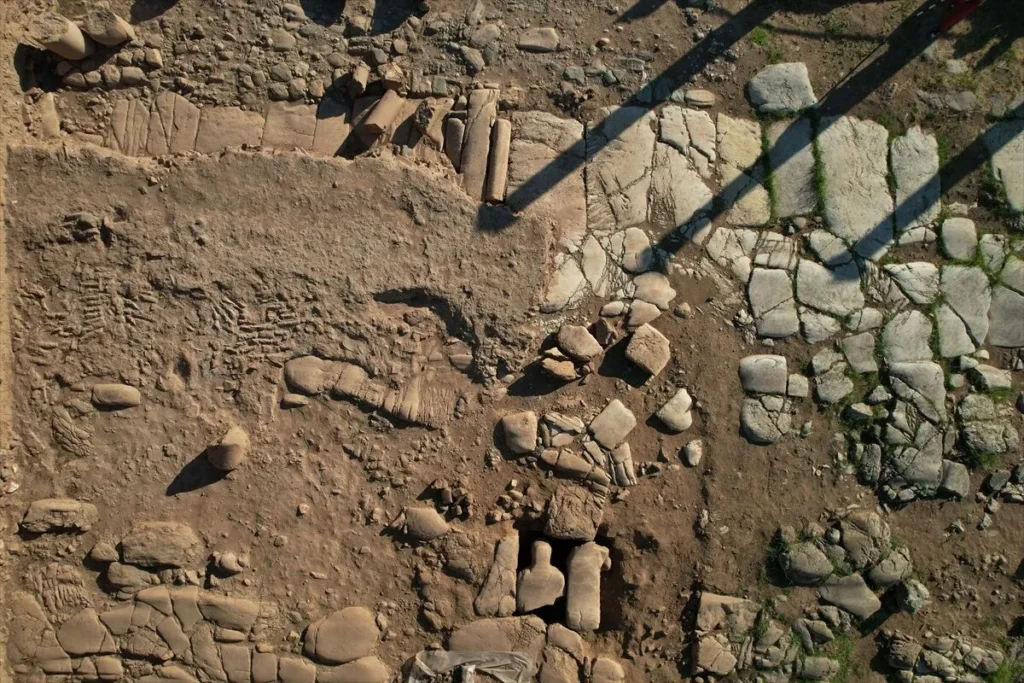
Reusing older stone was common in ancient construction, particularly when earlier buildings and monuments were dismantled. At Sardis, the sculpture was turned into building material and laid beneath a street near the city’s entrance.
That reuse erased its original archaeological context, but it also preserved the most detailed side of the marble beneath the pavement.
Large early statues from Anatolia rarely survive with so much of their facial and clothing detail intact. The condition of the Sardis sculpture will allow specialists to examine features that are often lost through weathering, breakage or later reuse.
Conservators will search for ancient color
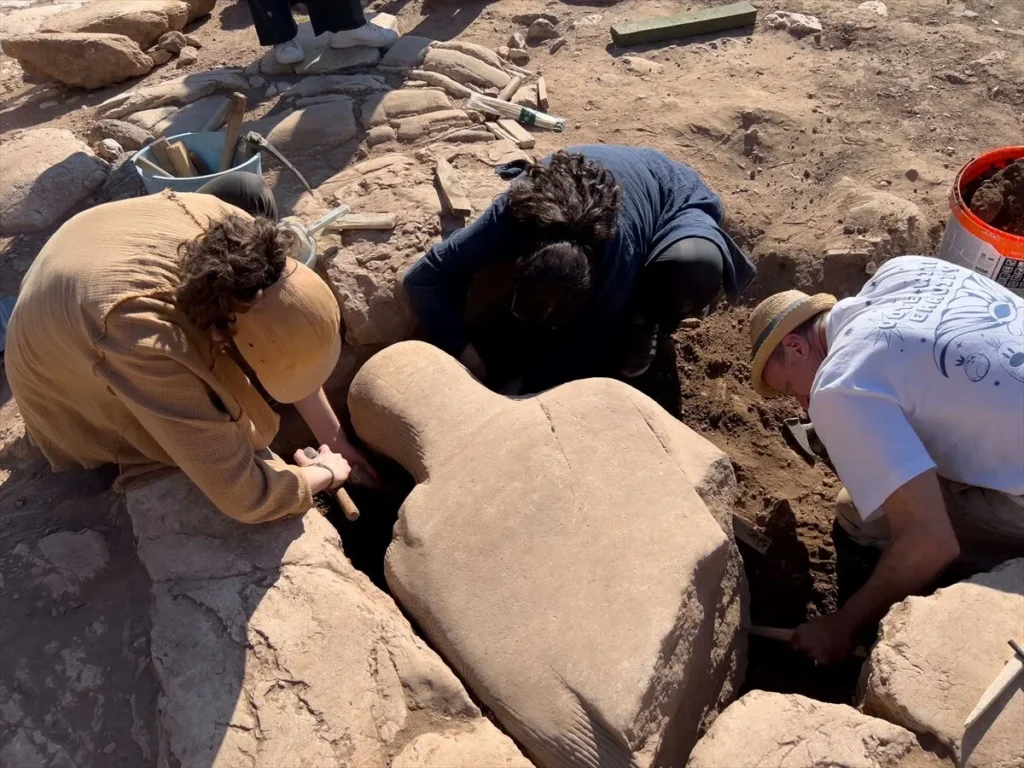
Parts of the marble remain covered by a thick layer of hardened soil and mineral deposits. Conservators will remove this material gradually to avoid damaging any surviving pigment.
Ancient marble statues were often painted rather than displayed as bare white stone. Specialists in ancient polychromy will examine both the sculpture and soil collected from around it for microscopic traces of color.
Pigments could reveal how the figure’s hair, skin, clothing or the object in his hand originally appeared. Painted patterns may also provide further clues about the unusual garments.
Once conservation, documentation and restoration are complete, the 2,500-year-old statue will be displayed at the Manisa Museum.