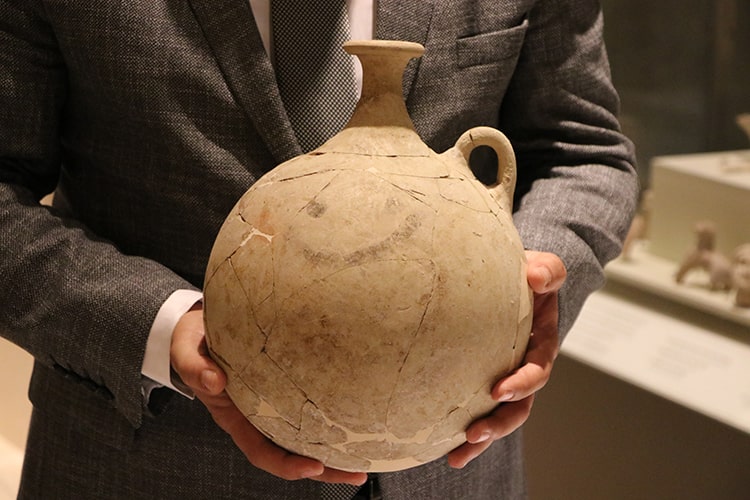
Long before digital emojis, someone in Bronze Age Carchemish painted a simple smiling face on a clay flask. Nearly 3,700 years later, that small object is preparing to meet visitors at Gaziantep Archaeology Museum in southeastern Türkiye.
The flask comes from Karkamış, known in antiquity as Carchemish, one of the great cities of the ancient Near East. Set on the Euphrates near today’s Türkiye-Syria border, Carchemish later became a major center of the Hittite and Neo-Hittite world, linking Anatolia, Syria and Mesopotamia across centuries of trade, war and cultural exchange.
A Bronze Age smile on a clay flask
The single-handled terracotta flask was discovered during excavations at Karkamış in 2017. Dated to the Middle Bronze Age, it carries a face formed with two eyes and a curved mouth.
The comparison with a modern emoji is, of course, a modern one. Yet the effect is hard to miss. The face is simple, direct and still instantly recognizable. It is not a royal inscription, a monumental relief or a temple object. It is a small vessel from daily life, made powerful by one human gesture.
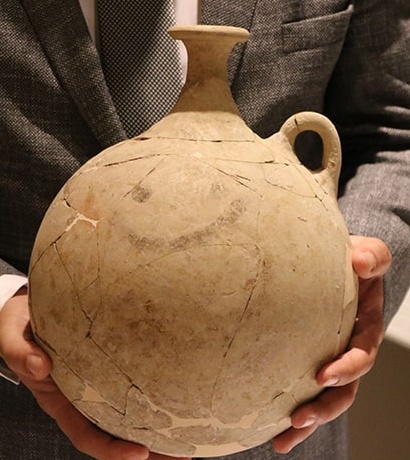
The flask has often been described in Türkiye as one of the world’s earliest known smiley-like images on an artifact. That popular description helped make the object widely known, but its archaeological value goes beyond the comparison. It comes from a city that stood at one of the key crossroads of the ancient Near East.
Carchemish, a city between empires
Carchemish owed much of its importance to geography. Its position on the Euphrates made it a strategic point between Anatolia and northern Syria. Over time, the city became associated with major powers of the region, including the Hittites, Neo-Hittite kingdoms and Assyrians.
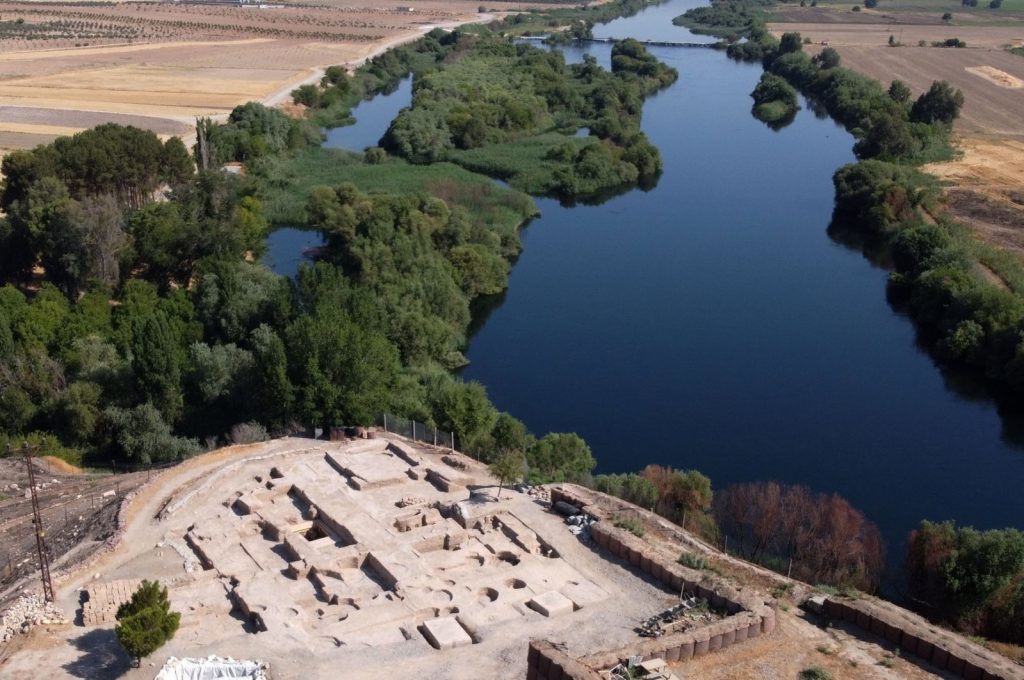
Modern excavations at Karkamış have uncovered cuneiform tablets, seals, monumental remains and other finds that help reconstruct the city’s long history. The work has been carried out by a Turkish-Italian archaeological team led by Prof. Nicolò Marchetti of the University of Bologna, with Turkish academic collaboration including Prof. Hasan Peker of Istanbul University.
The smiling flask will be displayed in the Karkamış Hall of Gaziantep Archaeology Museum.
A rare Mithras relief from Zeugma
The renewed museum display will also include a rare marble relief of Mithras from the ancient city of Zeugma. Dated to the 2nd century AD, the relief was found in an area associated with the Roman military presence at Zeugma, near the section described as the legionary camp and hippodrome area.
According to Gaziantep Museum Director Özgür Çomak, the relief is the only known archaeological evidence so far linked to Mithras worship at Zeugma.
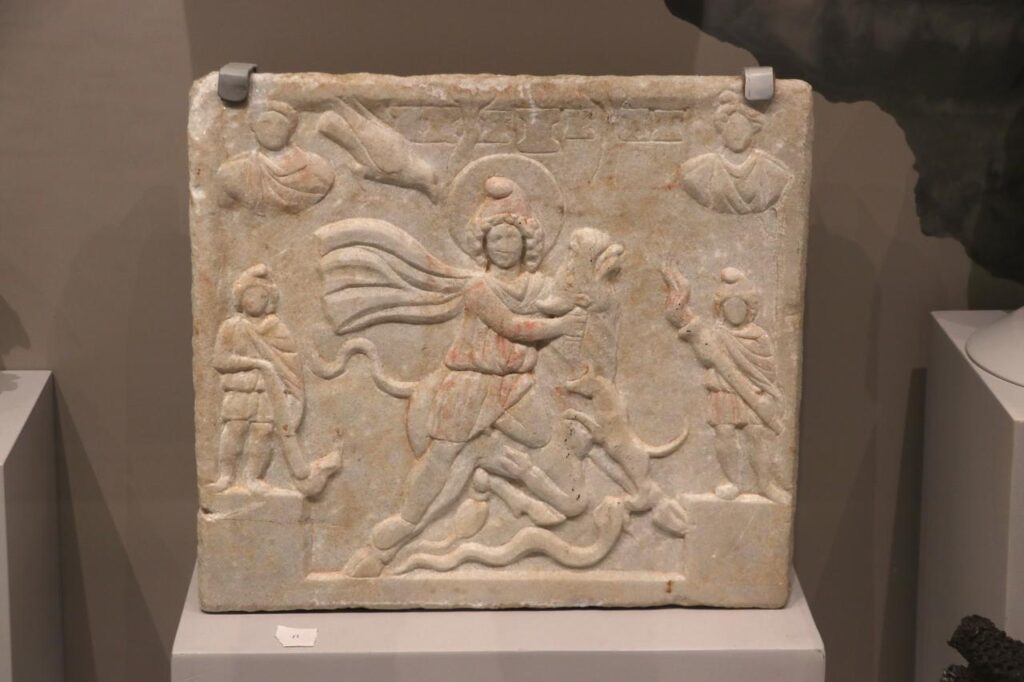
Mithras was a god whose cult spread across parts of the Roman Empire and became especially popular among soldiers. The cult was practiced in closed communities and was often associated with loyalty, light and strength.
The relief will be shown with finds connected to the Fourth Scythian Legion, which was stationed at Zeugma. Helmets, armor pieces, tools and other military equipment will also be displayed in the same section.
Gaziantep Archaeology Museum prepares to reopen
Gaziantep Archaeology Museum suffered damage during the February 6, 2023 earthquakes centered in Kahramanmaraş. After restoration and strengthening works, the museum is preparing to reopen in June with a renewed exhibition design.
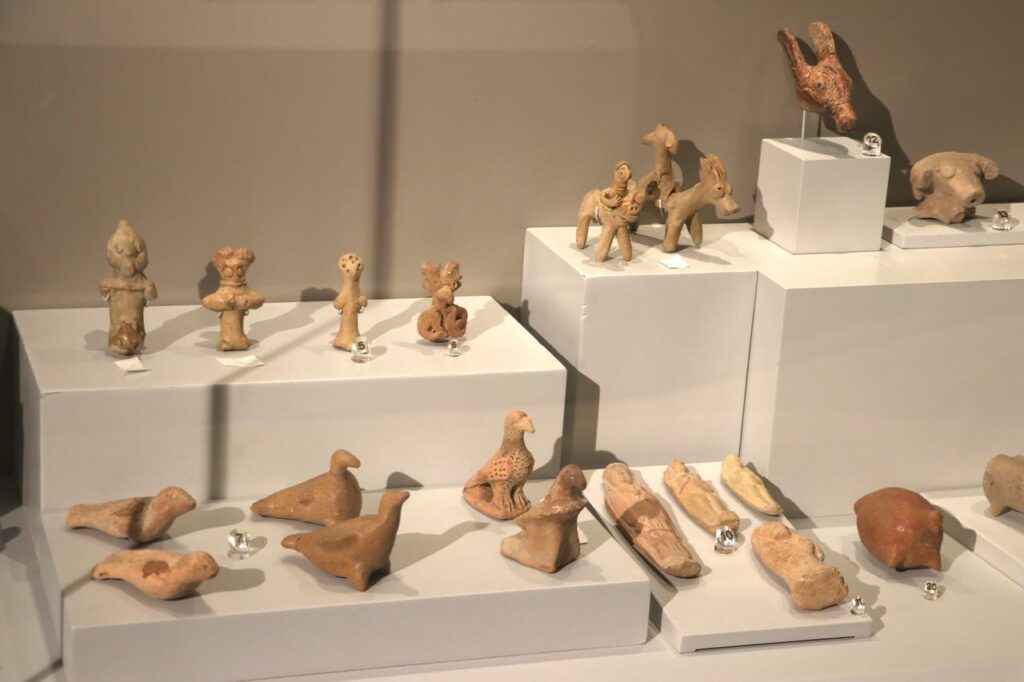
The new display will include 3,235 artifacts in total. Of these, 327 objects will be shown to visitors for the first time. The exhibition route will cover a long timeline from geological periods through the Paleolithic, Neolithic, Bronze Age, Hittite, Roman, Islamic and Ottoman eras.
Remains of the extinct Maraş elephant will also be part of the renewed display.
For many visitors, however, the object most likely to stop them first may be the smallest one: a Bronze Age flask from Carchemish, carrying a smile that still feels strangely familiar after nearly four thousand years.