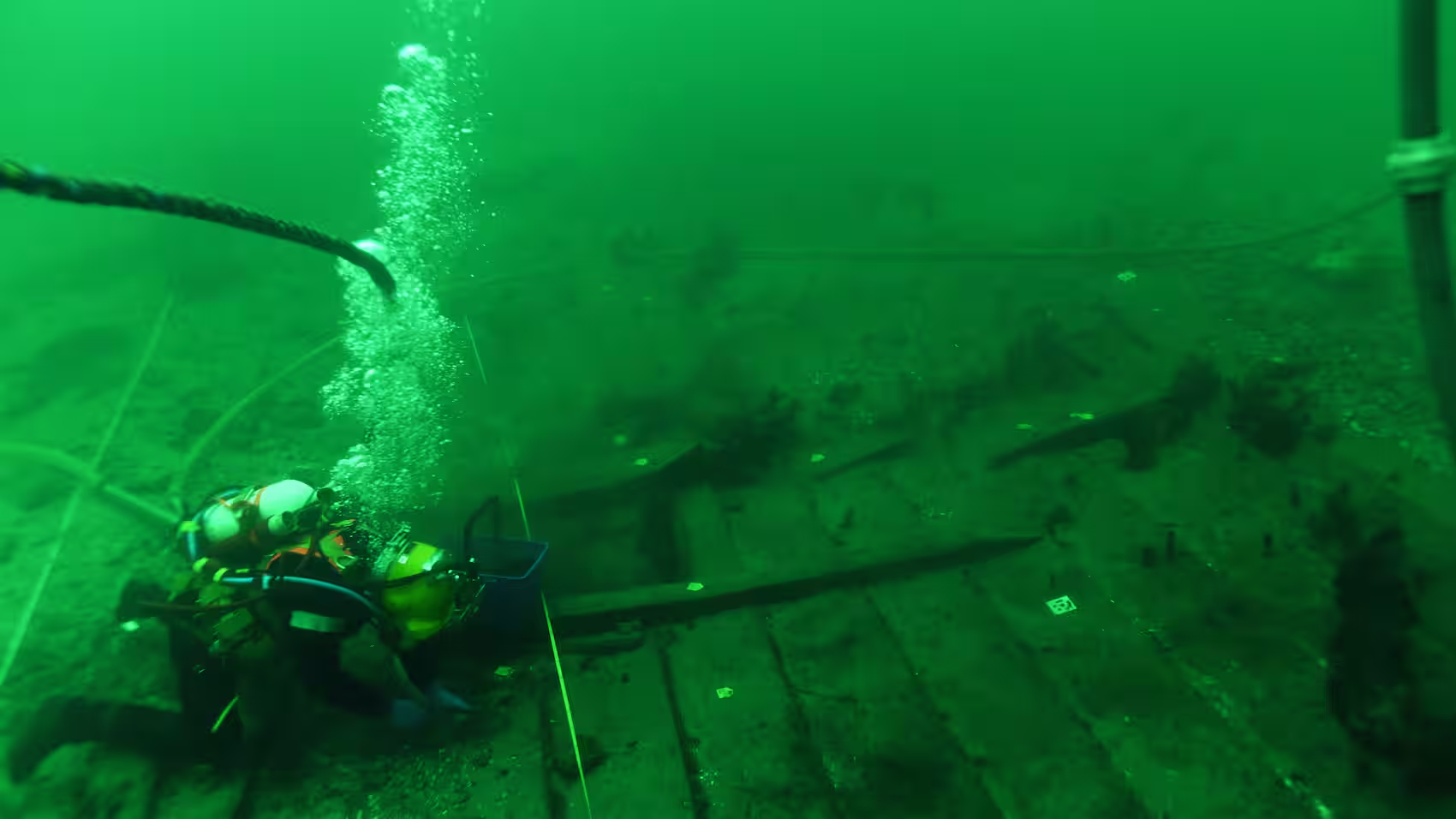
Marine archaeologists working off the coast of Copenhagen have identified a 600-year-old shipwreck as the largest medieval cog vessel ever discovered—a find that significantly recalibrates what historians understood about the scale of Northern European trade at the end of the Middle Ages. The wreck, known as Svælget 2, could carry up to 300 tons of cargo, placing it firmly among the heavyweights of 15th-century maritime commerce.
Resting undisturbed for centuries at a depth of 13 meters in the Øresund Strait, the ship survived in an exceptional state thanks to its sideways sinking in deep water—conditions rarely favorable for medieval wooden hulls.
An Unprecedented State of Preservation
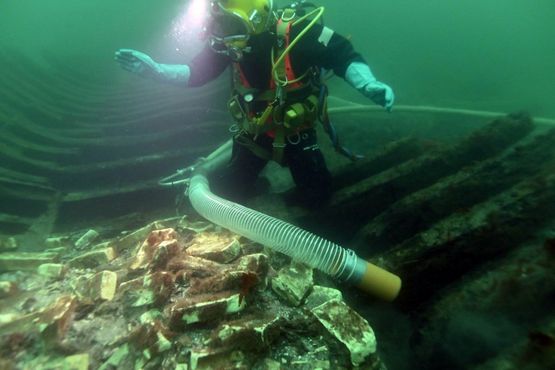
Excavation of Svælget 2 was anything but routine. Over 289 dives across more than two and a half years, researchers from the Viking Ship Museum painstakingly documented and recovered the hull, which remains preserved from keel to deck. For cog ships—typically known only from scattered timbers or partial wrecks—this level of completeness is extraordinary.
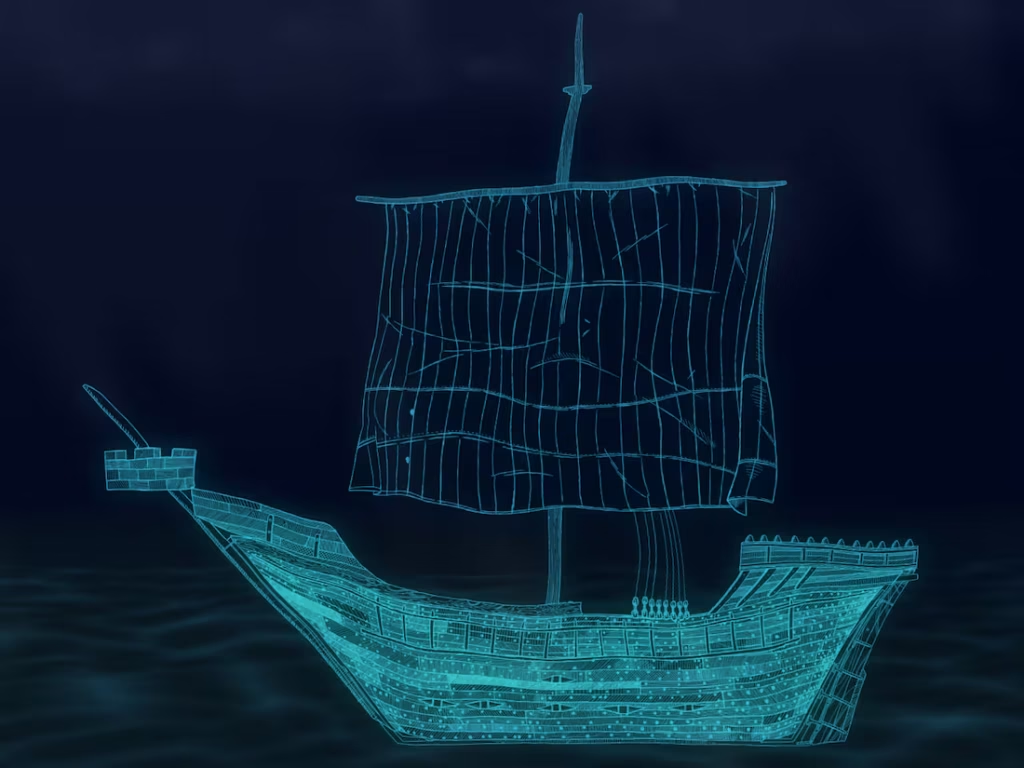
Beyond the hull, archaeologists uncovered structural elements of both the forecastle and aftcastle, small raised sections that provided shelter and working space for the crew. These features offer rare, tangible evidence of how sailors lived and operated aboard large commercial vessels in the 1400s.
Personal items recovered from the wreck—including shoes, a comb, a cooking pot, and a wooden tray—add a human dimension to the discovery, anchoring the ship not only as a commercial tool but as a floating workplace and temporary home.
Credit: Viking Ship Museum
Built for Bulk Trade, Not Longevity
Cog ships were the logistical backbone of medieval Northern Europe. Unlike earlier vessels optimized for luxury cargo, these ships were designed to move large volumes of everyday goods—timber, bricks, grain, and foodstuffs—across long distances with relatively small crews.
Svælget 2 exemplifies this economic logic. Measuring roughly 28 meters long, nine meters wide, and six meters high, it is officially the largest cog ship ever documented. Timber analysis reveals a strikingly international supply chain: planks imported from Poland combined with Dutch oak framing, underscoring the interconnected nature of 15th-century European trade.
Notably, the ship was not built to last. Archaeologists observed mediocre-quality planking, some of it already cracked during construction. This was not negligence but strategy. Ships like Svælget 2 were engineered for rapid return on investment, potentially repaying their cost after just one or two profitable voyages—a reminder that medieval shipping was already a highly organized, finance-driven industry.
Daily Life and Medieval Maritime Culture
One of the most revealing features of the wreck is its stone-built galley, evidence that the crew could prepare hot meals at sea. Such installations are rarely preserved and provide valuable insight into onboard living conditions.
The ship sailed during the era of Queen Margrethe I, when control of the Øresund was central to Scandinavian power and regional trade. Artifacts and construction techniques from Svælget 2 offer a snapshot of maritime life in a period when Denmark stood at the crossroads of Northern European commerce.
As historian Cecilie Nielsen observed, the logistical principles behind vessels like Svælget 2—bulk transport, standardized routes, and cost efficiency—form the historical foundation of modern Northern European trade systems.
From Seabed to Museum Gallery
Today, the shipwreck is undergoing long-term conservation at the National Museum, while the Viking Ship Museum in Roskilde has opened a dedicated exhibition on marine archaeology centered on the find. The dramatic recovery process—including the careful cutting and lifting of the keel—was documented in the DR television series Gåden i Dybet (The Mystery in the Deep), bringing the painstaking work of underwater archaeology to a broad public audience.
Why it matters: Svælget 2 does more than set a size record. It forces historians to reconsider the ambition, organization, and economic sophistication of late medieval shipping. Six centuries after it last sailed, this giant cog has returned to reshape our understanding of Europe’s maritime past—and the commercial instincts that continue to shape global trade today.
Cover Image Credit: Viking Ship Museum