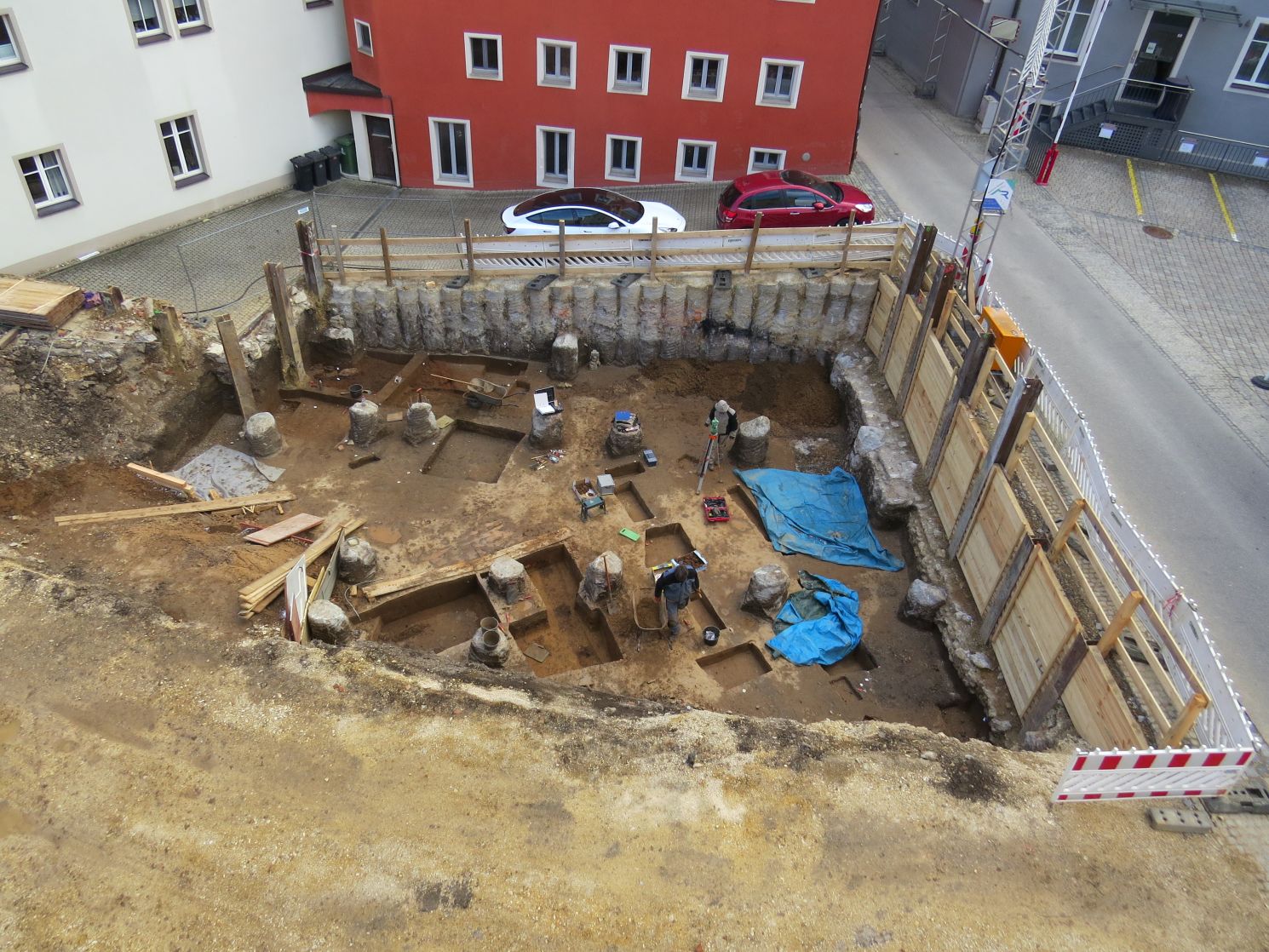
In the very center of Regensburg, where medieval streets and baroque façades dominate the eye, something far older has surfaced. Quietly. Almost accidentally.
What began as a routine archaeological assessment in the Old Town has led to one of the most consequential Roman discoveries in Bavaria in years: the remains of a Mithraeum—a sanctuary dedicated to the god Mithras—now identified as the oldest known example in the region.
Not a stone temple rising from the earth.
But traces. Subtle. Fragmentary. And decisive.
From expected layers to an unexpected cult
Credit: Museums of the City of Regensburg
The excavation site, at Stahlzwingerweg, initially behaved as expected. Prehistoric settlement traces. Roman occupation layers. Medieval remains stacked one above the other—Regensburg in miniature. Nothing unusual.
Then the structures stopped making sense.
Working in tight conditions, archaeologists returned to the site in several phases throughout 2023. Walls appeared, disappeared. Postholes resisted interpretation. Only later—once all data had been assembled—did the picture sharpen.
Dr. Stefan Reuter’s reassessment changed everything. What had seemed like scattered Roman features aligned into something far more specific: a wooden Mithras sanctuary, long decayed but still legible through its archaeological fingerprints.
North of the Alps, such sanctuaries are rare. In Bavaria, rarer still.
Objects that speak for a silent religion
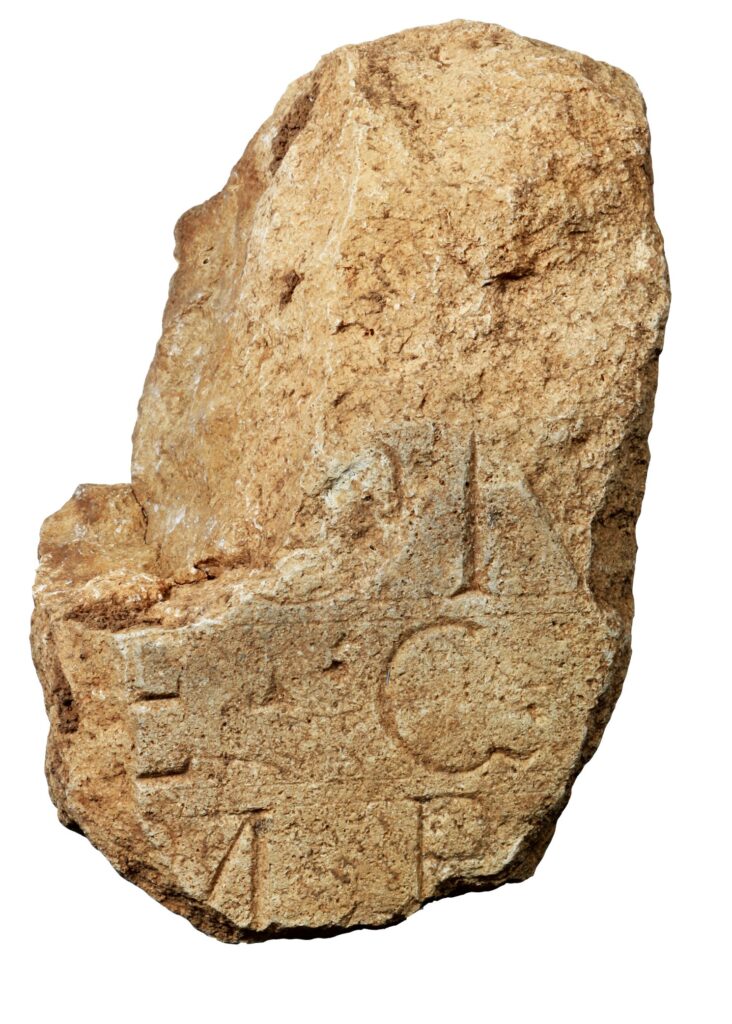
No carved relief survived intact. No inscription named the god outright. That is typical of Mithras worship—secretive, initiatory, inward-looking.
Yet the clues were unmistakable.
Credit: Museums of the City of Regensburg
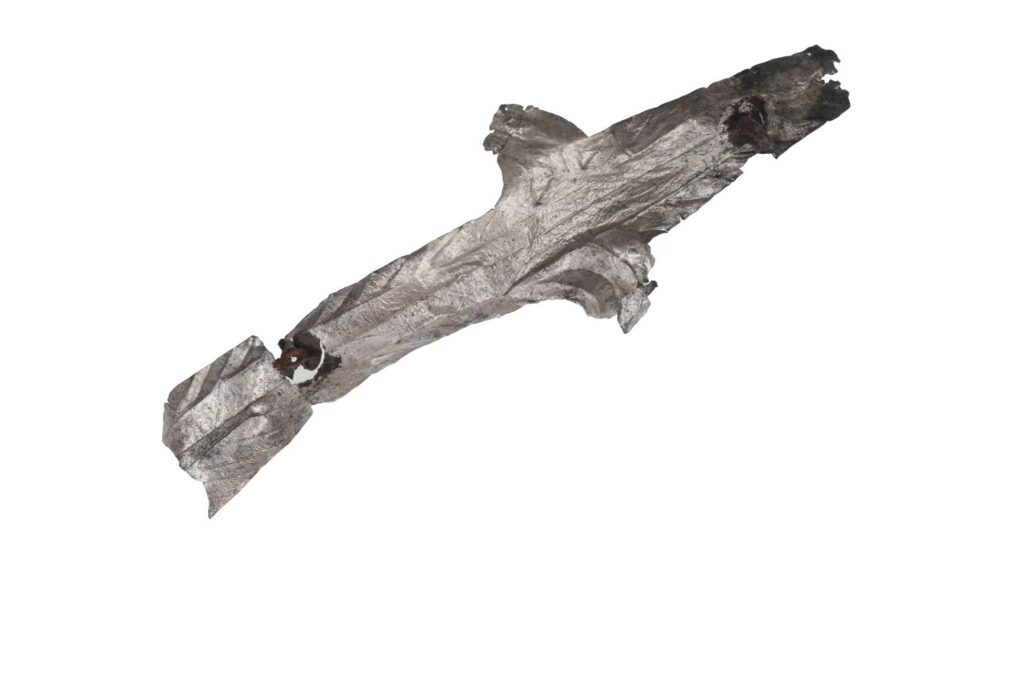
A votive stone of a familiar type. Fragments of metal dedication plates. Shrine fittings. Ritual vessels. Ceramic shards marked with snake imagery, a symbol closely tied to Mithraic cosmology. Incense cups. Jugs. Drinking vessels.
These were not everyday objects. They belonged to ritual banquets, a central act of Mithras worship where shared meals reinforced loyalty, hierarchy, and initiation.
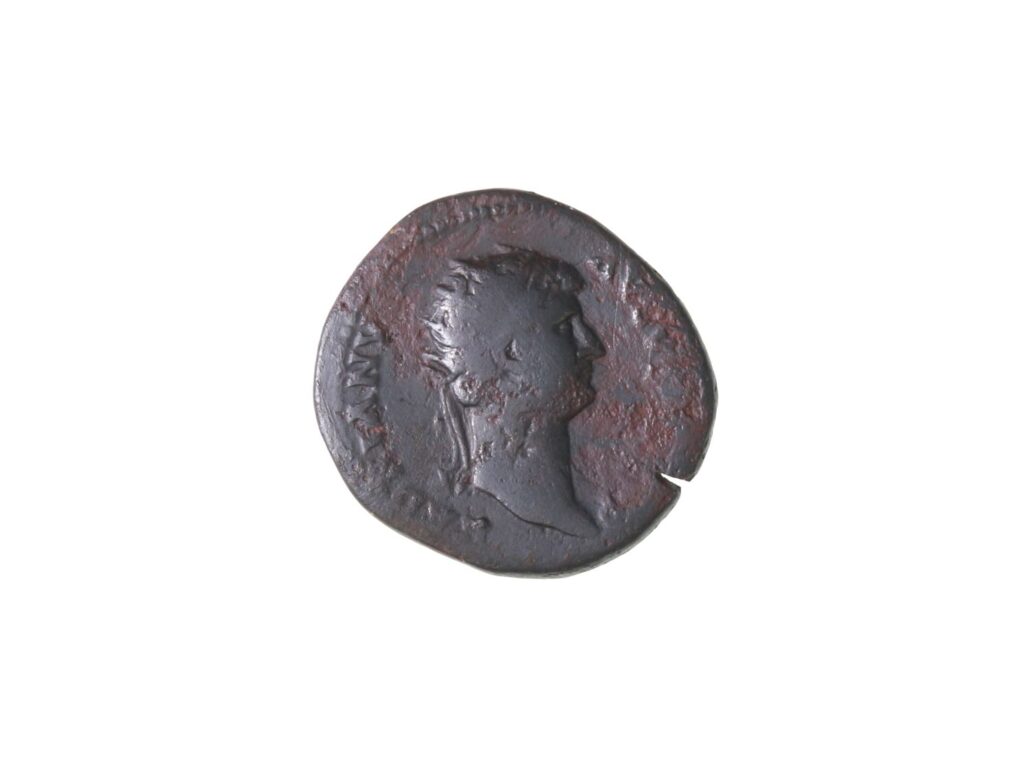
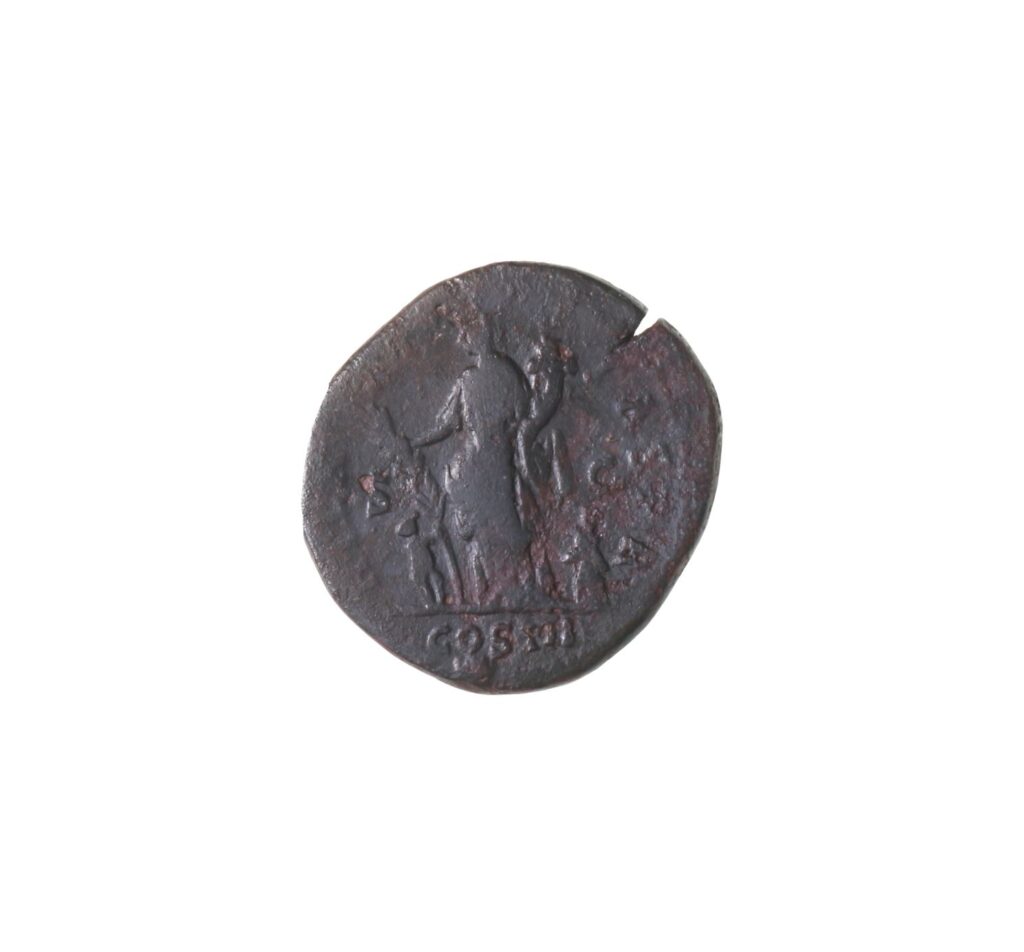
Coins recovered from the site provided the timeline. The sanctuary was active between 80 and 171 AD—well before Regensburg’s later legionary fortress. This places Mithras worship here at a surprisingly early stage, during the era of the Roman cohort fort at Kumpfmühl and its Danube-side settlement.
Credit: Museums of the City of Regensburg
“The earliest Mithraeum in Bavaria”
For Maximilian Ontrup, a Roman provincial archaeology specialist at the Museums of the City of Regensburg, the importance of the find is double-edged.
“This is the only Roman sanctuary ever identified within Regensburg’s Old Town,” he notes. “And beyond the city itself, it is the earliest Mithras sanctuary among the nine known sites in Bavaria.”
Most Mithraea belong to the late second or third century, when the cult reached its height across the empire—particularly among soldiers. This one predates that wave. It captures the cult before its peak, when it was still spreading along military and frontier networks.
That alone makes it exceptional.
Credit: Museums of the City of Regensburg
Rethinking Roman Regensburg
Roman Regensburg has always been harder to read than other frontier centers. Large parts of its early settlement remain buried beneath later urban layers. This discovery changes the balance.
A Mithraeum implies more than religion. It suggests social organization, military presence, shared identity, and structured ritual life within the Danube community. It fills a gap—not just on the map, but in understanding how Roman life functioned here.
And the implications extend beyond the city. For scholars of Mithras worship across Europe, the site offers new material evidence for a cult that left few written traces and guarded its secrets closely.
Making quiet objects speak
Recognizing the importance of the find, the City of Regensburg and the Bavarian State Office for the Preservation of Monuments have launched a joint research project to study the sanctuary and its artifacts in depth.
The recovered objects will be formally donated by the developer to the city’s museums, where they will become part of a new exhibition concept now in preparation.
Museum director Dr. Sebastian Karnatz is realistic about the challenge.
“At first glance, some of these pieces look unspectacular,” he says. “But placed in context, visualized properly, they begin to speak. And what they tell adds an entirely new dimension to Roman Regensburg.”
Beneath the Old Town, beneath centuries of stone and memory, a once-secret cult has surfaced again.
Cover Image Credit: ArchaeoTeam Resenburg