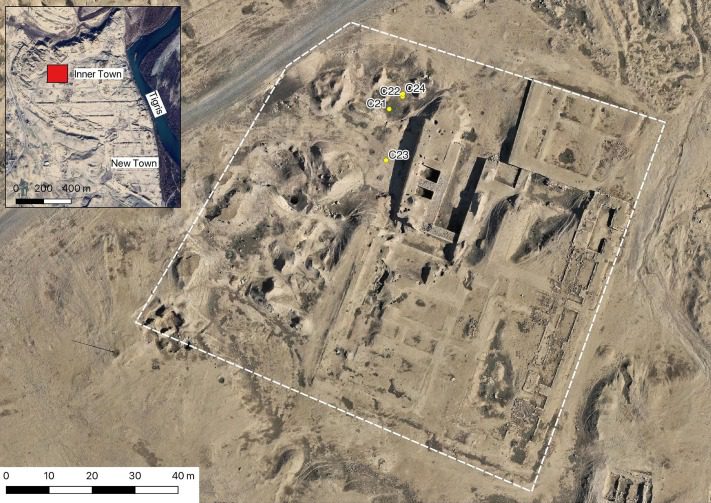
At the heart of the ancient Assyrian city of Assur, archaeologists have uncovered an unexpected detail that is quietly reshaping long-held assumptions about early Mesopotamian belief systems. Beneath the foundations of the city’s oldest Ishtar Temple, researchers identified a thick, deliberately placed layer of sand—an architectural choice with profound ritual meaning.
The discovery suggests that Assur was not only an emerging urban center, but also a carefully planned religious landscape much earlier than previously thought.
A Foundation Prepared for the Divine
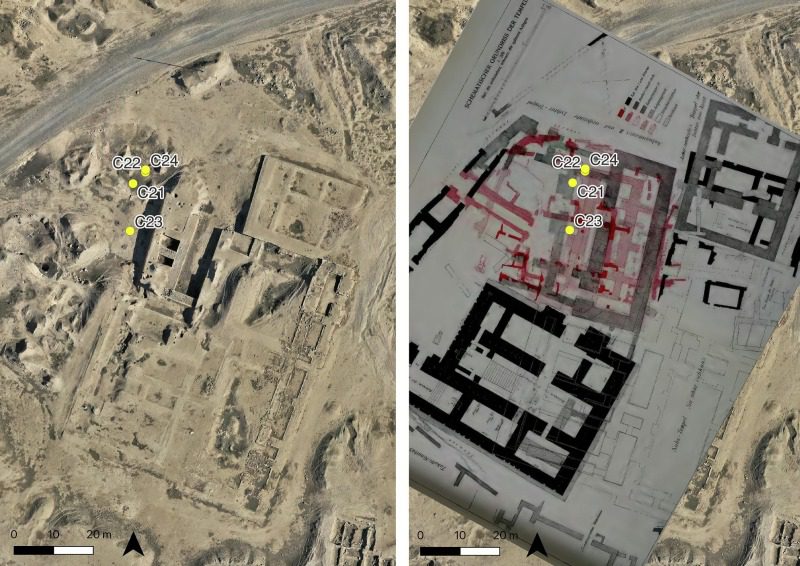
The sand layer lies directly beneath the temple’s earliest floor and contains no traces of daily life. There are no tools, pottery fragments, or domestic remains. Its clean composition points to intentional placement rather than accidental accumulation.
In southern Mesopotamia, purified sand was sometimes laid beneath temples as part of construction rituals, symbolically preparing the ground for a deity. Until now, there had been no clear evidence that this practice extended into northern Mesopotamia. The Assur discovery provides the first solid indication that such rituals were shared—or consciously adopted—far beyond their original heartland.
Sand That Came from Far Away
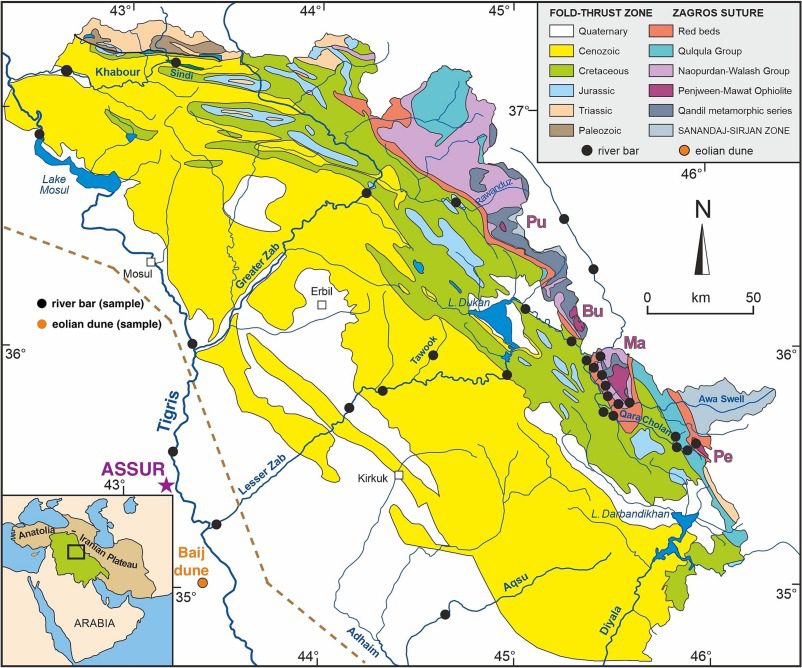
Mineralogical analysis revealed another crucial detail: the sand did not come from the nearby Tigris River, despite its proximity to the site. Instead, its mineral “fingerprint” points to the Zagros Mountainslocated some 30 to 50 kilometers away.
Rare minerals such as glaucophane and lawsonite—formed only under specific geological conditions—made it possible to trace the sand’s origin with high confidence. This means the temple’s builders deliberately rejected local materials in favor of sand sourced from a distant landscape, likely for symbolic rather than practical reasons.
Rethinking the Early History of Assur
Charcoal fragments found just above the sand layer were radiocarbon dated to roughly 2900–2700 BCE. These results push the construction of the Ishtar Temple—and possibly the emergence of Assur as a religious center—earlier than many traditional chronologies suggest.
Rather than developing gradually in the later third millennium BCE, Assur now appears to have played a significant ritual role during a formative phase of Mesopotamian urban history.
Ishtar Between the Plains and the Mountains

The choice of Zagros-origin sand opens a wider cultural discussion. In southern Mesopotamia, the goddess Ishtar was known as Inanna, while in northern and highland regions, closely related traditions honored Shaushka, worshipped among Hurrian-speaking communities.
By incorporating material symbolically linked to the Zagros Mountains, the builders of the Ishtar Temple may have been deliberately bridging southern Mesopotamian and highland religious identities. The temple, from its very foundation, seems to reflect Assur’s role as a cultural and spiritual crossroads.
A Temple Set Apart
Notably, similar sand foundations were not identified beneath other major temples in Assur, including those dedicated to Sin, Shamash, or Anu. This selective use underscores Ishtar’s unique status within the city’s sacred hierarchy.
The architectural distinction suggests that Ishtar’s cult required a different level of ritual preparation—one embedded not only in theology, but also in the physical fabric of the city.
Why This Discovery Matters
This research represents the first systematic mineralogical study of temple foundation sands in Iraq. More broadly, it demonstrates how seemingly modest construction materials can carry deep religious, cultural, and historical meaning.
Altaweel, M., Squitieri, A., Eckmeier, E., Garzanti, E., & Radner, K. (2026). The sand deposit underneath the Ishtar Temple in Assur, Iraq: Origin and implications for the foundation of the goddess’s cult and sanctuary. Journal of Archaeological Science: Reports, 69, 105574. https://doi.org/10.1016/j.jasrep.2026.105574
Cover Image Credit: The Ishtar Temple of Assur was first exposed by Walter Andrae. Altaweel et al. (2026)