A tiny stone object discovered at a Minoan sanctuary on Crete may preserve something far more significant than its size suggests: a ritual invocation containing what one researcher proposes could be an early divine name related to the later Greek god Dionysus.
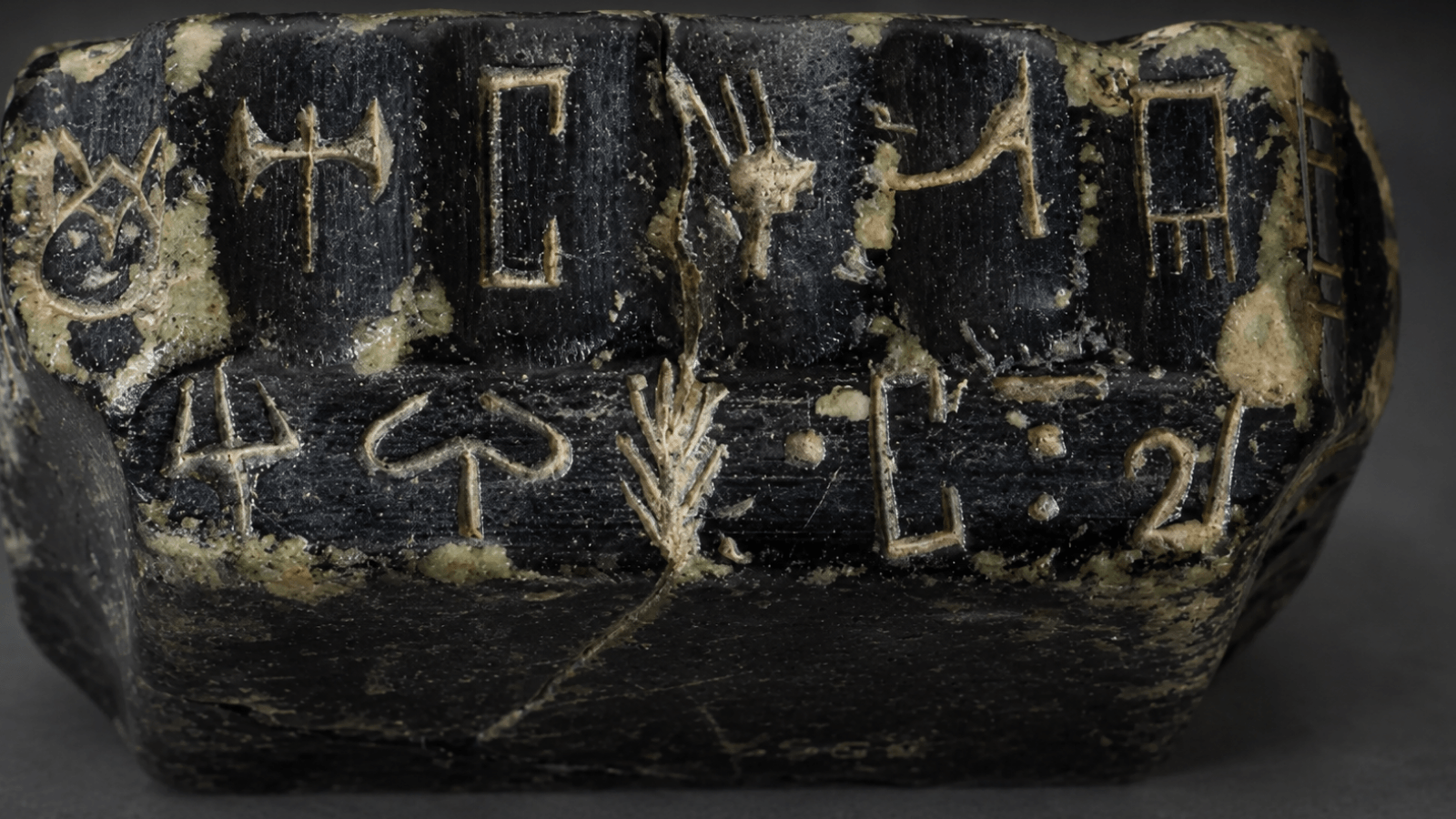
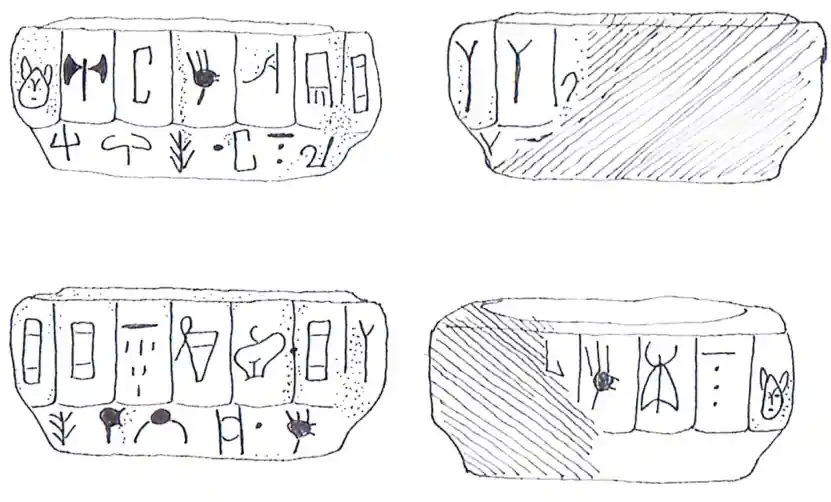
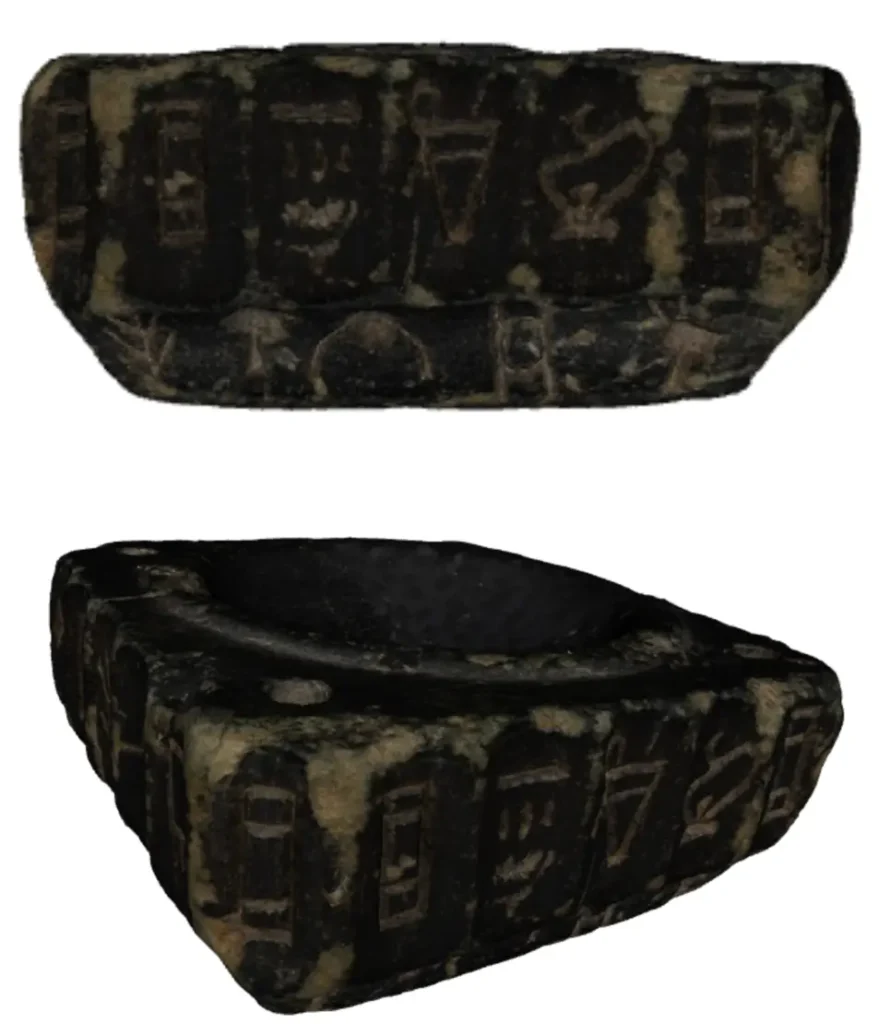
The inscription, known as IO Za 2, was carved onto a miniature stone libation table found at the peak sanctuary of Mount Juktas, near Knossos. Measuring only about 4.3 centimeters across and 1.9 centimeters high, the serpentinite object carries one of the longer surviving examples of Linear A, the still-undeciphered writing system used in Minoan Crete.
A recent study by independent researcher Michael Schümann proposes a new interpretation of the inscription, arguing that it records a structured religious invocation involving ritual actions and the names of deities. Central to his interpretation is the sequence TI-NU, which Schümann suggests may have been a divine name related to di-wo-nu-so, the form of Dionysus recorded centuries later in Mycenaean Linear B texts.
If the comparison is correct, Tinu could represent an earlier Aegean form of a divine name that was later recorded in Mycenaean Greek as Dionysus. The proposal is significant because Dionysus is already attested in Bronze Age Greek records, showing that the god’s history extends well before the Classical period, although the identification of Tinu with Dionysus remains a hypothesis rather than a confirmed reading of Linear A.
A ritual object from a major Minoan sanctuary
The archaeological context of IO Za 2 strengthens its identification as a ritual object independently of any proposed translation. Mount Juktas was one of the most important peak sanctuaries of Minoan Crete, and excavations around its open-air altar uncovered deposits containing ash, charcoal, animal remains and numerous vessels associated with ritual activity.
The miniature table itself contains a shallow depression that could have held a small quantity of liquid during an offering, while its inscription runs around the object’s outer surfaces. Together, these features suggest that writing formed part of the ceremonial use of the vessel rather than serving a purely administrative purpose.
Similar inscribed libation vessels from other Minoan sites contain repeated sequences of Linear A signs. Scholars generally refer to these recurring texts as the Linear A libation formula, indicating that they were probably connected with standardized religious practices, and Schümann argues that IO Za 2 belongs to this wider ritual tradition.
His proposed reading interprets parts of the inscription as references to lamentation and the pouring of an offering before concluding with divine names or references to a sanctuary. Another section may preserve traces of a second deity, although here the evidence is more fragmentary.
Only the signs I-DA survive clearly in this portion of IO Za 2. By comparing the damaged text with other Linear A inscriptions containing sequences such as I-DA-MA-TE and DA-MA-TE, Schümann reconstructs a longer form that he interprets as Ida-Mate, possibly meaning a “Mother of Ida.”
Connections have been suggested between such forms and the later Greek goddess Demeter, but this interpretation remains uncertain because part of the inscription is missing and must be reconstructed. The proposed Ida-Mate identification is therefore more tentative than the surviving signs themselves.
Linear A remains undeciphered
The new interpretation does not amount to a decipherment of Linear A. Although many Linear A signs can be transliterated because they resemble signs later used in Linear B, the underlying Minoan language remains unknown, allowing researchers to recognize recurring words and formulas without necessarily knowing their precise meanings.
That distinction is particularly important for IO Za 2 because the proposed association between Tinu and Dionysus depends on linguistic comparison combined with the inscription’s religious context. It cannot yet be treated as proof that the Minoans worshipped Dionysus under that exact name.
Even so, the inscription offers a rare window into the religious vocabulary of Bronze Age Crete. Its archaeological setting strongly supports its connection with ritual activity, while the recurring formulae found on comparable vessels show that writing was integrated into Minoan ceremonial practice.
Whether Tinu ultimately proves to be connected with Dionysus remains open to debate, but IO Za 2 provides an unusually intriguing piece of evidence for how divine names and religious traditions may have circulated in the Aegean centuries before they appeared in the Greek texts that survive today.
Cover Image: The small libation table with an inscription in Linear A. Credit: Georgia Flouda / Heraklion Archaeological Museum.