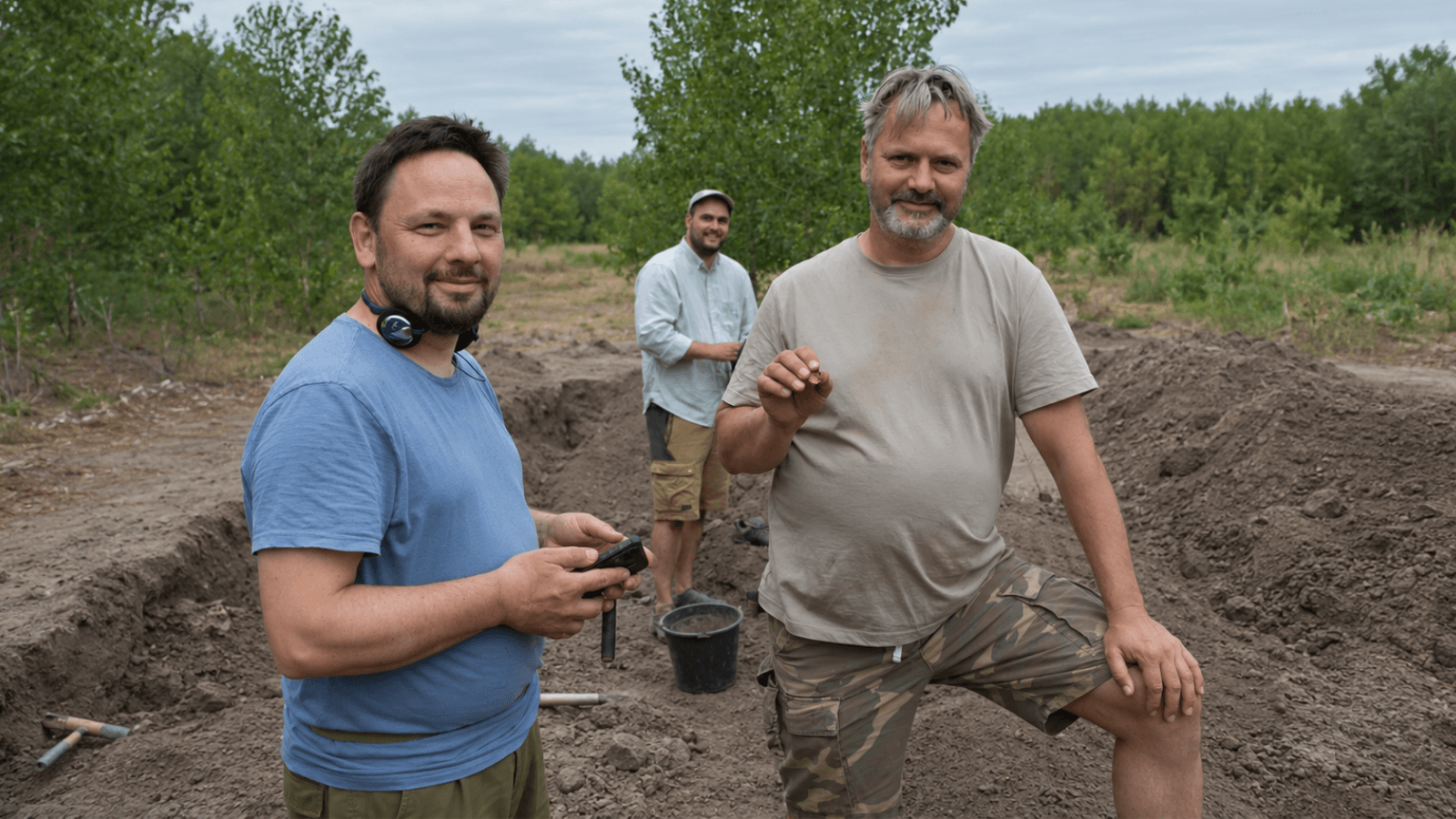
Rare gold fittings discovered at an undisclosed site in Hungary have been linked to an elite burial from the Hungarian Conquest period more than 1,000 years ago.
The find was made at an undisclosed location in Pest County, where the exact site is being kept confidential while archaeological investigations continue. Officials say the location will not be revealed for now in order to protect it from illegal treasure hunting.
The discovery began in early summer 2026, when Károly Tóth, a volunteer with the Közösségi Régészeti Egyesület, or Community Archaeology Association, noticed archaeological objects emerging from disturbed ground in a forested area.
According to the Ferenczy Múzeumi Centrum, forestry work involving deep ploughing had brought several artifacts close to the surface. The area had not previously been the subject of systematic archaeological investigation.
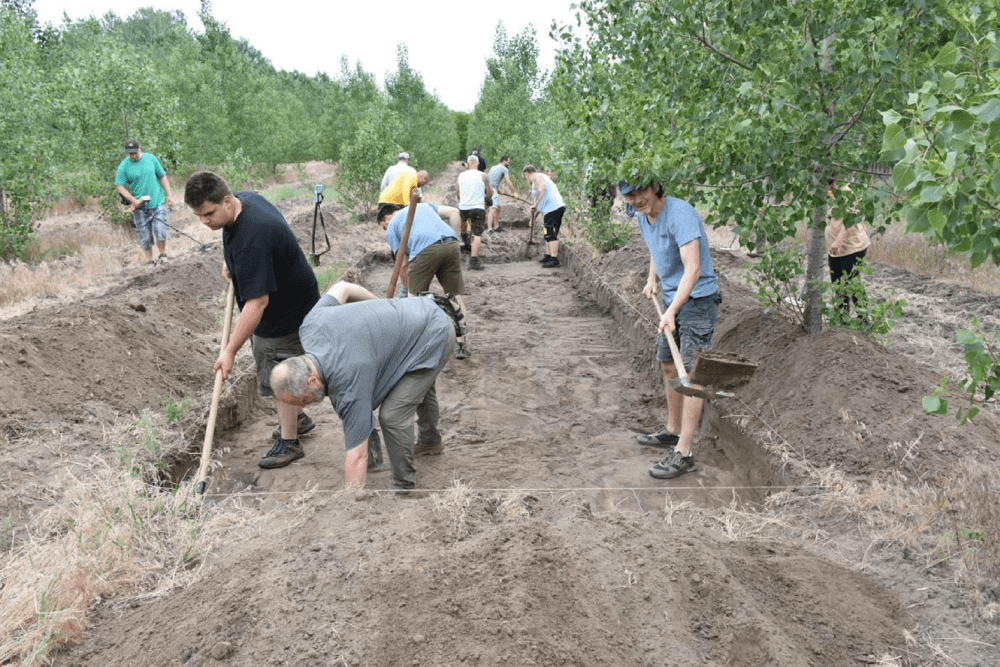
Recognizing the potential importance of the material, Tóth immediately contacted museum archaeologists. A verification survey was carried out with members of the association, followed by a controlled excavation designed to document the context of the finds.
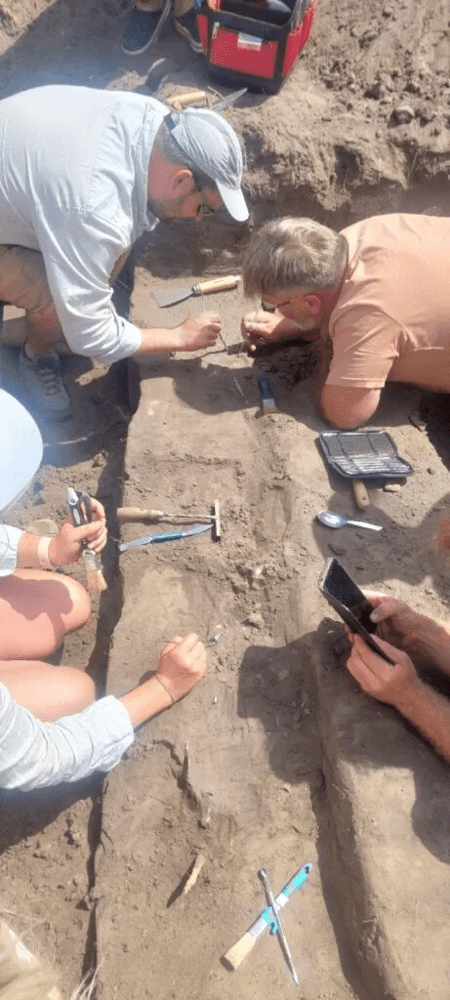
Rare gold fittings point to an elite burial
Among the objects recovered were gold mounts dating to the Hungarian Conquest period, roughly associated with the late ninth and tenth centuries.
Gold objects are considered particularly rare in archaeological contexts from this period, and researchers say the significance of the assemblage lies not only in the presence of precious metal but also in the unusually high quality of the workmanship.
Dániel Giedl, director of the excavation, and archaeologist Tibor Ákos Rácz have described the discovery as exceptional. Based on the character and craftsmanship of the finds, archaeologists believe the grave goods were associated with members of the elite of early medieval Hungary.
The Hungarian National Museum has identified the discovery as a Hungarian Conquest-period grave find, confirming that at least part of the assemblage comes from a burial context.
Researchers have not yet publicly detailed the exact function of the gold fittings or released further information about the individual associated with the burial. Analysis of the recovered objects is continuing.
The Hungarian Conquest period marks one of the most important phases in the formation of medieval Hungary, following the arrival and settlement of Magyar groups in the Carpathian Basin around the end of the ninth century.
Archaeological burials from this period provide some of the clearest evidence for social differentiation, clothing traditions, weapons, horse equipment and elite display at a time when written sources remain limited.
Site remains confidential as research continues
Specialists from the Hungarian National Museum’s National Archaeological Institute are now involved in the examination and conservation of the finds, including staff from its Archaeological Conservation Department and Archaeometry Laboratory.
For now, archaeologists are deliberately withholding both the exact location and many details about the assemblage.
The decision is intended to prevent unauthorized visitors and looters from reaching the site before investigations are complete.
A larger planned excavation is expected to begin at the site in the autumn. Additional details about the finds and the investigation will be released only when researchers consider it safe to present the exceptional assemblage publicly.
The discovery is especially notable because it began not with a planned excavation, but with a volunteer recognizing artifacts exposed by forestry work in an area that had previously escaped systematic archaeological attention.
What first appeared to be a handful of objects on disturbed ground has now developed into a significant Hungarian Conquest-period discovery, with rare gold mounts providing a glimpse into the wealth and craftsmanship associated with the elite of early medieval Hungary.
Cover Image: The rare gold mount discovered at an undisclosed archaeological site in Pest County, Hungary. Credit: Ferenczy Múzeumi Centrum