Ceramic fragments uncovered during roadwork hint at human activity in the area as early as the Chalcolithic period
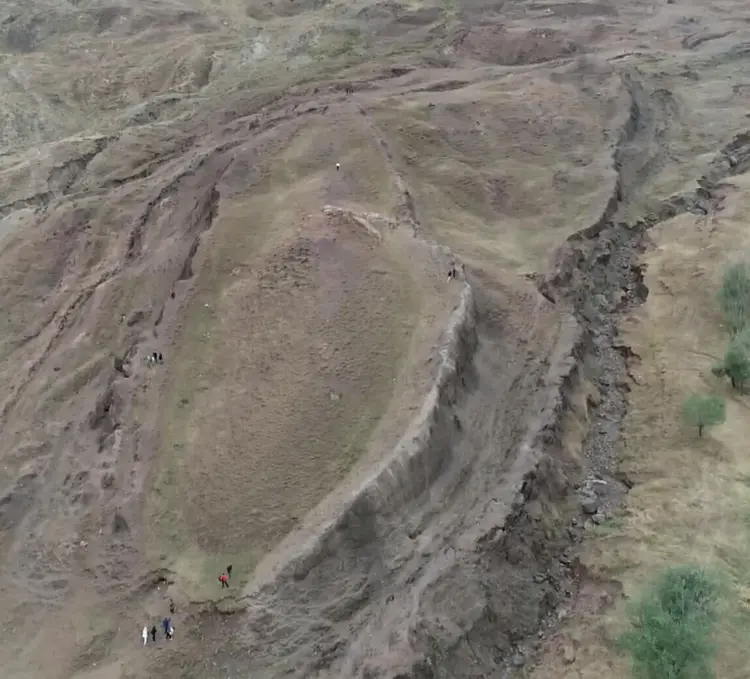
The long-debated formation on the slopes of Mount Ararat—long associated by some with the story of Noah’s Ark—has gained renewed archaeological attention after researchers documented ceramic fragments in the surrounding terrain. The material, examined by a joint research team from Ağrı İbrahim Çeçen University and Istanbul Technical University, suggests that people may have occupied or passed through this landscape at least 5,000 years ago. Although the formation itself remains scientifically unproven as a man-made structure, the new data points to a deeper and more complex human presence in the region than previously understood.
The discovery emerged incidentally when roadwork near Doğubayazıt exposed small clusters of pottery. The findings prompted Prof. Dr. Faruk Kaya and his colleagues to conduct a focused assessment. Their preliminary interpretation places the fragments within the broad Chalcolithic horizon, which spans roughly 5500 to 3000 BCE. The period overlaps with traditional timelines often attributed to the Near Eastern flood narratives. While such parallels do not establish a historical Noah as a factual figure, they do strengthen academic interest in the long-term human ecology of the Ararat foothills.
A Contested Formation with a Long History of Speculation
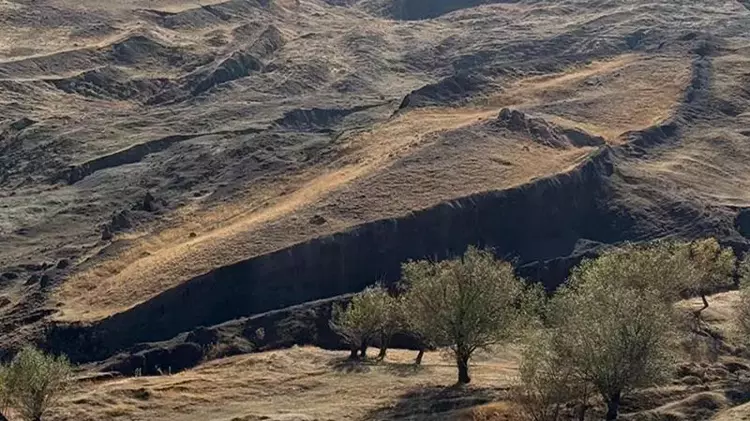
The feature first gained global attention in 1959 when Captain İlhan Durupınar, a cartographer with the Turkish Armed Forces, identified a boat-shaped outline in aerial photographs. Situated between Telçeker and Üzengili villages, the ridge quickly entered popular imagination. Over the decades, scientists, geophysicists, and independent researchers have surveyed the site using geological sampling, ground-penetrating radar, and geomorphological mapping. Most scholars interpret the formation as a natural geological structure. Others have proposed alternative hypotheses, often influenced by religious traditions.
According to Prof. Dr. Kaya, analyses conducted at ITU laboratories revealed that environmental conditions around the formation could have supported human life in the Chalcolithic era. Rock and soil samples carry indicators of early settlement activity, suggesting that communities may have moved across this landscape during the late prehistoric period. Kaya emphasizes that no comparable formation has been documented elsewhere, a point that continues to attract visitors and researchers from around the world.
Preservation Concerns Grow as Tourism Intensifies
The site’s increasing popularity has created new conservation challenges. During fieldwork, researchers learned from local residents that some visitors were removing stones from the formation, including pieces with engravings. Kaya warned that such losses erode the scientific record and distort the geological and cultural history embedded in the landscape. He argues that the entire area should receive strict protection status, citing its significance for both cultural tourism and academic inquiry.
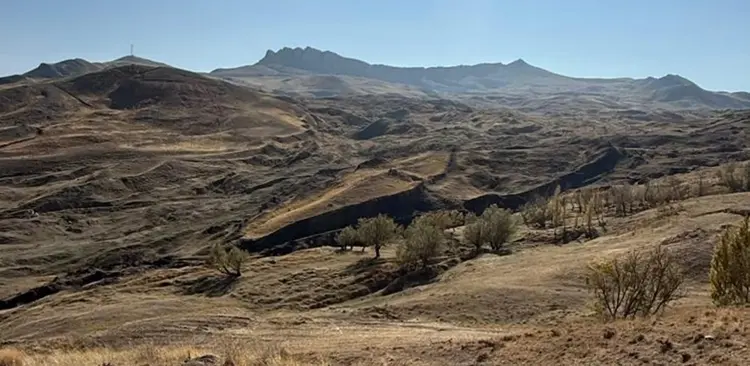
Seasonal instability also threatens the formation. Heavy spring rains regularly trigger small landslides that erode its flanks, altering the visible contours. According to the research team, mitigation measures are urgently needed to prevent further degradation. They stress that scientific access and community engagement must be balanced with responsible heritage management.
A Landscape Where Geology, Myth, and Memory Intersect
While the formation’s true nature remains unresolved, the recent discoveries contribute to a more grounded understanding of the region’s human past. The evidence does not confirm any direct link to the biblical flood narrative. Instead, it underscores a broader archaeological truth: the Ararat highlands were part of a dynamic corridor where early communities adapted to challenging environments, left traces of their presence, and shaped the cultural geography that later traditions would build upon.
As new analyses progress, the debate surrounding the formation is likely to continue. Yet the broader story—of prehistoric life in one of Anatolia’s most dramatic landscapes—is becoming clearer. And for researchers like Prof. Dr. Kaya, safeguarding the site for rigorous study is now more critical than ever.